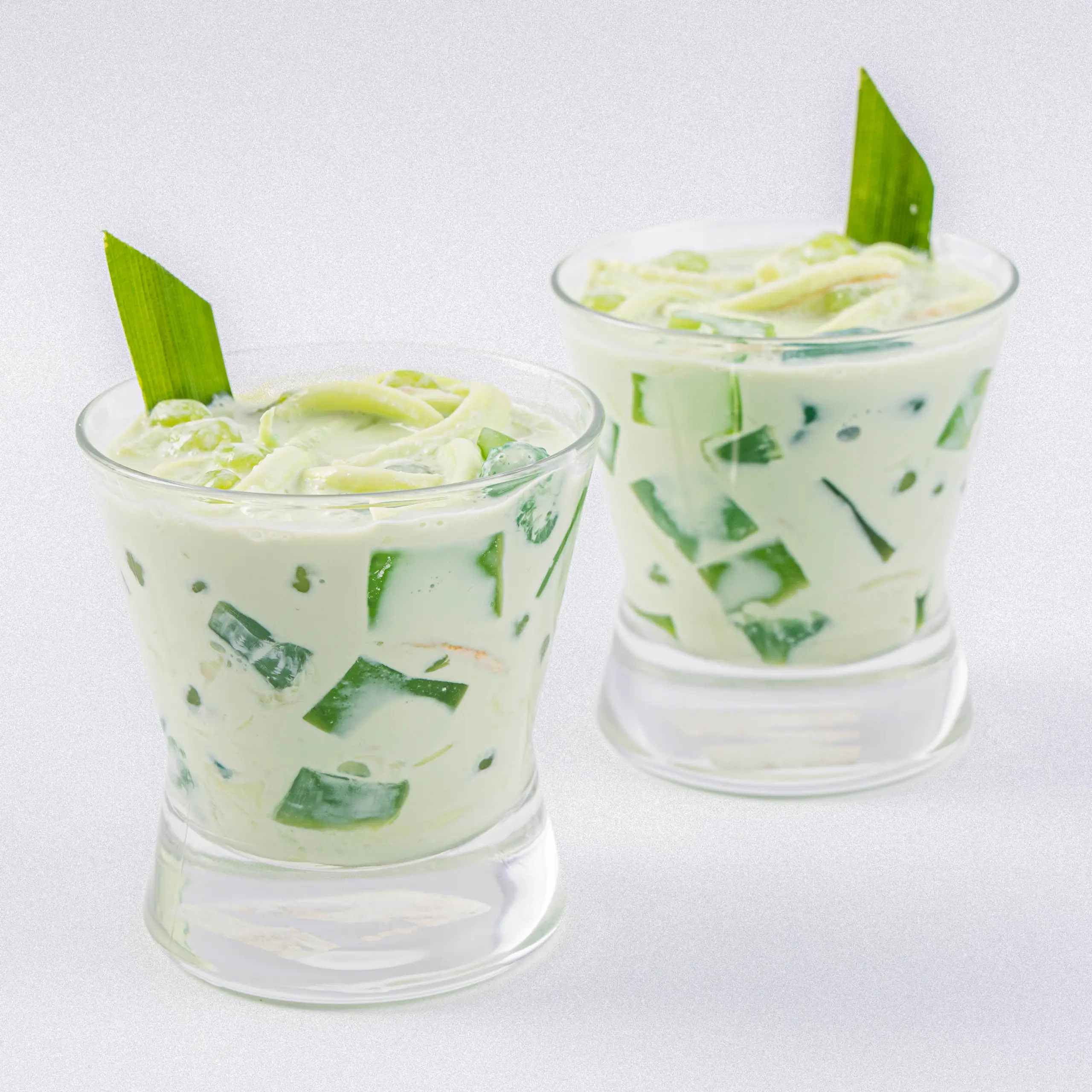
Few Filipino desserts feel as refreshing and festive as buko pandan salad. With tender young coconut, chewy gulaman and tapioca pearls, sweet kaong, nata de coco, and a creamy milk mixture, every spoonful gives you a combination of soft, chewy, juicy, and creamy textures.
It is especially popular at Filipino gatherings because it is easy to prepare in a large batch and can be made ahead of time. Whether it’s Christmas, a birthday party, a fiesta, or simply a hot afternoon at home, a chilled bowl of buko pandan is always welcome.
This version uses coconut juice to prepare the green gulaman, giving the jelly an extra coconut flavor while the pandan leaves add a fragrant aroma.
A Little History of Buko Pandan
Buko pandan is a distinctly Filipino dessert that combines several ingredients that are very familiar in Philippine cuisine. The name itself is straightforward: “buko” means young coconut, while “pandan” refers to the fragrant pandan leaf traditionally used to flavor Filipino sweets and drinks.
Unlike some older Filipino dishes with clearly documented historical origins, the exact beginnings of buko pandan salad are difficult to pinpoint. It is generally considered a relatively modern Filipino dessert that became increasingly popular through home cooking, celebrations, and Filipino food businesses.
The dessert also reflects a familiar Filipino love for combining coconut, creamy dairy, gelatin, and chewy ingredients. Similar ingredients appear in other Filipino refreshments and desserts, but buko pandan brings them together into one particularly colorful and festive dish.
Over time, many versions have appeared. Some use pandan-flavored gulaman, while others use pandan extract or food coloring. Some include tapioca pearls, kaong, nata de coco, or even sweetened cream. There is plenty of room to customize it according to family preference.
Recipe Tips for a Better Buko Pandan
The most important tip is keep everything cold before combining the salad. Warm gulaman, tapioca pearls, or coconut can make the creamy mixture thinner than you’d like.
Drain the kaong and nata de coco well. These ingredients are usually stored in syrup, and adding too much of that liquid can make your dessert excessively sweet and watery.
The same goes for the young coconut. Fresh buko is wonderful, but make sure the meat isn’t carrying too much coconut water into the mixture.
You can also control the sweetness. The combination of condensed milk, kaong, nata de coco, and sugar can become quite sweet, so taste the creamy mixture before adding everything together. If you prefer a less-sweet dessert, reduce the condensed milk slightly and compensate with additional cream if needed.
For the best texture, don’t make the gulaman cubes too tiny. Small cubes can disappear into the creamy mixture. Slightly larger cubes give you that satisfying jelly texture in every bite.
Buko pandan is also one of those desserts that benefits from resting in the refrigerator. Making it a few hours ahead gives the flavors time to blend while keeping the dessert refreshingly cold.
Ingredient Substitutions
This recipe is quite flexible.
- Coconut juice: Regular water can be used to make the gulaman, but coconut juice gives it a more natural coconut flavor.
- Young coconut meat: Canned or bottled young coconut can be used when fresh buko isn’t available. Drain it well before adding.
- All-purpose cream: Table cream or another suitable dairy cream can work depending on availability.
- Condensed milk: Evaporated milk combined with sugar can be used if you want more control over the sweetness.
- Kaong: You can leave it out or replace it with additional nata de coco, fruit cocktail, or another chewy ingredient.
- Nata de coco: Coconut jelly or additional kaong can be used, although the texture will be slightly different.
- Tapioca pearls: Sago can be used interchangeably in many Filipino-style desserts.
- Pandan leaves: Pandan extract can be used if fresh leaves aren’t available. Add it gradually because extracts can be quite concentrated.
- Green gulaman: Plain gulaman can be used if you don’t want the dessert to be green. Pandan flavoring or extract can provide the characteristic aroma.
For a more natural-looking dessert, you can also skip artificial green coloring and use clear or lightly tinted gulaman instead.
What Makes Buko Pandan Special?
The appeal of buko pandan isn’t just its sweetness—it’s really about texture.
The young coconut is tender and juicy. Gulaman gives you a soft, springy bite. Tapioca pearls are pleasantly chewy, while nata de coco adds another slightly firmer chew. Kaong contributes its own distinctive texture, and the creamy milk mixture brings everything together.
Then there’s the aroma of pandan. Pandan is often used in Filipino desserts because its fragrance is warm, floral, and slightly nutty. Even when used subtly, it gives buko pandan its recognizable character.
Another reason the dessert works so well is the contrast between richness and freshness. Condensed milk and cream make it indulgent, while young coconut and the chilled serving temperature keep it from feeling as heavy as some other creamy desserts.
Is Buko Pandan Healthy?
Buko pandan contains some nutritious ingredients, particularly young coconut, which provides fiber and various minerals. Coconut also contributes small amounts of vitamins and beneficial plant compounds.
Tapioca pearls, gulaman, kaong, and nata de coco mainly contribute carbohydrates and texture, while the cream and condensed milk provide energy and some nutrients.
However, buko pandan is still best thought of as a dessert rather than a health food. Condensed milk and sugar can make it high in added sugar, while cream increases its calorie and saturated-fat content.
If you’d like a lighter version, you can reduce the condensed milk, use less added sugar, increase the amount of young coconut, and use a lighter cream. You can also increase the proportion of gulaman and coconut while reducing some of the sweeter mix-ins.
The important thing is to enjoy it as part of a balanced diet rather than focusing on making a traditionally indulgent dessert “healthy.”
Serving and Storage
Buko pandan should be served well chilled. It’s particularly refreshing on warm days and makes a lovely dessert after a savory Filipino meal.
Keep leftovers covered and refrigerated. Because it contains dairy and several moisture-rich ingredients, it shouldn’t be left at room temperature for extended periods.
If you’re preparing it for a party, keep it refrigerated until close to serving time. For a buffet, placing the serving bowl over ice can help maintain a safe, pleasantly chilled temperature.
Final Thoughts
Buko pandan is the kind of Filipino dessert that doesn’t need an elaborate presentation to make people happy. Put it in a big bowl, chill it well, and suddenly everyone seems to find an excuse to grab “just one more spoonful.”
Its combination of young coconut, fragrant pandan, creamy milk, chewy pearls, jelly, kaong, and nata de coco makes every bite interesting. It is sweet and indulgent, but the cold coconut and jelly give it a refreshing quality that makes it especially enjoyable in the Philippine heat.
The wonderful thing about making buko pandan at home is that you can adjust it to your family’s taste. Make it creamier, less sweet, more coconut-heavy, extra chewy, or loaded with gulaman—the choice is yours.
In the end, buko pandan is more than just a colorful dessert. It’s a celebration dessert, a party favorite, and a little taste of Filipino creativity in a bowl. Serve it cold, share it generously, and don’t be surprised when the bowl is empty before you get the chance to have seconds.