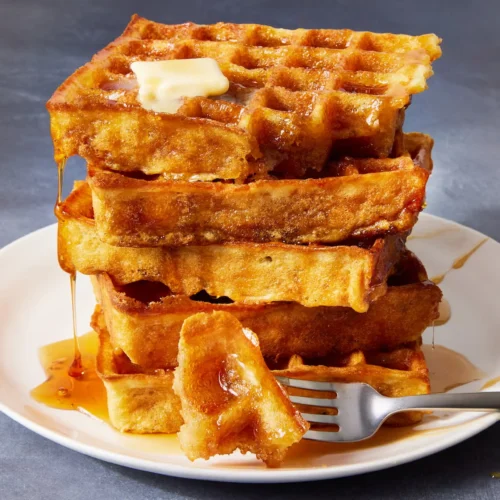


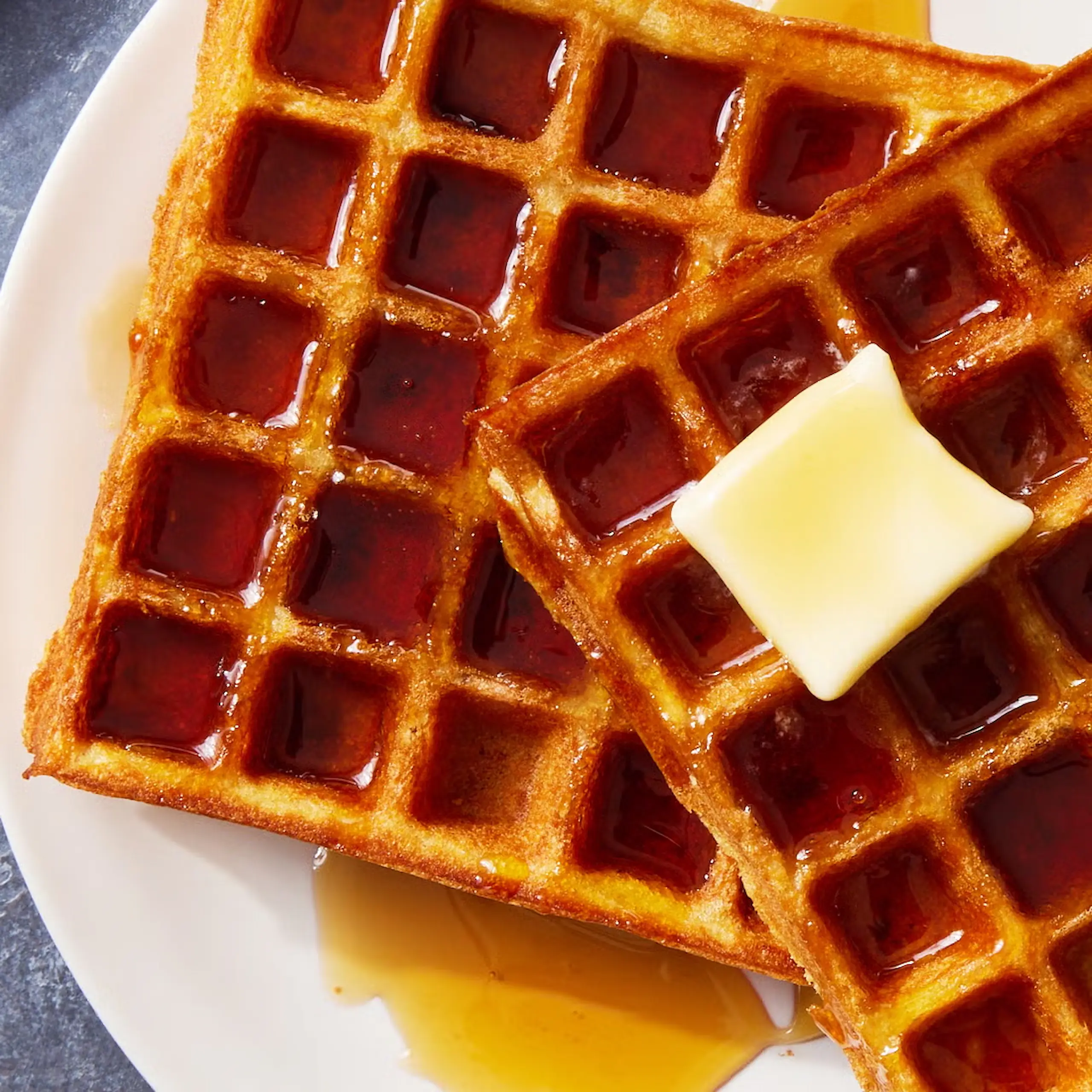
In my personal pantheon of breakfast and brunch foods, waffles hold the tip-top spot (sorry, pancakes; apologies, French toast). So, out of respect, I decided to keep these waffles classic: properly crispy, impossibly fluffy, and just begging to be drowned in maple syrup. I also wanted to make sure they were easy to make, requiring ingredients you probably already have on hand. I learned a few things in the process, which I’m sharing below, so you have all the tips and tricks you need to nail these waffles every time.
Recipe Tips
- Don’t overmix: Waffle batters should be lumpy when they get poured into waffle makers, never smooth. Overworking the gluten will result in tough, deflated, sad waffles.
- Measure your flour correctly: Too much flour and your waffles will be dry and dense, even if you don’t overmix them. Not enough flour, and you’ll have flimsy little waffles. Short of using a kitchen scale, the best way to guarantee the perfect amount is to spoon flour into a measuring cup without packing it in, then take the handle of your spoon and sweep off the excess flour that is over the rim of the measuring cup.
- Make sure your waffle iron is hot! Nothing ruins a waffle like a cold waffle iron. Your waffle will cook faster and more evenly and give you the crispy edges we all love. Once the waffle is in the iron, leave it alone! Lifting the lid will cause the waffles to steam and deflate.
- Pour the right amount of batter: Use a 2-oz. ladle or 1/4-c. measuring scoop to pour waffle batter into the waffle iron, starting in the center and working your way out. Waffle makers will vary in shape and size (some make four, while others may only make one or two!), so use your best judgment when pouring.
- The difference between classic waffles and Belgian waffles: Belgian waffles are typically leavened with yeast and whipped egg whites, which gives them a lighter, airier texture. They are made in special waffle makers that produce larger waffles with deeper wells. By contrast, classic waffles get their lift from a combination of buttermilk, baking powder, and baking soda, resulting in waffles that are thinner, richer, and slightly more dense, though still fluffy.
What can I use if I don’t have buttermilk?
If you don’t have buttermilk, you can substitute it with a few ingredients you might already have in your kitchen pantry.
Just mix 1 Tbsp. white vinegar or lemon juice with 1 cup of milk, then let it sit for 5 to 10 minutes. Wait for it to curdle and thicken, and your homemade buttermilk is ready.
Full list of ingredients and directions can be found in the recipe below.