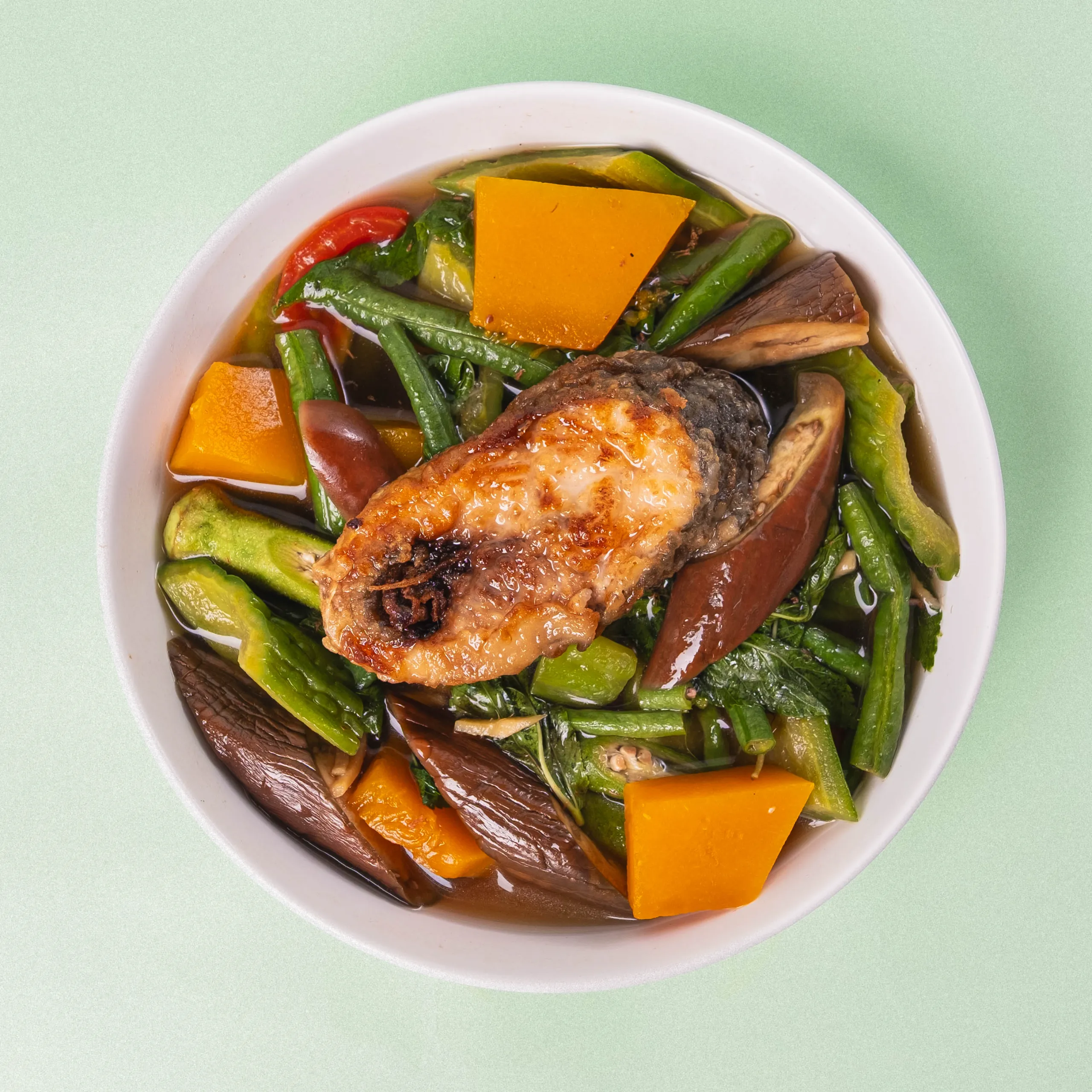


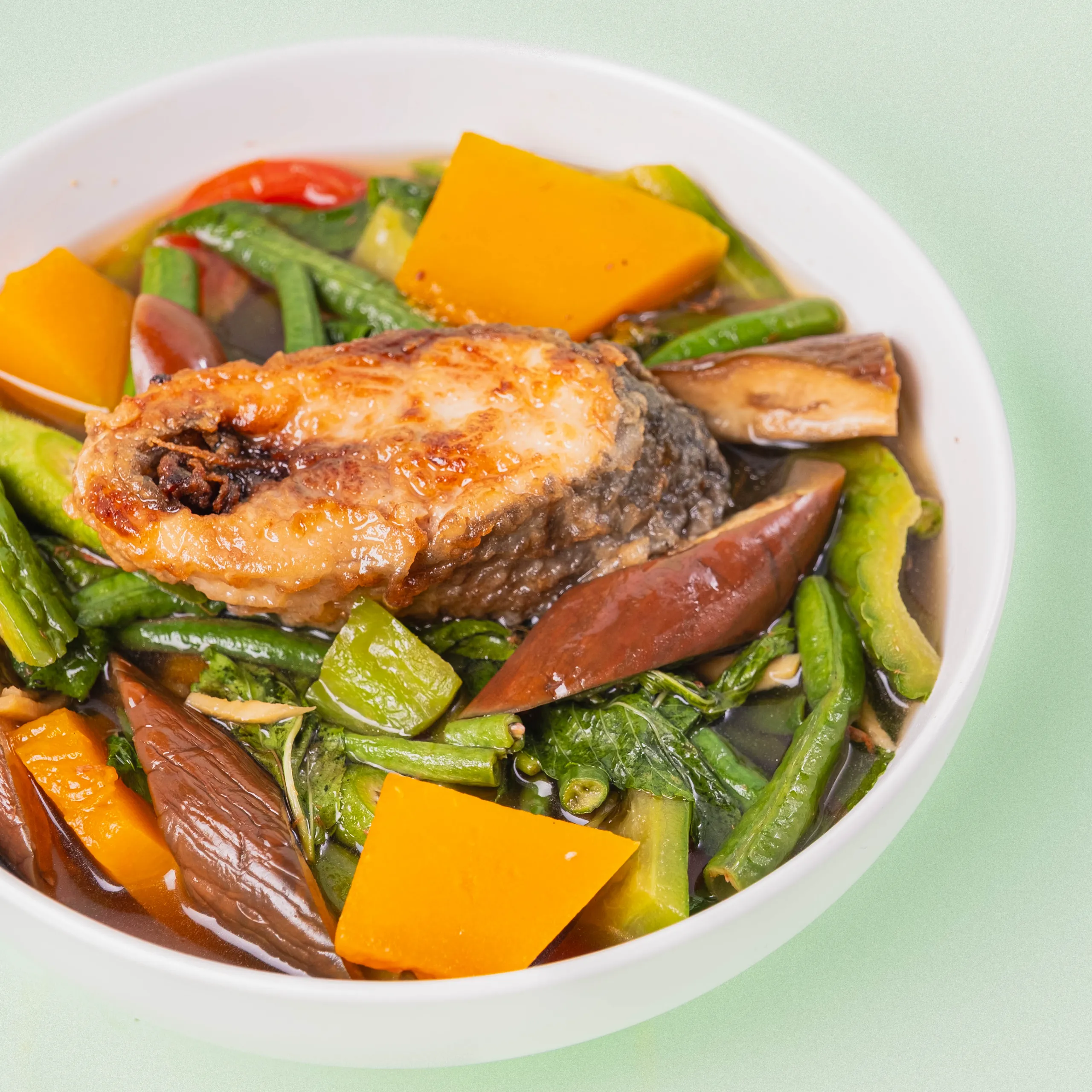
There are Filipino dishes that immediately feel like comfort food, and Dinengdeng is one of them. It is simple, rustic, and deeply connected to the everyday cooking traditions of Ilocos. There is nothing overly complicated about a bowl of dinengdeng: fresh vegetables, a savory broth, fermented fish paste, and often grilled or fried fish come together to create a meal that feels both nourishing and satisfying.
For many Ilocano families, dinengdeng is the kind of dish that makes good use of whatever vegetables are available. A handful of bitter melon, some squash, eggplant, okra, tomatoes, leafy greens, or other garden vegetables can become a flavorful meal when simmered in a broth seasoned with bagoong isda, or fermented fish paste.
What makes the dish especially memorable is its balance. The vegetables retain much of their natural character, while the bagoong provides a deep salty and savory flavor. Grilled or fried fish adds richness and protein, and the simple broth brings everything together.
Unlike creamy Filipino vegetable dishes cooked with coconut milk, dinengdeng allows the freshness of the vegetables to remain front and center. It is a wonderful example of Ilocano cooking: practical, flavorful, economical, and closely connected to the land and sea.
And if you’ve ever eaten a bowl of dinengdeng with steaming rice on a warm day, you probably already understand its appeal. It doesn’t need to be fancy. It just needs fresh vegetables, good seasoning, and a little patience.
A Little History of Dinengdeng
Dinengdeng is strongly associated with Ilocano cuisine, particularly the food traditions of the Ilocos region in northern Luzon.
Ilocano cooking developed around an environment where agriculture and fishing played important roles in everyday life. Vegetables grown in home gardens could easily become part of family meals, while fish and fermented fish products provided essential flavor and protein.
This helps explain why dinengdeng is so adaptable.
There isn’t one single combination of vegetables that every Ilocano family uses. Instead, the vegetables can change according to the season, what is growing in the garden, and what is available in the kitchen.
Common vegetables may include:
- Bitter melon
- Eggplant
- Okra
- Squash
- String beans
- Tomatoes
- Malunggay
- Saluyot
- Young corn
- Green beans
- Other local leafy vegetables
The broth is commonly seasoned with fermented fish paste, which is an important ingredient in many Ilocano dishes.
Fish may also be grilled or fried and added to the pot, giving the dish another layer of flavor.
This resourcefulness is an important part of Filipino regional cooking. Rather than treating recipes as rigid formulas, traditional cooks often work with what is available and adjust seasoning according to taste.
What Is Dinengdeng?
Dinengdeng is a savory Ilocano vegetable soup or stew made with assorted vegetables and fermented fish paste.
Depending on the household and recipe, grilled or fried fish may be included.
The vegetables are cooked in a simple broth until tender but, ideally, not completely mushy. The fermented fish paste gives the broth its distinctive savory and salty flavor.
Unlike some Filipino vegetable dishes, dinengdeng does not typically depend on a thick sauce. The broth remains relatively light, allowing the vegetables and fish to remain the stars.
This makes dinengdeng an excellent dish when you want something flavorful but not overly rich.
Recipe Tips for Better Dinengdeng
Don’t overcook the vegetables
One of the joys of dinengdeng is tasting different vegetables in the same spoonful.
If everything is cooked until soft and mushy, you lose some of that contrast.
Add vegetables according to their cooking time.
Taste the bagoong first
Different brands and varieties of bagoong can vary significantly in saltiness.
Some are intensely salty, while others are milder.
Start with less and add more gradually.
Use grilled fish when possible
Grilled fish adds smoky notes that make the broth considerably more flavorful.
If you have leftover grilled fish from another meal, dinengdeng is a great way to use it.
Don’t drown the vegetables
Dinengdeng is a broth-based dish, but you don’t necessarily need a huge amount of water.
You want enough broth to cook the vegetables and create a flavorful soup without diluting the bagoong too much.
Use seasonal vegetables
Don’t worry if you don’t have every vegetable listed.
Traditional cooking is about using what is available.
The important elements are the savory broth, vegetables, and fermented fish flavor.
Add leafy greens last
Malunggay, saluyot, and similar greens can become overcooked quickly.
Adding them near the end keeps them more appealing in both texture and color.
Ingredient Substitutions
Bagoong isda
Bagoong isda is one of the defining ingredients of dinengdeng.
If you cannot find it, you can use another Filipino fermented fish paste, although the flavor may differ.
Fish sauce can provide saltiness and umami in a pinch, but it won’t have exactly the same fermented character.
Fish
You can use many different types of fish.
Good choices include:
- Bangus or milkfish
- Tilapia
- Galunggong
- Mackerel
- Round scad
- Other firm local fish
Grilled fish is particularly flavorful, but fried fish can also be used.
Malunggay
Spinach, moringa leaves, saluyot, or other tender greens can be used depending on availability.
Each will provide a slightly different flavor and texture.
Squash
Kabocha squash, butternut squash, or other firm winter squash can be used.
Bitter melon
If you don’t enjoy bitter melon, simply leave it out or replace it with another vegetable.
However, bitter melon contributes the characteristic bitter note that many people associate with traditional vegetable preparations.
String beans
Green beans can substitute for Filipino string beans.
Eggplant
Asian eggplant is ideal, but ordinary globe eggplant can also be used.
Understanding the Main Ingredients
Bagoong isda
Bagoong isda is a fermented fish condiment made from fish and salt.
Its strong aroma can be surprising if you’re not familiar with it, but when used properly, it gives the broth a deep savory flavor that is difficult to reproduce with ordinary salt.
Fermentation also gives bagoong a complex umami quality.
It is one of the ingredients that makes dinengdeng unmistakably Filipino.
Bitter melon
Bitter melon, or ampalaya, has a distinctive bitter flavor.
That bitterness may take some getting used to, but it provides an important contrast to the salty broth and naturally sweet vegetables such as squash.
Squash
Squash contributes sweetness and a soft texture.
It also helps balance the more strongly flavored ingredients.
Eggplant
Eggplant absorbs the flavors of the broth beautifully.
As it cooks, its texture becomes soft and silky.
Okra
Okra adds a mild flavor and characteristic slightly slippery texture.
That texture is completely natural and is part of what makes okra appealing in soups and stews.
Malunggay
Malunggay contributes a fresh, slightly earthy flavor and is an excellent leafy addition to vegetable-based dishes.
Fish
Fish provides protein and additional savory flavor.
Grilled fish also introduces smoky notes that can make the broth taste much deeper.
Health Benefits of Dinengdeng Ingredients
One of the biggest strengths of dinengdeng is the variety of vegetables that can go into one pot.
Squash provides beta-carotene, which the body can convert to vitamin A, along with fiber and potassium.
Bitter melon provides vitamin C, fiber, and various plant compounds. It is naturally low in calories.
Eggplant provides fiber and antioxidant plant compounds, particularly in and around its skin.
Okra provides fiber, vitamin C, folate, and other micronutrients.
Malunggay is particularly nutrient-dense and provides vitamins, minerals, and plant compounds including vitamin A precursors, vitamin C, vitamin K, calcium, and iron.
Tomatoes contribute vitamin C, potassium, and lycopene.
Fish provides high-quality protein, vitamin B12, selenium, and other nutrients. Depending on the fish used, it can also provide beneficial omega-3 fatty acids.
Ginger, onion, and garlic contribute aromatic plant compounds and antioxidants while adding substantial flavor without needing large amounts of oil.
The main nutritional consideration is the bagoong, which can be high in sodium. If you’re watching your sodium intake, use less bagoong and rely more on fresh aromatics and vegetables for flavor.
Why Dinengdeng Is Considered a Practical Filipino Dish
Dinengdeng demonstrates one of the most useful principles in traditional cooking: use what you have.
You don’t need to buy a special collection of vegetables every time you want to make it.
If you have eggplant, squash, and okra, use those.
If you have string beans and malunggay, add them.
If you have leftover grilled fish from yesterday’s dinner, even better.
This flexibility makes dinengdeng particularly suitable for families who cook according to the season or what’s available at the local market.
It is also a great way to increase the variety of vegetables in a meal without making several separate side dishes.
How to Store Dinengdeng Properly
Because dinengdeng commonly contains cooked vegetables and fish, proper refrigeration is important.
Transfer leftovers to clean, shallow, airtight containers once they have cooled enough to handle safely.
Refrigerate promptly and keep your refrigerator at 4°C (40°F) or below.
If possible, store the fish and broth together only if you plan to consume them within the recommended storage period.
For the best texture, leafy greens can become very soft after storage, so freshly cooked dinengdeng is generally preferable.
How Long Does Dinengdeng Last?
Properly refrigerated dinengdeng is best consumed within 3 to 4 days.
The vegetables will gradually soften as they sit in the broth, and leafy greens may lose some of their fresh appearance.
When reheating, heat only the amount you plan to eat.
Warm it gently on the stovetop until it is thoroughly hot.
If the broth has reduced or thickened slightly, add a little water and adjust the seasoning.
If the dish develops an unusual odor, visible mold, or other signs of spoilage, discard it.
Can You Freeze Dinengdeng?
Dinengdeng can be frozen, but it is generally better fresh or refrigerated.
Some vegetables, particularly eggplant and leafy greens, can become quite soft after freezing and thawing.
The broth and fish will generally tolerate freezing better than delicate vegetables.
If you do freeze it, divide the dish into meal-sized portions and use freezer-safe containers.
For best quality, consume frozen leftovers within approximately 1 to 2 months.
Thaw in the refrigerator and reheat thoroughly.
How to Serve Dinengdeng
Dinengdeng is almost always at its best with hot steamed rice.
The light broth can be spooned over the rice, while the vegetables and fish provide the main flavor and texture.
You can serve it as a complete meal or alongside other Filipino dishes.
It pairs particularly well with:
- Grilled fish
- Fried fish
- Grilled pork
- Fried eggs
- Grilled chicken
- Fresh tomatoes
- Salted egg
- Atchara
If your dinengdeng already contains fish, you may not need another protein on the side.
How to Balance the Flavor
A good bowl of dinengdeng should have a balance of flavors rather than tasting simply salty.
If it tastes too salty, dilute the broth with a little water and add more vegetables if available.
If it tastes too bland, add a little more bagoong gradually.
If it tastes too bitter, additional naturally sweet vegetables such as squash can help provide balance.
If it tastes too heavy, add more broth and fresh vegetables.
If it lacks depth, grilled fish, ginger, onion, or tomato can help build additional flavor.
The important thing is to make adjustments gradually.
Final Thoughts
Dinengdeng may look humble, but that is exactly where its beauty lies.
It is a dish that celebrates the vegetables themselves rather than covering them with a heavy sauce. The fermented fish paste gives the broth its unmistakable Ilocano character, while the vegetables provide sweetness, bitterness, earthiness, and texture. Add grilled fish, and the dish gains another layer of savory and smoky flavor.
More than anything, dinengdeng represents the practical and resourceful side of Filipino cooking.
You don’t need expensive ingredients. You don’t need complicated techniques. You don’t even need an exact list of vegetables.
You need fresh produce, a flavorful fermented seasoning, and the patience to cook each ingredient according to its needs.
That flexibility is part of what makes the dish so meaningful. A pot of dinengdeng can look completely different from one home to another and still feel unmistakably Ilocano.
It is also the kind of food that makes you appreciate the relationship between Filipino cooking and the seasons. When a vegetable is plentiful, it finds its way into the pot. When there is leftover grilled fish, it becomes part of the next meal. Nothing needs to be wasted when a little creativity can turn simple ingredients into something delicious.
So don’t be afraid to make your dinengdeng your own while respecting its traditional character. Use the vegetables you love, adjust the bagoong to your taste, choose a good piece of grilled fish, and serve it with plenty of hot rice.
At the end of the meal, you may realize that the dish wasn’t trying to impress you with complexity.
It was simply doing what good home cooking has always done—turning fresh, humble ingredients into a warm meal that brings people together.