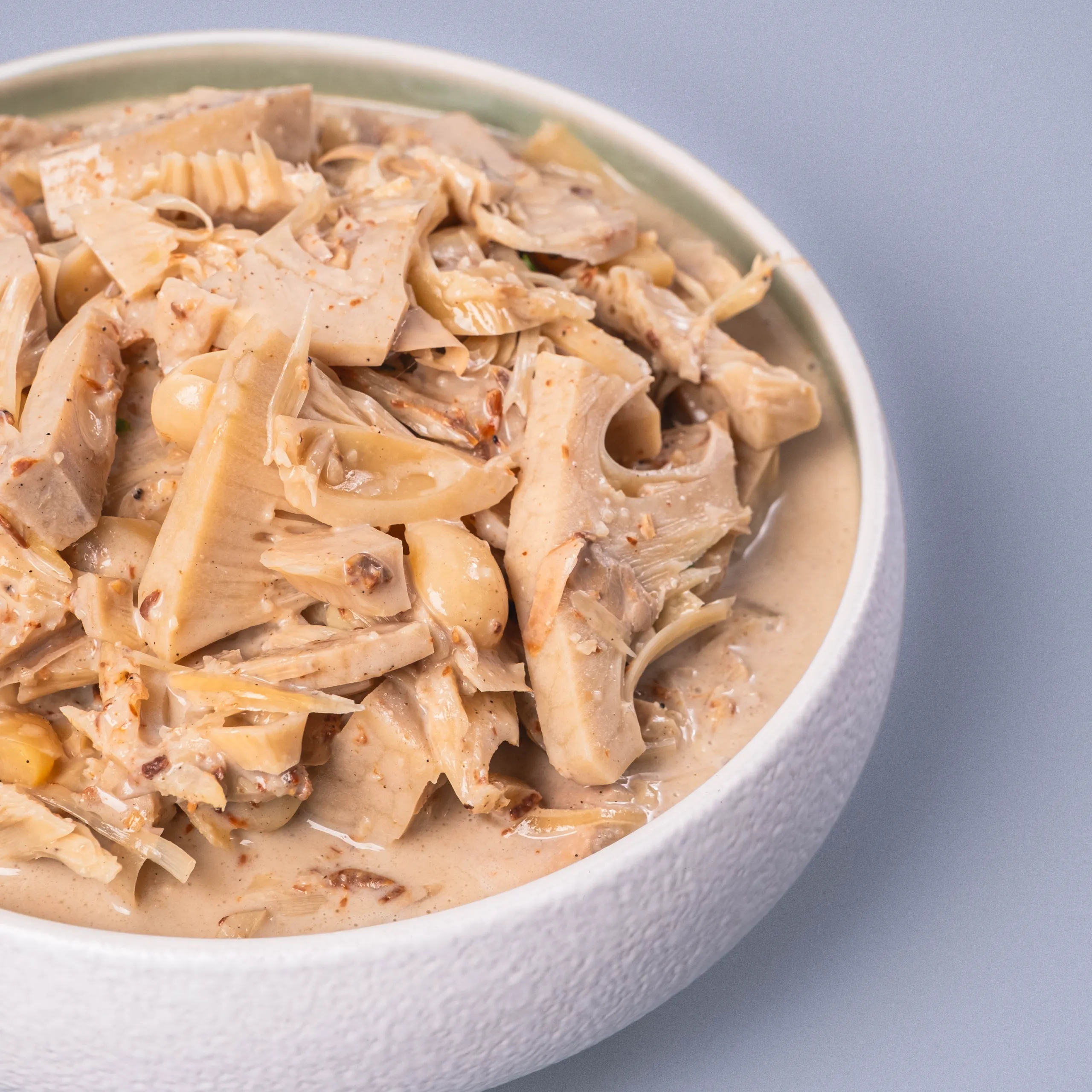


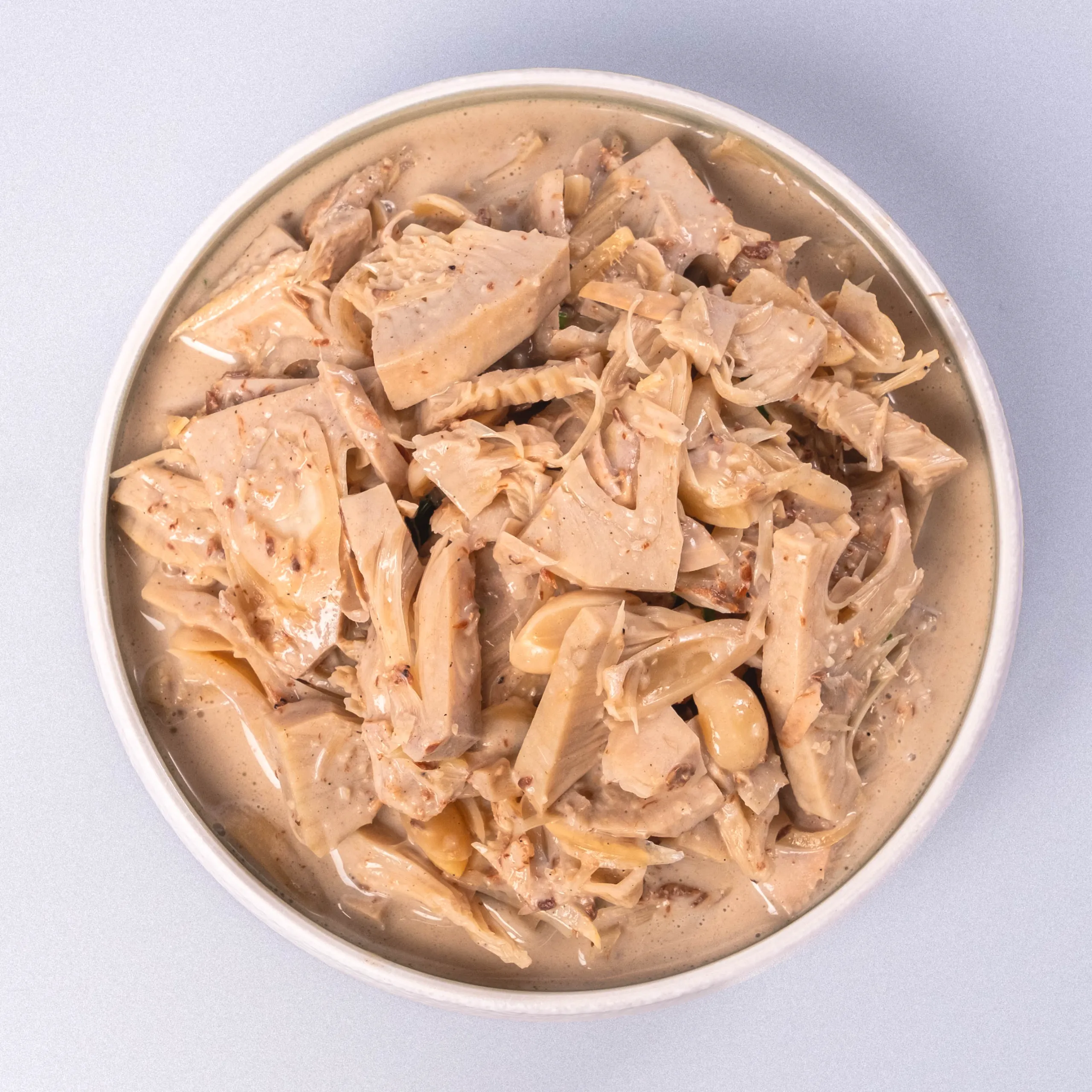
There is something wonderfully comforting about a pot of Ginataang Langka slowly simmering on the stove. The smell of sautéed garlic, onion, and ginger mixing with creamy coconut milk is enough to make the kitchen feel warm and inviting—even before the first bite.
For many Filipino families, dishes cooked in gata are closely associated with home cooking. They are the kind of meals that don’t need a fancy presentation. Put a pot of steaming rice on the table, spoon some creamy coconut sauce over it, and suddenly a simple vegetable dish feels like a complete and satisfying meal.
This Bicol-style Ginataang Langka takes young jackfruit and cooks it with coconut milk, bagoong, fish sauce, and aromatic ingredients. The result is creamy, savory, slightly sweet from the natural character of the jackfruit, and deeply flavorful from the fermented shrimp paste.
It is also a wonderful example of how Filipino cooks transform a humble ingredient into something special. Young jackfruit doesn’t have the sweetness or soft fruitiness associated with ripe jackfruit. Instead, its firm, fibrous texture makes it excellent for savory dishes because it absorbs sauces and seasonings beautifully.
In this recipe, the rich coconut milk coats the jackfruit while the bagoong provides an unmistakable salty, fermented depth. Ginger adds warmth, garlic and onion build the aromatic foundation, and fish sauce rounds out the seasoning.
The result is a dish that is simple enough for a weekday meal but flavorful enough to make you reach for another serving of rice.
A Little History of Ginataang Langka
Ginataang Langka belongs to the broad family of Filipino dishes known as ginataan—food cooked with coconut milk or coconut cream.
Coconut has played an important role in Filipino cooking for generations, particularly in areas where coconut trees grow abundantly. The fruit can be used in many ways, from coconut water and grated coconut to coconut milk, coconut cream, and coconut-based sweets.
Bicol is particularly famous for its love of coconut milk. Many Bicolano dishes use gata generously, often paired with chili, seafood, pork, vegetables, or fermented ingredients.
While Bicolano versions can vary from household to household, the underlying idea remains beautifully simple: take local ingredients, simmer them in coconut milk, and create a dish where richness, saltiness, spice, and natural flavors balance each other.
Ginataang Langka is also a good example of how Filipinos make use of young jackfruit. A fruit that is commonly associated with desserts and ripe tropical sweetness becomes an entirely different ingredient when harvested young.
Instead of being eaten as a sweet fruit, young jackfruit is cooked like a vegetable.
That versatility is one of the reasons jackfruit has become such an interesting ingredient in Filipino cuisine.
What Is Young Jackfruit?
Jackfruit is a large tropical fruit with a remarkable range of uses.
When fully ripe, the yellow flesh inside is sweet, fragrant, and often eaten fresh or used in desserts.
When harvested young, however, the fruit has a much milder flavor and a firm, fibrous texture. This makes it ideal for savory cooking.
Young jackfruit readily absorbs the flavors around it, which is why it works so well with coconut milk, bagoong, garlic, ginger, onion, and fish sauce.
For this recipe, you want young, unripe jackfruit, not the sweet ripe fruit normally sold as a snack or dessert.
Recipe Tips for the Best Ginataang Langka
Use young jackfruit
This is the most important ingredient choice.
Ripe jackfruit is sweet and soft and is not suitable for the savory texture you’re looking for in this recipe.
Look for cans labeled young jackfruit, green jackfruit, or unripe jackfruit.
Drain canned jackfruit well
Canned jackfruit can contain quite a bit of liquid. Draining it thoroughly prevents the coconut sauce from becoming unnecessarily watery.
A quick rinse can also help remove some of the canning liquid if you find its flavor too strong.
Don’t rush the bagoong
Sautéing the shrimp paste briefly with the aromatics helps mellow its raw fermented aroma and allows its savory character to develop.
Be cautious with seasoning
Bagoong and fish sauce are both salty.
Always taste before adding additional salt.
The amount of salt needed can also vary depending on the brand and type of bagoong.
Let the coconut milk simmer gently
A slow simmer allows the flavors to blend while helping maintain a pleasant texture.
Don’t overcook the jackfruit
Young jackfruit should become tender but retain some structure.
Cooking it for too long can make it mushy and cause the pieces to lose their satisfying texture.
Add chili if you like
Although this recipe doesn’t list chili, a Bicolano-inspired version can be wonderful with sliced green or red chili peppers.
Add them according to your preferred level of heat.
Ingredient Substitutions
Fresh young jackfruit
Fresh young jackfruit can be used if you have access to it, but canned young jackfruit is much more convenient.
The important thing is to make sure you’re using unripe jackfruit.
Bagoong
Shrimp paste is an important source of savory, fermented flavor.
If you don’t eat shrimp or need a vegetarian version, fermented soybean paste or another savory fermented bean paste can be used. The resulting flavor will be different, but the dish will still have depth.
Fish sauce
Soy sauce can substitute for fish sauce if necessary.
For a vegetarian version, use a vegetarian fish sauce alternative or additional soy sauce.
Because soy sauce and fish sauce have different flavors and salt levels, adjust according to taste.
Coconut milk
Full-fat coconut milk gives the richest result.
If you want a lighter dish, you can use a thinner coconut milk or dilute full-fat coconut milk slightly with water.
Ginger
Fresh ginger gives the best flavor, but powdered ginger can be used if necessary. Use it sparingly because dried ginger has a different intensity and aroma.
Chili peppers
For a more Bicolano-style spicy version, add:
- Long green chilies
- Siling labuyo
- Red chilies
- Jalapeño, if Filipino chilies aren’t available
The amount is entirely up to your tolerance for heat.
Understanding the Main Ingredients
Young jackfruit
Young jackfruit is surprisingly versatile.
Its fibrous texture allows it to absorb sauces extremely well, which makes it useful in stews, curries, vegetable dishes, and meatless preparations.
Unlike ripe jackfruit, it has a relatively mild flavor, so it acts almost like a blank canvas for stronger ingredients.
Coconut milk
Coconut milk is what gives this dish its creamy body.
It contributes fat, richness, and a subtle sweetness that balances the salty bagoong and fish sauce.
Bagoong
Bagoong is a fermented Filipino condiment traditionally made from seafood or other ingredients depending on the variety.
It contributes intense umami and saltiness.
Because its flavor is concentrated, even a small amount can transform an otherwise simple dish.
Ginger
Ginger gives the dish warmth and freshness.
Its slightly spicy character is especially useful in coconut-based dishes because it keeps the richness from becoming one-dimensional.
Garlic and onion
These are the aromatic foundation of the recipe.
Garlic adds savory intensity, while onion contributes sweetness and depth as it cooks.
Fish sauce
Fish sauce is another fermented ingredient that contributes salt and umami.
Using both bagoong and fish sauce gives the dish a particularly deep savory profile.
Health Benefits of the Ingredients
Ginataang Langka can be a nutritious vegetable-based side dish, particularly when paired with other vegetables and an appropriate portion of rice or protein.
Young jackfruit provides dietary fiber and carbohydrates and contains vitamin C, potassium, and other plant nutrients. Because it is relatively mild in flavor, it can be an easy way to add a plant-based ingredient to a meal.
Coconut milk provides energy, fats, and small amounts of minerals such as manganese and copper. It is also calorie-dense, so the quantity used can have a significant effect on the overall calorie content of the dish.
Garlic contains sulfur-containing plant compounds and contributes small amounts of vitamin B6, vitamin C, and manganese.
Onions provide fiber and various plant compounds, including antioxidant compounds such as quercetin.
Ginger contains naturally occurring compounds such as gingerols and has traditionally been used for digestive comfort.
Jackfruit also contains antioxidants and various vitamins and minerals, although the nutritional profile of young jackfruit can differ from that of ripe fruit.
Shrimp paste and fish sauce provide protein-derived savory compounds and minerals, but they can also be high in sodium.
For anyone watching sodium intake, reduce the amount of bagoong and fish sauce and season the dish with aromatics, chili, ginger, and pepper instead.
Is Ginataang Langka Vegetarian?
The basic jackfruit-and-coconut combination is plant-based, but this particular recipe is not vegetarian because it contains bagoong and fish sauce.
To make a vegetarian version, replace the shrimp paste and fish sauce with suitable plant-based alternatives.
You can use fermented soybean paste, mushroom seasoning, soy sauce, or a vegetarian fish-sauce alternative to provide savory depth.
The coconut milk, jackfruit, ginger, garlic, and onion can remain unchanged.
Is Ginataang Langka Vegan?
Not as written.
Bagoong and fish sauce are both animal-derived ingredients.
For a vegan version, replace them with plant-based fermented seasonings and check all packaged ingredients carefully.
How to Store Ginataang Langka Properly
Because this dish contains coconut milk, it should be refrigerated promptly after cooking.
Transfer leftovers to a clean, airtight container and refrigerate them once they have cooled enough to handle safely.
Keep the refrigerator at 4°C (40°F) or below.
For a large batch, divide the food into smaller, shallow containers so it cools more quickly.
Keep the container covered to prevent the dish from absorbing odors from other foods.
When reheating, use gentle heat and stir occasionally.
If the coconut sauce becomes very thick in the refrigerator, add a small splash of water while reheating.
How Long Does Ginataang Langka Last?
Properly refrigerated ginataang langka is best consumed within 3 to 4 days.
The sauce may become thicker after refrigeration, and the jackfruit can soften slightly. These texture changes are normal.
When reheating, heat the portion thoroughly before serving.
Avoid repeatedly reheating the entire batch. Take out only what you intend to eat and keep the remaining portion refrigerated.
If the dish develops an unpleasant smell, mold, unusual discoloration, or other signs of spoilage, discard it.
Can You Freeze Ginataang Langka?
Yes, although freezing can slightly change the texture of the coconut sauce and jackfruit.
If you want to freeze it, allow the dish to cool and portion it into freezer-safe containers.
Label the containers with the date and use them within approximately 1 to 2 months for best quality.
Thaw the dish in the refrigerator and reheat gently.
The coconut sauce may separate slightly after thawing. Stirring it carefully while reheating can help bring it back together.
How to Serve Ginataang Langka
Ginataang Langka is one of those dishes that feels incomplete without rice.
Serve it hot with freshly steamed white rice, and let the creamy coconut sauce soak into the grains.
It also pairs beautifully with other Filipino dishes, particularly grilled or fried foods.
Try serving it with:
- Fried fish
- Grilled chicken
- Grilled pork
- Fried tofu
- Salted egg and tomatoes
- Atchara
- Fresh cucumber salad
- Steamed vegetables
If you’ve made the dish spicy, something fresh and slightly acidic on the side can help balance the heat.
How to Make It More Bicolano-Style
If you love the signature combination of gata and sili found in many Bicolano dishes, don’t hesitate to add chili.
For mild heat, use sliced long green chilies.
For more serious heat, add a few pieces of siling labuyo.
You can also add the chilies during the simmering stage so their flavor infuses the coconut milk.
For an even richer dish, allow the coconut milk to reduce slightly before serving.
The goal is to create a sauce that is creamy and flavorful without becoming excessively thick or oily.
What Does Ginataang Langka Taste Like?
The first thing you’ll notice is the creaminess of the coconut milk.
Then comes the savory, fermented character of the bagoong and fish sauce, followed by the warmth of ginger, garlic, and onion.
The young jackfruit itself is mild, but its fibrous texture allows it to soak up all of those flavors.
If chili is added, it provides a pleasant heat that cuts through the richness of the gata.
The result is a dish that is creamy, savory, aromatic, and satisfying without relying on meat to make it flavorful.
Final Thoughts
Ginataang Langka is a wonderful reminder of how creative Filipino cooking can be.
A young jackfruit that might otherwise seem like an ordinary or unfamiliar ingredient becomes something deeply satisfying when slowly cooked with coconut milk, bagoong, ginger, garlic, and onion.
The dish also captures something essential about Bicolano cuisine. Coconut milk isn’t treated merely as a liquid or thickener—it is an important part of the flavor and identity of the food. When combined with salty fermented ingredients and, if desired, plenty of chili, it creates the bold yet balanced character that Bicolano cooking is famous for.
What I particularly love about ginataang langka is its versatility. It can be a simple everyday vegetable dish, a flavorful addition to a larger Filipino meal, or even the centerpiece of a meatless lunch when paired with rice and other vegetables.
Take your time with the aromatics, cook the bagoong briefly before adding the coconut milk, and let the jackfruit simmer gently until it becomes tender and flavorful. Most importantly, taste as you go. Bagoong and fish sauce vary in saltiness, so your palate should always have the final say.
Then serve it with hot rice and enjoy that first spoonful while the coconut sauce is still warm and fragrant.
Sometimes, Filipino comfort food is as simple as a humble fruit harvested young, a can of coconut milk, a few aromatics, and a well-seasoned pot on the stove.
That is the beauty of Ginataang Langka—simple ingredients, bold Bicolano character, and the comforting taste of home in every bite.