
Advertisement
Advertisement

Law-Uy Recipe (Davao)

YIELDS:
5 - 6 SERVING(S)
Prep Time:
15 MINS
Total Time:
30 MINS
Cal/Serv:
763

Nutritional Information

Calories 763 kcal
Fat 2 g
Saturated fat 1 g
Trans fat 0 g
Cholesterol 0 mg
Sodium 341 mg
Carbohydrates 172 g
Fiber 15 g
Sugar 21 g
Protein 17 g
Vitamin D 0 µg
Calcium 149 mg
Iron 5 mg
Potassium 1832 mg

Note: The information shown is Edamam's estimate based on available ingredients and preparation. It should not be considered a substitute for a professional nutritionist's advice.

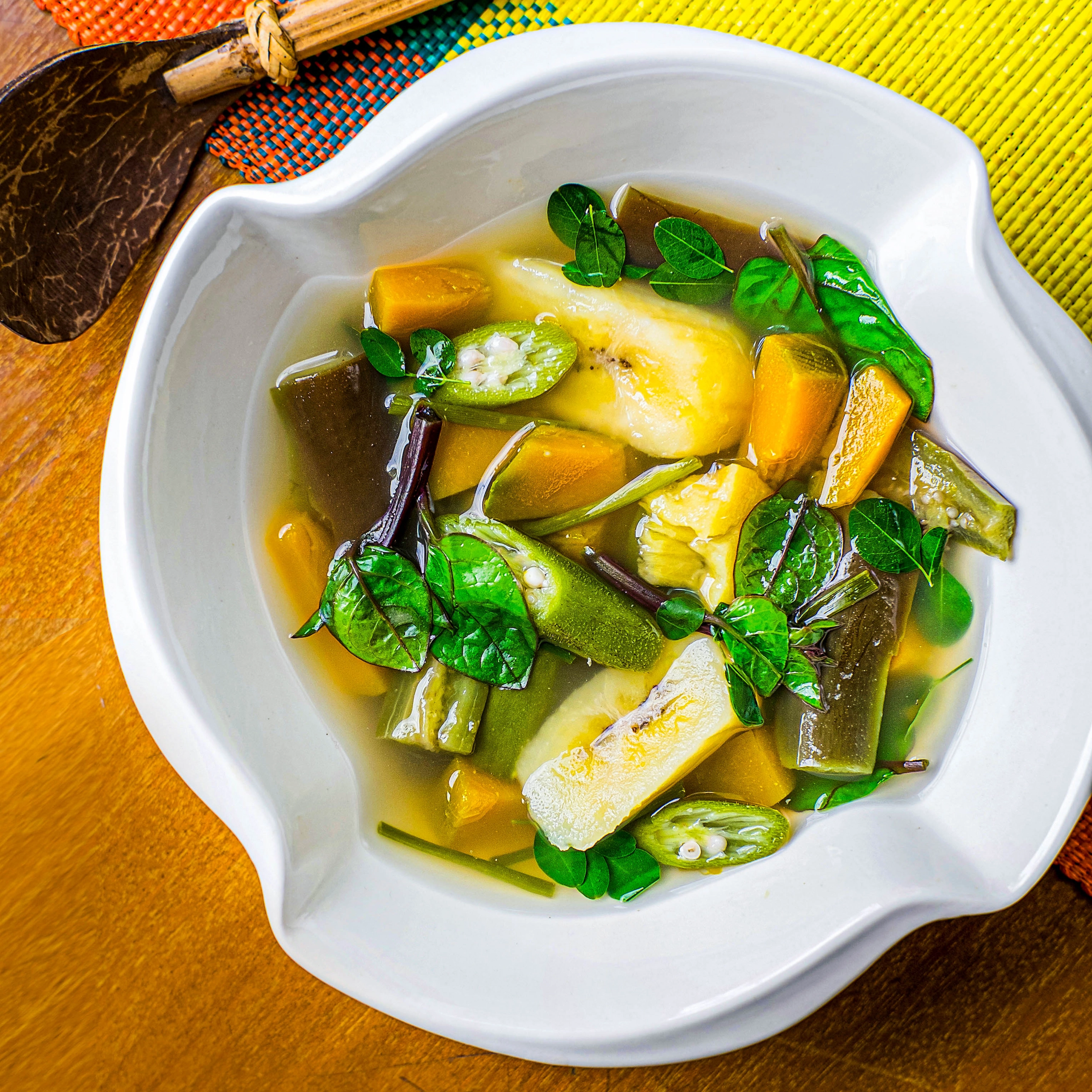
This Law-Uy recipe is from the Aviles family, owners of Lachi’s Cake Shop in Davao. Mike Aviles shares that Delia Dadapan, their staff of over 30 years, shared that the usual law-uy has shredded fried fish and traditionally does not have bananas. “We find that this version has a ‘cleaner’ taste without the fish, and the bananas make it pleasantly sweet,” he says.

Similar Filipino Vegetable Dishes

Filipino cuisine, given its archipelagic geography, has a lot of comparable dishes that are made slightly distinct only by the name and available ingredients in the region. These can be considered the variations of Law-Uy.

  • Dinengdeng – a brothy dish from Ilocos that’s seasoned with fermented fish paste
  • Bulanglang – a dish from Batangas that uses rice wash and dried fish
  • Laswa – a leafy vegetable dish from Western Visayas that incorporates leafy vegetables

Recipe by Mike Aviles, Mateo Ty, and Millet Aviles Ty of Lachi’s Cake Shop Davao.

Advertisement

How to obtain rice washing:

When cooking rice, rinse grains in water and throw out first wash. Add more water and stir rice with fingers. Pour out rice grains into a strainer reserving the second rice washing for this dish. The starch from the rice grains gives the law-uy a more viscous, nutritious broth.

Ingredients

  • 4 Cup second rice wash
  • 1 thumb-sized ginger, peeled, cut, and crushed
  • 2 stems green onion leaves, cut into 1-inch pieces
  • 1 wedge squash, cubed
  • 3 saba bananas, cut into 3 slices
  • 3 eggplants, cut into 2-inch pieces
  • 6 okras, ends trimmed, cut into 3 slices
  • 1 Tablespoon fish sauce (patis)
  • 1 Bundle malabar spinach (alugbati leaves)
  • 1 Cup moringga (malunggay) leaves
Keep screen awake

Directions

Step 1

In a medium saucepan, boil second rice wash with ginger and onion leaves. Once it boils, add squash, bananas, eggplants, and okras. Continue to boil the vegetables for 5 to 8 minutes. Season with patis.

Step 2

Lastly, add alugbati and malunggay. Boil for another minute and turn off heat. Taste and adjust seasoning. Serve hot.

Frequently Asked Questions

Using the second rice washing is essential for achieving the traditional, slightly viscous texture of Law-Uy. The residual starch from the rice adds body and nutrients to the broth, creating a silkier mouthfeel that plain water cannot replicate. This “clean” base perfectly highlights the natural sweetness of the squash and bananas.

While this specific Lachi’s version uses saba bananas for a unique sweetness, you can omit them or substitute them with shredded fried fish (tinapa or leftover galunggong) for a more traditional, smoky profile. However, if you stick with bananas, ensure they are firm-ripe to prevent them from becoming too mushy and clouding the broth.

While this specific Lachi’s version uses saba bananas for a unique sweetness, you can omit them or substitute them with shredded fried fish (tinapa or leftover galunggong) for a more traditional, smoky profile. However, if you stick with bananas, ensure they are firm-ripe to prevent them from becoming too mushy and clouding the broth.

Law-Uy is best enjoyed fresh, but leftovers can be stored in an airtight container in the refrigerator for up to two days. When reheating, do so over low heat on the stovetop just until it simmers; avoid boiling it vigorously for a second time, as this will overcook the malunggay and squash into a mushy consistency.

The most common mistakes are using the first rice washing, which contains impurities, and overcooking the leafy vegetables. Always discard the first rinse and use the second wash for a clean flavor. Additionally, ensure you season with patis only after the hard vegetables have softened to allow the natural flavors of the produce to develop first.

0 0 votes
Total of Ratings
guest
Rating
Ratings for Article
0 Comments
Oldest
Newest Most Voted
Inline Feedbacks
View all comments
Advertisement

To provide a customized ad experience, we need to know if you are of legal age in your region.

By making a selection, you agree to our Terms & Conditions.