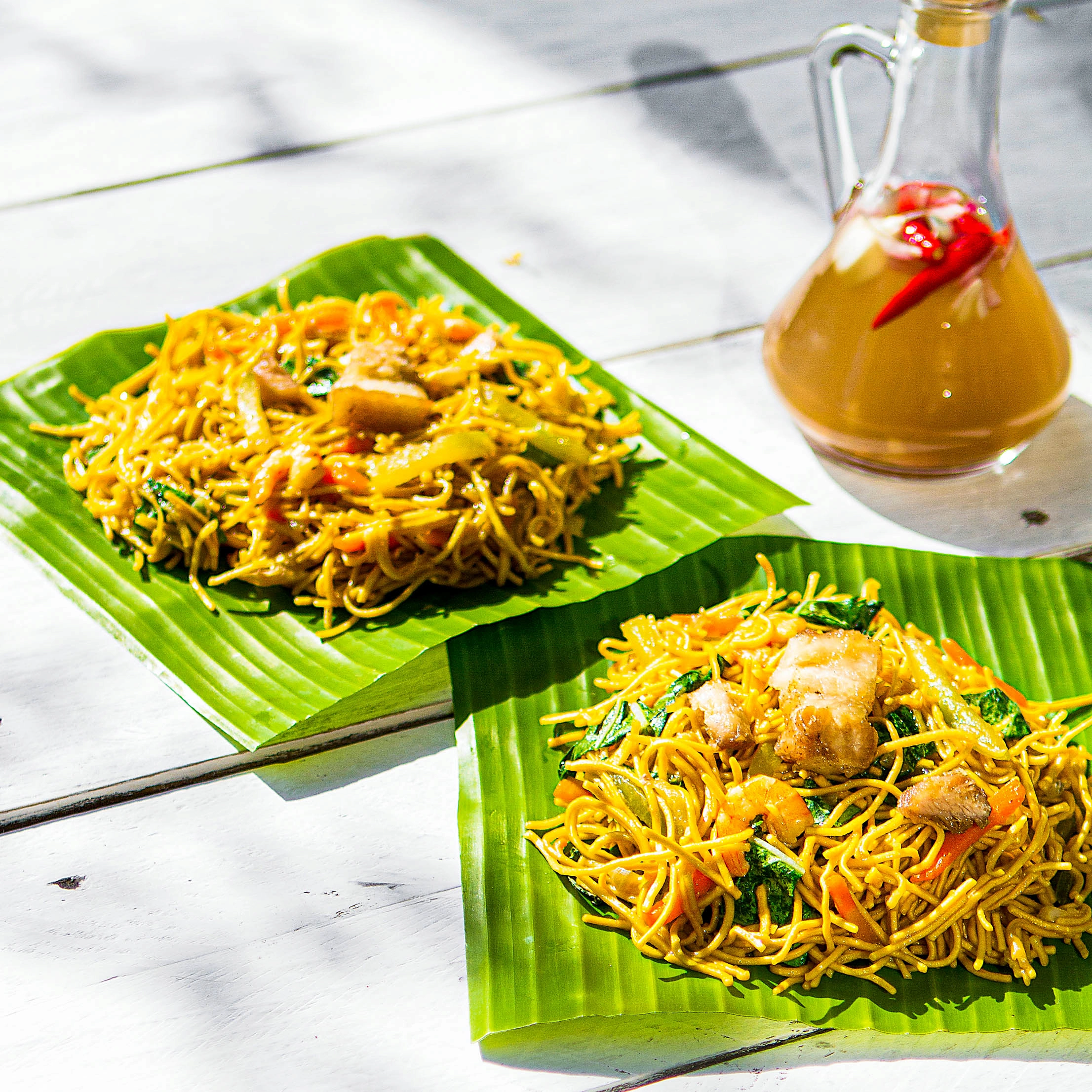
This Lucban delicacy is traditionally eaten straight out of a banana leaf without utensils. Habhab is the sound one makes when eating this dish.
Recipe developed by Nina Daza-Puyat and Chef Via S. Pelea.



Note: The information shown is Edamam's estimate based on available ingredients and preparation. It should not be considered a substitute for a professional nutritionist's advice.
Boil pork belly in water with salt and pepper, for at least an hour until tender. Remove pork and reserve broth. Slice pork and fry in oil until golden brown. Set aside.
In a large wok, heat cooking oil. Fry garlic (with peel) until golden then add chopped onion. Add celery and cook for another 1 to 2 minutes. Season with soy sauce, fish sauce, and pepper.
Toss in chayote and carrot strips. Add pork broth and shrimp broth and bring to a simmer over medium heat.
Add shrimps and pancit. Mix until noodles are softened. Cover with a lid and cook for 5 to 6 minutes, stirring every 2 minutes.
Toss in sliced bok choy and cook for another 1 to 2 minutes. Transfer to a serving platter lined with banana leaves and top with crispy fried pork. Serve with spicy vinegar on the side.
Pancit Habhab is unique because it uses miki Lucban, a dried flour noodle with a distinct texture, and is traditionally served on a banana leaf without utensils. Unlike other pancit versions that use calamansi, this Quezon specialty is strictly paired with spicy vinegar to balance the savory flavors. The name “habhab” refers to the traditional way of eating it by pushing the noodles directly into the mouth from the leaf.
To prevent soggy noodles, ensure your broth is at a rolling simmer before adding the pancit and cover the wok with a lid to steam them evenly. Stir every 2 minutes to distribute moisture, and remove the heat as soon as the noodles are softened but still have a slight “bite.” The noodles will continue to absorb the remaining liquid as they rest, reaching the ideal consistency just before serving.
If authentic miki Lucban is unavailable, the best substitute is dried pancit canton or high-quality egg noodles, though the texture will be slightly different. Avoid using bihon (rice sticks) or sotanghon, as they lack the starchiness required to hold the savory sauce typical of this dish. Regardless of the noodle used, always maintain the signature spicy vinegar pairing to keep the flavor profile authentic to Quezon province.
Pancit Habhab is best enjoyed fresh, but you can prep by boiling and frying the pork belly and slicing the vegetables a day ahead. Store leftovers in an airtight container in the refrigerator for up to 3 days. To reheat, add a small splash of water or broth to a pan over medium heat to loosen the noodles and restore their original moisture without making them greasy.
The secret to an authentic flavor profile lies in the combination of pork broth and shrimp broth rather than using plain water. Additionally, ensuring you fry the garlic with the peel on adds a rustic, toasted aroma characteristic of Lucban cooking. Don’t skip the step of browning the pork belly separately; the rendered fat and crispy texture are essential for providing the “umami” punch that defines the dish.