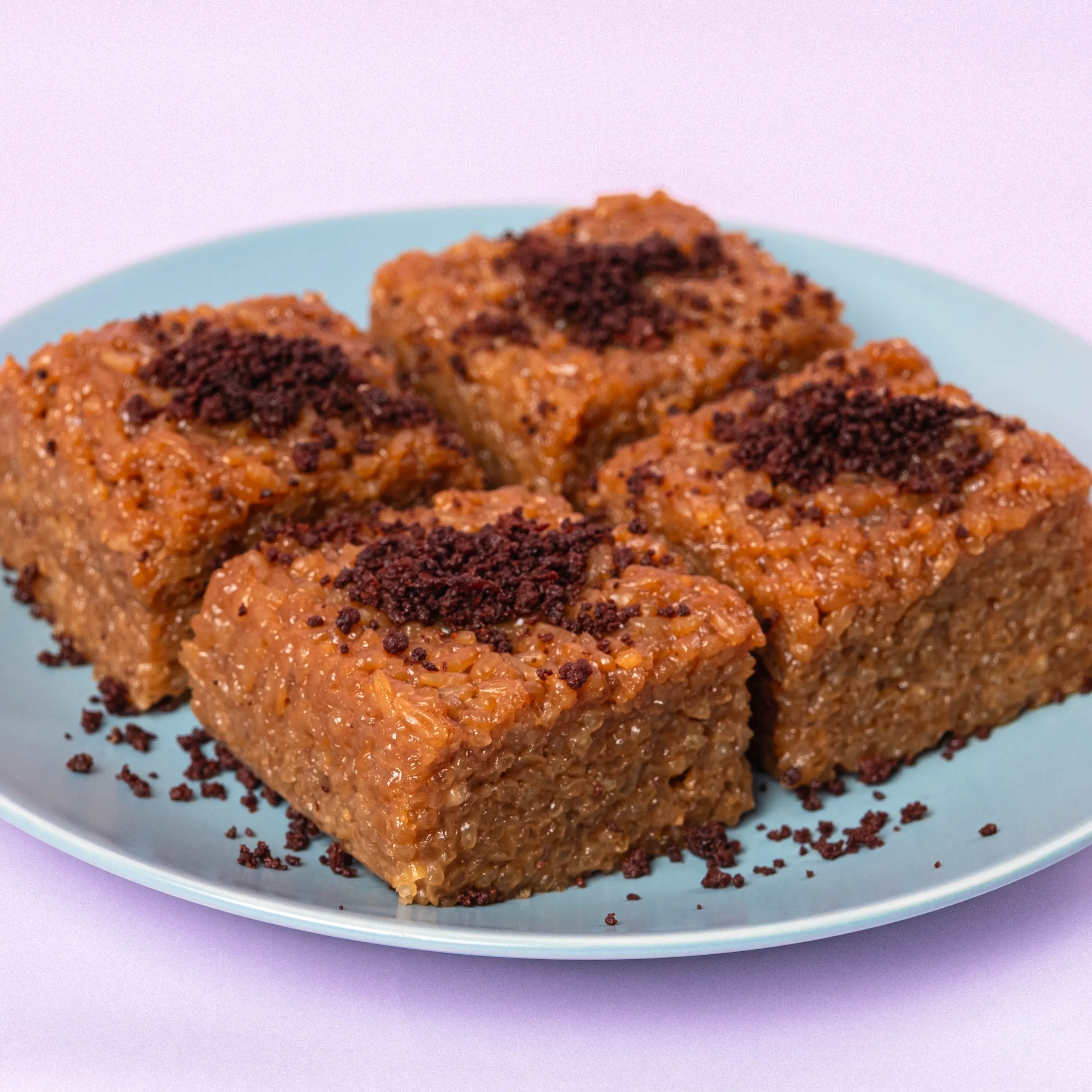


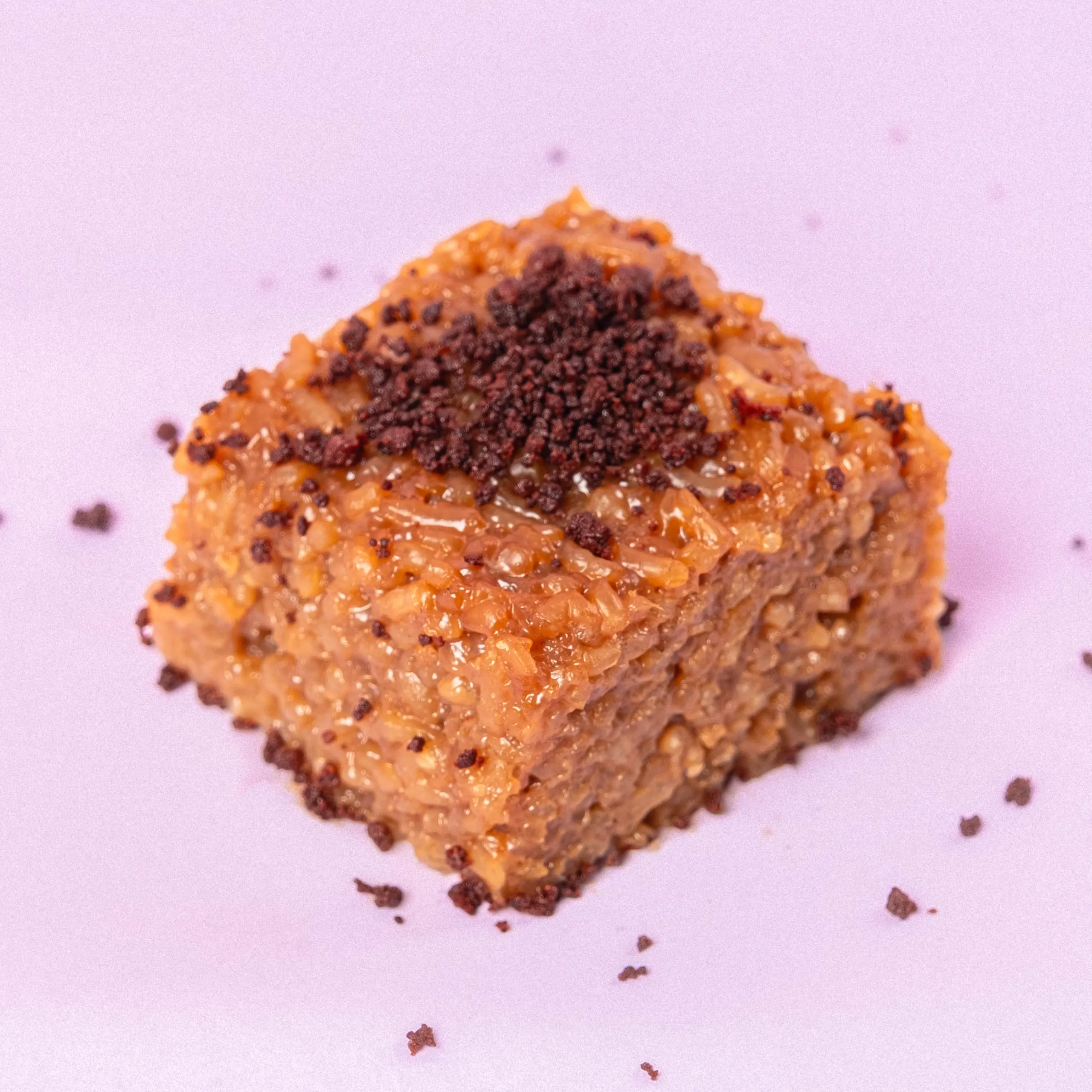
There are Filipino desserts that feel special because they are elaborate, and then there are desserts that feel special simply because they remind you of home. Sinukmani belongs to the second kind.
Made from glutinous rice, coconut milk, muscovado sugar, and a little salt, sinukmani is wonderfully simple. It doesn’t need a long list of ingredients or complicated decorations. What it needs is patience—the kind of patience that allows the rice to slowly absorb coconut milk and sugar until every grain becomes soft, chewy, rich, and beautifully coated.
For many families in the Southern Tagalog region, desserts like sinukmani are associated with celebrations, gatherings, merienda, and the simple pleasure of preparing something sweet for the people at the table. The combination of sticky rice and coconut is deeply familiar in Filipino cuisine, and sinukmani shows just how satisfying those humble ingredients can be.
The finishing touch is latik, made by cooking coconut milk until the coconut solids separate and turn golden brown. Those little toasted coconut curds add a wonderful contrast to the soft and sticky rice. You get creamy, caramel-like sweetness from the muscovado, richness from the coconut, chewy malagkit rice, and a lightly toasted flavor from the latik.
It is the kind of dessert that doesn’t try too hard—and perhaps that’s exactly why it is so comforting.
A Little History of Sinukmani
Sinukmani is a traditional Filipino rice delicacy associated with parts of Southern Tagalog, where coconut, rice, and sugar have long been important ingredients in regional cooking.
The exact preparation and name can vary depending on the locality and family tradition. Some versions are softer and more pudding-like, while others are cooked until quite firm and sticky. Some use white sugar, others use brown sugar or muscovado, and toppings can vary as well.
What remains consistent is the basic idea: glutinous rice is cooked with coconut and sugar until it becomes a rich, sticky rice delicacy.
This style of cooking reflects the abundance of ingredients historically available in many Philippine communities. Coconut trees have provided Filipino households with coconut water, meat, milk, cream, oil, and other products for generations. Rice, meanwhile, is one of the country’s most important staple foods.
Combining the two was both practical and delicious.
Sugar adds sweetness and helps transform the dish from a savory rice preparation into a dessert or merienda. In this version, muscovado sugar adds a deeper, almost caramel-like flavor and a beautiful brown color.
The preparation of latik is another example of Filipino culinary resourcefulness. Rather than discarding the coconut solids left behind after cooking coconut milk, they are slowly toasted until golden and fragrant.
That little topping can completely transform the finished dessert.
What Is Sinukmani?
Sinukmani is a sweet sticky rice delicacy cooked with coconut milk and sugar.
‘The primary ingredient is malagkit, or glutinous rice. Despite its name, glutinous rice does not contain gluten. The word refers to its naturally sticky texture when cooked.’
The rice absorbs coconut milk and sugar as it cooks, producing a dense, chewy, creamy, and sticky consistency.
Muscovado sugar gives the dish a darker color and a richer flavor than ordinary white sugar. A small amount of salt is important because it balances the sweetness and brings out the coconut flavor.
The dish is commonly finished with latik, the golden-brown coconut curds produced by slowly cooking coconut milk.
Recipe Tips for the Best Sinukmani
Use genuine glutinous rice
The rice is the heart of this dessert.
Look for rice labeled malagkit, glutinous rice, or sweet rice.
Regular long-grain rice will not produce the same chewy and sticky texture.
Use a heavy-bottomed pot
Sinukmani becomes very thick toward the end of cooking.
A heavy pot distributes heat more evenly and reduces the chance of the sugar and rice burning on the bottom.
Keep the heat low
Once the coconut milk and sugar are added, patience is more important than high heat.
Cooking slowly allows the rice to absorb the coconut flavor while preventing the sugar from caramelizing too aggressively.
Stir frequently
As the mixture thickens, it becomes increasingly prone to sticking.
Use a sturdy wooden spoon or heat-resistant spatula and scrape the bottom gently while stirring.
Add sugar gradually
Different brands of muscovado have different levels of moisture and intensity.
Start with the recommended amount, then adjust according to your preference.
Don’t overcook it
Remember that sinukmani continues to firm up as it cools.
If you cook it until it is extremely dry and stiff while still hot, it may become too hard once cooled.
Stop cooking when it is thick, sticky, and cohesive but still pleasantly soft.
Make the latik patiently
The latik is worth the extra effort.
Keep the heat controlled and stir as the coconut solids begin to brown.
Golden brown is what you’re looking for—not dark brown or black.
Burnt coconut curds will taste bitter.
Ingredient Substitutions
Malagkit rice
If you cannot find Filipino malagkit, use another type of glutinous or sweet rice.
Japanese mochigome or other Asian glutinous rice varieties can work well.
Avoid ordinary sushi rice or jasmine rice if you want the traditional sticky texture.
Muscovado sugar
Muscovado gives the dessert its distinctive deep sweetness, but you can substitute:
- Dark brown sugar
- Light brown sugar
- Coconut sugar
- White sugar
Brown sugar is the closest easy substitute in terms of flavor.
White sugar will produce a lighter-colored sinukmani with a cleaner sweetness.
Coconut milk
Freshly squeezed coconut milk is wonderful when available.
Canned full-fat coconut milk is much more convenient and works very well.
Avoid heavily diluted coconut beverages if you want a rich result.
Salt
A small amount of fine salt is best because it distributes evenly.
You can adjust the amount according to the sweetness of your sugar and your personal preference.
Latik
Latik is strongly recommended because it provides the traditional toasted coconut finish.
If you don’t have enough time to make it, toasted grated coconut can provide a similar nutty contrast, although it isn’t the same as authentic latik.
Understanding Malagkit Rice
The defining characteristic of sinukmani comes from glutinous rice.
Despite the name, glutinous rice contains no gluten. Its stickiness comes primarily from its starch composition, particularly its very high proportion of amylopectin.
When heated with water, the starch absorbs moisture and becomes soft and sticky.
This is why glutinous rice is used in so many Filipino delicacies, including various kinds of kakanin.
It also explains why ordinary rice cannot simply be substituted if you want the same texture.
Why Does Sinukmani Become So Sticky?
The answer is starch.
As malagkit rice cooks, its starch granules absorb liquid and swell.
Because glutinous rice contains a very high proportion of amylopectin, the cooked grains cling strongly to one another.
Then coconut milk and sugar are incorporated.
The result is a dense, cohesive mixture where the rice grains practically hold the entire dessert together.
As the sinukmani cools, it becomes firmer.
This is completely normal.
The Importance of Coconut Milk
Coconut milk does more than make sinukmani creamy.
It provides fat, aroma, and a subtle natural sweetness that complements the muscovado sugar.
The fat also helps create the rich mouthfeel that makes coconut-based Filipino desserts so satisfying.
For a particularly luxurious sinukmani, full-fat coconut milk is the best choice.
Why Muscovado Sugar Works So Well
Muscovado is a minimally refined sugar that retains more of the natural molasses character associated with sugarcane.
Compared with white sugar, it tends to have a deeper, more complex flavor.
That makes it especially good for coconut-based desserts.
In sinukmani, it gives the rice a beautiful brown color and a flavor reminiscent of caramel, molasses, and brown sugar.
If you prefer a lighter dessert, you can reduce the amount or substitute part of the muscovado with white sugar.
What Is Latik?
Latik is one of the most recognizable toppings in Filipino coconut-based cooking.
It is made by slowly cooking coconut milk until the liquid evaporates and the coconut solids separate from the coconut oil.
The solids are then cooked until they turn golden brown.
These toasted coconut curds are intensely aromatic and slightly crisp or chewy depending on how far they are cooked.
Latik provides an important textural contrast to soft sinukmani.
The rice is sticky and creamy.
The latik is toasted and slightly crunchy.
That contrast is part of the reason the dessert is so satisfying.
Health Benefits of the Ingredients
Sinukmani is a dessert, so it is best enjoyed as part of a balanced diet rather than treated as a health food. Still, its individual ingredients provide some useful nutrients.
Glutinous rice provides carbohydrates, which the body uses as an important source of energy. It is also naturally gluten-free.
Coconut milk contains fats and small amounts of minerals such as manganese and copper. Because it is calorie-dense, portion size matters if you’re monitoring overall calorie intake.
Muscovado sugar contains tiny amounts of minerals because it retains more molasses than highly refined white sugar, but it is still primarily added sugar. It should not be considered a significant source of vitamins or minerals.
Coconut contains fats and plant compounds, while the coconut solids used to make latik provide some fiber and minerals.
The main nutritional consideration is the amount of sugar and coconut fat in the finished dessert.
For a lighter version, you can reduce the sugar slightly and serve smaller portions.
Is Sinukmani Gluten-Free?
Yes, the basic ingredients in this recipe are naturally gluten-free.
Glutinous rice does not contain gluten despite its name.
However, if you have celiac disease or a serious gluten sensitivity, check packaged ingredients such as coconut milk and sugar for cross-contact or facility warnings where relevant.
How Sweet Should Sinukmani Be?
This is completely personal.
Some families prefer sinukmani quite sweet and rich, while others prefer the natural flavor of coconut and rice to remain more prominent.
The listed 1 1/2 cups of muscovado sugar creates a distinctly sweet dessert.
If you prefer something less sweet, start with around 1 cup and taste as you cook.
Remember that reducing sugar will also affect the final texture slightly because sugar contributes to the consistency of the finished mixture.
How to Store Sinukmani Properly
Allow freshly cooked sinukmani to cool before storing.
Transfer it to a clean, airtight container.
If you are storing the latik separately, keep it in its own airtight container. This helps preserve its texture and prevents it from becoming soft from the moisture in the rice.
Refrigerate the sinukmani at 4°C (40°F) or below.
For the best texture, store it in smaller portions rather than keeping one very large container.
When serving refrigerated sinukmani, you can allow it to sit at room temperature briefly or gently warm it.
If reheating, add a small splash of coconut milk or water if the rice has become excessively firm.
How Long Does Sinukmani Last?
Properly refrigerated sinukmani is best consumed within 3 to 4 days.
The texture will become firmer as it sits, particularly because the glutinous rice starch continues to firm up during refrigeration.
The latik is best stored separately and added just before serving.
If the dessert develops an unpleasant smell, mold, unusual discoloration, or other signs of spoilage, discard it.
Don’t taste food that appears spoiled simply to determine whether it is safe.
Can You Freeze Sinukmani?
Yes, sinukmani can be frozen, although freezing can change its texture.
If you want to freeze it, divide the cooled dessert into individual portions and place them in airtight freezer-safe containers.
For best quality, consume it within approximately 1 to 2 months.
Thaw it in the refrigerator.
When reheating, use gentle heat and add a small amount of coconut milk or water to restore some softness.
The texture may not be exactly the same as freshly cooked sinukmani, but it can still be enjoyable.
Store latik separately rather than freezing it together with the rice.
How to Reheat Sinukmani
Reheating is easy, but gentle heat is important.
For stovetop reheating, place the desired portion in a pan and add a splash of coconut milk or water.
Heat over low heat and stir gently until softened.
For microwave reheating, place a serving in a microwave-safe container and heat in short intervals, stirring between intervals.
Don’t overheat it, because the sugar can become extremely hot and the rice can dry out.
Add fresh latik after reheating.
How to Serve Sinukmani
Sinukmani can be served warm, at room temperature, or chilled.
For a traditional presentation, place a portion on a small plate or banana leaf and sprinkle golden latik over the top.
You can also add:
- Toasted coconut
- Fresh coconut strips
- A small drizzle of coconut cream
- Ripe mango on the side
- Fresh banana
- A cup of unsweetened coffee or tea
The combination of sweet sticky rice and slightly bitter coffee is particularly enjoyable.
Sinukmani for Special Occasions
Although it is simple enough for an ordinary merienda, sinukmani can also feel festive.
You can shape it into neat portions using a lightly greased mold or scoop it into small serving dishes.
For gatherings, make individual portions rather than placing the entire batch on one large plate.
A little latik sprinkled generously on top makes even a simple serving look special.
For Filipino celebrations, it can sit comfortably alongside other kakanin and native delicacies.
Common Mistakes to Avoid
Using regular rice
This is the biggest mistake.
Ordinary rice will not create the same sticky, chewy consistency.
Burning the sugar
High heat can cause the muscovado to scorch before the rice is properly cooked.
Keep the temperature low and stir regularly.
Making the latik too dark
Golden brown is ideal.
Once the coconut solids become very dark, they can develop a bitter, burnt taste.
Adding too much liquid
Too much water or coconut milk can leave the dessert loose and require excessive cooking to thicken it.
Follow the measurements initially, then make small adjustments if necessary.
Stopping too late
Remember that sinukmani becomes firmer as it cools.
The mixture should be thick and sticky when you turn off the heat—not completely dry.
A More Traditional Approach to Making It
If you have access to fresh coconut, you can make coconut milk from freshly grated coconut rather than using canned coconut milk.
Fresh coconut milk can have an especially fragrant flavor.
The first pressing is generally richer and creamier, while subsequent pressings are thinner.
For a truly traditional preparation, freshly squeezed coconut milk and freshly harvested glutinous rice create a beautiful combination.
However, canned coconut milk is perfectly practical for everyday cooking and can produce excellent results.
Traditional cooking doesn’t have to mean making every ingredient from scratch.
Sometimes the best version is simply the one that fits comfortably into your kitchen and your schedule.
Final Thoughts
Sinukmani is proof that a dessert doesn’t need dozens of ingredients to be memorable.
A few cups of glutinous rice, coconut milk, muscovado sugar, and a pinch of salt can create something deeply satisfying when they are cooked with patience. What makes the dish even more special is the latik. Those golden coconut curds may look like a small finishing touch, but they add an entirely different experience to every bite. The soft, sticky rice meets the toasted coconut, and suddenly a simple dessert becomes something much more layered and interesting. There is also something comforting about the way sinukmani represents Filipino cooking.
It is practical. It is generous. It makes use of ingredients that have long been important to Filipino households. And it doesn’t demand perfection. Maybe your sinukmani turns out a little softer than someone else’s. Maybe you prefer it darker and richer with muscovado. Maybe you like only a modest amount of sugar. Maybe you pile on the latik because that’s the best part for you. That’s perfectly fine.
Recipes like this have always lived through personal adjustments and family traditions. The important thing is to cook the rice until it is tender, give the coconut milk time to work its magic, balance the sweetness with salt, and be patient as the mixture thickens. Then comes the best part: spooning the warm, sticky rice onto a plate, scattering golden latik over the top, and sitting down with a cup of coffee while the kitchen still smells of toasted coconut.
Sinukmani is humble Filipino comfort food at its sweetest—chewy malagkit, fragrant coconut, deep muscovado sweetness, and golden latik coming together in one wonderfully nostalgic bite.