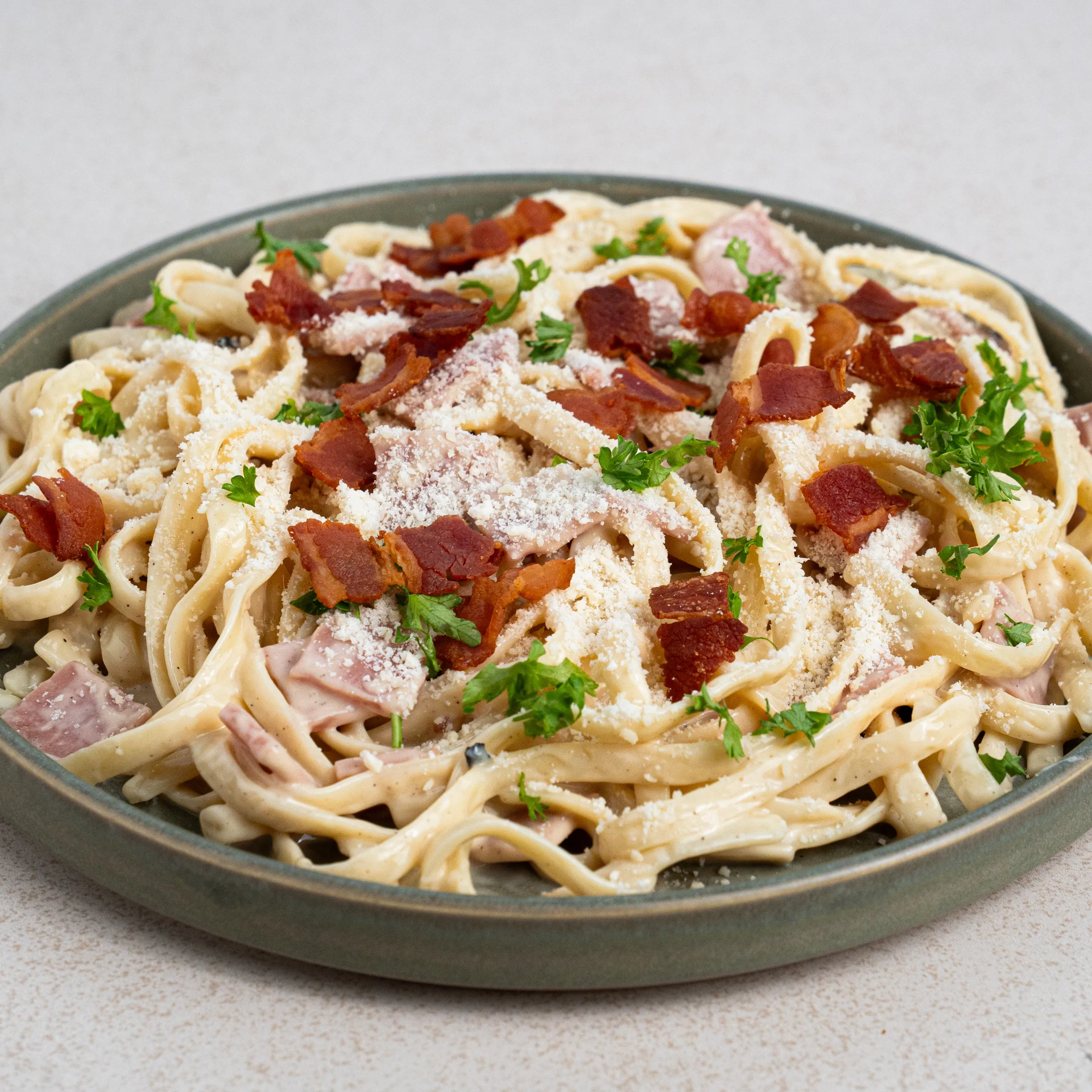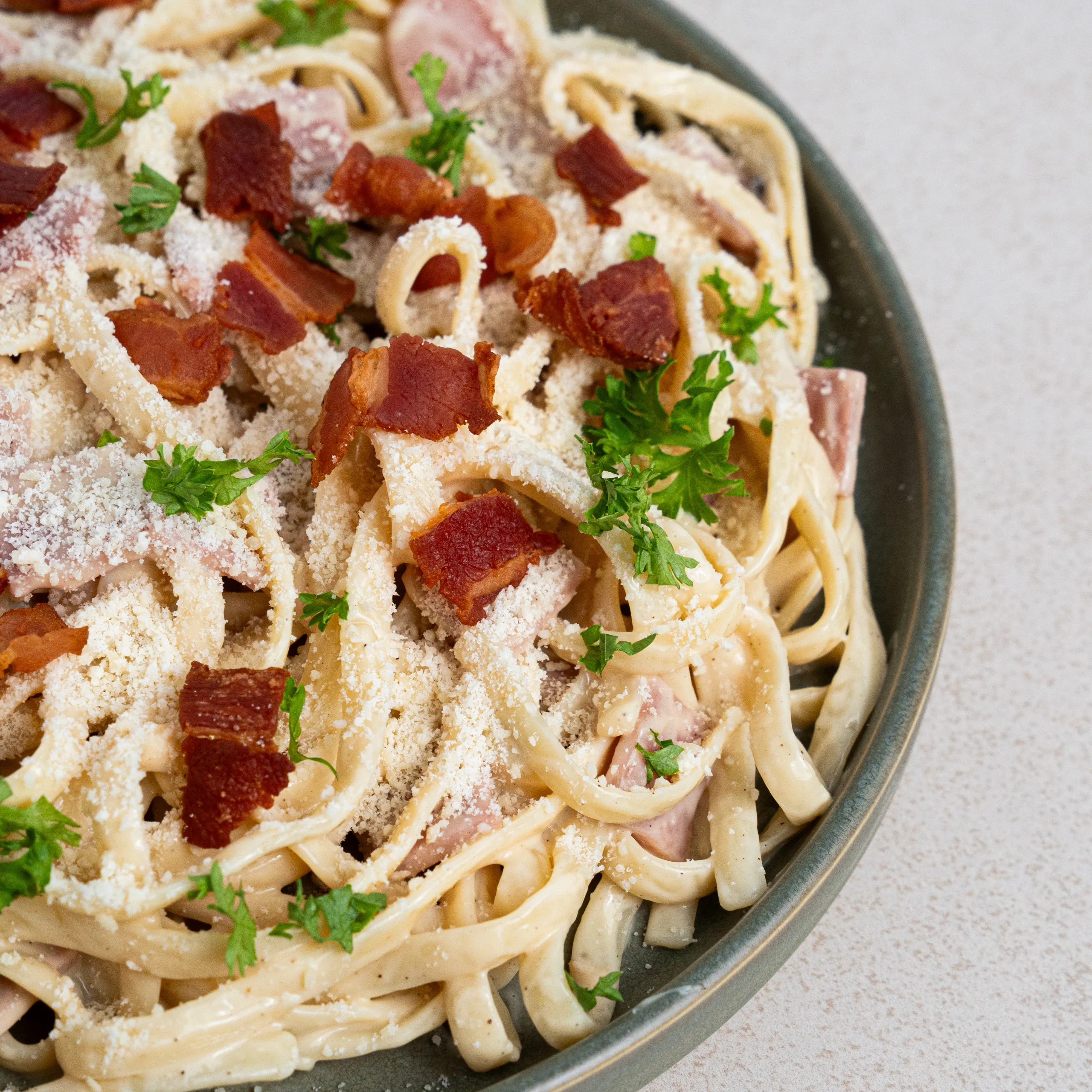
Few pasta dishes have become as familiar and well-loved in Filipino homes as Filipino-Style Carbonara. It is creamy, comforting, savory, and rich—the kind of food that often appears at birthday parties, family gatherings, Christmas celebrations, potlucks, and Sunday meals.
For many Filipinos, carbonara is more than just pasta. It is connected to occasions when the family comes together. You might see a large serving dish placed in the middle of the table, surrounded by other favorite Filipino foods. Someone reaches for the serving spoon, takes a generous portion, and immediately looks for the bacon and ham hiding among the creamy noodles.
What makes Filipino-style carbonara different from the traditional Italian dish is its rich, creamy sauce. Instead of relying primarily on eggs and cheese to create the sauce, Filipino versions commonly use all-purpose cream and evaporated milk. Bacon and ham add a salty, savory flavor, while Parmesan cheese gives the sauce a deeper cheesy taste.
The result is a pasta dish that is rich without being complicated.
It is also highly adaptable. Some families add mushrooms, hotdogs, chicken, or even ground meat. Others make the sauce extra cheesy or add more bacon. There is no single version that every Filipino family follows.
This recipe keeps the familiar creamy character of Filipino-style carbonara while using simple ingredients that are easy to find.
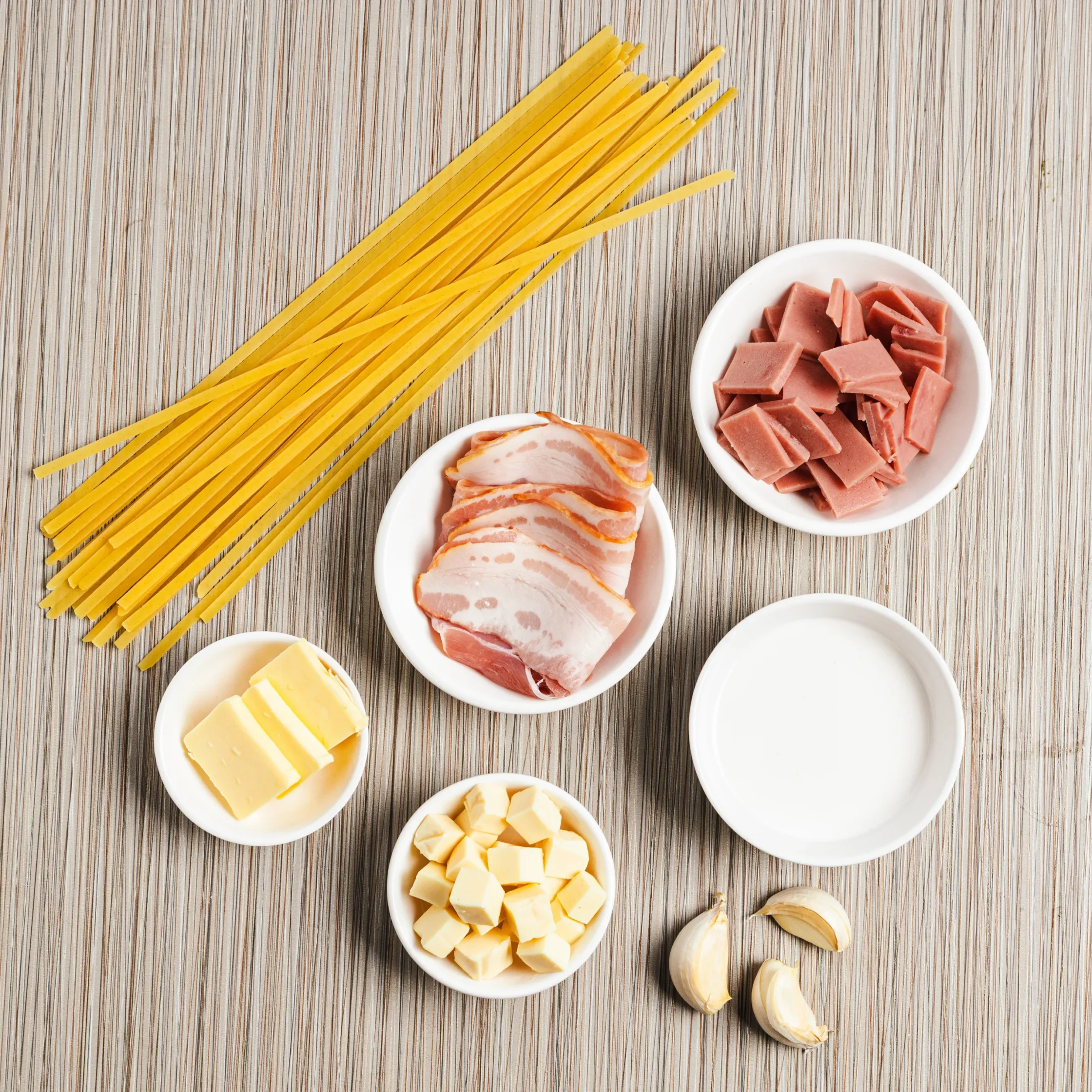
The combination of linguini, bacon, ham, onion, garlic, cream, evaporated milk, Parmesan, and butter creates a sauce that coats the pasta beautifully.
When finished with freshly ground black pepper and parsley, the dish becomes both comforting and presentable—perfect for an ordinary family dinner or a special gathering.
A Brief History of Carbonara
The original pasta alla carbonara comes from Italy and is traditionally associated with Rome and the Lazio region.
Traditional Italian carbonara is quite different from the Filipino version.
Classic carbonara generally uses pasta, eggs, hard cheese such as Pecorino Romano, cured pork such as guanciale, and black pepper. The creamy texture comes from the emulsification of eggs, cheese, pasta water, and rendered pork fat rather than from heavy cream.
Filipino-style carbonara developed differently.
As Western and international foods became more familiar in the Philippines, Filipino cooks adapted pasta dishes to suit local tastes and available ingredients. Cream-based sauces became particularly popular, and carbonara evolved into a richer, creamier dish.
All-purpose cream and evaporated milk became common ingredients because they are convenient, widely available, and produce a smooth sauce.
Ham is also frequently added alongside bacon, giving the Filipino version an additional layer of salty, savory flavor.
This adaptation is a good example of how food changes when it moves between cultures.
The Filipino version may not resemble traditional Roman carbonara exactly, but it has become its own recognizable dish within Filipino home cooking.
It is often served during celebrations because it is easy to prepare in large quantities and appeals to both children and adults.
Understanding the Ingredients
Linguini Pasta
Linguini is slightly flatter than spaghetti and works very well with creamy sauces.
Its surface provides enough area for the sauce to cling to each strand.
You can use other pasta shapes, but linguini gives this version a satisfying texture.
Bacon
Bacon provides saltiness, smokiness, fat, and a crisp texture.
It also releases flavorful fat as it cooks, which can be used to sauté the garlic and onion.
Ham
Ham adds another layer of savory flavor.
Using both bacon and ham gives Filipino-style carbonara its characteristic hearty taste.
Onion
Onion adds sweetness and depth.
When slowly sautéed, it becomes softer and sweeter, balancing the saltiness of the bacon and ham.
Garlic
Garlic provides the aromatic foundation of the sauce.
Six cloves give the dish a noticeable garlic flavor without necessarily overpowering the cream.
All-Purpose Cream
All-purpose cream is the main ingredient responsible for the thick, rich consistency commonly associated with Filipino carbonara.
It creates a smooth sauce that coats the noodles.
Evaporated Milk
Evaporated milk adds creaminess while making the sauce somewhat lighter in texture than using cream alone.
It also helps create enough sauce to coat a large amount of pasta.
Parmesan Cheese
Parmesan provides saltiness, nuttiness, and umami.
It also helps thicken the sauce.
Because Parmesan can already be salty, taste the sauce before adding additional salt.
Butter
Butter adds richness and helps create a smooth mouthfeel.
It also complements the bacon and cream.
Black Pepper
Black pepper provides warmth and prevents the creamy sauce from tasting flat.
Freshly ground black pepper is particularly aromatic.
Pasta Water
Reserved pasta water contains starch released from the pasta during cooking.
That starch can help loosen the sauce while also helping the sauce cling to the noodles.
Recipe Tips for Better Filipino-Style Carbonara
Don’t Overcook the Pasta
Overcooked pasta can become soft and break apart when mixed with the thick sauce.
Aim for al dente.
Save the Pasta Water
This is one of the easiest ways to improve the sauce.
The starchy water can loosen a sauce that has become too thick while helping it cling to the pasta.
Don’t Boil the Cream Aggressively
High heat can negatively affect the texture of a cream-based sauce.
Keep the heat at medium-low once the dairy ingredients are added.
Taste Before Adding Salt
Bacon, ham, Parmesan, and pasta water can all contribute salt.
Adding salt too early can result in an overly salty dish.
Use Freshly Ground Pepper
Freshly ground black pepper provides a stronger aroma and more noticeable flavor than pepper that has been sitting in a container for a long time.
Don’t Let the Sauce Sit Too Long Before Adding Pasta
Cream sauces become thicker as they cool.
Have your cooked pasta ready so that you can combine it with the sauce while the sauce is still warm and smooth.
Serve Immediately
Filipino-style carbonara is best when freshly made.
As it sits, the sauce thickens and the pasta absorbs more moisture.
If you need to serve it later, keep the sauce slightly looser than your final desired consistency.
Ingredient Substitutions
One of the strengths of Filipino-style carbonara is how easy it is to customize.
Linguini
You can substitute:
- Spaghetti
- Fettuccine
- Penne
- Fusilli
- Elbow macaroni
Different pasta shapes will change the eating experience but still work with the creamy sauce.
Bacon
If bacon is unavailable, you can use:
- Ham
- Pancetta
- Smoked bacon
- Cooked chicken
- Sausage
The flavor will change depending on the substitute.
Ham
You can leave out the ham and use additional bacon.
Alternatively, cooked chicken can provide additional protein.
All-Purpose Cream
You can use heavy cream or another cooking cream.
Keep in mind that different creams have different fat contents, so the final sauce may vary in richness.
Evaporated Milk
Regular milk can be used, although the sauce may be less rich.
You can also use a combination of milk and cream.
Parmesan
Other hard cheeses can be used if Parmesan is unavailable.
However, Parmesan provides a distinctive nutty and savory flavor, so substitutes will change the character of the sauce.
Butter
You can reduce or replace the butter with some of the rendered bacon fat.
This will give the sauce a stronger bacon flavor.
Parsley
Parsley can be replaced with:
- Spring onions
- Chives
- Basil
Or simply leave it out.
What Makes Filipino Carbonara Different?
The biggest difference is the sauce.
Traditional Italian carbonara does not rely on all-purpose cream and evaporated milk to create its characteristic creamy texture.
Filipino-style carbonara is much more heavily associated with a cream-based sauce.
This creates a dish that is:
- Richer
- Creamier
- Milder
- More indulgent
- Often more suited to large family gatherings
Filipino carbonara also commonly includes both bacon and ham.
This gives the dish a distinctly savory and hearty character.
Rather than thinking of Filipino carbonara as a “wrong” version of Italian carbonara, it is more useful to understand it as a Filipino adaptation of an internationally familiar pasta dish.
Food changes when it enters a new culture.
Ingredients, preferences, availability, and local cooking traditions all influence how a dish develops.
The Role of Pasta Water
Pasta water may seem like something that should simply go down the drain, but it is actually useful in sauce-making.
When pasta cooks, some starch moves into the water.
That starchy liquid can help emulsify and loosen a sauce.
In this recipe, pasta water is particularly useful because the cream, cheese, and butter can create a very thick sauce.
Adding a small amount of pasta water can make the sauce smoother and easier to distribute across the noodles.
It also prevents you from having to add large amounts of cream or milk simply to loosen the sauce.
Why Does Carbonara Become Thick When It Cools?
Cream-based pasta naturally becomes thicker as it cools.
The fats begin to firm up and the noodles continue absorbing moisture.
This is why carbonara often looks perfect immediately after cooking but becomes noticeably thicker after sitting on the table for a while.
If you know the pasta will sit before serving, keep the sauce slightly looser during cooking.
A small amount of reserved pasta water can also help restore the consistency when reheating.
Health Benefits and Nutritional Considerations
Filipino-style carbonara is best thought of as a rich comfort food rather than a light meal.
However, it still contains useful nutrients.
Protein
Bacon, ham, and Parmesan provide protein.
Chicken can also be substituted for some of the processed meats if you want a different protein source.
Carbohydrates
The linguini provides carbohydrates, which are an important source of energy.
Calcium
Milk and Parmesan contribute calcium, which is important for maintaining healthy bones and teeth.
Fat
Cream, butter, bacon, and cheese contribute fat.
Fat helps create the satisfying texture and flavor of the dish, but the overall recipe can be relatively high in saturated fat.
Sodium
Bacon, ham, Parmesan, and salt can make carbonara relatively high in sodium.
If you are trying to reduce sodium, consider:
- Using less bacon
- Choosing lower-sodium ham
- Reducing added salt
- Using less Parmesan
- Adding vegetables for more volume
Adding Vegetables
You can make the meal more balanced by serving carbonara with vegetables such as:
- Broccoli
- Green beans
- Carrots
- Peas
- Mushrooms
- Spinach
- A fresh salad
This does not change the identity of the dish but adds more variety to the meal.
How to Store Filipino-Style Carbonara Properly
Because this recipe contains cooked pasta, dairy, bacon, and ham, proper storage is important.
Do not leave the finished carbonara at room temperature for an extended period.
Transfer leftovers to a clean, airtight container and refrigerate promptly.
Refrigerator
Store carbonara in the refrigerator and consume it within approximately 3–4 days for best quality and food safety.
The sauce will become thicker as it chills.
Freezer
Carbonara can technically be frozen, but the creamy sauce may change texture after thawing.
The dairy-based sauce may become slightly separated or grainy.
For the best quality, freshly made carbonara is preferable.
If you do freeze it, divide it into individual portions and place them in freezer-safe containers.
Use frozen portions within approximately 1–2 months for better quality.
Reheating
Reheat gently over low to medium-low heat.
Add a small amount of milk, cream, or reserved pasta water to loosen the sauce.
Stir frequently.
Avoid extremely high heat because it can make the sauce oily or cause the dairy to separate.
Microwave Reheating
If using a microwave, heat in short intervals.
Stir between intervals.
Adding a small splash of milk can help restore creaminess.
Serving Suggestions
Serve the carbonara immediately after tossing the pasta with the sauce.
Place it on a large serving platter for family-style meals or portion it onto individual plates.
Finish with chopped parsley and additional black pepper.
A light sprinkling of Parmesan on top can make the presentation more appealing.
For celebrations, Filipino-style carbonara is often served alongside other party favorites.
It works particularly well with fried or grilled dishes because the creamy pasta provides a softer contrast.
For an everyday meal, simply serve it with a fresh salad or steamed vegetables.
Final Words
Filipino-style carbonara is a wonderful example of how a dish can travel across cultures and become something new.
Its roots may be connected to Italian pasta, but the version many Filipinos know and love has developed its own personality.
The creamy sauce, evaporated milk, bacon, ham, Parmesan, garlic, and butter create a dish that is rich, familiar, and deeply satisfying.
It is the kind of food that can turn a simple family dinner into something that feels like an occasion.
And perhaps that is why Filipino carbonara has become so popular.
It is not complicated.
It does not require rare ingredients.
It can be prepared in a large batch.
It can be adjusted to suit different tastes.
Most importantly, it is meant to be shared.
Whether it is sitting on a dining table during a birthday celebration, being served at a Christmas gathering, or simply being prepared on a quiet evening at home, carbonara has a way of bringing people to the table.
The secret to making a good batch is not just following the measurements. It is learning how to balance the richness of the cream with the saltiness of the bacon and ham, the nuttiness of Parmesan, the aroma of garlic, and the warmth of black pepper.
Keep the pasta al dente, avoid overheating the cream, save some pasta water, and taste before adding extra salt.
Most importantly, make it your own.
Filipino-style carbonara is more than a creamy pasta dish—it is a comforting reminder that food can travel, change, and become part of a new family’s traditions while still bringing people together around the same table.