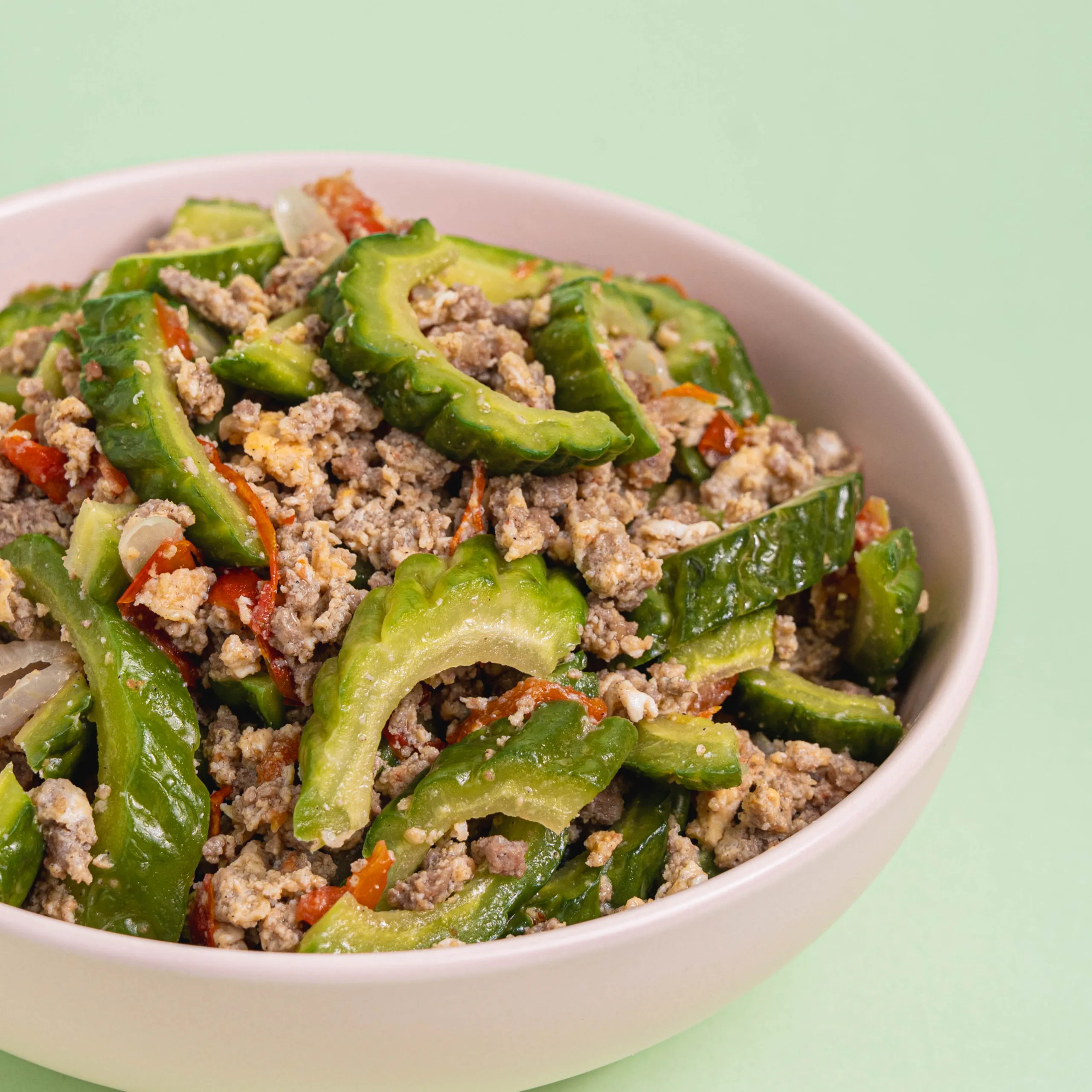


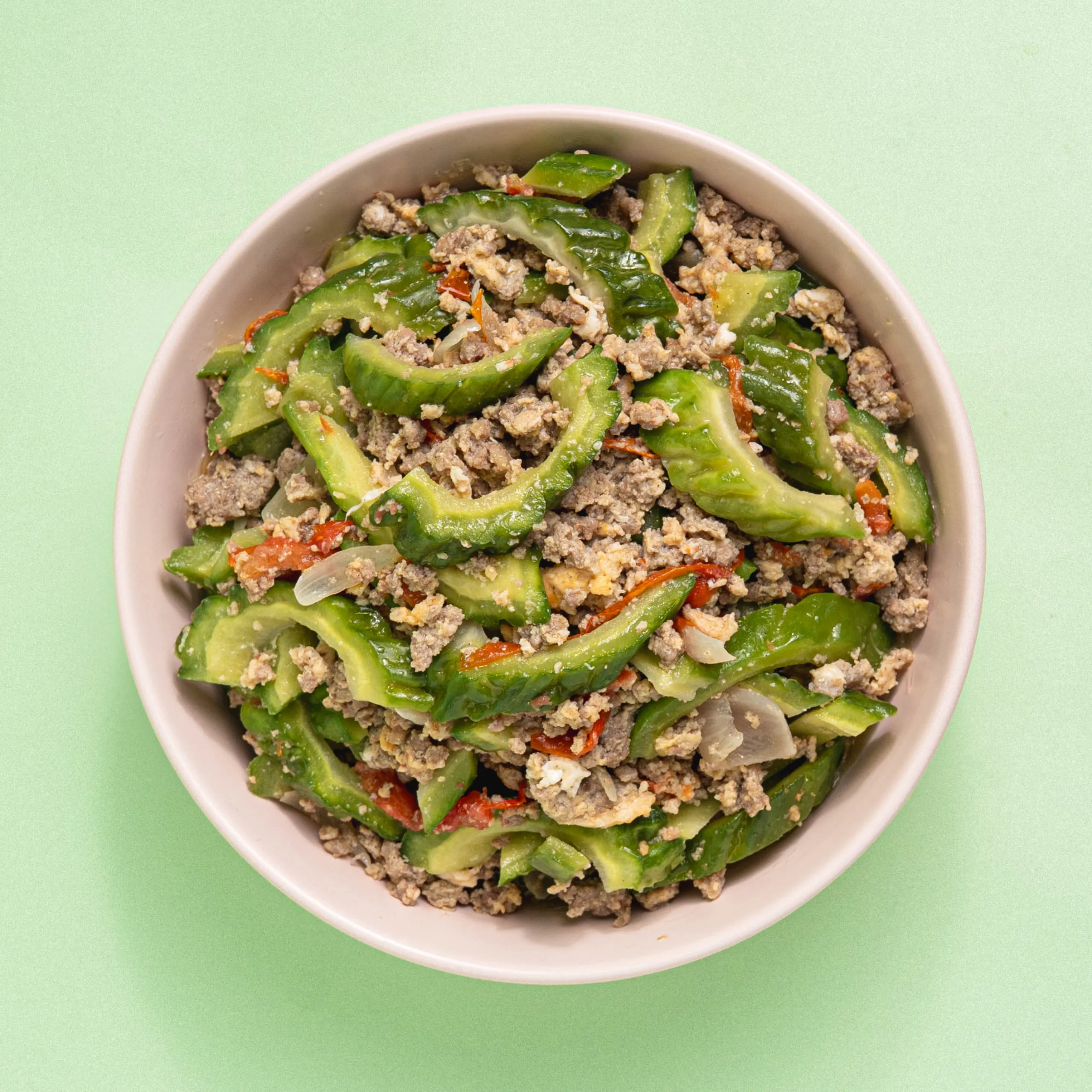
Ginisang Ampalaya is a classic Filipino vegetable dish made with sliced bitter melon (ampalaya) sautéed with garlic, onions, tomatoes, and eggs. Despite its naturally bitter taste, ampalaya becomes flavorful and satisfying when cooked with simple ingredients that balance its unique flavor. Known for being both nutritious and delicious, ginisang ampalaya is a popular home-cooked dish in the Philippines, often enjoyed with steamed rice as part of a healthy and comforting meal.
A Little History of Ginisang Ampalaya
Ampalaya, also known as bitter melon or bitter gourd, has long been used in Filipino cooking and traditional food practices. It is a tropical vine belonging to the cucumber and squash family and is widely grown throughout Asia.
In the Philippines, ampalaya appears in many dishes, but ginisang ampalaya is perhaps one of the most familiar preparations. The Filipino word ginisa refers to sautéing ingredients, usually beginning with aromatics such as garlic, onion, and tomatoes. This simple cooking method is a foundation of many Filipino home dishes.
The combination of ampalaya and eggs is particularly popular. Adding meat, such as ground beef or pork, makes the dish heartier and turns it into a satisfying main course. Different households have their own way of preparing it—some use shrimp, others add tomatoes generously, while some prefer a very simple egg-and-ampalaya version.
Recipe Tips
- Soaking the sliced ampalaya in salted water helps mellow the bitterness. Avoid squeezing the ampalaya too hard after soaking, as this can affect texture.
- Do not overcook the ampalaya to keep it slightly crisp and less bitter.
- Use ripe tomatoes for a slightly sweeter flavor balance.
- Stir gently after adding eggs to create soft egg curds throughout the dish.
How to remove the bitterness in ampalaya
Removing the bitterness in ampalaya starts cleaning it well. You have to remove all the seeds first, and then scrape off the white, spongy pith inside. To do this, cut the ampalaya in half, and using a spoon, scrape off the seeds and pith completely. Rinse it off and then you can proceed with cutting the piece as needed.
You can follow this up with two more methods:
- Salt the ampalaya. Put the ampalaya pieces in a bowl. Sprinkle some salt on it and let it sit for 15 to 20 minutes. This will draw out the water and bitterness from the ampalaya. Rinse it well to remove all the salt.
- Soak in a warm, water solution. Mix some salt into the bowl of ampalaya with warm water, and then let it sit for a few minutes. Rinse well, and use as needed.
What Makes Ampalaya Special?
Ampalaya has a distinctive bitter taste caused in part by naturally occurring compounds found in the vegetable. That bitterness can be quite strong when raw, but cooking and proper preparation can make it much more approachable.
Its flavor also makes it a great partner for richer ingredients. The ground beef adds savory fat and protein, the eggs provide softness and richness, while tomatoes contribute acidity and a touch of natural sweetness. Garlic, onion, and fish sauce bring everything together.
This is also a good example of how Filipino cooking often balances contrasting flavors rather than trying to make every ingredient taste mild. Bitterness isn’t necessarily something to eliminate—it can be part of the dish’s character.
Is Ginisang Ampalaya Healthy?
Ginisang ampalaya can be a nutritious addition to a balanced diet. Ampalaya is naturally low in calories and provides fiber, vitamin C, folate, and other nutrients. It also contains various plant compounds that have been studied for their potential health effects.
The eggs and ground beef contribute high-quality protein, while tomatoes provide nutrients and antioxidant compounds such as lycopene. Garlic and onions also contain beneficial plant compounds.
However, the nutritional profile depends on preparation. Ground beef can add considerable saturated fat depending on the cut, while patis and salt contribute sodium. If you’d like a lighter version, choose lean ground beef, use less oil, and season gradually.
It’s also worth being careful with claims that ampalaya “cures” diabetes or other diseases. Although bitter melon has been researched for its potential effects on blood sugar, eating ginisang ampalaya should not be considered a replacement for prescribed medical treatment.
How to Serve It
Ginisang ampalaya is best served immediately while the eggs are still soft and the vegetables retain some bite. A bowl of freshly steamed rice is the natural companion.
Because the dish has a strong savory and slightly bitter character, it also works nicely with other simple Filipino dishes. You can serve it alongside fried or grilled fish, roasted chicken, or another protein for a larger family meal.
If you’re new to ampalaya, start with a smaller serving and plenty of rice. The bitterness becomes much more balanced when combined with the savory beef, egg, and rice.
Final Thoughts
Ginisang ampalaya is a wonderful example of Filipino home cooking: uncomplicated ingredients, straightforward preparation, and flavors that don’t try to hide where they came from. The ampalaya brings bitterness, the beef brings savory richness, the eggs add softness, and the tomatoes, garlic, and onion give the dish brightness and aroma.
It may take a few attempts to find your favorite level of bitterness, but that’s part of learning to appreciate ampalaya. You can blanch it, salt it, slice it thinly, or simply embrace its natural character.
In the end, ginisang ampalaya isn’t about making bitter melon taste like something else. It’s about balancing its bitterness with ingredients that make it shine. Served with hot rice and enjoyed as part of a simple family meal, it becomes a comforting Filipino classic that’s both humble and satisfying.