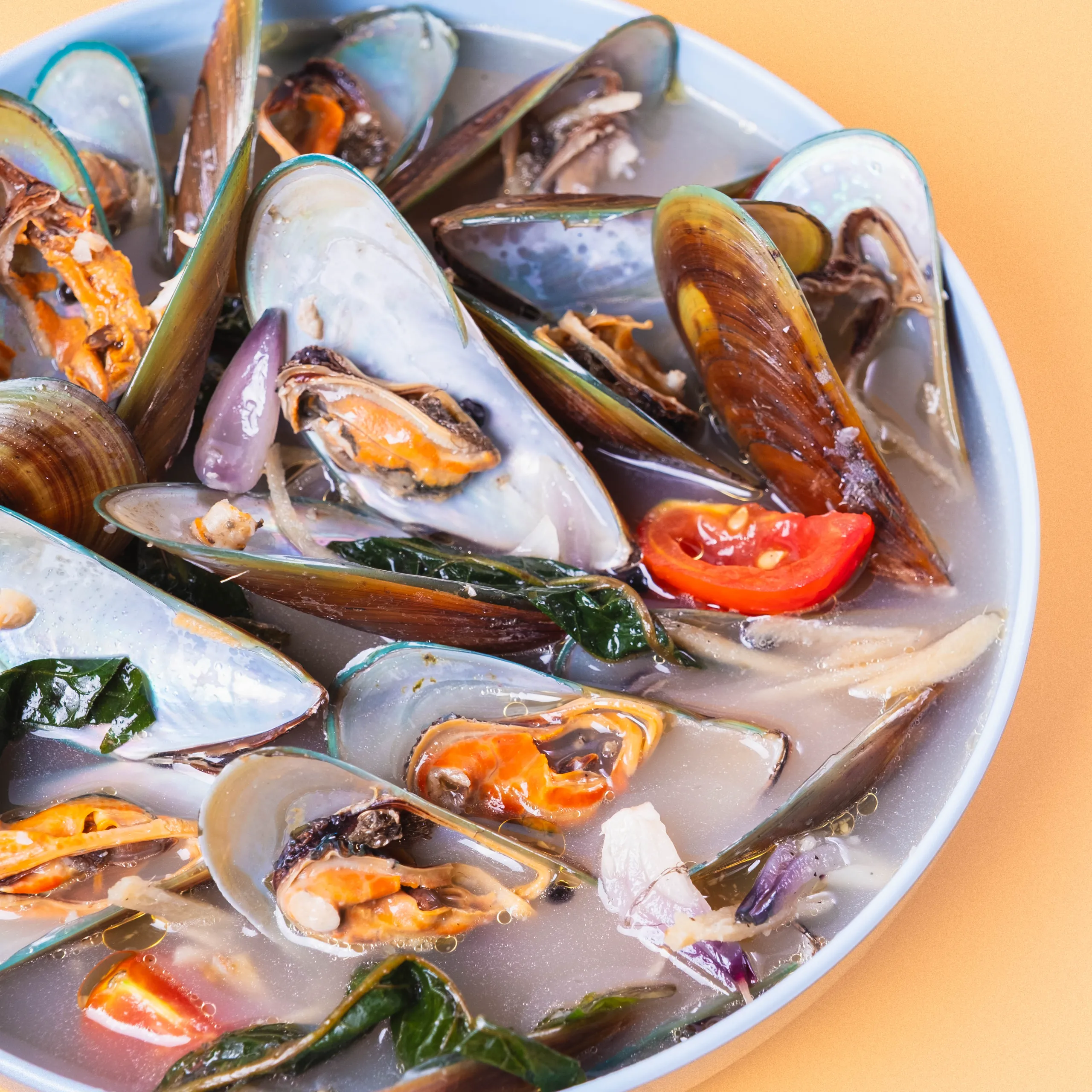


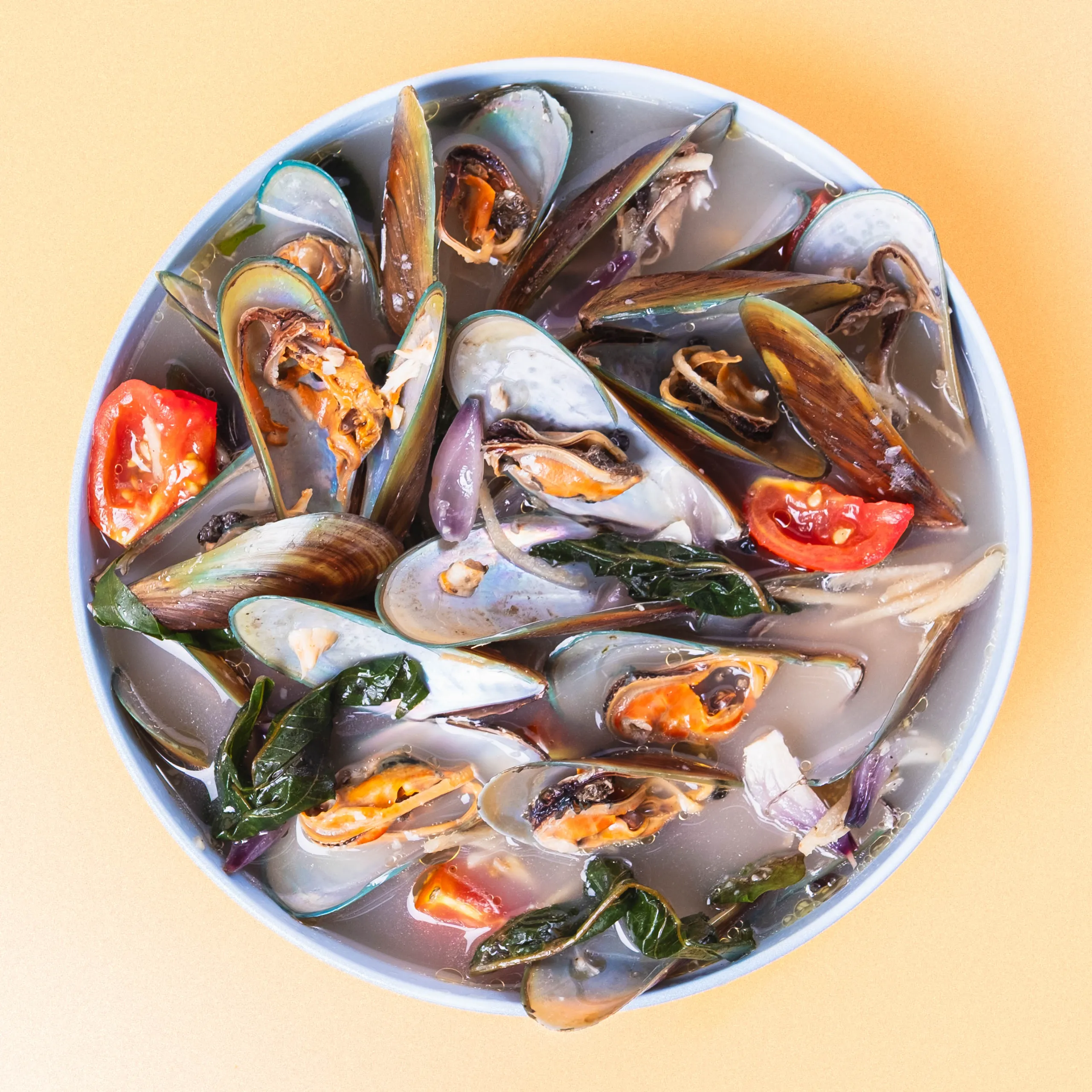
Sinabawang tahong is a simple Filipino mussel soup that brings together the fresh, briny flavor of seafood with the warmth of ginger, garlic, onion, and tomatoes. It is the kind of dish that does not need a complicated list of ingredients to feel special. When fresh tahong is simmered in a fragrant broth, the natural sweetness of the mussels slowly becomes part of the soup, creating a light but deeply satisfying meal.
For many Filipino families, seafood soups like this are especially enjoyable because they are comforting without feeling overly heavy. The broth is warm and aromatic, while the mussels provide tender pieces of seafood that are naturally rich in flavor. Ginger gives the soup a gentle warmth and helps balance the seafood, while tomatoes add a mild acidity and freshness.
The optional addition of Sprite or 7-Up may sound unusual, but sweet carbonated drinks are sometimes used in Filipino cooking to add a subtle sweetness to savory dishes. In this recipe, the soda is optional, so you can easily leave it out if you prefer a more traditional, clean-tasting seafood broth.
Sinabawang tahong is also wonderfully quick compared with many meat-based Filipino soups. Once the mussels are cleaned, they cook relatively quickly. This makes the dish suitable for a weekday meal when you want something warm and flavorful without spending hours in the kitchen.
Served with steaming rice, this soup becomes a comforting meal that is both simple and satisfying. It is especially enjoyable when eaten fresh, while the broth is hot and the mussels are tender.
History and Cultural Background
The Filipino word tahong refers to mussels, a type of shellfish that is widely consumed in the Philippines. Because the country is an archipelago surrounded by productive coastal waters, seafood has naturally played an important role in Filipino food culture for generations.
Mussels are relatively accessible compared with some other types of seafood, and they can be prepared in many ways. They may be steamed, grilled, cooked in coconut milk, incorporated into noodle dishes, or simmered in a simple broth such as sinabawang tahong.
The tradition of cooking seafood in a flavorful broth is deeply connected to Filipino home cooking. Before modern refrigeration became widespread, coastal communities relied heavily on freshly caught seafood and straightforward cooking techniques that could highlight the natural flavors of the catch.
The word sinabawan relates to cooking something with plenty of liquid or broth. Sinabawang tahong therefore describes mussels prepared in a soup-like broth.
The exact ingredients can vary from household to household. Some cooks use more ginger, others add leafy vegetables, and some include green chilies for heat. Others may add lemongrass, spring onions, or other locally available ingredients.
The use of tomatoes in this version provides a mild sourness and sweetness that complements the mussels. Ginger, garlic, and onion create the aromatic foundation, while fish sauce provides savory depth.
The optional Sprite or 7-Up is an example of how Filipino home cooking continues to evolve. Modern cooks sometimes incorporate familiar commercial ingredients into traditional-style dishes, adapting recipes according to family preference.
Because of this, there is no single formula that defines every bowl of sinabawang tahong. What remains consistent is the idea of fresh mussels cooked in a fragrant broth that is meant to be enjoyed while hot.
Understanding the Ingredients
Tahong
Tahong, or mussels, is the star of the dish.
Fresh mussels have a naturally briny, slightly sweet flavor. When cooked in broth, some of their juices are released into the liquid, giving the soup a distinctive seafood character.
Mussels are also relatively quick to cook, which is why they should generally be added after the broth and aromatics have been prepared.
Garlic
Garlic provides a savory, aromatic foundation.
Sautéing it gently in oil releases its fragrance and gives the broth a more rounded flavor.
Onion
Onion contributes sweetness and depth.
As it cooks, it softens and releases natural sugars that help balance the saltiness of the fish sauce and seafood.
Ginger
Ginger is especially useful in seafood soups because its warm, aromatic flavor complements the natural brininess of shellfish.
Julienned ginger also distributes its flavor throughout the broth without becoming too overpowering.
Black pepper
Black pepper provides gentle heat and a warm aroma.
It also works well with seafood without masking the natural flavor of the mussels.
Fish sauce
Fish sauce adds saltiness and umami.
Because mussels naturally contain some saltiness from the sea, it is best to add fish sauce carefully and taste the broth before adding additional salt.
Water
Water forms the base of the soup.
As the mussels cook, they release their natural juices, which enrich the broth.
Sprite or 7-Up
This ingredient is optional.
A small amount can contribute sweetness and help balance the salty and savory elements of the broth.
If you prefer a more straightforward seafood soup, you can simply leave it out.
Tomatoes
Tomatoes add acidity, freshness, and natural sweetness.
Their flavor is particularly useful in balancing the richness and saltiness of the mussels and fish sauce.
Pepper leaves
Pepper leaves add a fresh, slightly aromatic quality.
They also contribute a leafy element to the soup and can make the finished dish more colorful and inviting.
Recipe Tips
• Use fresh mussels whenever possible. Fresh shellfish will give the broth a much better flavor.
• Clean the shells thoroughly. Sand and dirt can ruin an otherwise excellent soup.
• Remove the mussel beard. This improves the eating experience and makes the mussels cleaner.
• Discard cracked shells. Damaged shellfish should not be used.
• Do not overcook mussels. They can become tough and rubbery if left simmering too long.
• Add fish sauce gradually. Mussels already have a naturally briny flavor.
• Taste before adding salt. This prevents the broth from becoming excessively salty.
• Use plenty of ginger. Ginger helps create the characteristic warm, aromatic quality of many Filipino seafood soups.
• Do not burn the garlic. Lightly golden garlic gives the best flavor.
• Add leafy greens near the end. This helps maintain their color and freshness.
• Use the soda sparingly. It is optional and should complement the savory broth rather than dominate it.
• Serve immediately. Mussels are at their best when freshly cooked.
• Keep the broth hot. The warmth helps bring out the aroma of the ginger, tomatoes, and seafood.
• Serve with rice. Plain steamed rice is ideal because it absorbs the flavorful broth.
• Prepare only what you can eat. Freshly cooked shellfish is best enjoyed immediately.
Ingredient Substitutions
Tahong
If fresh mussels are unavailable, frozen mussels can be used.
Follow the package instructions for thawing and cooking, and be aware that frozen mussels may release a slightly different amount of liquid into the broth.
Pepper leaves
If pepper leaves are unavailable, you can use pechay, spinach, kangkong, or other mild leafy greens.
The flavor will be different, but the vegetables will still work well in the soup.
Ginger
Fresh ginger is strongly recommended, but if necessary, a small amount of ground ginger can be used.
However, fresh ginger provides a brighter and more aromatic flavor.
Tomatoes
Fresh tomatoes can be replaced with canned diced tomatoes.
You can also use a small amount of tomato sauce, although this will make the broth more tomato-forward.
Fish sauce
Soy sauce can substitute for fish sauce, although it will give the broth a darker color and a different flavor.
For a seafood-forward broth, you may prefer to use less soy sauce and rely on the natural flavor of the mussels.
Sprite or 7-Up
This ingredient can simply be omitted.
If you want a slight sweetness without soda, a small amount of sugar can be used.
Black pepper
Freshly ground black pepper can be used instead of pre-ground pepper for a stronger aroma.
White pepper is another option if you prefer a milder pepper flavor.
Knowledge About Sinabawang Tahong
Sinabawang tahong is a good example of how Filipino cooking can make the natural flavor of seafood the centerpiece of a dish.
Unlike heavily seasoned seafood preparations, this soup does not need a thick sauce or large amount of spices. The mussels themselves contribute much of the broth’s character.
As the shells open, juices from the mussels mix with the water, fish sauce, tomatoes, and aromatics. This creates a broth that is both light and flavorful.
The ginger is particularly important. Seafood can have a strong natural aroma, and ginger provides a clean, warm fragrance that complements it beautifully.
Garlic and onion contribute savory sweetness, while tomatoes provide acidity. Together, these ingredients create a simple but layered flavor profile.
Another interesting part of the recipe is the use of leafy vegetables. Pepper leaves provide more than color; they introduce an aromatic, slightly peppery character that works naturally with the broth.
The optional Sprite or 7-Up reflects the adaptability of Filipino cooking. Sweet beverages are sometimes incorporated into savory recipes as a way to create a subtle balance between sweet and salty flavors.
However, the soda is by no means necessary. A good bowl of sinabawang tahong can be delicious with nothing more than mussels, ginger, garlic, onion, tomatoes, fish sauce, and water.
Health Benefits and Nutritional Information
Sinabawang tahong can be a nutrient-rich meal, particularly because mussels are naturally packed with protein and several important vitamins and minerals.
The exact nutritional value will depend on the serving size, the amount of fish sauce, and whether the optional soda is included.
Mussels
Mussels are an excellent source of high-quality protein.
They also contain important nutrients such as vitamin B12, iron, selenium, zinc, and omega-3 fatty acids.
Vitamin B12 is important for normal nerve function and the production of red blood cells.
Iron contributes to normal oxygen transport in the body, while selenium supports antioxidant defenses and normal thyroid function.
Mussels are also generally considered a nutrient-dense seafood because they provide substantial nutrition relative to their calorie content.
Ginger
Ginger provides aromatic compounds that contribute its characteristic warmth and flavor.
It has also been traditionally valued in many food cultures for its digestive and soothing qualities.
Garlic
Garlic contributes flavor along with various sulfur-containing plant compounds.
Because it provides strong flavor, it can make the dish satisfying without requiring large amounts of additional fat.
Onion
Onions provide vitamin C, fiber, and naturally occurring plant compounds.
They also contribute natural sweetness as they cook.
Tomatoes
Tomatoes provide vitamin C, potassium, and lycopene.
Lycopene is a naturally occurring carotenoid found in red fruits and vegetables.
Pepper leaves
Pepper leaves contribute vitamins, minerals, fiber, and plant compounds depending on the specific variety used.
They also add vegetables to the meal without significantly increasing its calorie content.
Fish sauce
Fish sauce provides umami and saltiness but can be high in sodium.
If you are watching your sodium intake, use less fish sauce and rely more on the natural flavor of the mussels and aromatics.
Sprite or 7-Up
The soda is optional and contributes added sugar without providing significant nutritional value.
If your goal is a lighter version of the dish, leaving it out is an easy adjustment.
Food Safety and Mussel Preparation
Because mussels are shellfish, proper handling is particularly important.
Purchase mussels from a reliable source and keep them properly refrigerated before cooking.
Clean the shells thoroughly and remove debris and the beard where necessary.
Discard mussels with cracked or badly damaged shells.
Before cooking, live mussels may be slightly open, but they should generally close when gently tapped. Mussels that remain open and unresponsive should be discarded.
After cooking, discard mussels that remain tightly closed.
Always cook shellfish thoroughly and avoid consuming mussels that appear spoiled or have an unusual odor.
If you have a known shellfish allergy, do not consume this dish.
Final Words
Sinabawang tahong is a beautiful example of how Filipino cooking can turn a handful of simple ingredients into something that feels deeply comforting. The dish does not rely on a complicated sauce or an overwhelming number of seasonings. Instead, it allows the mussels to remain the star while garlic, onion, ginger, tomatoes, and pepper build a warm and aromatic broth around them.
There is something especially satisfying about watching the mussels open in the simmering broth. What begins as a simple pot of water and aromatics gradually becomes a fragrant seafood soup, with the natural juices of the mussels adding depth and character.
The ginger brings warmth, garlic and onion provide a savory foundation, tomatoes add brightness, and pepper leaves give the finished soup a fresh, leafy quality. Fish sauce ties everything together with the salty umami flavor that is so familiar in Filipino cooking.
The optional Sprite or 7-Up is a reminder that recipes are not always fixed. You can include it for a subtle sweetness or leave it out for a cleaner seafood flavor. You can add chili for heat, lemongrass for fragrance, or other vegetables to make the soup more substantial.
What matters most is respecting the mussels themselves. Fresh, properly cleaned shellfish and careful cooking will make a much bigger difference than adding numerous seasonings. Cook them just until they open and are done, then serve the soup immediately while the broth is hot and fragrant.
With a bowl of steaming rice on the side, sinabawang tahong becomes the kind of meal that is simple enough for an ordinary weekday but satisfying enough to bring everyone to the table. It captures something special about Filipino home cooking: the ability to take fresh local ingredients, treat them simply, and create food that feels warm, generous, and familiar.
In the end, sinabawang tahong is more than a mussel soup. It is a celebration of fresh seafood, comforting Filipino flavors, and the simple pleasure of sharing a hot bowl of food with the people around you.