


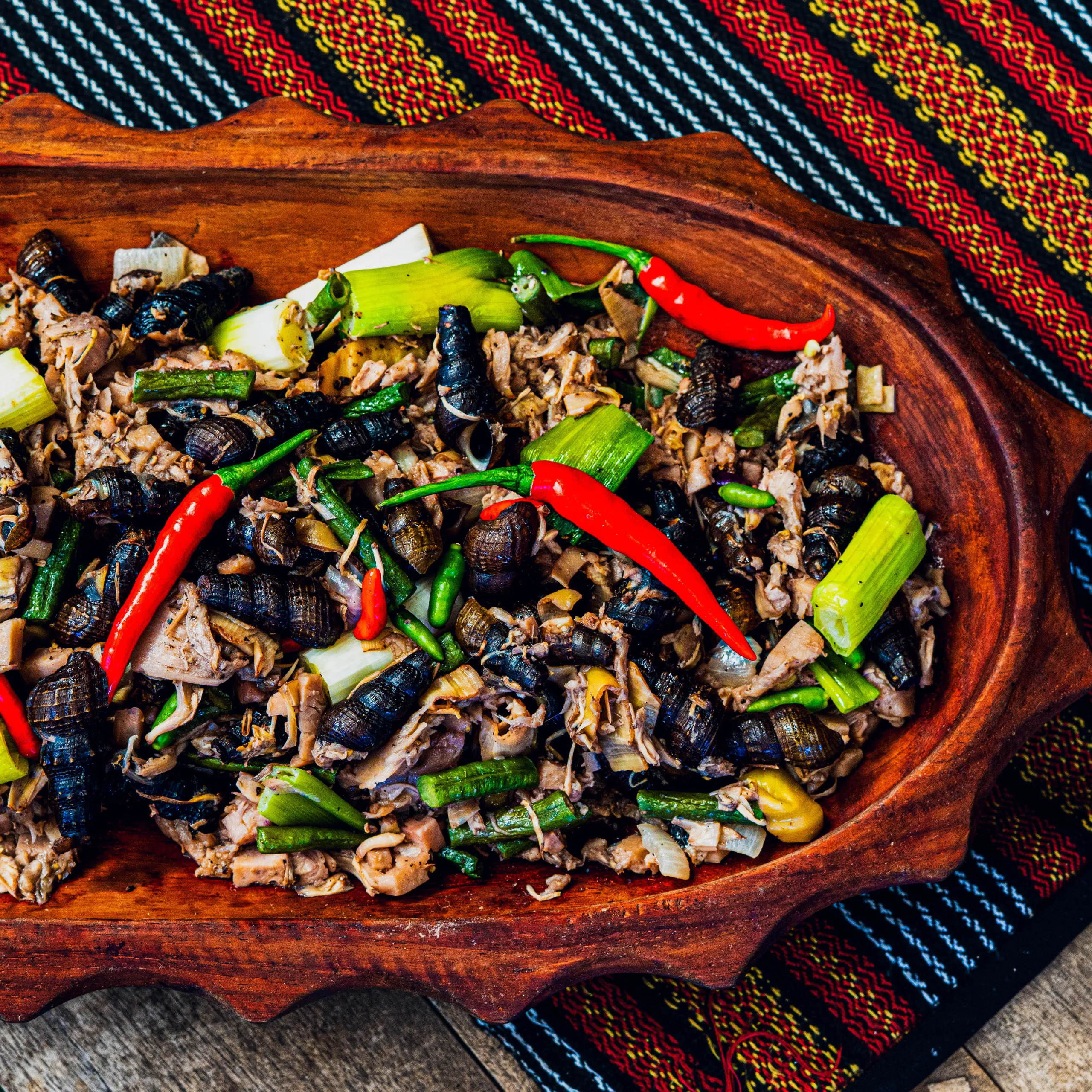
Among the many everyday dishes of the Cordillera, Binungor stands out for its simplicity and its deep connection to nature. Long before convenience stores and supermarkets became part of daily life, many Igorot families relied on the rivers, forests, and gardens surrounding their homes for fresh ingredients. A walk to the river often meant returning with enough food for the day’s meal.
Chef Jo Kapuno fondly recalls these childhood memories.
“Whenever we got hungry, we didn’t wait for our parents to cook. My siblings, cousins, and I would gather our own ingredients and prepare something ourselves. Binungor was one of those dishes because it was easy to make. We’d go to the river to collect freshwater snails, pick some chilies along the way, and cook everything together. Those were the two ingredients we always had. Everything else depended on what was growing nearby.”
This spirit of cooking with what nature provides is at the heart of Binungor. The dish begins with agurong, freshwater snails gathered from clean rivers and rice fields. They are simmered with unripe jackfruit, banana heart, mushrooms, beans, onions, and native chilies to create a light yet satisfying stew that highlights the natural sweetness of fresh vegetables.
Rather than relying on heavy seasonings, Binungor celebrates the flavors of freshly harvested ingredients. Every household has its own version, often changing with the seasons and whatever vegetables are available from the garden. It is a perfect example of Cordilleran cooking—simple, nourishing, and closely tied to the land.
Recipe Tips
- Always collect freshwater snails only from clean rivers or trusted sources.
- Purging the snails in salted water improves both cleanliness and flavor.
- Trimming the shell tips makes eating much easier.
- Avoid overcooking the mushrooms and beans to preserve their texture.
- Simmer gently rather than boiling vigorously to keep the vegetables intact.
- The number of chilies can easily be adjusted depending on your preferred level of spiciness.
- Binungor tastes best when prepared with freshly harvested vegetables.
Ingredient Substitutions
Traditional ingredients provide the most authentic taste, but these alternatives may be used when needed.
Freshwater Snails
Substitute with:
- Escargot
- Clams
- Mussels
- Small freshwater shellfish
Although the flavor changes slightly, these provide a similar texture.
Unripe Jackfruit
Replace with:
- Green papaya
- Chayote
- Young breadfruit
Banana Heart
Substitute with:
- Bamboo shoots
- Young cabbage
- Additional jackfruit
Baguio Beans
Other vegetables work well, including:
- Sitaw (yardlong beans)
- Snap peas
- Green beans
Mushrooms
Use:
- Oyster mushrooms
- Shiitake mushrooms
- Button mushrooms
- Wood ear mushrooms
A Taste of Cordilleran Heritage
Binungor captures the essence of traditional Cordilleran living, where meals begin not in a market but in the rivers, gardens, and forests that surround the community. It reflects a way of life built on self-sufficiency, respect for nature, and the simple joy of cooking together with family. Every bowl tells the story of children gathering snails from clear mountain streams, picking fresh chilies along the path home, and turning humble ingredients into a nourishing meal. Though simple in preparation, Binungor is rich in memories and tradition, offering a taste of the Cordillera’s enduring connection to the land and its abundant natural resources.
Final Words
Binungor is more than just a simple vegetable and freshwater snail stew; it is a beautiful reflection of the Igorot people’s resourcefulness, love for nature, and rich culinary heritage. Every bowl brings together the fresh flavors of the river, the goodness of locally harvested vegetables, and the warmth of traditional home cooking. What makes this dish truly special is the story behind it—the childhood memories of gathering ingredients, cooking together, and enjoying whatever nature generously provides. Binungor reminds us that delicious food does not always need complicated ingredients or elaborate preparation. Sometimes, the most meaningful meals come from the simplest ingredients and the traditions shared with family and loved ones. Preserving dishes like Binungor helps keep Cordilleran culture alive and allows future generations to appreciate the beauty of traditional Filipino cuisine.