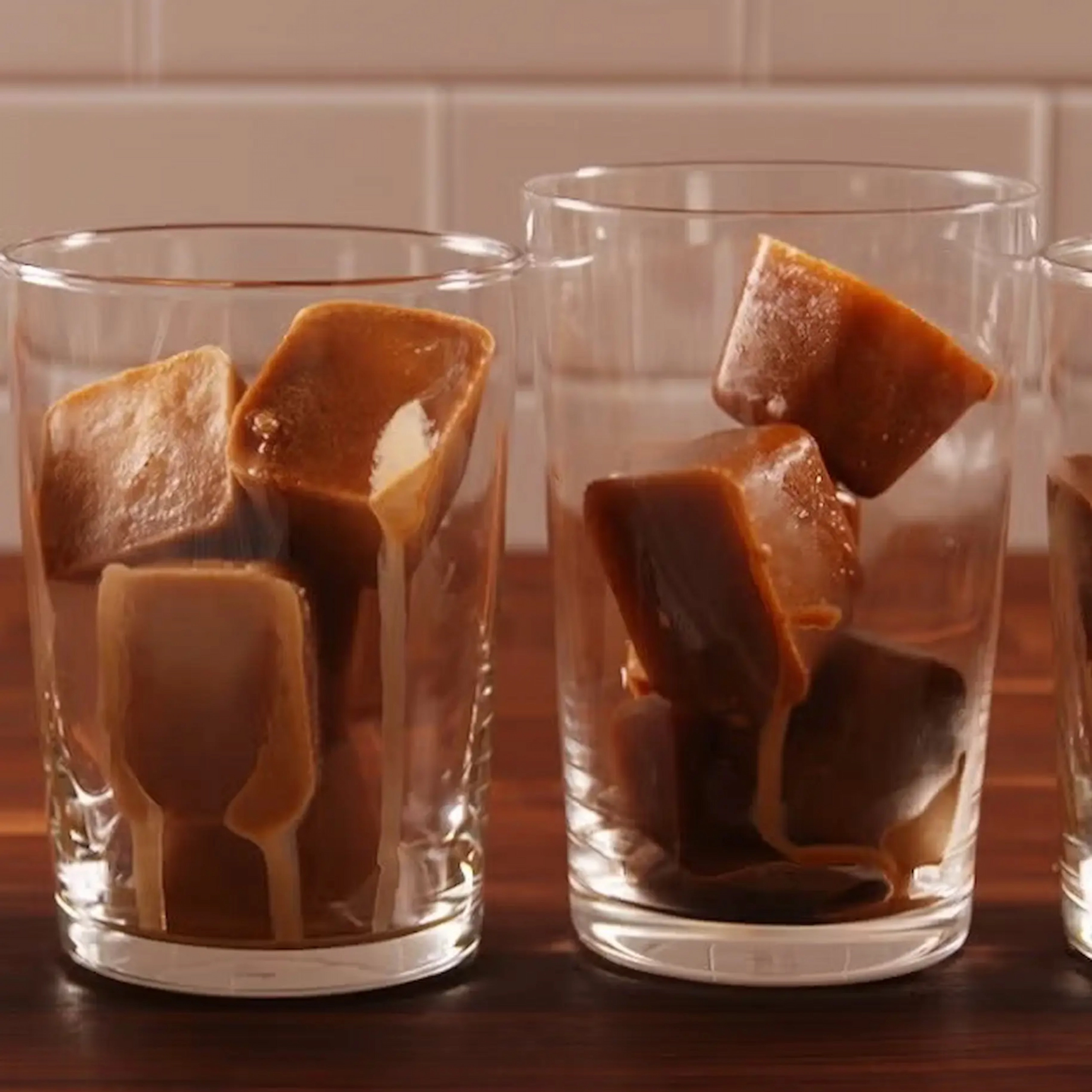
Coffee ice cubes won’t only keep your cold brews and lattes strong without dilution, but they also make for great beverage add-ons, the type that will have people raving.
Never drink watered down coffee again.
0:00 / 0:00
0:00



Note: The information shown is Edamam's estimate based on available ingredients and preparation. It should not be considered a substitute for a professional nutritionist's advice.
Pour iced coffee into ice cube molds and freeze until solid, about 5 hours. Enjoy with iced coffee!
In a liquid measuring cup, combine iced coffee, milk and chocolate milk mix. Whisk until well combined then pour into ice cube molds and freeze until solid, about 5 hours.
In a liquid measuring cup, combine iced coffee, milk and caramel. Whisk until well combined then pour into ice cube molds and freeze until solid, about 5 hours.
In a liquid measuring cup, combine iced coffee and sweetened condensed milk. Whisk until well combined then pour into ice cube molds and freeze until solid, about 5 hours.
This recipe was originally published in Delish US.
Standard coffee ice cubes typically take about 5 hours to freeze until solid in a domestic freezer. Factors like the size of your ice cube molds and the addition of fats (like milk or condensed milk) can slightly increase this time. For the best results, prepare them the night before to ensure they are fully set and ready for your morning brew.
Coffee cubes that remain soft usually have a high concentration of sugar or fat, which lowers the freezing point. If you are making Vietnamese or Mocha variations, ensure you are whisking the ingredients thoroughly to prevent heavy syrups from settling at the bottom. Using a slightly higher ratio of coffee to additives will help achieve a firmer, more traditional “ice” texture.
For peak flavor and freshness, use coffee ice cubes within 2 weeks. While they are safe to keep longer, coffee is porous and will eventually begin to absorb “freezer smells” or develop freezer burn, which can turn the taste bitter. To extend their shelf life, transfer the frozen cubes from the mold into an airtight freezer bag or silicone container.
While you can use hot coffee, it is best to let it cool to room temperature before pouring it into the molds. Pouring boiling liquid directly into plastic molds can leach chemicals or cause silicone to retain odors. Additionally, using chilled or room-temperature coffee prevents your freezer’s internal temperature from rising, which protects the quality of your other frozen goods.
Bitterness usually stems from using over-extracted or burnt coffee before freezing. Use a high-quality cold brew or a slightly diluted espresso for a smoother profile that holds up well during the freezing process. If you prefer a sweeter finish, try the Vietnamese or Caramel Macchiato variations, as the dairy and sweeteners act as a natural buffer against coffee’s acidity.