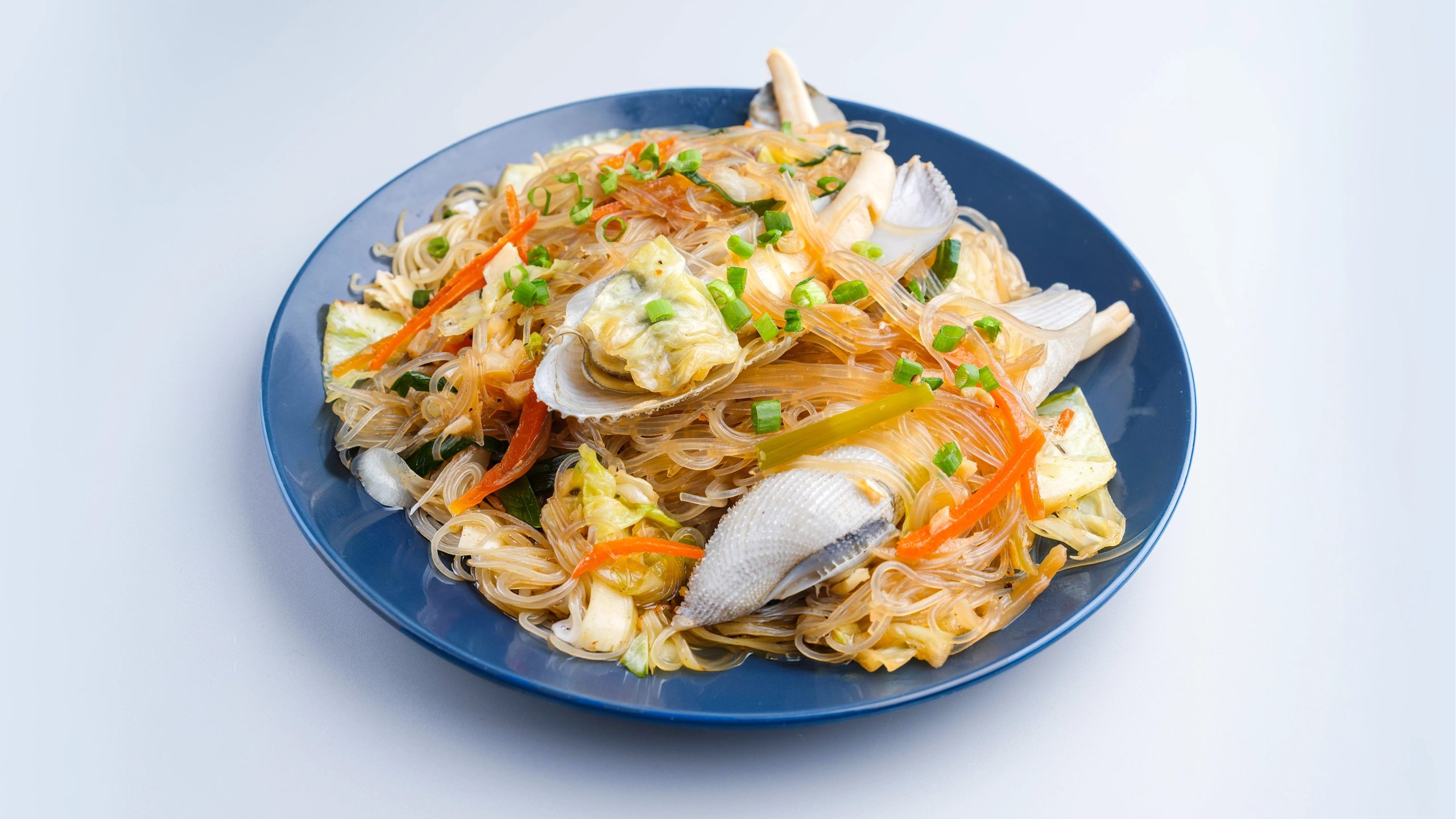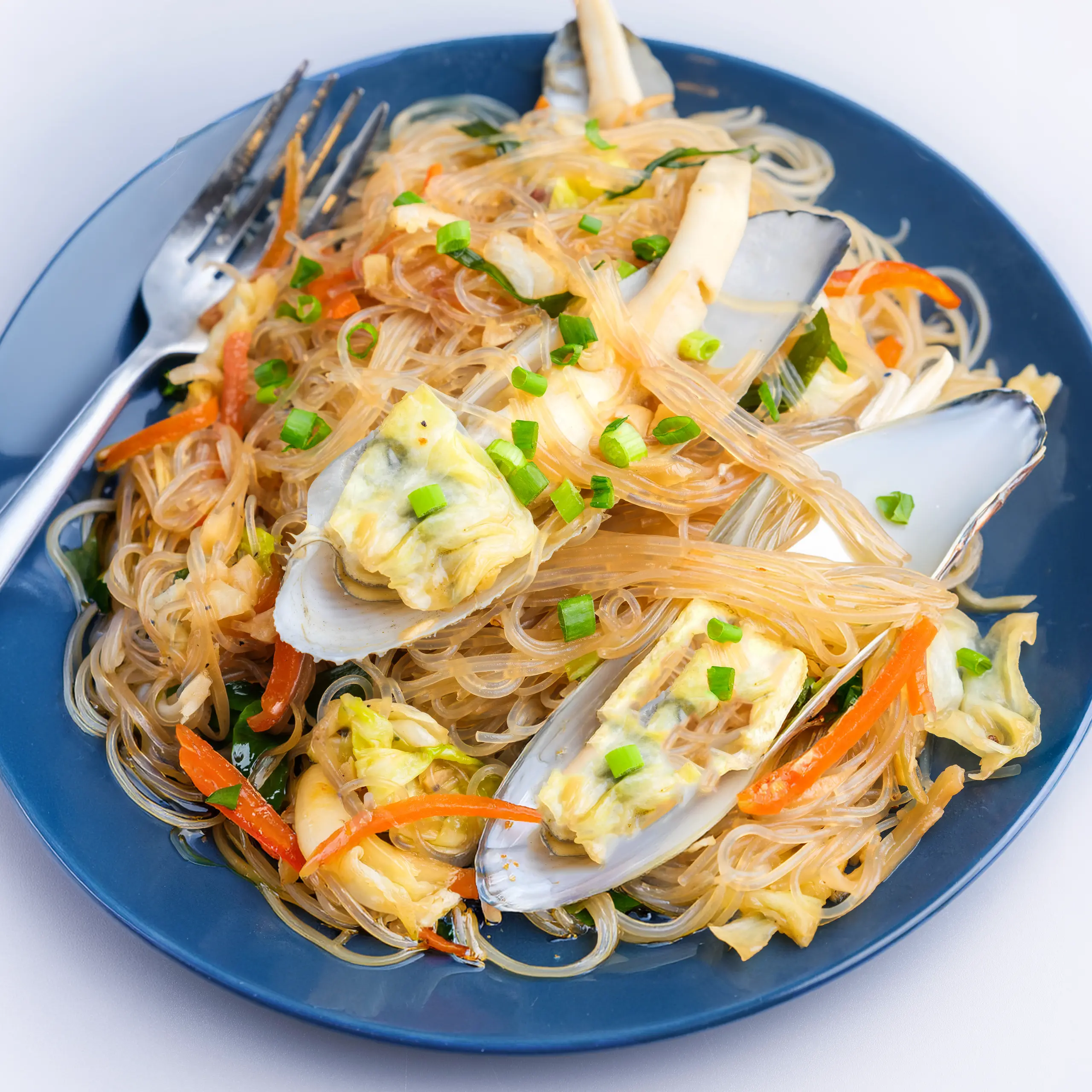
Diwal, also known as angel wing clams, is a prized delicacy in the Philippines, particularly in coastal areas like Capiz, often referred to as the “Seafood Capital of the Philippines.” Pairing diwal with sotanghon (glass noodles) creates a comforting dish that reflects the country’s love for seafood and noodle-based meals, commonly served during gatherings or as a hearty everyday ulam.
A favorite ingredient in many Filipino dishes, sotanghon is typically stir-fried with chicken and vegetables like cabbage and carrots, or served as a comforting soup with the same ingredients. This version stands out by featuring diwal, a seasonal delicacy from the Visayas.
The angel wing clams are the perfect complement to a classic sotanghon dish, allowing their delicately sweet flavor to shine while the noodles absorb the rich, briny clam juices.
What is sotanghon?
Sotanghon is also known as vermicelli, glass or cellophane noodles. Uncooked, it is dry, thin, and opaque, but it turns almost-transparent (hence, “glassy”) and slippery when cooked. Made of mung bean starch, it absorbs flavors well, making it a favorite ingredient in many Filipino dishes.
Recipe Tip
Preparing the diwal
Diwal (or angel wing clams) often contain sand. To clean them, soak in salted water (“as salty as seawater”) for 20 to 30 minutes. Change the water once or twice if they’re very sandy. Rinse the shells gently; avoid scrubbing too hard, as they are fragile. You may also trim the edges or remove any tough parts around the clams.
These seasonal delicacies cook quickly—about 3 to 5 minutes max—so be careful not to overcook them, as this can make them chewy and rubbery.
Preparing the sotanghon
Sotanghon (vermicelli) noodles need to be soaked in warm water before use. Place them in a bowl of warm water and soak for about 10 minutes. This helps them cook evenly, prevents clumping, and keeps them from absorbing too much liquid in the dish. Pre-soaking also ensures a springy texture instead of a mushy one.
Substitutions & Alternatives
For a low-carb version, you can replace sotanghon with Japanese shirataki noodles. Made from konjac yam, shirataki noodles are gluten-free and ideal for those watching their carb and sugar intake. They are typically sold in packed in liquid, so be sure to drain them well before using.
Shirataki noodles also cook quickly. If using them in place of sotanghon, cook the cabbage and carrots first, then add the noodles to avoid overcooking. Overcooked shirataki can become mushy, rubbery, or even fall apart.