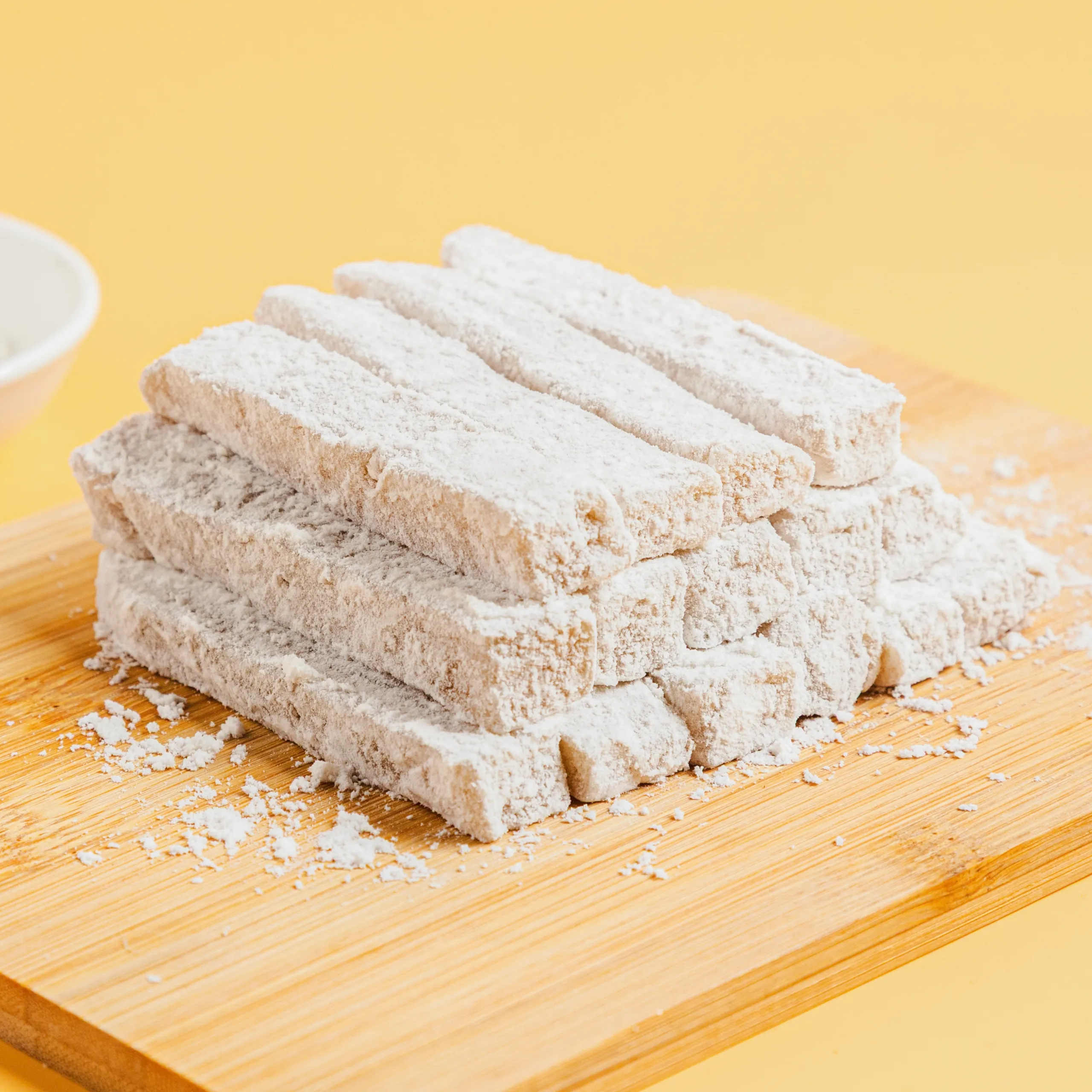


Some Filipino delicacies are memorable because of their elaborate appearance, while others win people over with their simplicity. Espasol belongs to the latter.
Soft, chewy, mildly sweet, and generously coated with toasted rice flour, espasol is a traditional Filipino delicacy that feels wonderfully homemade. It is often associated with provincial markets, family celebrations, pasalubong, and afternoons when someone brings home a box of native delicacies to share.
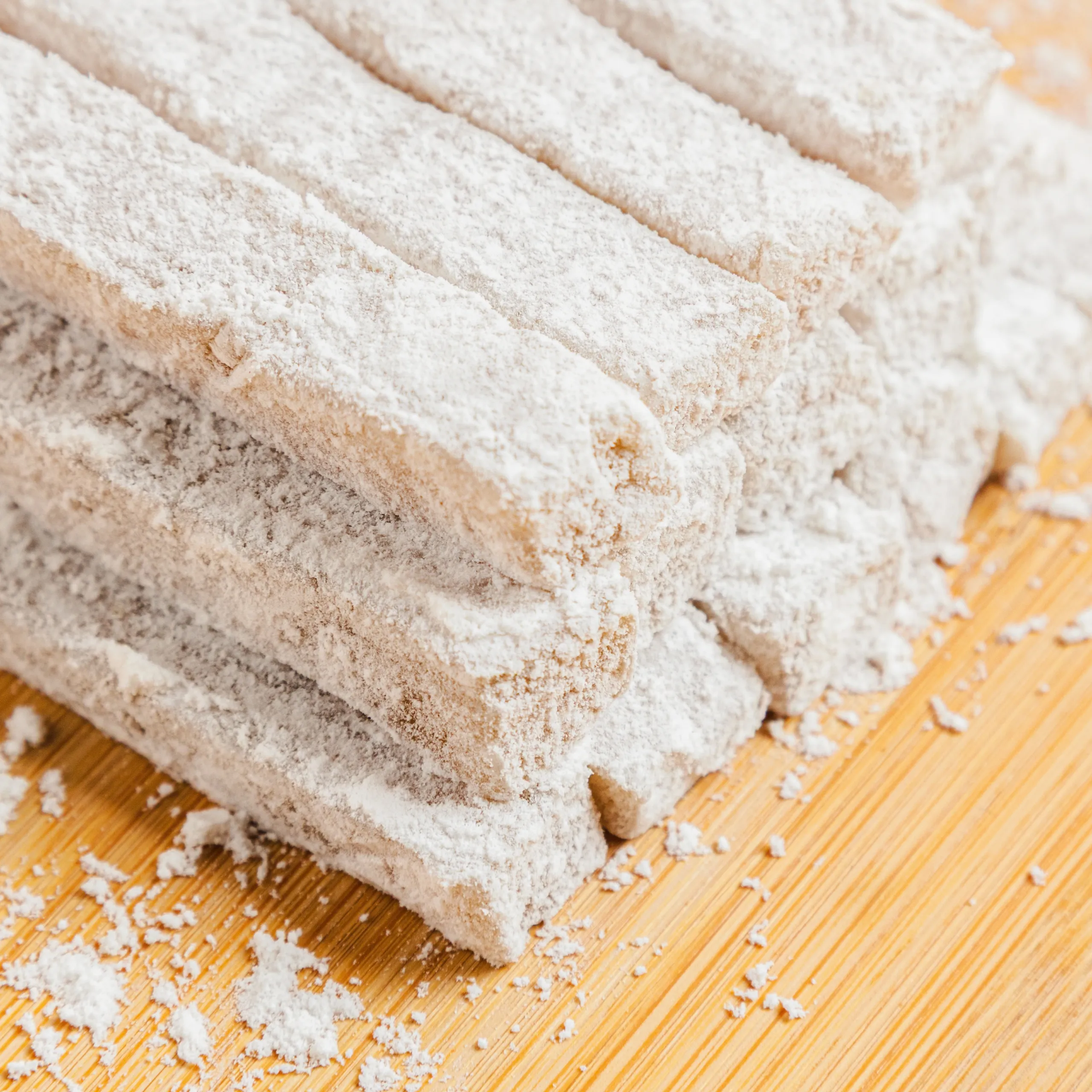
At first glance, espasol may look very simple. It does not have layers of frosting or elaborate decorations. Instead, its charm comes from texture and flavor. The outside is covered with a fine layer of rice flour, while the inside is soft, dense, chewy, and fragrant with coconut.
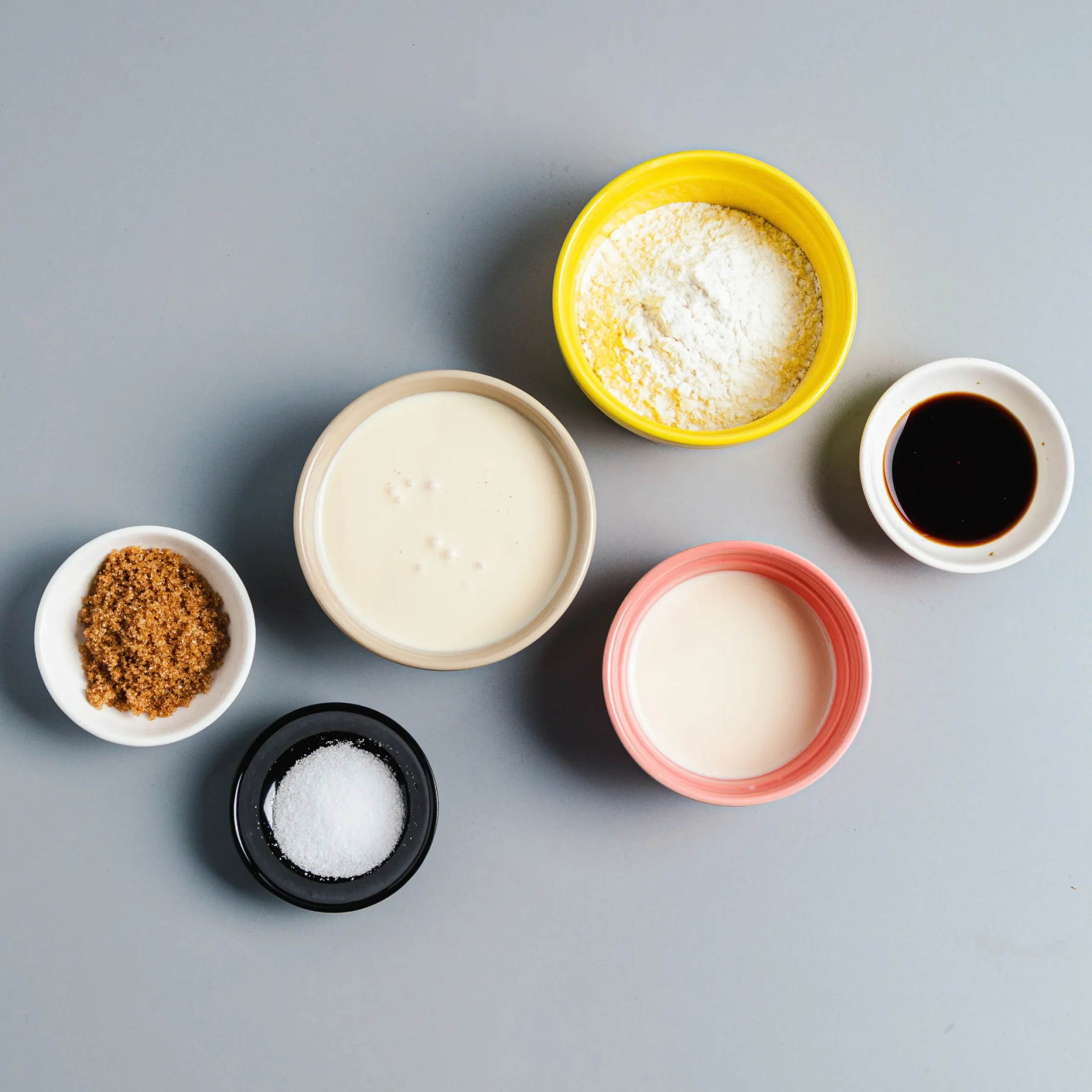
The combination of glutinous rice flour, coconut milk, and brown sugar creates a dessert that is both humble and satisfying. Vanilla extract is included in this version to add a gentle aroma, although traditional recipes may rely more heavily on the natural fragrance of coconut.
Making espasol is also an exercise in patience. The mixture must be cooked and stirred until the flour absorbs the coconut milk and transforms into a thick, smooth dough. It can become quite heavy as it cooks, so the final stage requires some effort.
But that is part of the experience.
There is something rewarding about spreading the warm mixture, allowing it to cool, cutting it into pieces, and rolling each piece in toasted rice flour. What starts as a few simple pantry ingredients eventually becomes a delicacy that is perfect for sharing.
A Brief History of Espasol
Espasol is a traditional Filipino rice delicacy strongly associated with the Laguna region, although versions of similar rice-based coconut sweets can be found in different parts of the Philippines.
Like many Filipino native delicacies, its exact origins are difficult to trace to one specific person or date. These foods were generally developed and passed down through families and communities over generations rather than recorded as the creation of a single chef.
Espasol reflects several ingredients that have long been important in Filipino cooking:
- Rice and rice flour
- Coconut milk
- Sugar
- Local cooking traditions involving steaming, boiling, roasting, and grinding grains
The name “espasol” is sometimes associated with the Spanish-influenced culinary vocabulary of the Philippines, although explanations of the exact origin of the name vary. What is more certain is the delicacy’s strong place in Filipino food culture.
Espasol is especially known as a pasalubong—a food brought home for family or friends after traveling. In this sense, it is more than a dessert. It is part of the Filipino tradition of remembering people at home and bringing them something from a journey.
Traditional espasol recipes can differ from one household to another. Some versions are softer, some are firmer, some use white sugar, and others use brown sugar. The amount of coconut milk may also vary depending on the desired texture.
Understanding the Ingredients
Glutinous Rice Flour
Glutinous rice flour is the foundation of espasol.
It provides the characteristic sticky and chewy texture.
Despite the word “glutinous,” glutinous rice does not contain gluten. The term refers to the sticky texture produced when its starch is cooked.
Using ordinary rice flour instead will produce a significantly different result.
Coconut Milk
Coconut milk provides moisture, richness, and the unmistakable tropical aroma associated with many Filipino delicacies.
It also helps turn the dry flour into a cohesive dough.
The amount required can vary slightly depending on the brand of flour, the thickness of the coconut milk, and the desired final texture.
Brown Sugar
Brown sugar gives espasol its sweetness and a deeper caramel-like flavor.
It also contributes to the warm color of the finished delicacy.
If you prefer a lighter-colored espasol, white sugar can be used instead.
Vanilla Extract
Vanilla is not essential to the basic concept of espasol, but it adds a pleasant aroma.
Use it moderately so that it complements rather than overpowers the coconut.
Recipe Tips for Better Espasol
1. Use low heat
This is perhaps the most important cooking tip.
The mixture becomes thick and can burn easily.
Low heat gives the flour enough time to cook while reducing the risk of scorching.
2. Stir continuously
Once the flour is combined with the coconut milk, do not leave the pot unattended.
Scrape the bottom regularly.
3. Toast the flour carefully
Toasting gives the flour a better flavor, but burnt flour will make the finished espasol bitter.
Keep the heat low.
4. Don’t add too much coconut milk
Your goal is a dough that is soft and pliable but not runny.
If you add too much liquid, you may need significantly more cooking time to achieve the correct consistency.
5. Don’t worry if the mixture becomes difficult to stir
This is normal.
As the starch cooks, the mixture becomes thick and sticky.
Use a sturdy wooden spoon or heat-resistant spatula.
6. Let it cool before cutting
Freshly cooked espasol is extremely soft.
Allowing it to cool helps it firm up and makes cutting easier.
7. Coat generously but not excessively
The toasted rice flour prevents the pieces from sticking to each other and your hands.
However, too much flour can make the delicacy overly dry on the outside.
Ingredient Substitutions
Brown Sugar
Brown sugar can be replaced with:
- White sugar
- Muscovado sugar
- Coconut sugar
Muscovado can give the espasol an especially deep, caramel-like flavor.
Vanilla Extract
Vanilla extract can be omitted.
You can also use natural vanilla or another mild flavoring.
For a more traditional coconut-forward flavor, simply leave the vanilla out.
Coconut Milk
Fresh coconut milk is wonderful when available, but canned or packaged coconut milk can also be used.
If using very thick coconut cream, dilute it slightly with water so that the mixture does not become excessively rich.
Glutinous Rice Flour
For authentic texture, glutinous rice flour should not be replaced with ordinary rice flour.
If you have access to freshly ground glutinous rice flour or traditional galapong, that can also be used.
Optional Flavor Variations
Although classic espasol is wonderfully simple, you can experiment with subtle variations.
Pandan Espasol
Add a small amount of pandan extract or pandan-infused coconut milk.
Pandan and coconut are a natural pairing in many Filipino desserts.
Ube Espasol
A small amount of ube flavoring or cooked ube can create a colorful variation.
Be careful not to add too much additional moisture.
Toasted Coconut
A small amount of toasted coconut can be incorporated into the mixture or used as a garnish.
Sesame Seeds
Lightly toasted sesame seeds can provide a pleasant nutty contrast.
These additions are variations rather than requirements. Traditional espasol is delicious even without them.
Knowledge About Espasol
Why Is Espasol Chewy?
The chewiness comes from the starch in glutinous rice flour.
Glutinous rice contains a high proportion of amylopectin, which creates its characteristic sticky and elastic texture when heated with liquid.
This is the same general property that makes many glutinous-rice desserts pleasantly chewy.
Why Does the Mixture Become So Thick?
When the rice flour is heated with coconut milk, its starch granules absorb liquid and swell.
This process causes the mixture to thicken and eventually become dough-like.
Why Is Toasted Flour Used for Coating?
The coating has several purposes.
It helps prevent the sticky pieces from sticking to each other, makes them easier to handle, and contributes additional roasted flavor.
Is Espasol Gluten-Free?
Glutinous rice itself is naturally gluten-free.
However, if you need to avoid gluten for medical reasons, check the packaging of your flour and other ingredients and take appropriate precautions against cross-contact.
Why Is Espasol Associated With Pasalubong?
Espasol is commonly sold as a Filipino native delicacy and is particularly associated with bringing food home after traveling.
This connects the delicacy with the Filipino tradition of pasalubong, in which travelers bring gifts or treats back for family, friends, and loved ones.
Health and Nutritional Considerations
Espasol is primarily a sweet rice-based delicacy, so it is best enjoyed as part of a balanced diet and in appropriate portions.
Glutinous Rice Provides Energy
The rice flour provides carbohydrates, which are an important source of energy.
Coconut Milk Provides Fat
Coconut milk provides fat and contributes to the rich mouthfeel of the dessert.
Some of the fat in coconut milk is saturated fat, so portion size can be considered when incorporating the dessert into an overall balanced diet.
Sugar Provides Added Sweetness
Brown sugar is still an added sugar.
Although brown sugar has a slightly different flavor from white sugar, it should not be considered a major source of nutrition.
If you want a less sweet espasol, the amount of sugar can be reduced somewhat, although significant changes can affect the texture and flavor.
Portion Size Matters
Because espasol is relatively dense, a small piece can be satisfying.
Pairing it with unsweetened coffee or tea can also provide a pleasant contrast to its sweetness.
People following specific diets or managing conditions such as diabetes should adjust the recipe and serving size according to their individual dietary requirements and professional dietary advice.
How to Store Espasol Properly
Because espasol contains coconut milk and cooked rice flour, proper storage helps preserve both its quality and safety.
At Room Temperature
If serving the espasol soon after preparation, keep it covered and away from excessive heat, humidity, and direct sunlight.
Avoid leaving it at room temperature for prolonged periods.
Refrigeration
For longer storage, place the espasol in a clean, airtight container.
Separate layers with parchment paper if necessary to prevent the pieces from sticking together.
Refrigerate promptly.
For best quality, consume refrigerated espasol within several days.
Keep in mind that refrigeration can make the texture firmer.
Freezing
Espasol can be frozen, although its texture may change slightly after thawing.
Place individual pieces in an airtight freezer-safe container or wrap them carefully before freezing.
Separate the pieces with parchment paper so they do not freeze into one large block.
Allow frozen espasol to thaw in the refrigerator or at room temperature for a short period before serving.
The coating may become slightly damp after thawing, so you can lightly dust the pieces with fresh toasted rice flour if desired.
Serving Suggestions
Espasol is traditionally simple and does not require elaborate presentation.
Arrange the pieces on a small serving plate or traditional tray.
It pairs especially well with:
- Black coffee
- Kapeng barako
- Unsweetened tea
- Ginger tea
- Hot chocolate
- Fresh fruit
For a traditional merienda spread, espasol can be served alongside other Filipino delicacies such as suman, kutsinta, puto, or bibingka.
Final Words
Espasol is proof that a Filipino delicacy does not need a long list of ingredients to have a memorable personality.
With just glutinous rice flour, coconut milk, sugar, and a little vanilla, you can create something soft, chewy, fragrant, and deeply satisfying.
Its history is also closely connected to the everyday traditions of Filipino food. It represents the importance of rice and coconut in Philippine cuisine, the creativity of home cooks, and the culture of sharing food with people we care about.
Perhaps one of the most charming things about espasol is its simplicity. There is no need to decorate it with elaborate toppings. Its beauty comes from its texture—the soft center, the chewy bite, and the delicate layer of toasted rice flour surrounding each piece.
Making it also teaches an important lesson in Filipino cooking: patience matters. The mixture needs gentle heat and constant attention. It may become difficult to stir, but that is part of transforming simple ingredients into the finished delicacy.
And once the espasol has cooled, been cut, and coated, there is something especially satisfying about placing the pieces on a plate and sharing them.
Whether you make it for a family merienda, a celebration, a food project, or simply because you are craving a traditional Filipino sweet, espasol offers a small taste of home.
It is humble, comforting, and unmistakably Filipino—a delicacy made not only from rice, coconut, and sugar, but also from the traditions and memories passed from one kitchen to another.