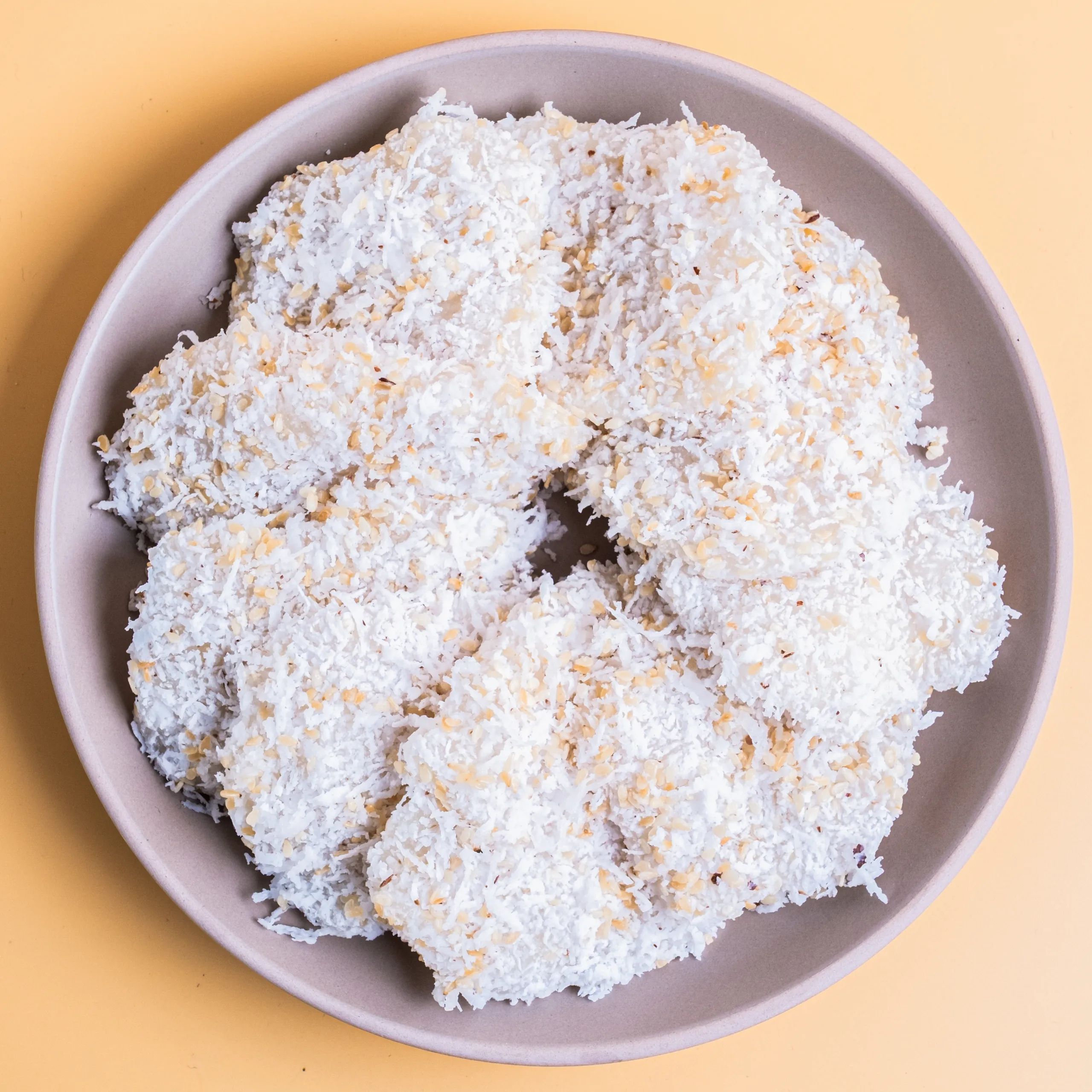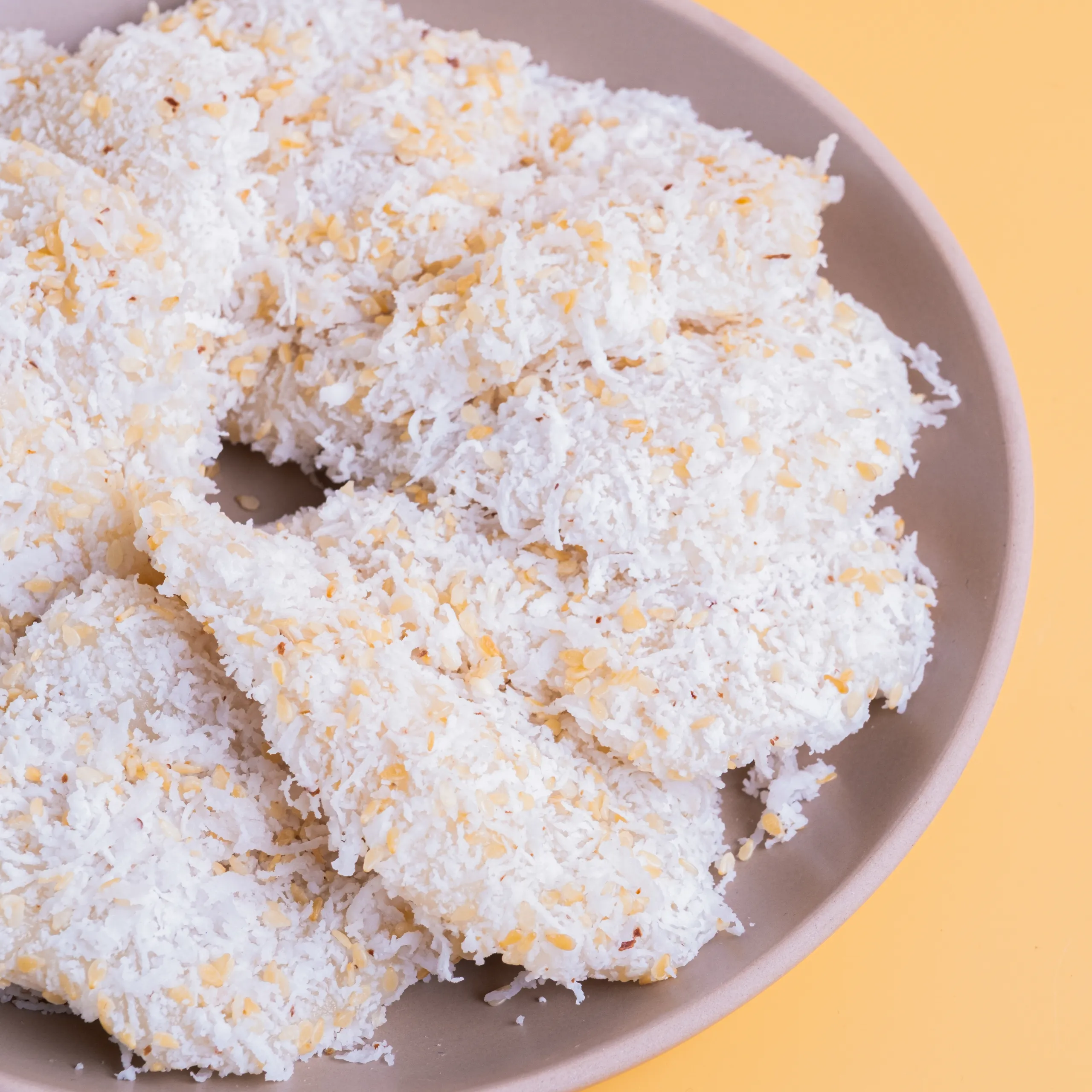
Palitaw is one of the simplest yet most beloved traditional Filipino delicacies. Made from glutinous rice flour, water, freshly grated coconut, sugar, and toasted sesame seeds, this soft and chewy rice cake is a favorite merienda enjoyed by many Filipino families. Its name comes from the Filipino word litaw, which means “to float” or “to appear on the surface.” This name describes how the rice cakes rise and float to the top of the boiling water when they are cooked.
What makes palitaw special is its simplicity. It does not require an oven, complicated equipment, or expensive ingredients. With just a few pantry staples and a little preparation, you can make a delicious homemade treat that is soft, slightly sweet, and coated with fragrant coconut and sesame seeds.
For many Filipinos, palitaw brings back memories of childhood, family gatherings, fiestas, and afternoons spent enjoying homemade kakanin. It is often prepared for special occasions, but it is also easy enough to make on an ordinary day when you want something comforting and satisfying.
The combination of chewy rice cake, fresh coconut, and sweet sesame topping creates a wonderful balance of textures and flavors. Whether you grew up eating palitaw or are trying it for the first time, this recipe will help you prepare a delicious Filipino delicacy right in your own kitchen.
History of Palitaw
Palitaw belongs to the rich tradition of Filipino kakanin, a broad category of rice-based delicacies commonly served as snacks, desserts, and festive foods. Rice has been an important part of Filipino food culture for centuries, and generations of home cooks have developed creative ways to turn it into sweet and savory dishes.
Traditional rice cakes were often prepared using soaked and ground rice, while modern home cooks frequently use glutinous rice flour because it is more convenient and readily available. Palitaw is particularly recognizable because of its simple cooking method: flattened pieces of rice dough are boiled in water until they float, then coated with grated coconut and a sweet mixture of sugar and toasted sesame seeds.
Although the exact origin and date of palitaw’s creation are not firmly documented, it has become a familiar part of Filipino culinary heritage. Its ingredients reflect the importance of rice and coconut in local cooking, while sesame seeds provide a fragrant finishing touch.
Palitaw is often associated with family celebrations, community gatherings, and traditional merienda. Like many Filipino delicacies, recipes can vary from one household to another. Some families prefer a generous coating of sugar and sesame seeds, while others enjoy a lighter topping that allows the natural flavor of the rice cake to shine.
Today, palitaw remains popular because it is affordable, easy to prepare, and deeply connected to the warmth of Filipino home cooking.
Helpful Recipe Tips for Perfect Palitaw
- Add water gradually. Pouring in too much water at once can make the dough too soft to shape.
- Aim for the right dough texture. The dough should be smooth and pliable, similar to soft modeling dough. If it cracks excessively, knead in a little water. If it is too sticky, add a small amount of glutinous rice flour.
- Keep the pieces evenly sized. Similar thickness helps all the rice cakes cook at approximately the same rate.
- Use gently boiling water. A steady boil is sufficient. Extremely vigorous boiling can cause delicate rice cakes to break apart.
- Do not overcrowd the pot. Cook the rice cakes in batches if necessary.
- Drain the rice cakes well. Too much water on the surface can make the coconut soggy and dilute the topping.
- Use fresh coconut when possible. Freshly grated coconut provides a naturally sweet aroma and soft texture.
- Toast the sesame seeds carefully. Low heat helps release their nutty fragrance without burning them.
- Adjust the sweetness. You can reduce the sugar if you prefer a less sweet palitaw.
- Serve it fresh. Palitaw is most enjoyable shortly after cooking, when the rice cake is tender and chewy.
My best tip: If you are making palitaw for the first time, cook one piece as a test. Check whether it holds its shape, floats properly, and has a fully cooked center. Adjust the dough with a little more water or flour before shaping the remaining pieces.
Ingredient Substitutions
Can I use ordinary rice flour?
It is not recommended for traditional palitaw. Ordinary rice flour lacks the same sticky, chewy qualities of glutinous rice flour. Your rice cakes may turn out firmer or more fragile.
Can I use desiccated coconut instead of fresh coconut?
Yes. Unsweetened desiccated coconut can be used if fresh coconut is unavailable. You can lightly moisten it with a small amount of water to soften it, but avoid making it wet enough to become mushy.
Can I make palitaw without sesame seeds?
Absolutely. Although sesame seeds are a familiar traditional topping, you can leave them out if you do not have any or need to avoid sesame. Coconut and sugar alone can still make a delicious palitaw.
Can I make it less sweet?
Yes. Reduce the sugar to your liking or serve it separately. The rice cake itself has a mild flavor, so the amount of sweetness is easy to adjust.
Interesting Knowledge About Palitaw
Why is it called palitaw?
The name comes from litaw, meaning to float or emerge. During cooking, the flattened rice dough rises to the surface of the boiling water when it has heated and expanded sufficiently.
Why is palitaw chewy?
Palitaw is made with glutinous rice flour, which contains a high proportion of amylopectin, a type of starch that contributes to its sticky, elastic, and chewy texture when cooked.
Despite the name, glutinous rice does not contain gluten. It is naturally gluten-free, although cross-contamination and other ingredients should still be considered.
Is palitaw a kakanin?
Yes. Palitaw is widely recognized as a Filipino kakanin, a category that includes many traditional rice-based delicacies such as puto, kutsinta, suman, and bibingka.
Why is coconut commonly used?
Coconut is abundant in many parts of the Philippines and has long been an important ingredient in Filipino cooking. Freshly grated coconut adds moisture, aroma, and a mild richness that complements the chewy rice cake.
Why are sesame seeds toasted first?
Toasting releases the natural oils in sesame seeds and deepens their nutty aroma. This gives the topping more flavor than using raw sesame seeds.
Is palitaw only served during special occasions?
No. While it is often prepared for gatherings and celebrations, palitaw is also a popular homemade merienda. Its simple ingredients make it suitable for an ordinary afternoon snack.
Can palitaw be made in different flavors?
Yes. Some home cooks experiment with pandan flavoring, a little vanilla, or other ingredients. These variations can be enjoyable, although the traditional version is known for its simple rice, coconut, sugar, and sesame combination.
Health Benefits of Palitaw
Palitaw is a sweet rice-based snack that can be enjoyed as part of a balanced diet. Its nutritional value depends on the portion size and the amount of coconut, sugar, and other toppings used.
Provides energy
Glutinous rice flour is rich in carbohydrates, which supply energy for everyday activities. This makes palitaw a convenient snack when you want something satisfying between meals.
Contains some plant-based fats
Coconut and sesame seeds contribute fats to the recipe. Coconut is relatively high in saturated fat, while sesame seeds contain predominantly unsaturated fats.
Offers small amounts of minerals
Sesame seeds contain minerals such as calcium, magnesium, and iron, although the amount you receive depends on how much you eat. Coconut also contributes small amounts of nutrients.
Provides a naturally gluten-free base
Glutinous rice flour is naturally gluten-free, making palitaw suitable for many people avoiding gluten, provided the flour and other ingredients have not been contaminated with gluten-containing products.
Can be portion-controlled
Homemade palitaw allows you to control the amount of sugar and coconut used. Smaller servings or a lighter topping can help reduce the overall calorie and sugar content.
Is palitaw healthy?
Palitaw can fit into a healthy eating pattern, but it is primarily a carbohydrate-rich snack, and added sugar contributes to its sweetness and calories. It is not a significant source of protein or fiber when made with the basic ingredients alone.
For a more balanced snack, enjoy a moderate portion alongside a protein-rich food, such as unsweetened yogurt or another suitable protein source.
People who need to monitor their blood sugar may also wish to pay attention to portion size because glutinous rice products can raise blood glucose levels.
How to Store Palitaw Properly
Palitaw is best eaten fresh because its texture can change as it cools. The rice cakes may become firmer or less pleasantly chewy over time, while fresh coconut can spoil if it is not stored correctly.
Storing at room temperature
- Serve palitaw soon after preparation.
- Do not leave it out for more than 2 hours, or more than 1 hour if the room temperature is above 32°C.
- Avoid leaving palitaw with fresh coconut sitting uncovered for long periods, especially in warm weather.
Storing in the refrigerator
- Place leftover palitaw in a clean, airtight container.
- Refrigerate within 2 hours of cooking.
- For best quality, eat within 1–2 days. This is a quality recommendation; always discard food that has been stored improperly or shows signs of spoilage.
- Store the coconut and sugar-sesame topping separately when possible to help preserve their texture.
- Keep the refrigerator at 4°C or below.
Can you freeze palitaw?
Freezing is possible, but the texture may change after thawing. The rice cakes can become firmer or slightly uneven in texture.
If you want to try freezing them:
- Allow the cooked rice cakes to cool.
- Place them in a single layer on a tray until firm.
- Transfer them to a freezer-safe container with baking paper between layers.
- Freeze without the fresh coconut topping when possible.
- Thaw in the refrigerator and warm gently before serving.
For the best results, prepare palitaw fresh rather than freezing it for long periods.
How to reheat leftover palitaw
Warm refrigerated palitaw gently in the microwave in short intervals or steam it briefly until heated through. A few drops of water can help prevent excessive drying.
Avoid overheating because the rice cakes may become overly sticky or tough.
Add freshly grated coconut and the sugar-sesame mixture after reheating for a fresher taste.
How to store the ingredients
- Glutinous rice flour: Keep in an airtight container in a cool, dry place and follow the package instructions.
- Fresh grated coconut: Refrigerate promptly and use as soon as possible, ideally within 1–2 days, or freeze for longer storage.
- Sesame seeds: Store in an airtight container away from heat and sunlight. Refrigeration can help preserve freshness, especially in warm climates.
- Sugar: Keep in a dry, sealed container to prevent moisture from causing clumping.
Food safety reminder: Never eat palitaw that has been left at room temperature overnight. Discard it if it develops mold, an unusual smell, or other signs of spoilage.
Final Words About Palitaw
Palitaw is more than just a sweet Filipino rice cake. It represents the beauty of traditional home cooking, where simple ingredients are transformed into something delicious and memorable. Its soft, chewy texture, fragrant coconut coating, sweet sugar, and nutty sesame seeds make every bite a satisfying experience.
One of the best things about making palitaw is that it does not require advanced cooking skills. With patience, the right dough consistency, and a few practical tips, even a beginner can prepare this beloved Filipino delicacy.
Whether you serve it during merienda, share it with friends, prepare it for a family celebration, or turn it into a small food business, palitaw is a wonderful way to appreciate Filipino culinary traditions.
So gather your ingredients, prepare your dough, and enjoy the simple pleasure of making palitaw at home. Sometimes, the most memorable foods are not the most complicated ones, but the ones that bring people together through familiar flavors, shared stories, and the warmth of home.
Happy cooking, and enjoy your homemade palitaw!