
Advertisement
Advertisement

Braised Pork Belly Recipe

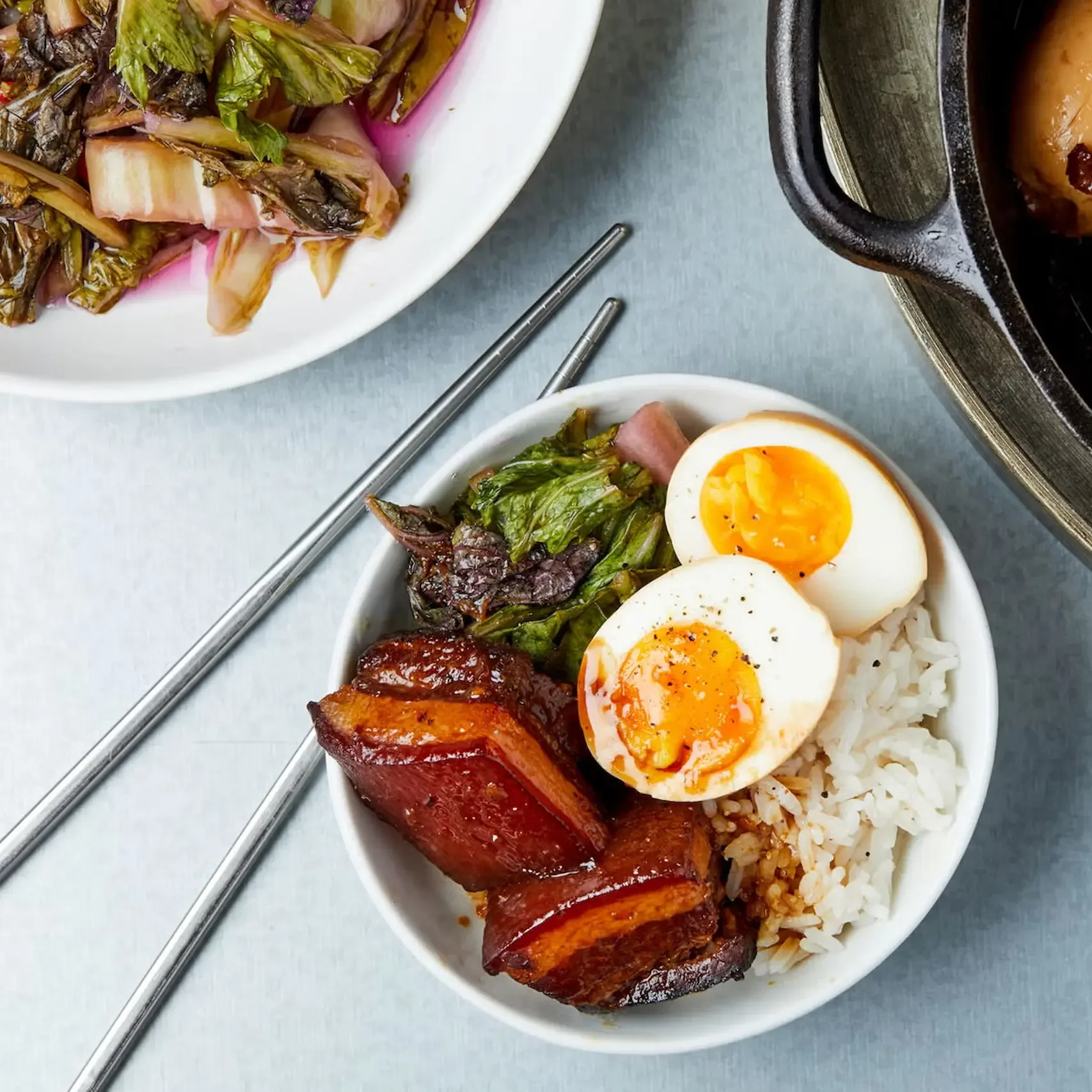
PHOTO: LUCY SCHAEFFER
YIELDS:
6 SERVING(S)
Prep Time:
N/A
Total Time:
4 HRS
Cal/Serv:
2053

Nutritional Information

Calories 2053 kcal
Fat 122 g
Saturated fat 42 g
Trans fat 0 g
Cholesterol 643 mg
Sodium 2808 mg
Carbohydrates 180 g
Fiber 6 g
Sugar 27 g
Protein 52 g
Vitamin D 3 µg
Calcium 215 mg
Iron 12 mg
Potassium 1439 mg

Note: The information shown is Edamam's estimate based on available ingredients and preparation. It should not be considered a substitute for a professional nutritionist's advice.

Thịt Kho Tàu or Vietnamese braised pork belly is a salty-sweet dish of caramelized pork belly and marinated eggs. Hailing from South Vietnam (as evidenced by the use of coconut water in cooking), this flavorful dish is one of the most beloved amongst my friends (both Vietnamese and non-Vietnamese alike). Every family has their own take on the dish, and this is my interpretation.

Don’t be intimidated by the long cooking time—most of it is letting it simmer on the stove so the pork belly can get nice and tender. Make the most of your efforts by cooking a large serving size because this dish works great as leftovers for a quick weekday meal.

In fact, its ability to keep for 4 to 5 days is why it’s a popular Lunar New Year’s (Tết) dish in Vietnam. Because no one wants to constantly be cooking while they’re receiving a stream of visiting guests.

Advertisement

Recipe Tips

Feel free to alter the traditional 100% pork belly recipe to include a mix of leaner cuts (like pork shoulder or pork butt) so the richness doesn’t become overwhelming.

  • Look for pork belly that is a fresh, pink color (not discolored or dry) with skin that isn’t too thick, and an even ratio of fat to meat at the top. We don’t want it completely fatty, and if it’s too lean, it might become tough and cook too quickly in the braising liquid.
  • The coconut water can be substituted with water, coconut juice, coconut soda, or any combination of all four. Be sure to adjust the sugar content of the sauce accordingly.
  • Traditionally hard boiled eggs are used for this dish, but I prefer eggs soft boiled, so this recipe has instructions for those.

Ingredients

For The Pork

  • 2.5 Pound pork belly
  • 2 Tablespoon kosher salt
  • 1 Tablespoon distilled white vinegar (or juice of 1 lime)

For The Marinade

  • 4 Clove garlic
  • 1 shallot
  • 0.5 Tablespoon kosher salt
  • 0.25 Cup granulated sugar
  • 2 Tablespoon fish sauce
  • 1 Teaspoon ground black pepper

For The Sauce

  • 0.25 Cup granulated sugar
  • 2.5 Tablespoon cooking oil
  • 5 Cup coconut water
  • 0.5 Cup fish sauce
  • 1 yellow onion, halved
  • 2 Thai bird's eye chilies, stems removed (optional)

For Serving

  • 6 Cup soft boiled eggs, peeled
  • 6 Cup cooked white Jasmine rice
  • Pickled mustard greens (or other pickled vegetables)
Keep screen awake

Directions

Prepare Pork:

Step 1

Place pork belly in a large Dutch oven or pot. Fill Dutch oven with enough cool water to cover the pork belly then add the salt and vinegar. Soak for 15 minutes to start removing impurities from the meat. Drain and rinse meat of salt and vinegar. Return pork belly to the Dutch oven.

Step 2

Pour enough fresh water to cover pork belly again. Bring to a boil, and boil for 2 minutes. By this point, a lot of scum should come to the surface. Drain then rinse the pork under running water until water is clear. Clean Dutch oven. (Similar to the previous step, this is done to further remove impurities from the meat to yield a clearer sauce. This step also makes it easier to slice the pork.)

Step 3

Cut pork into 1.5” cubes, making sure they are about the same size so they will cook evenly together.

Make Marinade:

Step 1

Grind shallots, garlic, and salt into a paste.

Step 2

Coat the pork cubes evenly in the shallot-garlic paste, sugar, fish sauce, and black pepper. Marinate covered for 30 minutes to 2 hours in the fridge.

Cook Pork + Assemble:

Step 1

Place Dutch oven on medium-low heat. Add sugar and watch it very carefully as it melts and caramelizes. (It will be slow at first, then quickly jump to the caramel stage, so don’t take your eyes off it!) When it reaches a dark golden brown color, immediately add oil and stir to stop the cooking.

Step 2

Turn the heat up to medium-high, add the pork pieces, and stir well for 3 minutes until the pork is browned on all sides.

Step 3

Add coconut water, fish sauce, onion halves, chili peppers, and remainder of marinade. Add more coconut water if liquid doesn’t cover the pork. Once liquid is boiling, lower the temperature to a low-medium heat; it should be at a vigorous simmer for the next 2 hours. Keep uncovered so the liquid can reduce. Throughout cooking, check on it, skim any foam or impurities from the surface, and stir every 20 minutes.

Step 4

While the pork is cooking, place soft boiled eggs in a large bowl or container. Remove about a cup of the liquid from the sauce and add to the peeled eggs to allow the color to permeate. This can be done at room temperature. If you are working with hard boiled eggs instead, they do not need a separate marination; they can just be peeled and thrown into the pot during the last 30 minutes of cooking.

Step 5

At the end of 2 hours, the liquid should have reduced to half of the original amount. Remove the onion halves and chili pepper. Test to see if the pork is tender (it should still hold its shape, but be easily broken with chopsticks) and taste the sauce. Add sugar or fish sauce if it seems under-seasoned. It’s ok if the sauce is saltier or sweeter than you’d normally cook because it will be balanced out by the plain white rice. Turn off the heat and add the soft boiled eggs, stirring and keeping them in the pot until they’ve warmed back up.

Step 6

Vietnamese food is traditionally served family style. If you’d like to serve it as individual bowls, start with a rice base and top with the pork pieces. Slice the eggs in half, add spoonfuls of the sauce and crack black pepper over everything. Finally, add pickled mustard greens on the side of the bowl to cut the richness of the dish.

This recipe was originally published in Delish US.

Frequently Asked Questions

These preliminary steps are essential for achieving a professional-grade, clear braising liquid. Soaking in salt and vinegar (Step 1) draws out surface impurities, while the two-minute parboil (Step 2) forces out “scum” and excess proteins from the meat. Skipping these steps results in a cloudy, gritty sauce and can leave the pork with a slightly gamey odor that distracts from the delicate coconut and fish sauce aroma.

The “Nuoc Mau” or caramel stage is the most critical point for flavor and color. Watch the sugar closely on medium-low heat; once it reaches a dark golden brown, immediately add the oil to stop the cooking and prevent it from burning into a bitter black mess. If the sugar hardens into clumps when you add the meat, don’t worry—it will slowly dissolve back into the coconut water during the two-hour simmer, eventually coating the pork in a rich, mahogany glaze.

If you prefer soft-boiled eggs, follow Step 4 by marinating them separately in a cup of the warm braising liquid rather than boiling them in the pot. This allows the soy and coconut flavors to permeate and color the egg whites without making the yolks rubbery. If using traditional hard-boiled eggs, you can add them directly to the Dutch oven during the final 30 minutes of cooking so they can absorb the sauce’s deep color and savory notes directly.

While coconut water is the hallmark of Southern Vietnamese Thịt Kho Tàu, providing a natural sweetness and “nutty” depth, you can substitute it with plain water, coconut juice, or even coconut soda. If using plain water, you may need to slightly increase the sugar in your marinade to replicate the characteristic sweetness. If using coconut soda (like Coco Rico), reduce the added sugar in the caramel stage significantly to prevent the dish from becoming cloying.

The secret to the perfect texture is a vigorous simmer for a full two hours in an uncovered pot. Keeping the pot uncovered allows the liquid to reduce and thicken into a syrupy consistency while the pork fat slowly renders into the sauce. The meat is ready when it can be easily broken with chopsticks; however, avoid over-stirring during the final hour of cooking, as the tender fat layers can become fragile and separate from the meat.

0 0 votes
Total of Ratings
guest
Rating
Ratings for Article
0 Comments
Oldest
Newest Most Voted
Inline Feedbacks
View all comments
Advertisement

To provide a customized ad experience, we need to know if you are of legal age in your region.

By making a selection, you agree to our Terms & Conditions.