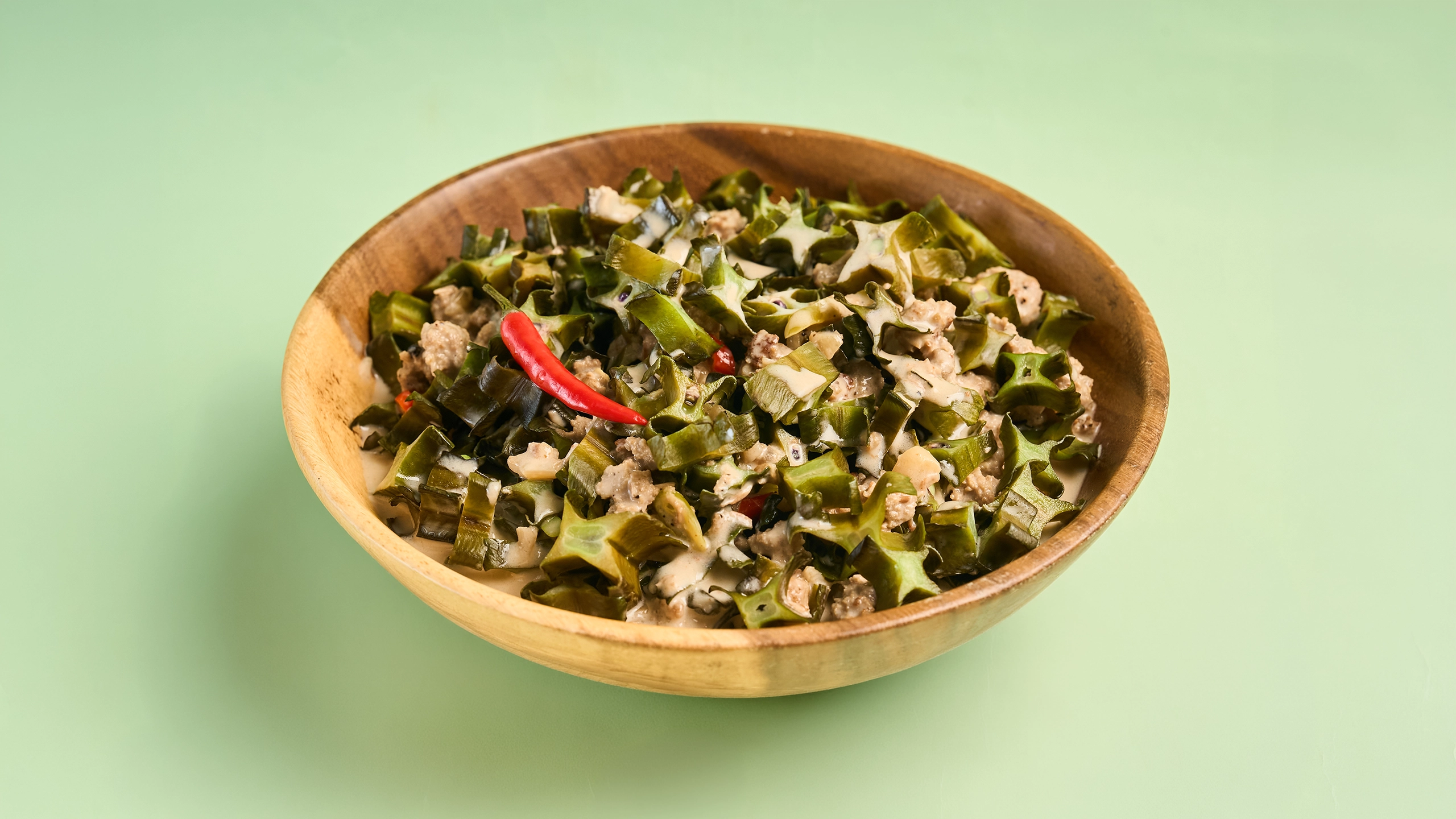


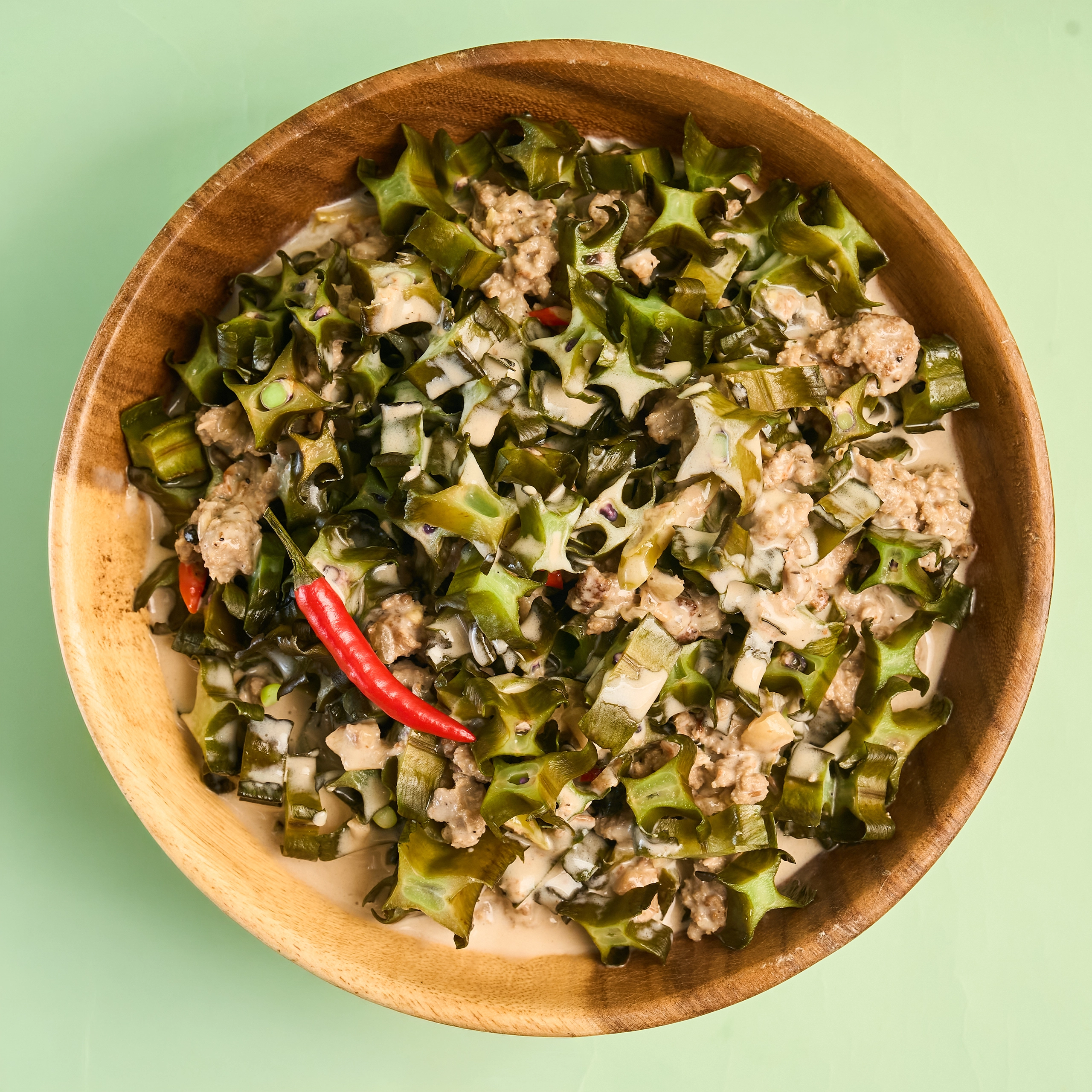
There are Filipino dishes that immediately wake up your appetite, and Gising-gising is one of them. The name itself means “wake up, wake up,” which is a fitting description for a dish that combines creamy coconut milk, savory pork, salty fermented shrimp paste, and the gentle-to-fiery heat of chilies.
What makes Gising-gising especially enjoyable is the contrast of flavors and textures. The winged beans remain slightly crisp when cooked properly, while the coconut milk creates a rich and creamy sauce. The pork gives the dish heartiness, and bagoong adds the deep, salty, fermented flavor that makes many Filipino vegetable dishes so distinctive.
It is also the kind of dish that feels right at a Filipino family table. You can eat it as a vegetable side dish, but with the pork and coconut milk, it is substantial enough to become the centerpiece of a simple meal. Put it beside a steaming plate of rice, and suddenly a bowl of vegetables becomes something everyone wants another serving of.
What Is Gising-Gising?
Gising-gising is a Filipino vegetable dish traditionally made with winged beans (sigarilyas) cooked in coconut milk, chili, pork, and bagoong.
The winged bean is the star of the dish. It has a distinctive shape, with four ridges or “wings” running along the length of the pod. When fresh and properly cooked, it has a pleasant crunch and a slightly grassy, fresh flavor.
The combination of coconut milk + bagoong + chili + pork gives Gising-gising its characteristic Filipino flavor profile: creamy, savory, salty, rich, and spicy.
Although there are variations, the dish is closely related to the broader Filipino tradition of cooking vegetables with coconut milk and fermented seafood products. Gising-gising is also sometimes compared with Bicol Express because both can contain pork, coconut milk, bagoong, and chilies. The important difference is that Gising-gising traditionally puts a vegetable—particularly winged beans—at the center of the dish.
A Little History of Gising-Gising
The exact origin story of Gising-gising is not completely settled, but the dish belongs to a Filipino culinary tradition strongly associated with coconut-rich cooking and the use of local vegetables.
Coconut milk has been an important ingredient in many parts of the Philippines, particularly in areas where coconut trees thrive. It provides a naturally rich cooking liquid that can transform vegetables, seafood, meat, and legumes into hearty dishes.
The use of bagoong also reflects an important part of Filipino food culture. Fermented seafood products have historically been used as a way to preserve seafood while creating a powerful seasoning. Instead of simply adding salt, bagoong contributes saltiness along with a complex fermented, savory character.
The chili component is another reason Gising-gising feels so distinctly Filipino. Depending on the cook and region, the heat can be gentle or quite intense.
The dish’s name, Gising-gising, literally translates to something like “wake up, wake up.” The playful name likely refers to the stimulating effect of the chilies and bold flavors.
Like many Filipino home dishes, there isn’t necessarily one universal recipe. One household might use more coconut milk, another might make it particularly spicy, while someone else might substitute green beans or another vegetable for sigarilyas.
How to Prepare the Winged Beans
Before cooking, wash the sigarilyas thoroughly.
Trim off both ends and remove any tough portions. If the beans are particularly mature, the ridges can sometimes be fibrous, so you may want to lightly trim them.
Cut the winged beans into small diagonal pieces or thin slices.
Don’t cut them too finely. One of the pleasures of Gising-gising is being able to bite into pieces of vegetable that still have some texture.
If the beans are young and fresh, they should cook fairly quickly.
Recipe Tips for Better Gising-Gising
Choose fresh winged beans
Look for sigarilyas that are:
- Bright green
- Firm
- Crisp
- Free from large brown spots
- Not excessively limp
Young winged beans are generally more tender.
Older pods can become tougher and more fibrous.
Don’t overcook the vegetables
This is probably the most important technique when making Gising-gising.
The winged beans shouldn’t completely disappear into the sauce.
You want them tender but still slightly crunchy.
That texture is part of what makes the dish interesting.
Be careful with the bagoong
Different brands and varieties of bagoong can have dramatically different levels of saltiness.
Start with the recommended amount and taste before adding more.
You can always add more bagoong later, but rescuing an overly salty coconut sauce can be difficult.
Control the heat
The amount of chili is completely adjustable.
For a mild version:
- Use one green chili.
- Remove the seeds.
- Skip the red chili.
For medium heat:
- Use the green chili with some seeds.
- Add a small amount of red chili.
For a fiery version:
- Use both chilies generously.
- Leave the seeds and membranes intact.
Remember that chili heat can intensify as the dish sits.
Don’t drown the beans
The coconut milk should coat the vegetables rather than turn the dish into a thin soup.
If your Gising-gising seems too watery, simply simmer it uncovered for several minutes.
Let the coconut milk simmer gently
Coconut milk can become oily or separate if aggressively boiled for too long.
Gentle cooking produces a smoother, more pleasant sauce.
Ingredient Substitutions
One of the great things about Gising-gising is its flexibility.
Winged Beans
If fresh sigarilyas aren’t available, you can substitute:
- Green beans
- French beans
- Snow peas
- Okra
- Bitter melon
- Young bamboo shoots
Green beans are probably the easiest substitute because they have a similar shape, texture, and cooking time.
However, if you can find fresh sigarilyas, they are worth using because they have a distinctive flavor that makes the dish feel truly special.
Ground Pork
You can replace ground pork with:
- Thinly sliced pork
- Diced pork
- Ground chicken
- Ground turkey
- Shrimp
- Flaked smoked fish
- Mushrooms
- Tofu
For a vegetarian version, simply omit the pork and use mushrooms or tofu.
Bagoong
If shrimp paste isn’t available, possible substitutes include:
- Fish sauce
- Soy sauce
- Mushroom seasoning
- Anchovy paste
However, none of these will taste exactly like bagoong.
If you’re using fish sauce instead, start with a small amount because it can be quite salty.
Coconut Milk
Full-fat coconut milk gives the richest result.
For a lighter version, you can use:
- Light coconut milk
- A mixture of coconut milk and water
- Unsweetened coconut cream diluted with water
Avoid sweetened coconut milk or coconut beverage products intended for drinking. They can make the dish unexpectedly sweet.
Understanding the Main Ingredients
Winged Beans (Sigarilyas)
Winged beans are one of the most visually recognizable Filipino vegetables.
Their long green pods have four characteristic ridges or “wings,” which explains the English name winged bean.
They are sometimes called sigarilyas in Filipino because of their elongated shape.
The vegetable is versatile. Young pods can be eaten cooked, while other parts of the plant—including leaves, flowers, and seeds—can also be utilized in certain culinary traditions.
The young pods have a mild flavor and pleasant crunch, making them particularly suitable for dishes with rich sauces.
Coconut Milk
Coconut milk is responsible for much of Gising-gising’s luxurious texture.
It provides:
- Creaminess
- Mild sweetness
- Richness
- A smooth mouthfeel
It also acts as a bridge between the strong bagoong and chili flavors.
The result is a sauce that is rich without being dependent on dairy.
Bagoong
Bagoong is a fermented seafood condiment widely used in Filipino cooking.
Depending on the type, it can be made from fermented shrimp or fish.
Its flavor is intensely savory, salty, and fermented.
A little can dramatically change a dish.
That’s why Gising-gising doesn’t need a long list of seasonings. Bagoong does a lot of the heavy lifting.
Chili
The chili isn’t merely there to make the dish hot.
It also provides freshness and helps balance the richness of the coconut milk.
The heat cuts through the fatty, creamy sauce and keeps every bite interesting.
Pork
Ground pork gives the dish additional protein and a deep savory character.
As it cooks with the garlic, onion, bagoong, and coconut milk, its flavor becomes part of the entire sauce.
If you’re looking for a lighter version, you can reduce the pork and increase the amount of vegetables.
Health Benefits of Gising-Gising
Gising-gising can be a nutritious part of a balanced meal, especially when the vegetable-to-meat ratio is kept relatively high.
1. Winged beans provide fiber
Winged beans contain dietary fiber, which contributes to digestive health and helps promote fullness.
Because the vegetable is the main component of the dish, Gising-gising can be a satisfying way to include more vegetables in a meal.
2. Winged beans contain plant protein
Winged beans are notable among vegetables for their protein content.
The exact nutritional value varies depending on the maturity and preparation of the beans, but they can contribute meaningful plant-based protein to the meal.
3. Coconut provides energy and fat
Coconut milk contains fat, including saturated fat, which contributes richness and energy.
This is one reason Gising-gising tastes so satisfying.
Because coconut milk is relatively calorie-dense, portion size matters if you’re trying to keep the overall meal lighter.
4. Garlic and onion contribute beneficial plant compounds
Garlic and onions contain various sulfur-containing and other plant compounds.
Beyond their nutritional contribution, they are particularly valuable because they allow you to create a lot of flavor without needing large amounts of additional seasoning.
5. Chilies contain capsaicin
Hot peppers contain capsaicin, the compound responsible for their heat.
Chili peppers can also contribute vitamin C and other plant compounds.
Of course, you don’t need an extremely spicy Gising-gising to enjoy these benefits. Use as much chili as you can comfortably tolerate.
6. Pork provides protein
Pork contributes high-quality protein and nutrients such as vitamin B12, zinc, and iron.
Choosing leaner ground pork can reduce the amount of saturated fat while maintaining the meaty character of the dish.
Making a Healthier Gising-Gising
You don’t have to give up the character of the dish to make it lighter.
Try these changes:
Use less pork
Instead of increasing the meat, let the winged beans remain the star.
Add more vegetables
Increase the sigarilyas or add another vegetable such as mushrooms, spinach, or green beans.
Use less coconut milk
You can replace part of the coconut milk with water or a lighter coconut milk.
Control the bagoong
Using less bagoong can significantly reduce the sodium.
You can compensate with garlic, onion, chili, black pepper, and other aromatics.
Choose lean pork
Lean ground pork gives you the meaty flavor without as much fat.
Don’t add unnecessary salt
Bagoong already provides a considerable amount of sodium.
Always taste before seasoning.
Gising-Gising vs. Bicol Express
It’s easy to see why people compare these two Filipino dishes.
Both can contain:
- Pork
- Coconut milk
- Bagoong
- Chili
- Garlic
- Onion
The major difference is the focus of the dish.
Bicol Express is primarily a pork dish cooked in a rich, spicy coconut sauce.
Gising-gising traditionally makes the vegetable the star, with winged beans providing the characteristic texture and flavor.
They can taste similar because they share many ingredients, but the experience is different.
Gising-gising is generally more vegetable-forward, while Bicol Express is more meat-centered.
What to Serve with Gising-Gising
The obvious companion is steamed white rice.
The rice absorbs the coconut-bagoong sauce beautifully and helps balance the spicy flavor.
You can also serve Gising-gising alongside:
- Fried bangus
- Grilled tilapia
- Fried galunggong
- Grilled chicken
- Crispy tofu
- Salted egg
- Fresh tomato salad
- Atchara
If your Gising-gising is particularly spicy, a simple side dish can help cool the palate.
Common Mistakes to Avoid
Using too much bagoong
More isn’t necessarily better.
Too much can overwhelm the coconut milk and vegetables.
Overcooking the sigarilyas
Soft vegetables can make the dish feel heavy.
Keep some bite in the beans.
Boiling the coconut milk aggressively
A gentle simmer is preferable.
Adding salt too early
Wait until you’ve tasted the finished sauce.
Making it unnecessarily watery
Gising-gising should have a rich, creamy sauce that clings to the vegetables.
Using old winged beans without trimming them
Mature beans can be fibrous.
Choose young, fresh pods whenever possible.
Final Words
Gising-gising is a wonderful example of how Filipino cooking can turn a simple vegetable into something deeply flavorful and satisfying.
At first glance, the ingredient list doesn’t seem particularly complicated: winged beans, pork, coconut milk, bagoong, garlic, onion, and chili. But when those ingredients come together, they create a dish with remarkable depth.
You get the creaminess of coconut milk, the savory intensity of bagoong, the richness of pork, the fresh crunch of sigarilyas, and the heat of chili. Each ingredient has a purpose, and none needs to overpower the others.
The dish also reminds us that Filipino cooking isn’t just about following a rigid recipe. It is about adapting food to what’s available and to the people sitting around the table. You can make Gising-gising fiery or mild, meaty or vegetable-heavy, rich or lighter. You can use sigarilyas when they’re available or green beans when they aren’t.
And perhaps the most fitting part is the name itself: Gising-gising—wake up, wake up.
One bite of creamy coconut sauce followed by a salty hit of bagoong and a little chili heat makes it easy to understand why the dish earned such an energetic name.
Serve it hot over freshly cooked rice, share it with family or friends, and let the flavors do the waking up. Gising-gising may be a simple Filipino vegetable dish, but it has a bold personality—and once you taste a really good version, it is difficult to forget.