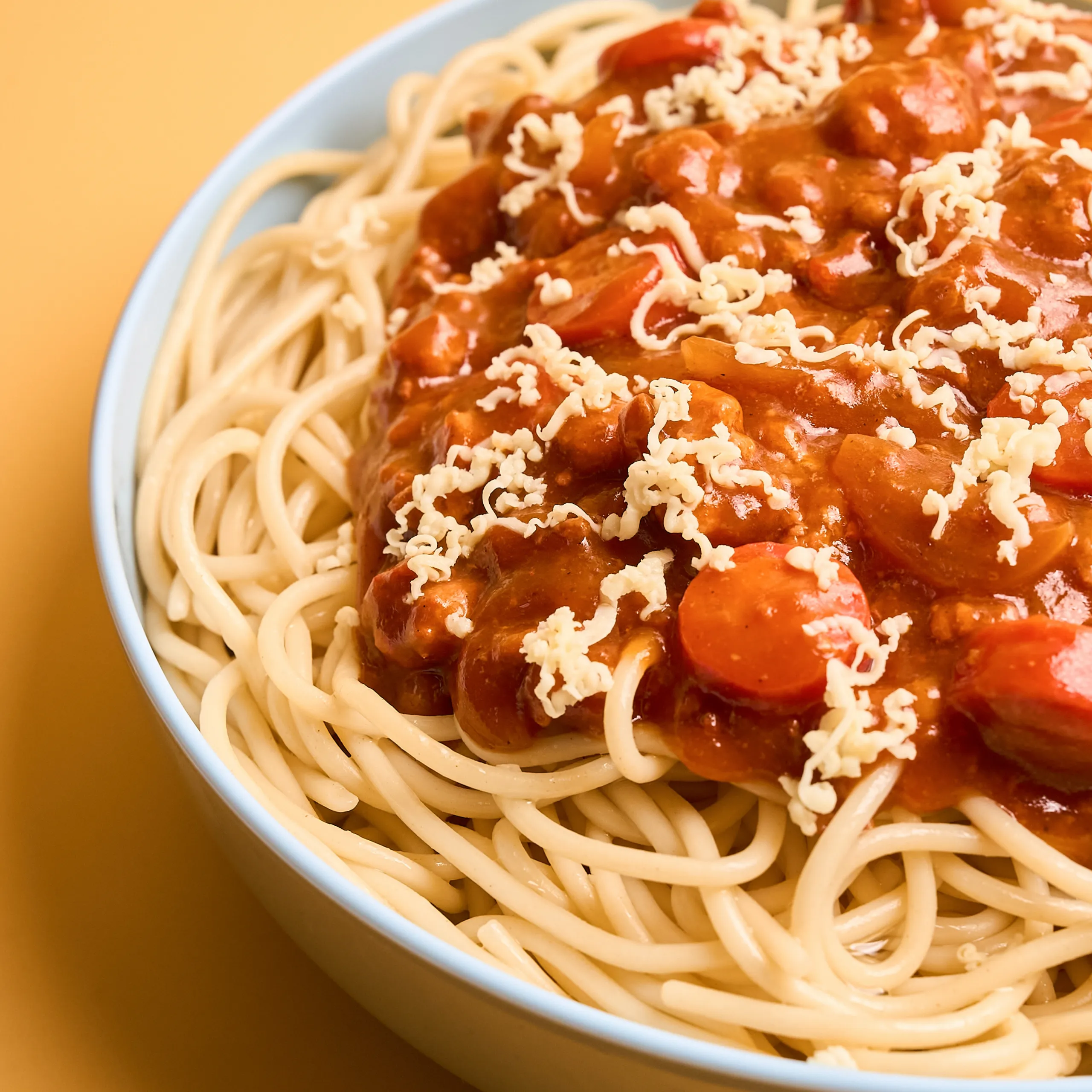


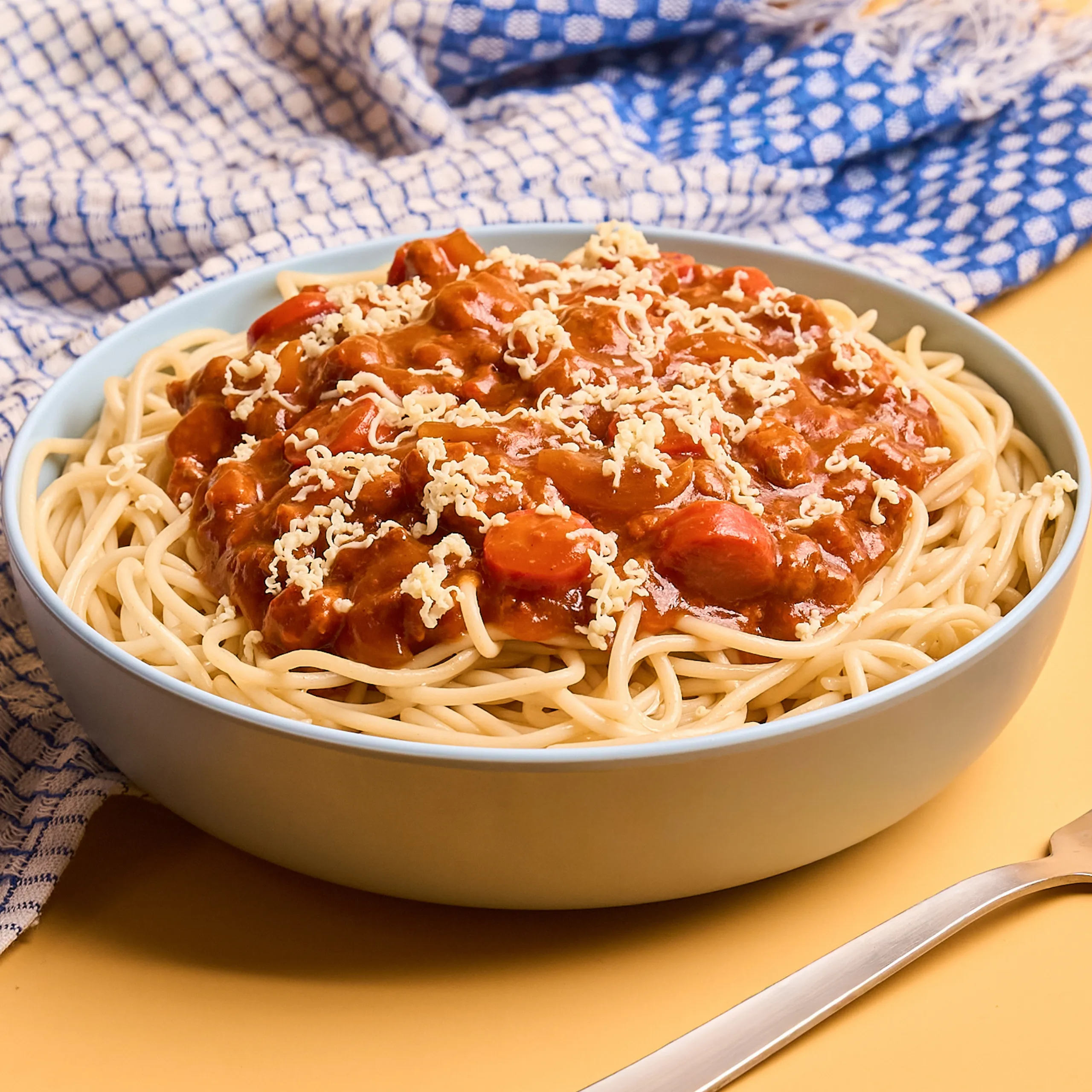
For many Filipinos, spaghetti is more than just a plate of pasta. It is a food connected to childhood birthdays, family celebrations, school parties, Christmas gatherings, and those simple moments when everyone gathers around the dining table. You might remember seeing a large tray of bright red spaghetti at a birthday party, topped generously with grated cheese, with slices of hotdog mixed into the sauce. For many families, that familiar combination is a comforting taste of home.
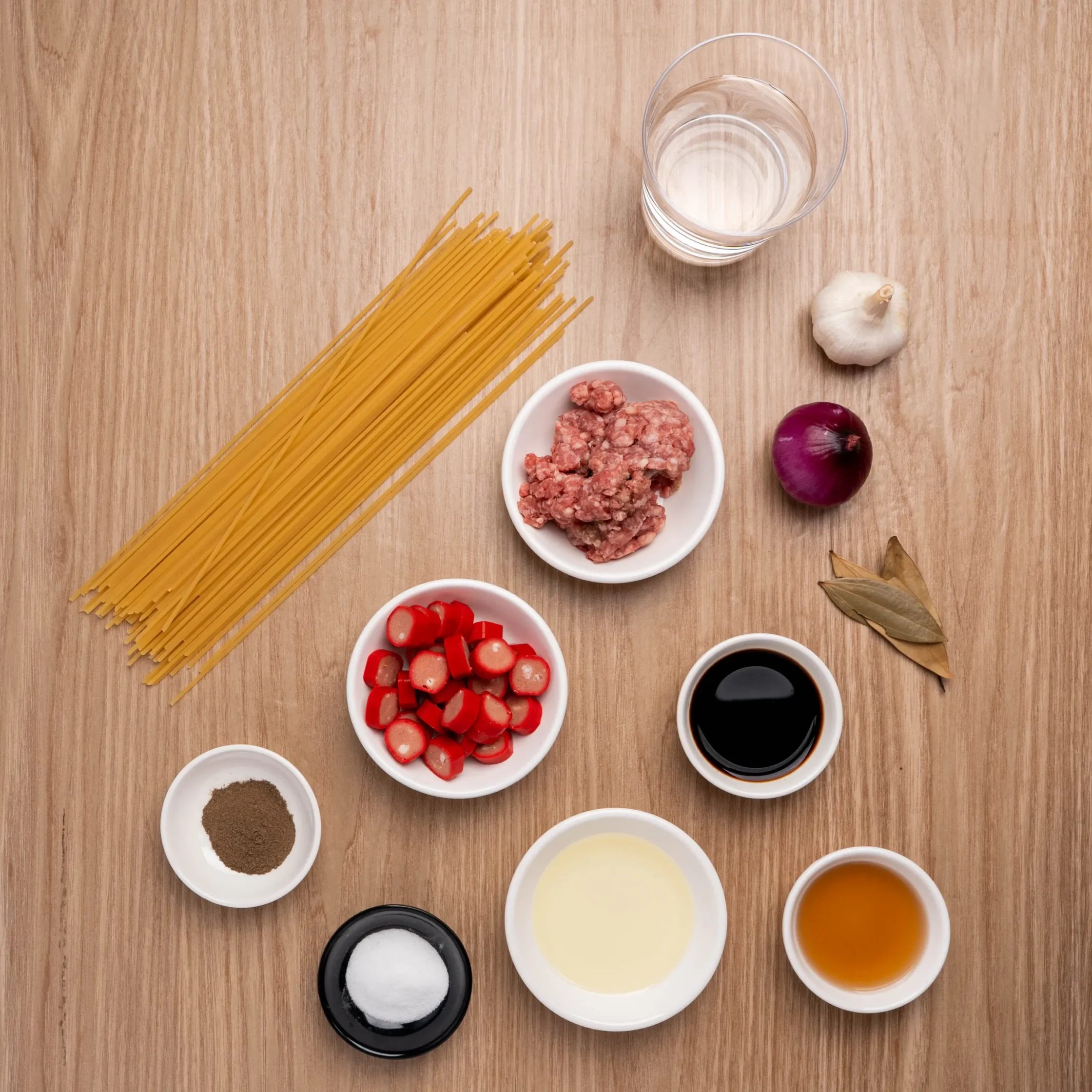
Filipino-Style Spaghetti is different from the traditional Italian versions that many people may be familiar with. Instead of a primarily tomato-forward and savory sauce, the Filipino version is known for its sweet, savory, meaty, and slightly tangy flavor. Filipino-style spaghetti sauce is usually sweeter, and hotdogs are a signature addition. Ground beef gives the sauce a hearty texture, while garlic, onion, fish sauce, soy sauce, and bay leaves add layers of savory flavor.
What makes this dish particularly special is how it has been adapted to Filipino tastes. It takes a familiar Western dish and transforms it into something distinctly Filipino. It is not simply an imitation of Italian spaghetti—it has developed its own identity and has become a beloved part of Filipino food culture.
This recipe is straightforward enough for a weekday meal but special enough for birthdays and celebrations. Served hot with plenty of grated cheese, Filipino-Style Spaghetti is the kind of dish that can disappear surprisingly quickly once it reaches the table.
A Brief History of Filipino-Style Spaghetti
Spaghetti was introduced to the Philippines through Western influence, particularly during the American colonial period, when American food products, restaurants, and food culture became increasingly familiar in the country.
Over time, Filipinos adapted spaghetti to local tastes and available ingredients. Instead of keeping the sauce strongly savory and acidic, Filipino cooks developed a sweeter tomato-based sauce. Hotdogs became a popular addition, and the dish was often finished with a generous amount of grated cheese.
The result became what we now recognize as Filipino-style spaghetti.
Sweetness is an important part of the Filipino version. Filipino cuisine has many dishes that balance salty, sweet, sour, and savory flavors, so a sweeter spaghetti sauce fits naturally into local preferences.
The dish also became closely associated with celebrations. Fast-food chains and family restaurants helped make Filipino spaghetti even more recognizable, but homemade versions remain extremely popular. Every family can have its own variation: some add liver spread, some use pork instead of beef, some add banana ketchup, while others add extra hotdogs or cheese.
There is no single “correct” version. Filipino-Style Spaghetti is a good example of how food changes as it travels between cultures and becomes part of a new culinary tradition.
Understanding the Ingredients
Spaghetti Pasta
Spaghetti is a long, thin pasta that provides the foundation of the dish. The pasta itself is relatively mild in flavor, which allows the sweet and savory sauce to stand out.
Cooking the pasta properly is important because overcooked spaghetti can become soft and mushy. Ideally, it should be tender but still have some firmness when bitten.
Garlic
Garlic is one of the most important aromatic ingredients in Filipino cooking. Sautéing minced garlic in oil releases its aroma and creates a flavorful foundation for the sauce.
Garlic also contains sulfur-containing compounds and antioxidant compounds, making it a flavorful ingredient that can contribute to a nutritious diet.
Onion
Onion adds natural sweetness and depth. When sautéed until softened, it becomes slightly sweet and helps round out the flavor of the meat sauce.
Bay Leaves
Bay leaves provide a subtle herbal aroma. They are not normally eaten directly; instead, they are added while the sauce simmers and removed before serving.
Even though bay leaves have a relatively mild flavor, they can make a noticeable difference in a slowly simmered sauce.
Ground Beef
Ground beef provides protein and a rich, savory flavor. As it cooks, it absorbs the seasonings and becomes part of the sauce.
For a less greasy spaghetti, choose ground beef with a moderate amount of fat and drain excess grease after browning if necessary.
Fish Sauce
Fish sauce adds saltiness and umami. Although it has a strong aroma on its own, it blends into the sauce during cooking and provides a deeper savory character.
This is one of the ingredients that gives the recipe a distinctly Filipino touch.
Soy Sauce
Soy sauce adds additional umami and saltiness. It complements the beef and helps balance the sweetness of the Filipino-style spaghetti sauce.
Because both fish sauce and soy sauce are salty, taste the sauce before adding extra salt.
Filipino-Style Spaghetti Sauce
This is the ingredient that gives the dish much of its characteristic sweetness and tomato flavor.
Filipino-style spaghetti sauces are formulated specifically for the sweeter flavor profile associated with Filipino spaghetti. Different brands can vary in sweetness, so you can adjust the final flavor according to your preference.
Hotdogs
Hotdogs are perhaps the most recognizable ingredient that distinguishes Filipino spaghetti from many traditional spaghetti recipes.
They provide a mildly smoky, salty, and slightly sweet flavor. Sliced hotdogs also make the dish especially familiar to Filipino children and families.
Recipe Tips for Better Filipino-Style Spaghetti
Brown the Beef Properly
Don’t rush the ground beef. Browning it creates a richer flavor and prevents the sauce from tasting flat.
Don’t Burn the Garlic
Garlic cooks quickly. Keep the heat moderate and stir frequently. Once garlic becomes dark brown or burnt, it can develop a bitter flavor.
Let the Sauce Simmer
Even if the spaghetti sauce is already prepared, simmering it with the beef and aromatics allows the flavors to blend.
A gentle simmer is better than aggressive boiling.
Taste Before Adding Salt
Fish sauce and soy sauce already provide plenty of sodium. Always taste the sauce first.
Adjust the Sweetness
Not every Filipino-style spaghetti sauce tastes exactly the same. Some are very sweet, while others are more tomato-forward.
If you find the sauce too sweet, add more savory ingredients carefully or dilute it slightly with plain tomato sauce.
Slice the Hotdogs Evenly
Cutting the hotdogs into similar-sized pieces makes the dish more attractive and ensures that each serving gets a good amount.
Don’t Overcook the Pasta
Overcooked pasta can become mushy, especially when mixed with hot sauce. Aim for tender pasta with a little firmness.
Use Plenty of Cheese
Cheese is one of the easiest ways to add richness and balance to Filipino-style spaghetti. Cheddar, quick-melting cheese, or processed cheese can all work depending on your preference.
Ingredient Substitutions
Ground Beef
You can substitute ground pork, ground chicken, or a combination of ground meats.
Ground pork is especially common in Filipino-style spaghetti and can create a richer sauce.
Fish Sauce
If you don’t have fish sauce, you can use additional soy sauce. The flavor will be slightly different because fish sauce provides a distinct umami character.
Soy Sauce
Reduced-sodium soy sauce can be used if you want to lower the saltiness.
For a different flavor, you can also use tamari, although the overall taste may change slightly.
Filipino-Style Spaghetti Sauce
If you don’t have Filipino-style spaghetti sauce, you can make a substitute using regular tomato or pasta sauce combined with a small amount of sugar or banana ketchup.
Add the sweetener gradually because the desired sweetness varies from person to person.
Hotdogs
You can use Filipino-style red hotdogs, regular hotdogs, sausage, Vienna sausage, or another cooked sausage.
If you prefer not to use processed meat, simply leave it out and increase the amount of ground meat or add vegetables.
Olive Oil
Regular cooking oil can be used for the pasta or sauce. Canola, vegetable, sunflower, or another neutral cooking oil will work.
Cheese
Cheddar is a popular choice, but you can also use quick-melting cheese, mozzarella, Parmesan, or a combination.
The flavor will differ, but the dish will still be delicious.
How to Make It More Special
If you’re preparing this for a birthday or family celebration, there are several easy ways to make the dish more festive.
You can add extra hotdogs, use a mixture of ground beef and pork, or add a small amount of banana ketchup for additional sweetness and color.
Some cooks also add liver spread or finely chopped liver for a deeper savory flavor.
Vegetables such as finely diced carrots, bell peppers, or mushrooms can also be incorporated if you want to add more nutrients and texture.
For children, keeping the sauce smooth and mildly seasoned may be preferable. For adults, you can add black pepper, chili flakes, or chopped chili for a little heat.
Food Knowledge: Why Is Filipino Spaghetti Sweet?
The sweetness of Filipino spaghetti is one of the most interesting things about the dish.
Traditional Italian tomato sauces generally emphasize the natural acidity and savory character of tomatoes, herbs, garlic, olive oil, and other ingredients. Filipino-style spaghetti developed differently.
Filipino food culture often embraces sweet-savory combinations. Ingredients such as banana ketchup, sweet-style sauces, and sugar are common in Filipino cooking.
As spaghetti became familiar in the Philippines, it was adapted to local tastes. The result was a sweeter tomato sauce, often paired with hotdogs and generous amounts of cheese.
This is why Filipino spaghetti should not necessarily be judged by how closely it resembles Italian spaghetti. It is its own style of comfort food with a history shaped by cultural exchange and local preferences.
Health Benefits of the Ingredients
Filipino-style spaghetti is a hearty comfort food, and like many rich pasta dishes, it is best enjoyed as part of a balanced diet.
Garlic
Garlic contains sulfur compounds and antioxidants. It also adds significant flavor without needing large amounts of additional seasoning.
Onion
Onions provide fiber and various plant compounds, including antioxidants. They also contribute natural sweetness and flavor to the sauce.
Tomatoes
Tomato-based spaghetti sauce provides nutrients such as vitamin C and the antioxidant lycopene. Lycopene is a carotenoid associated with the red color of tomatoes.
Beef
Ground beef provides protein, iron, zinc, and vitamin B12. Choosing leaner ground beef can reduce the amount of saturated fat in the dish.
Bay Leaves
Bay leaves are primarily used for their aroma and flavor. While only a small amount is used in the recipe, herbs and spices can contribute beneficial plant compounds to the diet.
Garlic and Onion Together
This classic combination is useful beyond flavor. Both ingredients contain various plant compounds and antioxidants and are staples of many nutritious cooking styles.
Pasta
Spaghetti provides carbohydrates, which are an important source of energy. Whole-wheat pasta can provide more fiber than regular pasta if you prefer a higher-fiber option.
Hotdogs
Hotdogs provide protein but are processed meat and can be relatively high in sodium and saturated fat. If you’re trying to make the dish lighter, use less hotdog or replace some of it with fresh meat or vegetables.
How to Make the Meal More Balanced
Instead of making the spaghetti the only component of the meal, serve it with vegetables or a fresh salad.
You can also use leaner ground meat, add finely chopped vegetables to the sauce, reduce the amount of processed meat, and use a moderate amount of cheese.
Properly Storing Filipino-Style Spaghetti
Proper storage is important because the dish contains cooked meat and pasta.
Refrigerating Leftovers
Allow the food to stop steaming heavily, then transfer leftovers into clean, shallow, airtight containers.
Refrigerate promptly rather than leaving the spaghetti at room temperature for an extended period.
For food safety, perishable cooked foods should generally be refrigerated within about 2 hours, or sooner in very hot conditions.
How Long Does Filipino Spaghetti Last in the Refrigerator?
Properly refrigerated cooked spaghetti with meat sauce is generally best consumed within 3 to 4 days.
If it develops an unusual smell, appearance, texture, or signs of spoilage, discard it rather than tasting it to determine whether it is still safe.
Can You Freeze Filipino Spaghetti?
Yes. Filipino-style spaghetti freezes well, especially the sauce.
For the best texture, consider freezing the sauce separately from the pasta.
Place cooled sauce into airtight freezer-safe containers or bags and label them with the date.
Cooked pasta can also be frozen, although its texture may become somewhat softer after thawing.
How to Reheat
For refrigerated spaghetti, reheat it thoroughly in a saucepan, skillet, microwave, or oven.
If the sauce has become too thick, add a small amount of water while reheating and stir until the desired consistency is reached.
When reheating frozen food, thaw it safely in the refrigerator when possible and heat it thoroughly before serving.
Can You Freeze the Sauce?
Yes, and this is often the best meal-preparation option.
The meat sauce can be prepared in advance, cooled, portioned, and frozen. When you want spaghetti, simply cook fresh pasta and reheat the sauce.
Final Words
Filipino-Style Spaghetti is a beautiful example of how food can travel across cultures and become something entirely its own. What began as a Western-inspired dish has been transformed through Filipino ingredients, preferences, creativity, and family traditions.
Its sweetness may surprise someone trying it for the first time, but that sweetness is part of its identity. The savory ground beef, salty fish sauce and soy sauce, fragrant garlic and onion, tender hotdogs, rich tomato sauce, and melted cheese come together to create a flavor that many Filipinos immediately associate with celebrations and home.
Perhaps that is the real magic of Filipino spaghetti. It doesn’t need to follow a traditional definition to be meaningful. Food evolves, families adapt recipes, and certain dishes become connected to memories.
A big pot of Filipino spaghetti can represent a child’s birthday, a Christmas gathering, a family reunion, a Sunday lunch, or simply a comforting meal after a long day.
So whether you’re making it for a special celebration or preparing a simple family dinner, take your time with the sauce, taste as you go, adjust the sweetness and saltiness to your liking, and don’t forget the cheese.
In the end, the best Filipino spaghetti is not necessarily the one that follows every rule. It is the one that tastes like home and gives people a reason to gather around the table.
If you’d like, I can also create a matching long-form version for another Filipino recipe using this same format and writing style, so your entire recipe collection has a consistent look and tone.