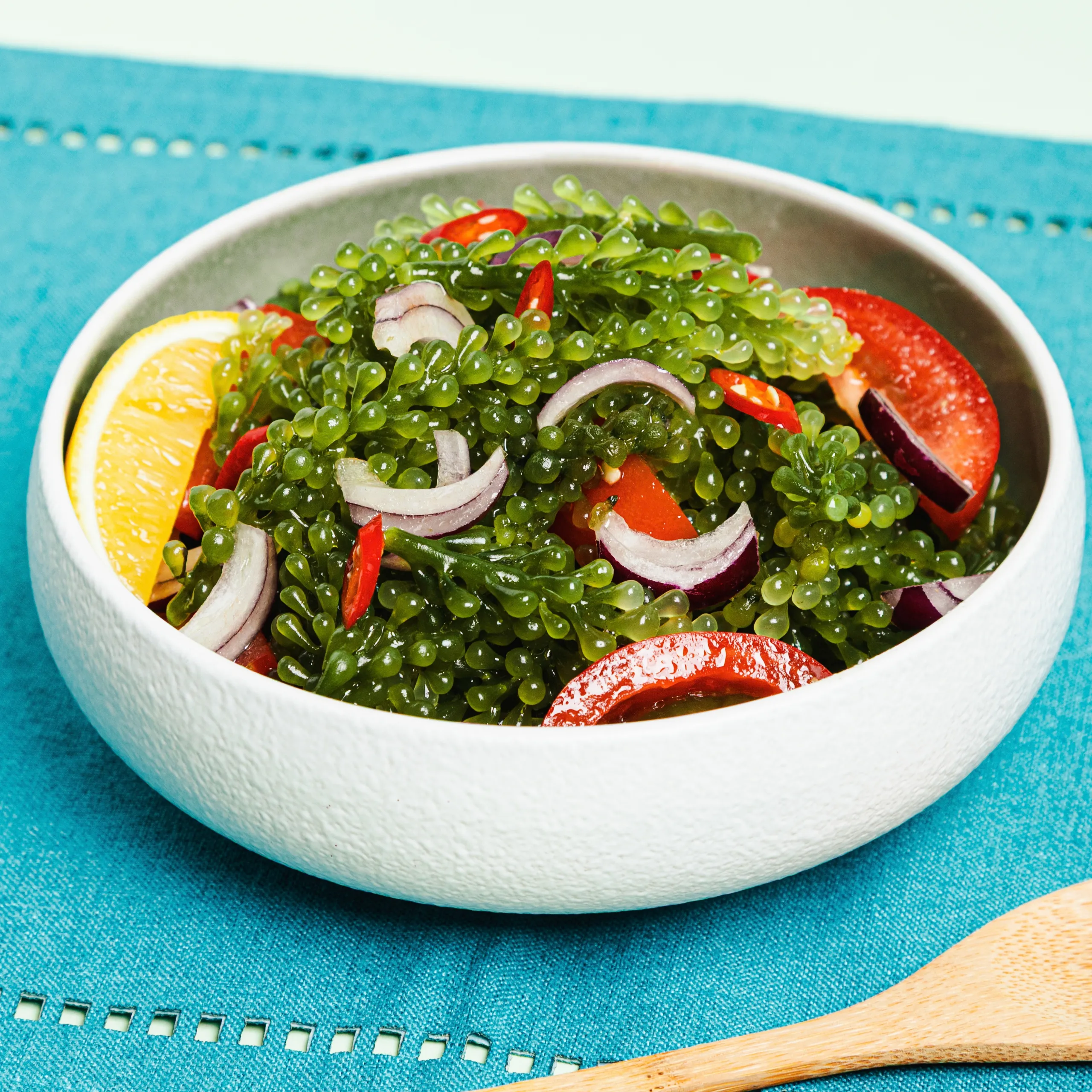


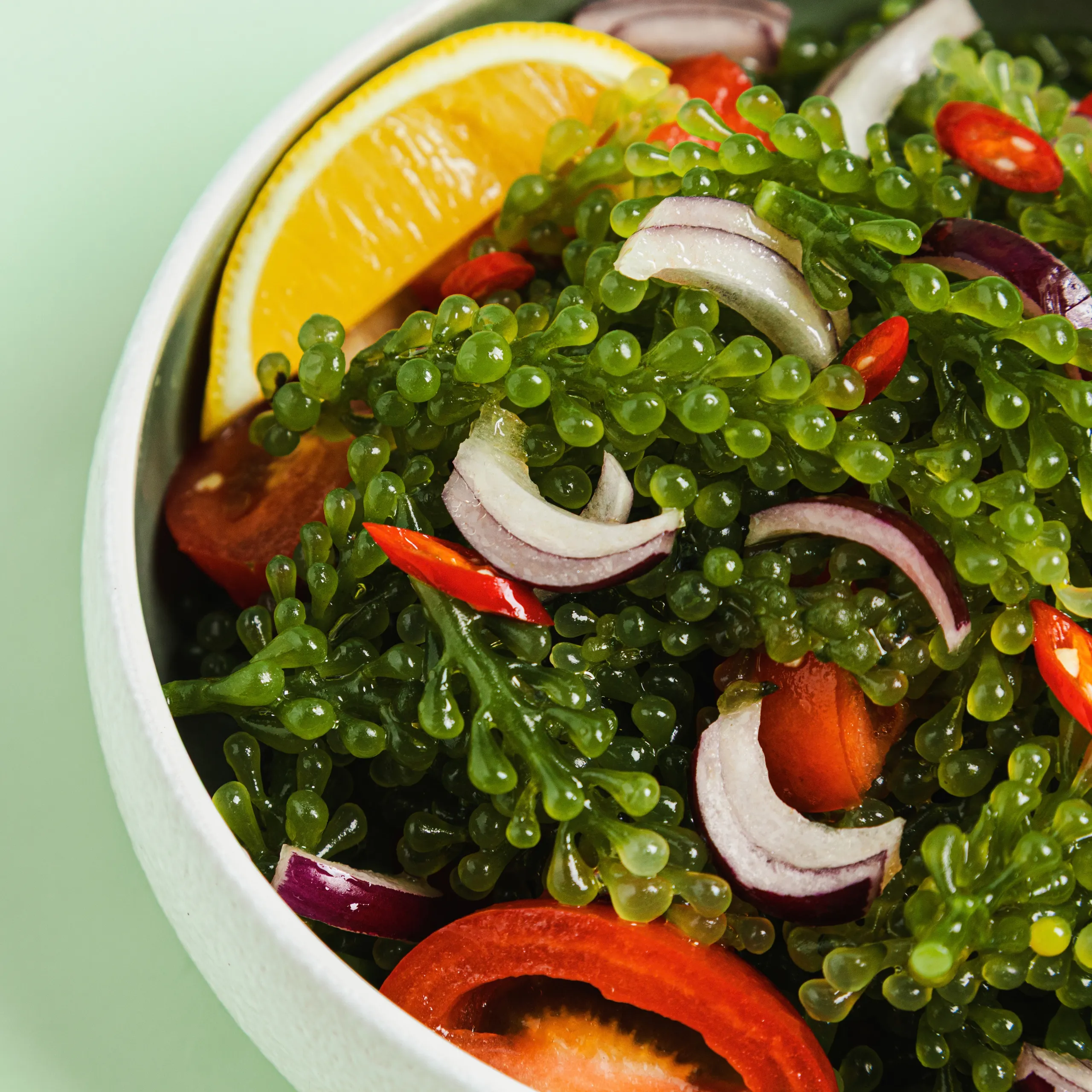
Lato salad is one of those simple Filipino dishes that proves you do not need a long list of ingredients to make something memorable. Fresh lato, also called sea grapes or green caviar, is naturally crisp and pleasantly briny. When tossed with juicy tomatoes, sharp red onion, vinegar, and calamansi, it becomes a refreshing side dish that pairs especially well with grilled or fried seafood and other Filipino meals.
A Little History of Lato Salad
Lato, scientifically belonging to the genus Caulerpa, is a type of edible green seaweed commonly found in warm coastal waters. In the Philippines, it is particularly associated with coastal communities and is eaten fresh rather than heavily cooked.
The name lato is widely used in the Philippines, while other communities and countries may use names such as sea grapes, green caviar, or Caulerpa lentillifera. Its appearance is distinctive: tiny round beads grow along slender stems, giving the seaweed the appearance of a miniature bunch of green grapes.
Traditionally, fresh lato can be eaten with a simple dipping sauce or mixed with ingredients such as tomatoes, onions, vinegar, and citrus. The preparation is deliberately uncomplicated because cooking can destroy the delicate texture that makes fresh lato special.
Optional additions
You can personalize the salad without losing its traditional character by adding:
- Cucumber, thinly sliced
- Green mango, cut into thin strips
- Chopped spring onions
- A small amount of fresh chili
- A pinch of sugar to balance very sharp vinegar
- Roasted or grilled fish served alongside the salad
Recipe Tips for Better Lato Salad
Keep the lato cold. Fresh lato is especially refreshing when chilled. You can refrigerate it briefly before preparing the salad.
Don’t over-wash it. Lato should be cleaned, but excessive washing can reduce its natural briny flavor and affect its texture.
Don’t crush the sea grapes. The little beads are the highlight of the dish. Handle them gently.
Add the dressing shortly before serving. Acidic ingredients such as vinegar and calamansi can gradually change the texture of delicate seaweed.
Go easy on salt. Lato already contributes natural saltiness, so always taste before seasoning.
Use ripe but firm tomatoes. Very soft tomatoes can release too much liquid and make the salad watery.
Slice the onion thinly. Thin slices distribute the onion flavor without overwhelming the mild seaweed.
Ingredient Substitutions
If you cannot find every ingredient, the salad is fairly flexible.
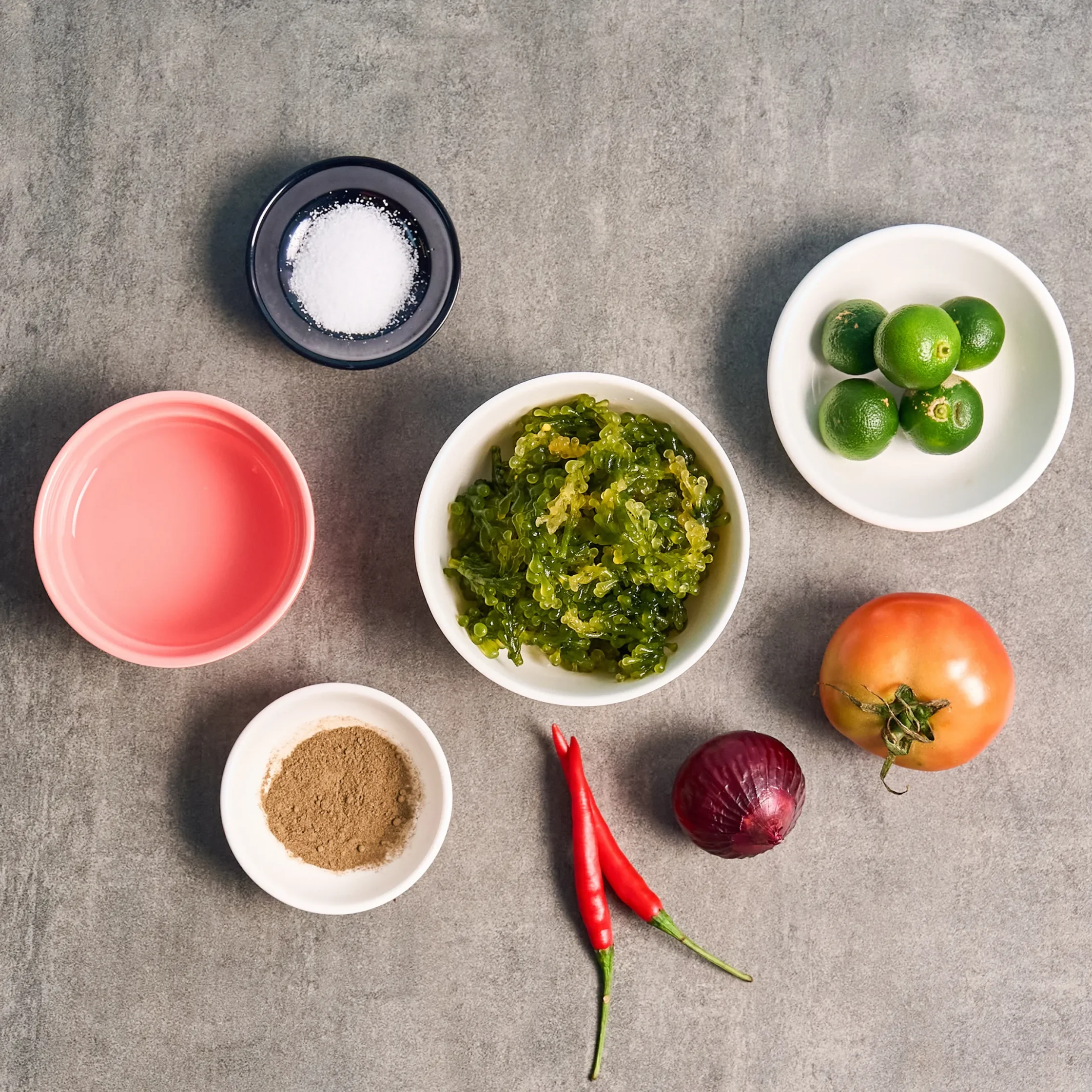
Calamansi
Fresh calamansi gives the most distinctly Filipino flavor, but you can substitute it with:
- Lemon juice
- Lime juice
- A mixture of lemon and lime juice
The flavor will be slightly different, but the citrus still provides the acidity needed for the dressing.
Red onion
White onion or shallots can be used instead. Shallots are particularly useful if you prefer a gentler onion flavor.
Vinegar
Cane vinegar is an excellent Filipino-style choice. Coconut vinegar or rice vinegar can also work.
Rice vinegar tends to be milder and slightly sweeter, while stronger vinegars will give the salad a sharper flavor.
Tomato
Regular tomatoes work well, but cherry tomatoes can also be used. They are particularly convenient when making individual servings.
Black pepper
Freshly ground black pepper gives the salad a little warmth, but it can be omitted if you prefer the clean, fresh flavor of the sea grapes.
What Makes Lato Special?
The most interesting characteristic of lato is its texture. Each tiny bead contains water, so biting into it creates a gentle pop in the mouth.
This texture is very different from cooked seaweed. Rather than being soft or chewy, fresh lato can be crisp and juicy.
Its flavor is also naturally marine and mildly salty. Because of this, strong sauces are generally unnecessary. Vinegar and calamansi work particularly well because their acidity balances the seaweed’s briny character.
Lato is also an example of how coastal Filipino food makes use of ingredients that are naturally available from the surrounding environment. Instead of transforming the seaweed through extensive cooking, the preparation highlights its natural characteristics.
Health and Nutrition
Lato can be a nutritious addition to a varied diet. Like other edible seaweeds, it provides dietary fiber and contains various minerals and naturally occurring plant compounds. Its nutritional composition can vary depending on the species, growing conditions, and preparation.
Because the salad uses fresh vegetables and relatively little added fat, it can be a light side dish compared with many creamy or fried salads.
The tomato contributes nutrients such as vitamin C and carotenoids, while calamansi adds vitamin C and acidity.
However, lato should not be treated as a cure or as a replacement for a balanced diet. Its naturally salty, marine character also means people who need to monitor sodium intake should pay attention to portion size and additional salt.
How to Store Lato Properly
Fresh lato is best eaten as soon as possible because its texture is one of its most desirable qualities.
If you need to store it:
- Keep the fresh lato refrigerated.
- Place it in a clean, covered container.
- Avoid crushing or tightly compressing the sea grapes.
- Keep it away from strong-smelling foods.
- Avoid storing it submerged in fresh water.
- Keep the dressing separate if you are preparing the salad in advance.
For the best quality, prepare only the amount you expect to eat. Once mixed with vinegar and calamansi, the texture can gradually change.
If the lato develops an unusual smell, slimy texture, significant discoloration, or other signs of spoilage, discard it rather than trying to salvage it.
Final Words
Lato salad is a beautiful example of uncomplicated Filipino food. The recipe does not depend on complicated techniques or expensive ingredients. Instead, it relies on the natural qualities of fresh sea grapes, ripe tomatoes, crisp onion, sharp vinegar, and fragrant calamansi.
The best version is usually the one that allows the lato to remain the star of the dish. Keep the sea grapes fresh, handle them gently, season conservatively, and add the acidic dressing close to serving time.
With every bite, you get the freshness of the vegetables, the bright tang of calamansi and vinegar, and that unmistakable little pop of the sea grapes—a simple combination that brings the flavors of the Philippine coast straight to the table.