


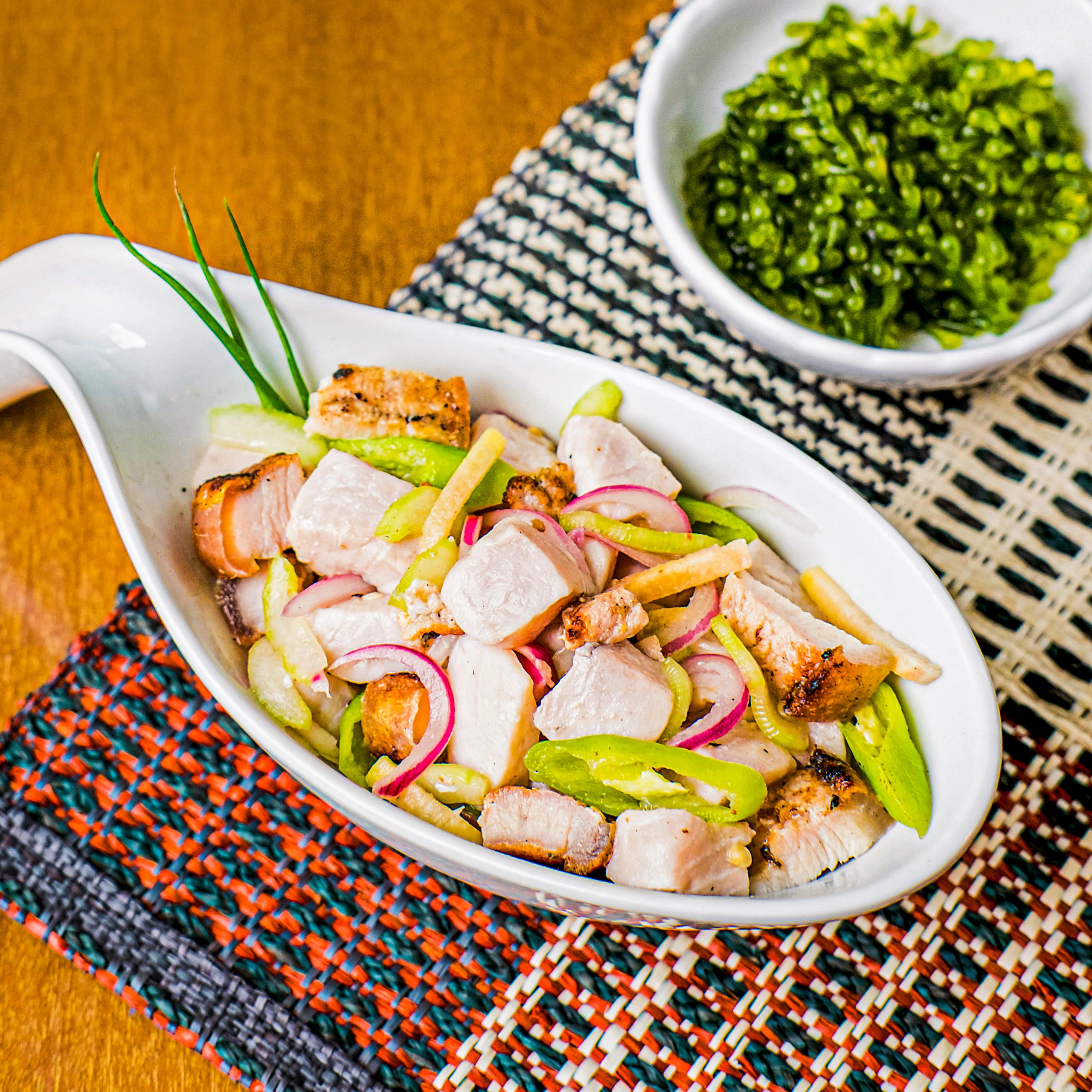
A popular recipe from the Southern Philippines is Sinuglaw, a grilled liempo and raw fish dish that gives diners the best of both worlds. Its name comes from two of the cooking methods employed when making sinuglaw: sinugba, which means “to grill” and kinilaw, a cooking method that uses vinegar to “cook” raw fish.
Typically made with two kinds of souring agents—vinegar and a citrus fruit—this dish beautifully melds together the sharp acidity of the kind of vinegar used and the fruity sourness and fragrance of a calamansi, dayap (key lime) or lemon. The smokiness of the grilled liempo plays off the freshness of the fish that has absorbed the multilayered flavors of the dressing, tied together beautifully by the crispness of the cucumber, onions, and ginger.
Great either as an appetizer or a main dish, sinuglaw is an all-in-one dish that you should try making at home!
Recipe by Mike Aviles, Mateo Ty, and Millet Aviles Ty of Lachi’s Cake Shop Davao.
Recipe Tips
- Since this is a raw fish dish, make sure to use the freshest fish possible. This is essential for both flavor and food safety so only use the freshest catch.
- Pick a meaty fish, too, for your sinuglaw. While this dish calls for blue marlin, tuna is traditionally used. Any kind of firm fish would do, just make sure it’s fresh.
- After grilling the pork liempo, let it rest for a bit before slicing. This helps the meat retain its juices and makes it easier to cut into smaller, bite-sized pieces.
- Always taste the dressing as your are making it. The balance between the vinegar and calamansi against the fish and pork is key. And make sure to season with salt and pepper gradually as you mix everything.
Substitutions
While this recipe typically uses cucumber, you can also try other sweet and crunchy vegetables for added texture and flavor. Alternatively, you may use thinly sliced jicama (singkamas) green or red bell pepper, radish (labanos), or even green mango.