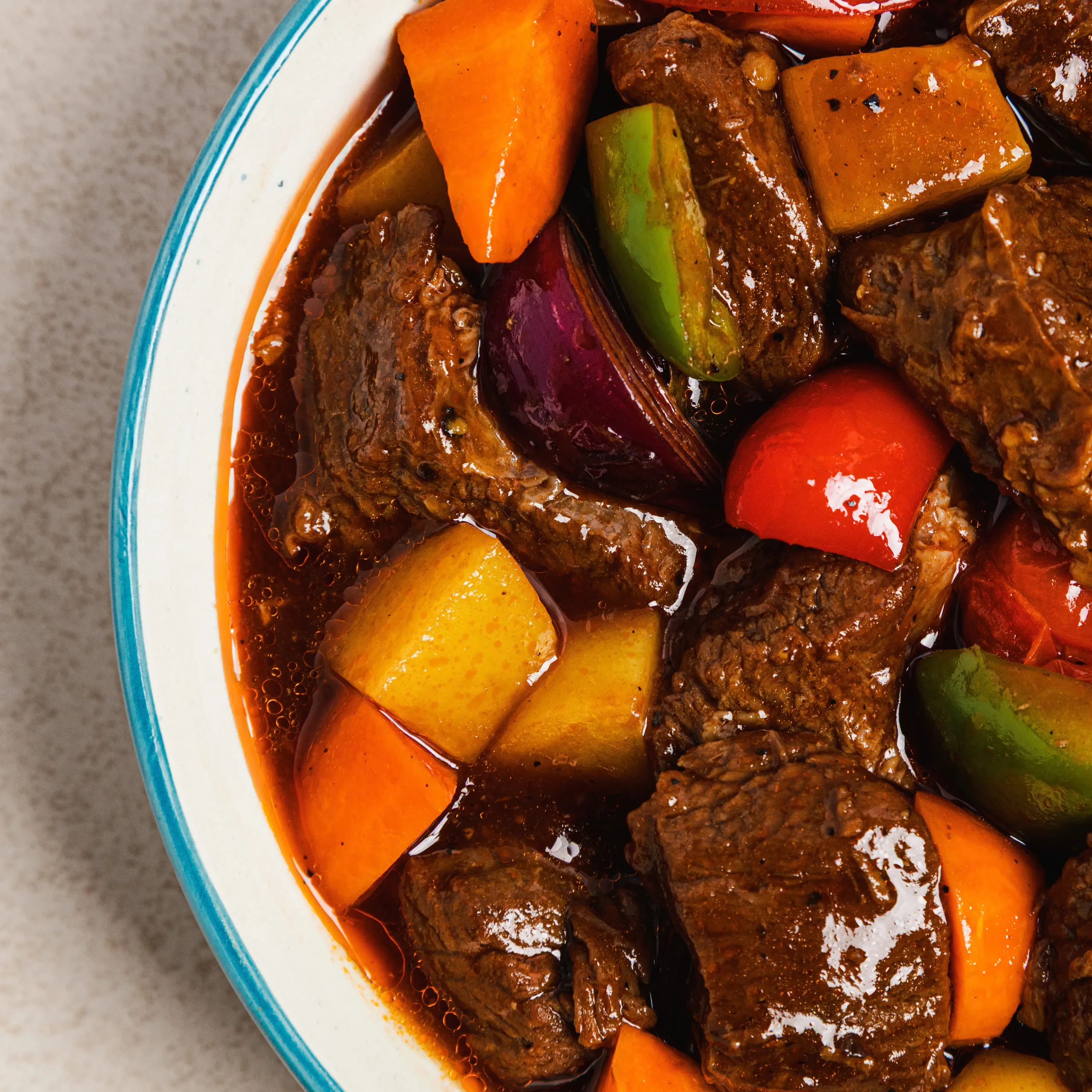


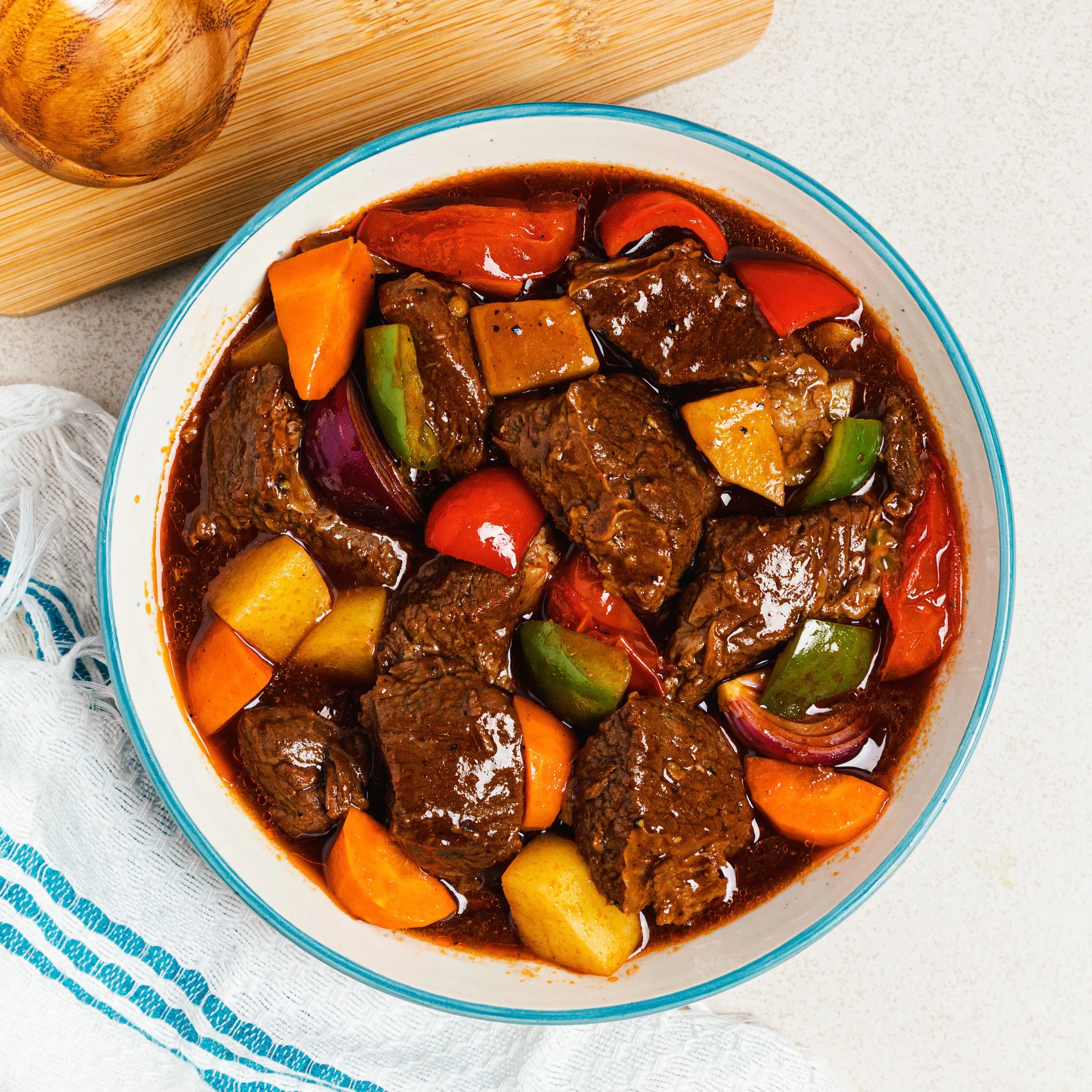
Mechado is the kind of Filipino dish that feels right at home on a family dining table. It is rich, savory, slightly tangy, and comforting, with tender pieces of beef simmered slowly in a tomato-based sauce until the flavors come together. The potatoes and carrots soak up the sauce, while bell pepper adds a little sweetness and freshness.
For many Filipino families, dishes like mechado are more than simply something to eat. They are the kind of food associated with weekend lunches, family gatherings, celebrations, and the familiar smell of something delicious slowly cooking in the kitchen. It is a dish that rewards patience: the longer the beef gently simmers, the more tender and flavorful it becomes.
A Little History of Mechado
Mechado is one of several Filipino dishes influenced by Spanish culinary traditions. Its name is commonly associated with the Spanish word mecha, meaning “wick,” referring to the traditional preparation in which strips of pork fat were inserted into a piece of beef. The fat resembled a wick running through the meat and helped add richness during cooking.
Over time, Filipino cooks adapted the dish to local ingredients, cooking methods, and tastes. Modern versions commonly use cubed beef rather than a whole piece of beef stuffed with pork fat. Tomato sauce, potatoes, carrots, soy sauce, citrus, and other ingredients have also become familiar components of Filipino-style mechado.
This adaptation is characteristic of Filipino cuisine: outside influences were not simply copied but were gradually transformed into something distinctly local.
Mechado is sometimes discussed alongside other Filipino tomato-based stews such as caldereta and afritada. Although they share ingredients and cooking techniques, each has its own traditional variations, flavor profile, and family interpretations.
Recipe Tips for Delicious Mechado
Brown the beef properly
Don’t rush the browning process. A nicely browned exterior gives the finished stew a deeper and more developed flavor.
Don’t overcrowd the pot
If too much beef is added at once, it may release water and steam instead of browning. Cook in batches when necessary.
Use beef chuck
Beef chuck is particularly suitable and carrots need more cooking time than bell peppers. Adding everything at once can result in vegetables with different levels for slow-cooked dishes because it contains connective tissue that becomes tender during long, gentle cooking.
Keep the simmer gentle
A violent boil is not necessarily better. A gentle simmer gives the beef time to become tender while helping prevent the meat from becoming unnecessarily tough.
Add vegetables at the right time
Potatoes and carrots need more cooking time than bell peppers. Adding everything at once can result in vegetables with different levels of doneness.
Taste near the end
Because the sauce reduces during cooking, its saltiness and intensity can increase. Final seasoning is best done after the sauce has had time to develop.
Let it rest
Mechado can taste even better after sitting for a short time. The sauce settles, the beef absorbs some of the surrounding flavors, and the dish becomes more cohesive.
Ingredient Substitutions
Beef chuck
You can use other cuts suitable for stewing, such as:
- Beef brisket
- Beef round
- Beef stew meat
- Beef shoulder
Cooking time may vary depending on the cut.
Calamansi juice
If fresh calamansi isn’t available, substitute with:
- Lemon juice
- Lime juice
- A combination of lemon and lime
The flavor won’t be exactly the same, but these alternatives provide the necessary acidity.
Tomato sauce
Canned crushed tomatoes or blended fresh tomatoes can be used instead. If using fresh tomatoes, you may need to simmer the sauce longer to achieve the desired consistency.
Beef broth
Water works perfectly well. For additional flavor, use homemade beef stock or a low-sodium commercial broth.
Brown sugar
White sugar can be used in a smaller amount. You can also omit the sugar if you prefer a sharper, more tomato-forward sauce.
Potatoes
Sweet potatoes can be used for a different flavor profile, although this changes the traditional character of the dish.
Bell pepper
Green, yellow, or orange bell peppers can replace red bell pepper. Each variety contributes a slightly different level of sweetness.
What Makes Mechado Different?
Mechado belongs to the broader family of Filipino stews that developed through a mixture of local cooking traditions and outside influences.
One of its defining characteristics is its savory tomato-based sauce combined with beef and vegetables. Soy sauce adds saltiness and umami, while calamansi contributes acidity and fragrance.
The dish also demonstrates an important principle in Filipino cooking: balance.
You have savory soy sauce, acidic tomato and calamansi, natural sweetness from vegetables, a small amount of brown sugar, richness from beef, and aromatic ingredients such as garlic, onion, and bay leaf.
When those flavors are balanced properly, the result is much more complex than the relatively simple ingredient list might suggest.
How to Make the Sauce Richer
For a particularly rich mechado, you can build flavor in stages.
First, brown the beef well. Then allow the onions and tomatoes to cook down before adding the liquid. Finally, let the sauce reduce gently toward the end of cooking.
If you have time, you can also prepare the dish several hours before serving and reheat it gently. Like many braised dishes, mechado can develop an even deeper flavor after resting.
Health and Nutrition
Mechado provides several nutrients, although its overall nutritional profile depends on portion size and the specific ingredients used.
Beef provides protein, as well as nutrients such as iron, zinc, and vitamin B12.
Tomatoes provide vitamin C and carotenoids, including lycopene. Cooking tomatoes can change the availability of some of these compounds.
Carrots contribute beta-carotene, which the body can convert into vitamin A.
Bell peppers contribute vitamin C and other plant compounds.
Potatoes provide carbohydrates and potassium, making them a substantial part of the meal.
At the same time, mechado can be relatively high in sodium because of the soy sauce and added salt. Using a reduced-sodium soy sauce or dishes, portion size and the overall balance of the meal matter. Serving mechado with vegetables and an appropriate portion of rice can make it part broth and relying on the natural flavors of the other ingredients can help lower the amount of added sodium.
As with most rich meat dishes, portion size and the overall balance of the meal matter. Serving mechado with vegetables and an appropriate portion of rice can make it part of a varied diet.
How to Store Mechado Properly
Mechado is a good make-ahead dish because it stores and reheats well when handled properly.
Refrigerating
Allow the cooked mechado to cool promptly, then transfer it into clean, shallow, airtight containers.
Refrigerate it within 2 hours of cooking, or within 1 hour if the surrounding temperature is particularly hot.
For best quality, use refrigerated leftovers within about 3–4 days.
Freezing
Mechado can also be frozen.
Place cooled portions in freezer-safe containers or bags, leaving a little room for expansion. If possible, divide the dish into meal-sized portions before freezing.
For best quality, use frozen mechado within a few months.
The potatoes may become somewhat softer after freezing and thawing, but the beef and sauce generally hold up well.
Reheating
Reheat only the amount you intend to eat.
Warm the mechado in a saucepan over medium-low heat, stirring occasionally. Add a small amount of water or broth if the sauce has become too thick.
Make sure the entire portion is heated thoroughly before serving.
Avoid repeatedly cooling stewing can remain tough if it has not cooked long enough. Continue simmering gently until the connective tissue has had and reheating the same batch.
Final Words
Mechado is a dish that rewards time and patience. At first glance, it may look like a straightforward beef stew, but its character comes from the gradual layering of flavors: browned beef, garlic and onion, ripe tomatoes, savory soy sauce, bright calamansi, sweet vegetables, and a rich tomato sauce.
What makes mechado especially comforting is its balance between richness and brightness. The beef makes the dish hearty, while tomato and calamansi prevent it from feeling overly heavy. Potatoes and carrots make it satisfying, and bell pepper adds color and freshness.
Most importantly, mechado is the kind of recipe that can become your own. One family’s version may be more tangy, another may use more tomato sauce, while someone else may prefer a darker, richer sauce. Those little differences are part of what makes Filipino home cooking so personal.
Serve it with hot rice, spoon plenty of sauce over the top, and enjoy it slowly. Mechado is not simply a recipe to follow—it is a comforting Filipino stew that becomes even more special when shared around the table.