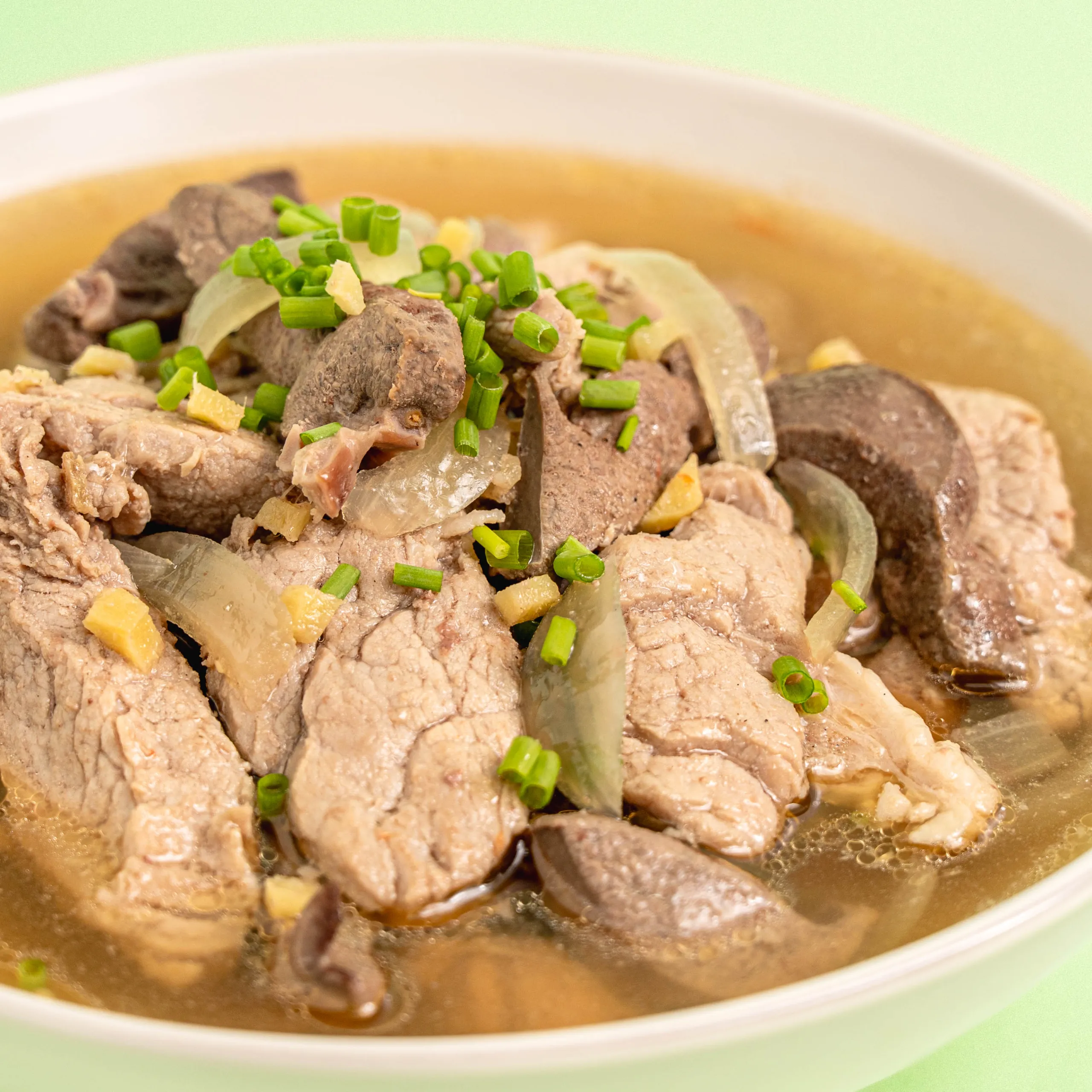


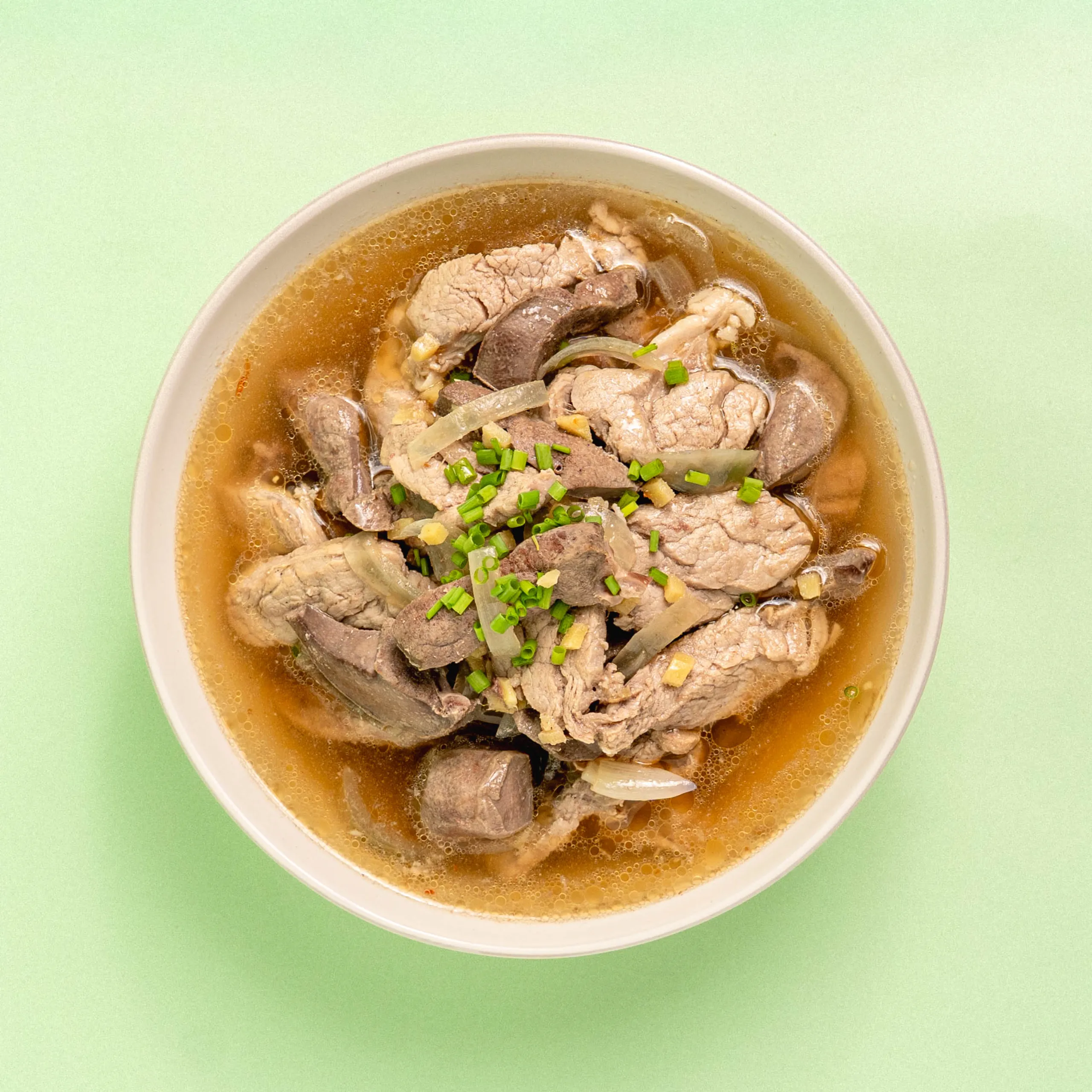
Some Filipino dishes don’t need a complicated sauce or a long list of ingredients to be memorable. Yusi is one of those dishes. Simple, savory, and comforting, this Ilocano preparation brings together tender pork, flavorful pork liver, aromatic ginger, garlic, onion, and fish sauce in a way that feels very much like home cooking.
For many Filipino families, dishes like this are the ones that quietly become part of everyday life. They are prepared when there is pork in the kitchen, when a simple but filling meal is needed, or when you want something flavorful to serve with a pot of freshly steamed rice. There is something satisfying about a dish that doesn’t try too hard—it simply lets good ingredients and careful cooking do the work.
This version of Yusi from Ilocos Norte uses pork tenderloin and pork liver. The tenderloin provides lean, meaty pieces, while the liver adds a rich, slightly earthy flavor that gives the dish more depth. Ginger, garlic, and onion create a fragrant base, while fish sauce provides the salty umami that ties everything together.
Finished with fresh spring onions, Yusi is a straightforward dish that can be prepared without complicated techniques. The key is knowing when to add each ingredient and avoiding overcooking the pork and liver.
A Little History of Yusi
Yusi is associated with the culinary traditions of Ilocos Norte, part of the Ilocos region in northern Luzon. Ilocano cooking is often characterized by its practical use of locally available ingredients, bold savory flavors, and dishes designed to complement rice.
Northern Filipino cuisine developed around agriculture, fishing, livestock raising, and the ingredients that communities could readily obtain. Pork has long been an important ingredient in many Filipino regional dishes, while aromatics such as garlic, onion, and ginger provide flavor without requiring complicated sauces.
Yusi reflects this kind of practical home cooking. Rather than relying on numerous spices or elaborate preparation, the dish builds flavor through sautéing aromatics, browning the meat, simmering, and seasoning carefully with fish sauce.
As with many regional Filipino dishes, recipes can vary from one household to another. One cook may prefer more ginger, another may add more fish sauce, while someone else may cook the meat a little longer to create a richer broth.
That flexibility is part of Filipino food culture. Traditional recipes are often passed down through families by watching, tasting, and adjusting rather than by following exact measurements.
What Is Yusi?
Yusi is a savory pork dish featuring pork and pork liver cooked with aromatic ingredients and fish sauce.
The combination of pork and liver is particularly important. Pork gives the dish its familiar meaty flavor, while liver provides richness and an earthy depth that would be difficult to achieve from pork alone.
The ginger is also an important part of the flavor profile. Its warmth cuts through the richness of the pork and liver and gives the dish a clean, aromatic quality.
Unlike heavily sauced Filipino dishes, Yusi is relatively simple. The cooking liquid creates a light, savory sauce or broth that coats the meat without overwhelming it.
This makes it particularly good with rice, where the savory juices can be spooned over each serving.
Recipe Tips for Better Yusi
Cut the pork evenly
Uniform strips cook more consistently. Very thin pieces can become dry quickly, while very thick pieces may take longer to cook.
Don’t overcook the tenderloin
Pork tenderloin is naturally lean. It doesn’t have the high fat content of pork belly, so prolonged cooking can make it dry.
Cook it until safely done and tender rather than simmering it unnecessarily for a long time.
Treat the liver gently
Pork liver has a delicate texture when properly cooked but can become tough if overcooked.
Adding it after the pork has already started cooking gives you better control over its texture.
Use fresh ginger
Fresh ginger makes a noticeable difference in this dish. It provides a clean, warm aroma that works particularly well with pork and liver.
Taste before adding salt
Fish sauce can vary considerably in saltiness. Since three tablespoons are already included in the recipe, taste the dish before adding additional salt.
Don’t discard the cooking liquid
The savory liquid is part of what makes this dish excellent with rice. Spoon some over the rice rather than treating it as something to drain away.
Use a wide pan
A wide pan allows the pork to brown more effectively and gives you more control over the cooking process.
Ingredient Substitutions
One of the nice things about Yusi is that the basic method is flexible.
Pork tenderloin
If pork tenderloin isn’t available, you can use pork loin.
Pork shoulder can also be used, although it contains more connective tissue and may require a longer cooking time to become tender.
For a richer dish, pork belly can be substituted, but it will make the finished meal considerably fattier.
Pork liver
If pork liver is difficult to find, chicken liver can be used as an alternative. The flavor and texture will be different, but chicken liver still provides the rich organ-meat character that makes the dish distinctive.
Be aware that different types of liver cook at different rates, so adjust the cooking time accordingly.
Fish sauce
Fish sauce provides the main salty umami flavor.
If you don’t have fish sauce, soy sauce can be used, although the flavor will be different. You may also use a combination of soy sauce and a small amount of another savory seasoning.
Spring onions
Chives or finely sliced leeks can work as substitutes.
You can also finish the dish with chopped cilantro if you enjoy its flavor, although that changes the traditional character of the dish.
Ginger
Fresh ginger is strongly recommended, but ground ginger can be used in an emergency. It will not provide the same fresh aroma, so use it sparingly.
Pork-free variation
If you need an alternative to pork, chicken can be used with chicken liver. The cooking time will need to be adjusted because chicken cooks differently from pork.
The result will no longer be the traditional pork version, but the ginger-garlic-fish sauce combination remains delicious.
Understanding the Main Ingredients
Pork tenderloin
Pork tenderloin is one of the leanest cuts of pork. It is tender and cooks relatively quickly, making it practical for stir-fried or lightly simmered dishes.
Its low fat content also means it benefits from careful cooking. Overcooking can quickly turn it dry.
Pork liver
Pork liver has a concentrated, savory flavor and provides nutrients including vitamin A, vitamin B12, iron, copper, and protein.
Because liver is so nutrient-dense, it is generally better enjoyed in moderate amounts rather than consumed in very large portions on a regular basis.
Its flavor can be strong, but in Yusi it is balanced by the pork and aromatic ingredients.
Ginger
Ginger gives the dish warmth and fragrance. Its slightly spicy character helps balance the richness of the meat and gives the finished dish a fresher taste.
Garlic
Garlic is one of the most important flavor-building ingredients in Filipino cooking. Sautéing it releases aromatic sulfur compounds that give the dish its characteristic savory fragrance.
Onion
Onion provides sweetness and depth. As it cooks, its sharp raw flavor softens and becomes more mellow.
Fish sauce
Fish sauce is a fermented condiment made from fish and salt. It is a powerful source of umami and is used throughout Filipino cuisine to season everything from soups and stews to stir-fries.
A little can go a long way, which is why it is important to taste before adding more.
Spring onions
Spring onions provide a mild onion flavor and a fresh finish. Their green color also gives the dish some visual contrast.
Health Benefits of the Ingredients
Yusi is a protein-rich meal, although its overall nutritional profile will depend on portion size and the amount of oil and fish sauce used.
Pork tenderloin is a lean source of protein and provides nutrients such as thiamine, vitamin B6, phosphorus, selenium, and zinc. Because it is relatively lean, it can be a lighter choice than fattier pork cuts.
Pork liver is exceptionally rich in several micronutrients, particularly vitamin B12, vitamin A, iron, copper, and folate. Liver is one of the most nutrient-dense animal foods, although its high vitamin A content means very large or frequent servings are not advisable.
Ginger contains naturally occurring compounds such as gingerols. It has traditionally been used in many cultures for digestive comfort and its warming flavor.
Garlic contains sulfur-containing compounds and provides small amounts of vitamin C, vitamin B6, and manganese.
Onions contain fiber and various plant compounds, including quercetin and other antioxidants.
Spring onions add vitamins, minerals, and plant compounds while contributing very few calories to the overall dish.
Because fish sauce can be high in sodium, people who need to limit sodium may want to reduce the amount used and compensate with ginger, garlic, onion, pepper, and other aromatics.
How to Store Yusi Properly
Yusi contains cooked pork and liver, so proper storage is important.
After cooking, allow the dish to cool briefly and transfer it to a clean, shallow airtight container.
Refrigerate promptly and keep the refrigerator at 4°C (40°F) or below.
Avoid leaving cooked meat sitting at room temperature for extended periods.
If you’re storing a large batch, dividing it into smaller containers is helpful because smaller portions cool more quickly and are easier to reheat.
Keep the spring onions and any fresh garnishes separate if you want them to retain their fresher appearance.
How Long Does Yusi Last?
Properly refrigerated Yusi is best consumed within 3 to 4 days.
When reheating, heat the pork and cooking liquid thoroughly until hot throughout.
Only reheat the amount you plan to eat. Repeated cycles of cooling and reheating can reduce quality and increase food-safety concerns.
If the dish develops an unpleasant smell, unusual appearance, mold, or other signs of spoilage, discard it rather than tasting it to determine whether it is still safe.
Can You Freeze Yusi?
Yes, Yusi can be frozen, although the texture of the liver may change somewhat after freezing and thawing.
For best results, cool the cooked dish and portion it into freezer-safe containers.
Remove as much excess air as practical and label each container with the date.
For best quality, use frozen Yusi within approximately 2 to 3 months.
Thaw it in the refrigerator rather than on the kitchen counter, then reheat thoroughly.
If the sauce has thickened or reduced during storage, add a small amount of water while reheating.
How to Serve Yusi
Yusi is best served hot and alongside freshly cooked rice.
The savory cooking liquid is particularly good spooned over the rice, allowing the grains to absorb the flavors of the pork, liver, ginger, garlic, and fish sauce.
For a simple Filipino meal, serve it with:
- Steamed white rice
- Garlic rice
- Fresh tomato and onion salad
- Blanched or sautéed vegetables
- Atchara
- A simple vegetable soup
Something fresh or slightly acidic on the side can provide a nice contrast to the rich liver and savory pork.
What Does Yusi Taste Like?
The flavor of Yusi is savory, meaty, aromatic, and slightly earthy from the liver.
The ginger gives it a gentle warmth, while garlic and onion create a familiar savory foundation. Fish sauce provides the salty umami that brings the ingredients together.
Unlike dishes with thick tomato or coconut-based sauces, Yusi allows the natural flavor of the meat to remain prominent.
The pork should be tender, the liver should be cooked but not tough, and the broth should be flavorful enough to make every spoonful of rice more satisfying.
A Few Ways to Make the Dish Your Own
Traditional home cooking naturally evolves, and you can make small adjustments according to your family’s preferences.
For a stronger ginger flavor, add a little extra fresh ginger.
For more broth, increase the water slightly and adjust the fish sauce carefully.
For a more aromatic finish, add extra spring onions just before serving.
If you enjoy heat, a few slices of fresh chili can be added during the sautéing stage or served on the side.
You can also add a squeeze of calamansi at the table if you enjoy a brighter, slightly tangy flavor. While this changes the character of the dish, the acidity can be a pleasant contrast to the richness of the liver.
Final Thoughts
Yusi is the kind of dish that reminds us that Filipino regional cooking doesn’t always need elaborate ingredients to be deeply satisfying.
With pork, liver, ginger, garlic, onion, and fish sauce, you can create a meal that is simple but full of character. Each ingredient has a job: the pork provides substance, the liver adds depth, the aromatics create fragrance, and the fish sauce ties everything together with unmistakable Filipino umami.
Its connection to Ilocos Norte also makes the dish worth appreciating beyond the plate. Regional Filipino food tells stories about local ingredients, practical cooking, family traditions, and the ways communities have learned to make nourishing meals from what they have.
Yusi is especially enjoyable when served simply—with hot rice and perhaps a fresh side dish to balance the savory flavors. There is no need to dress it up too much.
Take care not to overcook the lean pork or liver, season gradually, and let the ginger, garlic, onion, and fish sauce do their work.
Sometimes, the dishes that stay with us aren’t the complicated ones. They’re the meals that remind us of a particular place, a particular kitchen, or the comfort of sitting down to a warm plate of rice and something lovingly cooked to go with it.
That is the quiet appeal of Yusi: simple Ilocano cooking, made flavorful through good ingredients and careful preparation.