

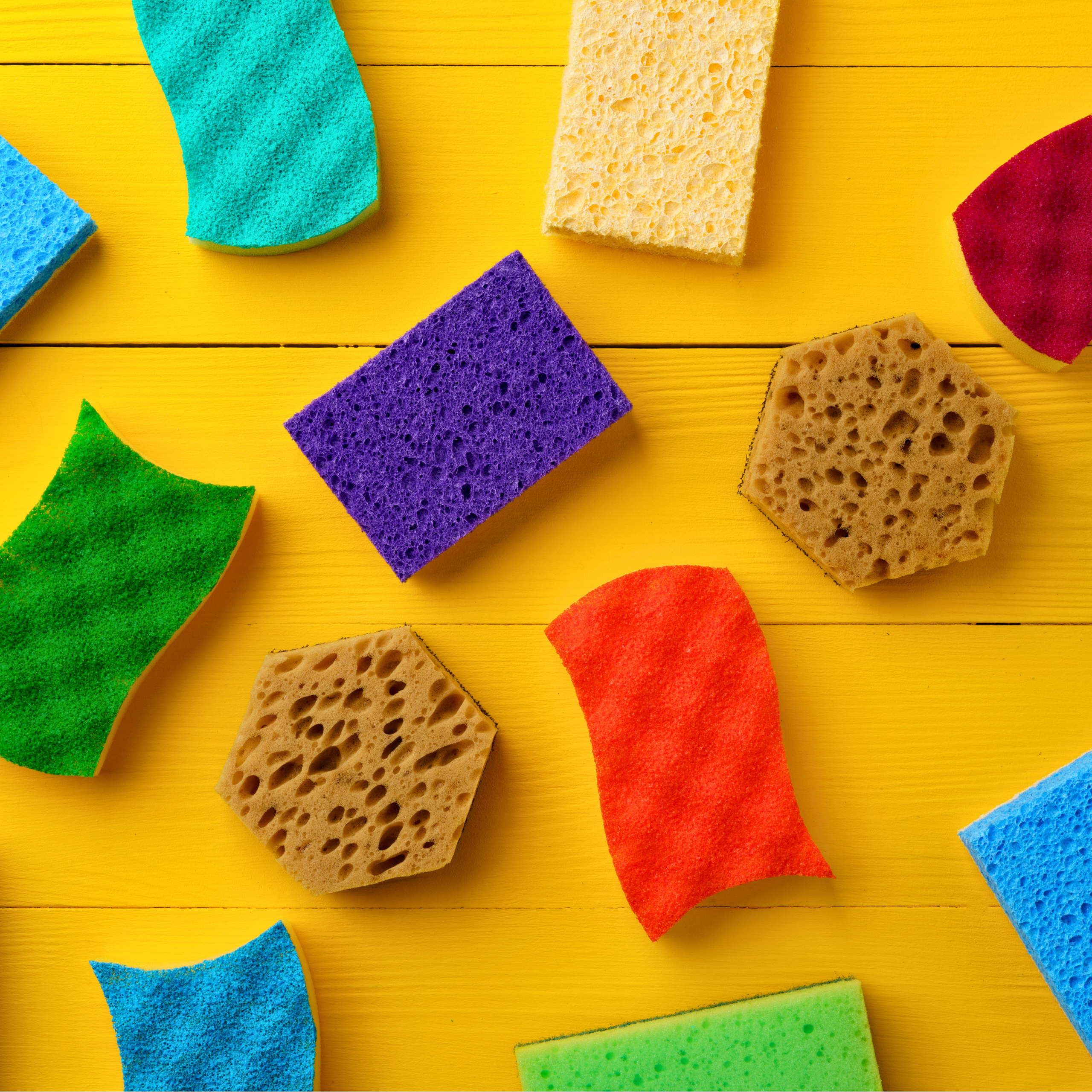
Sponges are a kitchen essential, helping cooks lather soap and scrub dishes clean. They’re also magnets for bacteria, thanks—or rather, no thanks—to their damp surface and ability to trap food particles. Unchecked, sponges can be even dirtier than a toilet seat.
To keep yourself and your family safe, it’s important to clean your sponges regularly—ideally after each use or at least once a week. But it’s just as crucial to know when to toss them for good.
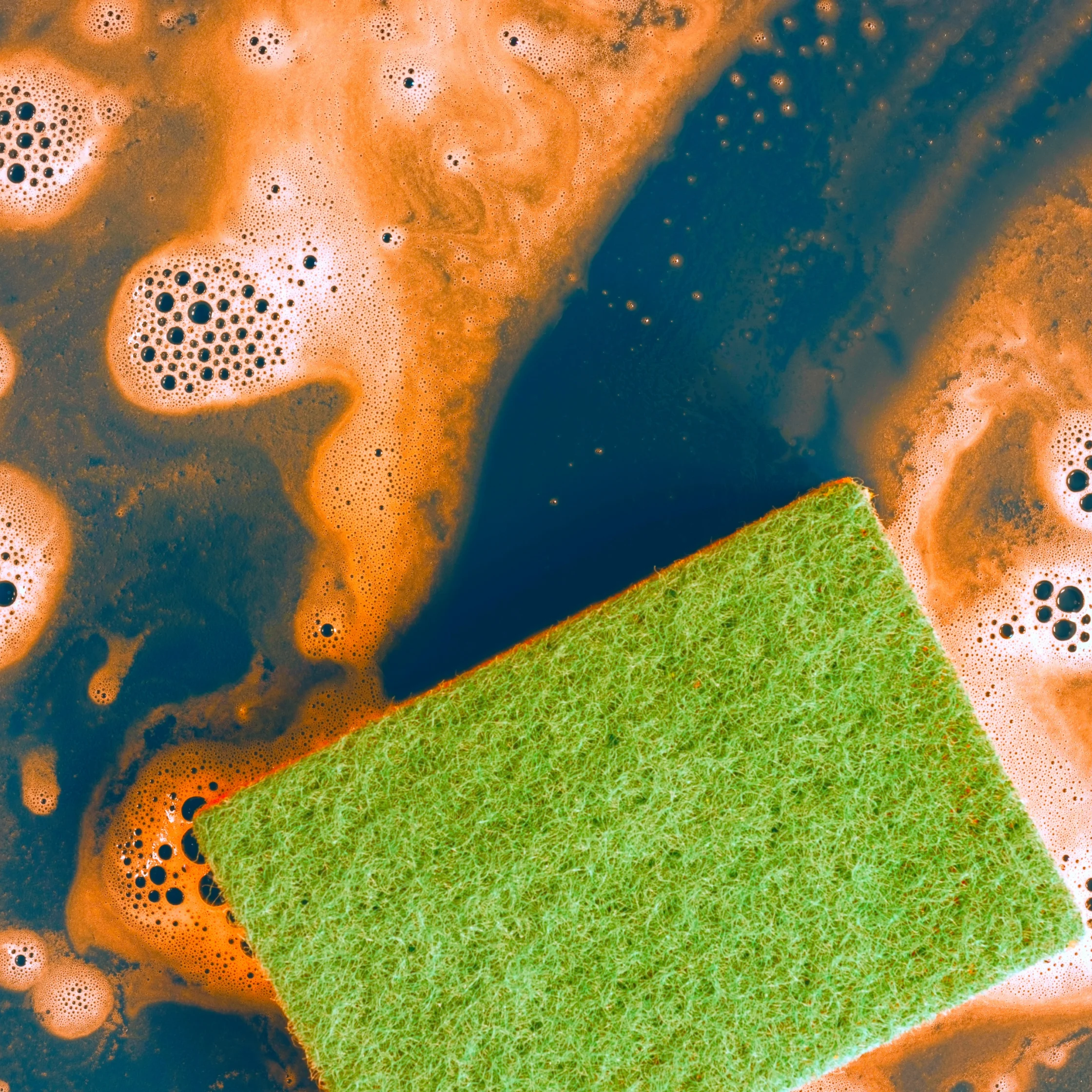
Here are easy ways to get your sponges squeaky clean and ready for reuse:
Nuke It
Per the USDA Agriculture Research Service (ARS), microwaving your sponge is your best bet to killing up to 99.9999 percent of the bacteria, mold and yeast. This works for sponges that don’t have plastic or metallic materials attached. Soak your sponge in water—note that nuking a dry sponge could cause a fire—then place it on a microwave-safe bowl and microwave it on high for one minute.
Throw It Into the Dishwasher
A close alternative to the microwave method, killing 99.9998 percent of bacteria and 99.9999 percent of molds and yeasts per the ARS, is utilizing the dishwasher. Place it on the top rack, then turn the dishwasher on to the longest cycle option with the heated drying cycle.
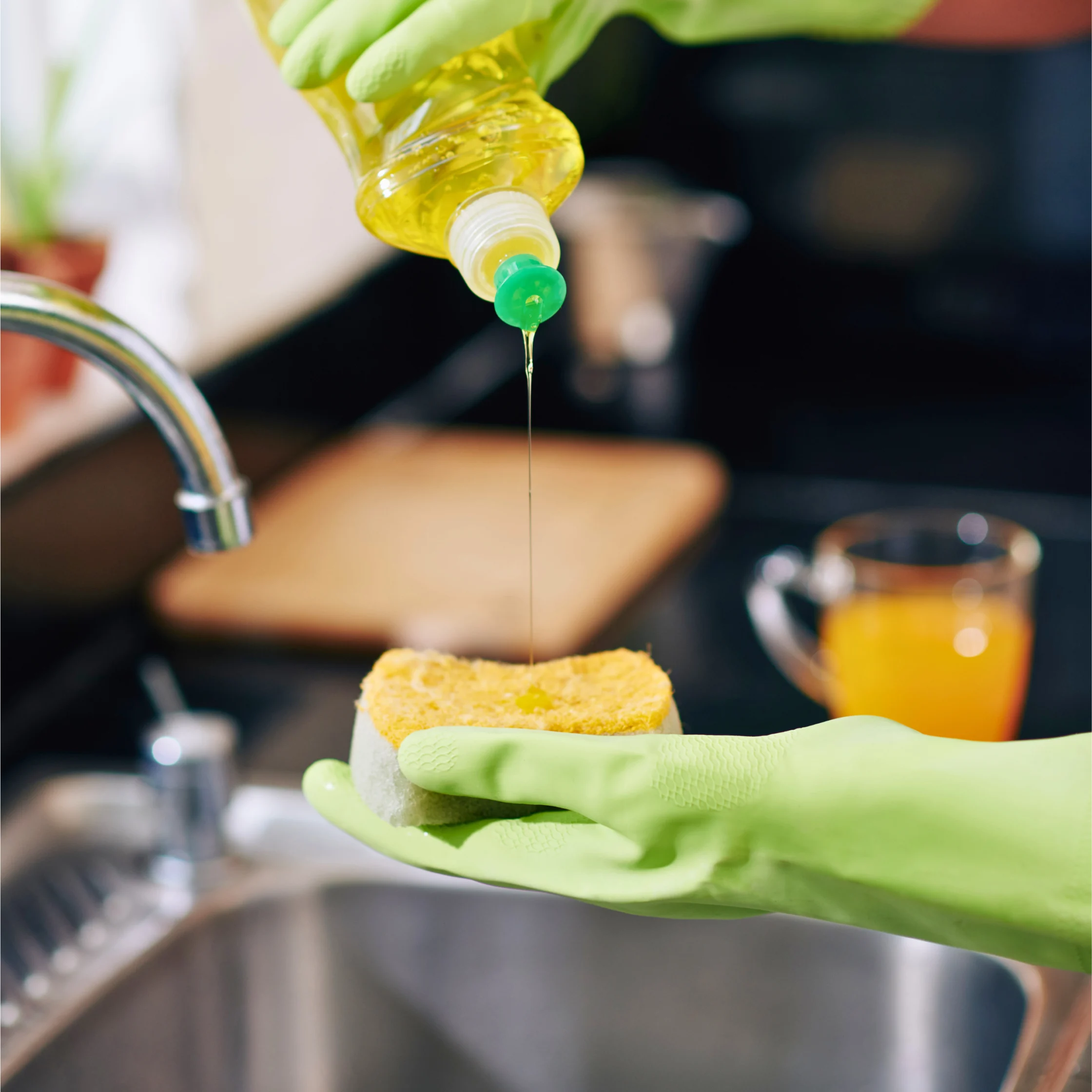
Soak It in Bleach, Lemon Juice, or Deionized Water
In a pinch, you could clean your sponges by soaking them in a 10 percent chlorine bleach solution, lemon juice, or deionized water—but this only kills about 37 to 87 percent of bacteria. It’s better than nothing, but still leaves you susceptible to disease.
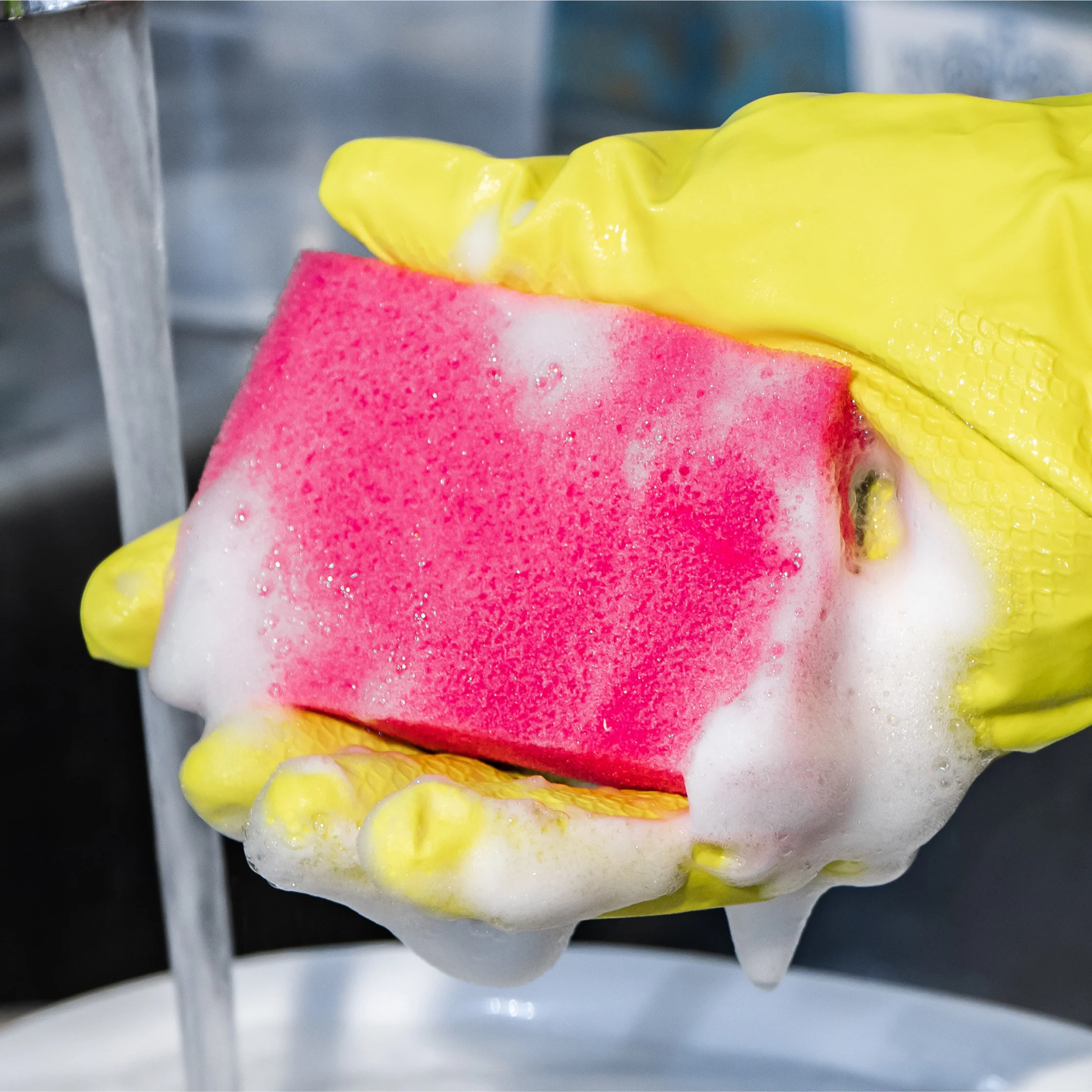
Replace It!
Sponges aren’t designed to last forever, and the absolute safest way to ensure cleanliness is to replace your sponge every one to two weeks.
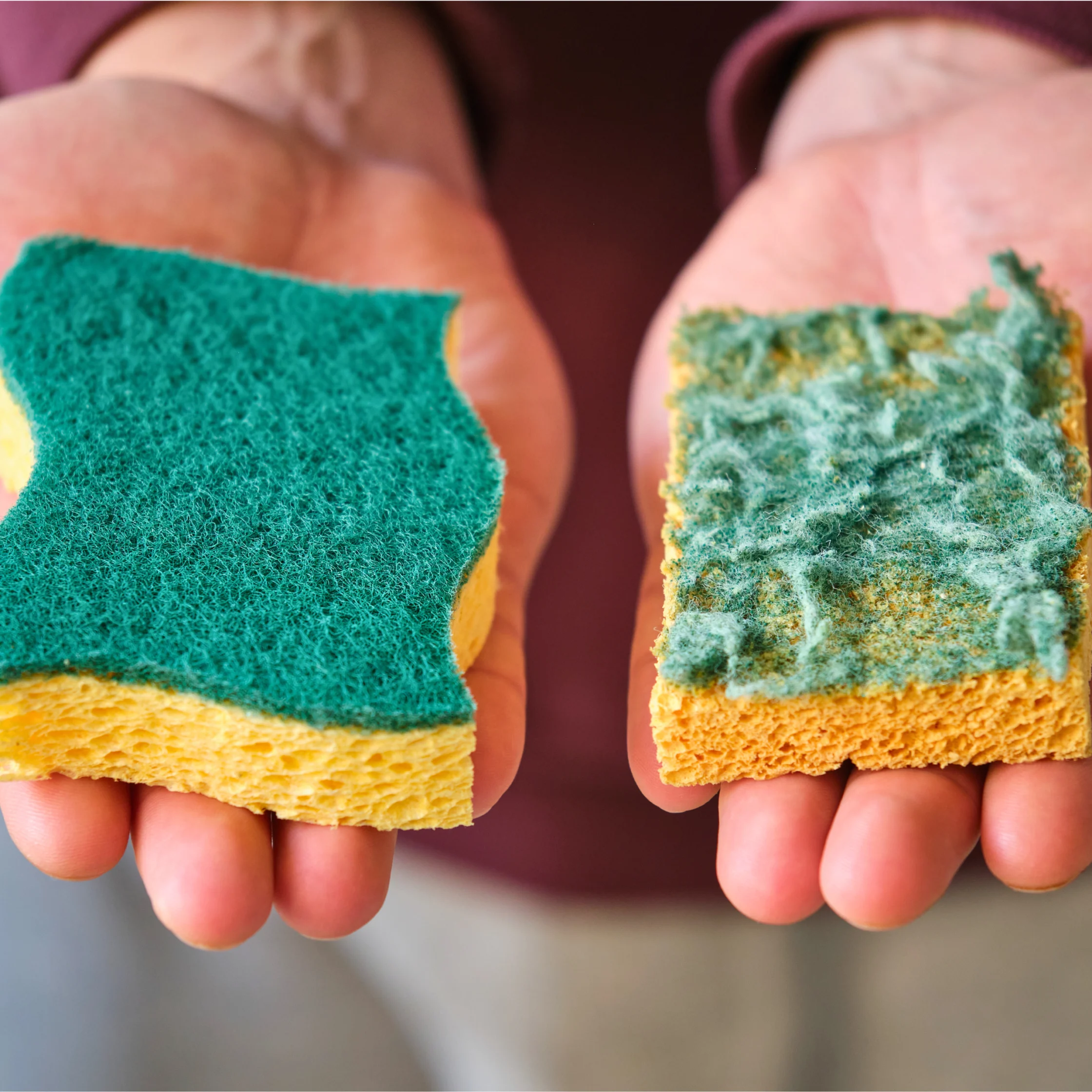
Tips to Extend Your Sponge’s Life
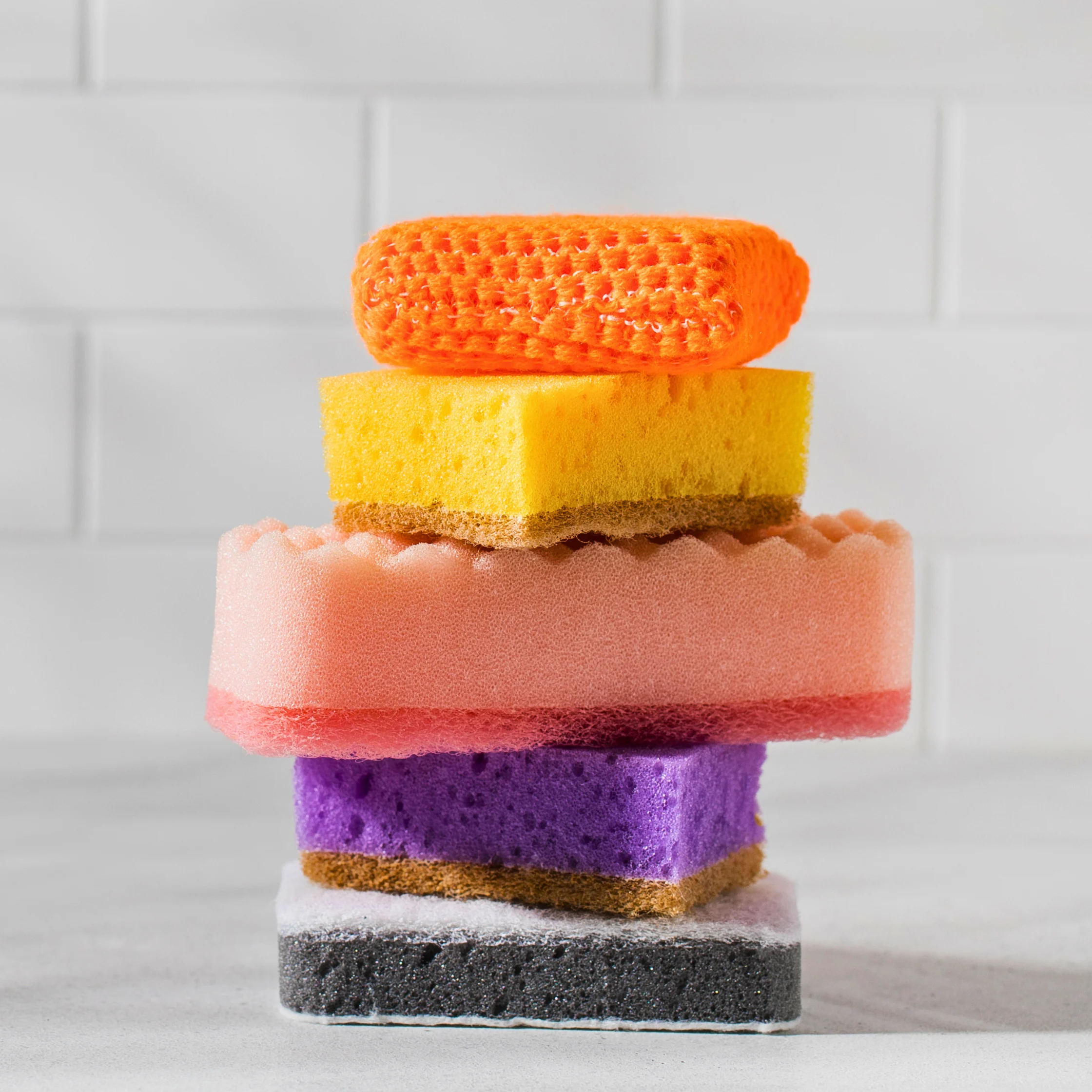
Though replacing kitchen sponges is a non-negotiable, you can still make them last longer by storing them in a dry location, like a wire rack or sink caddy that exposes all sides to airflow—this keeps the bacteria from multiplying as quickly. Try not to use your sponge to wipe meat juices, which carry harmful pathogens. Another pro tip: cut your sponges in half to get twice the mileage out of the same sponge.

Frequently Asked Questions
According to USDA research, microwaving a wet sponge for one minute is one of the most effective ways to kill bacteria, mold, and yeast.
Yes, as long as the sponge contains no metal or plastic scrub components and is thoroughly soaked with water before microwaving.
Yes, as long as the sponge contains no metal or plastic scrub components and is thoroughly soaked with water before microwaving.
Ideally after each use, or at minimum once per week.
Experts recommend replacing kitchen sponges every one to two weeks.
Yes, but it is less effective than microwaving or dishwashing and may leave some bacteria behind.
Their porous structure traps food particles and moisture, creating ideal conditions for bacterial growth.
Store it in a well-ventilated area, avoid cleaning raw meat juices, and cut larger sponges in half to extend usage.