


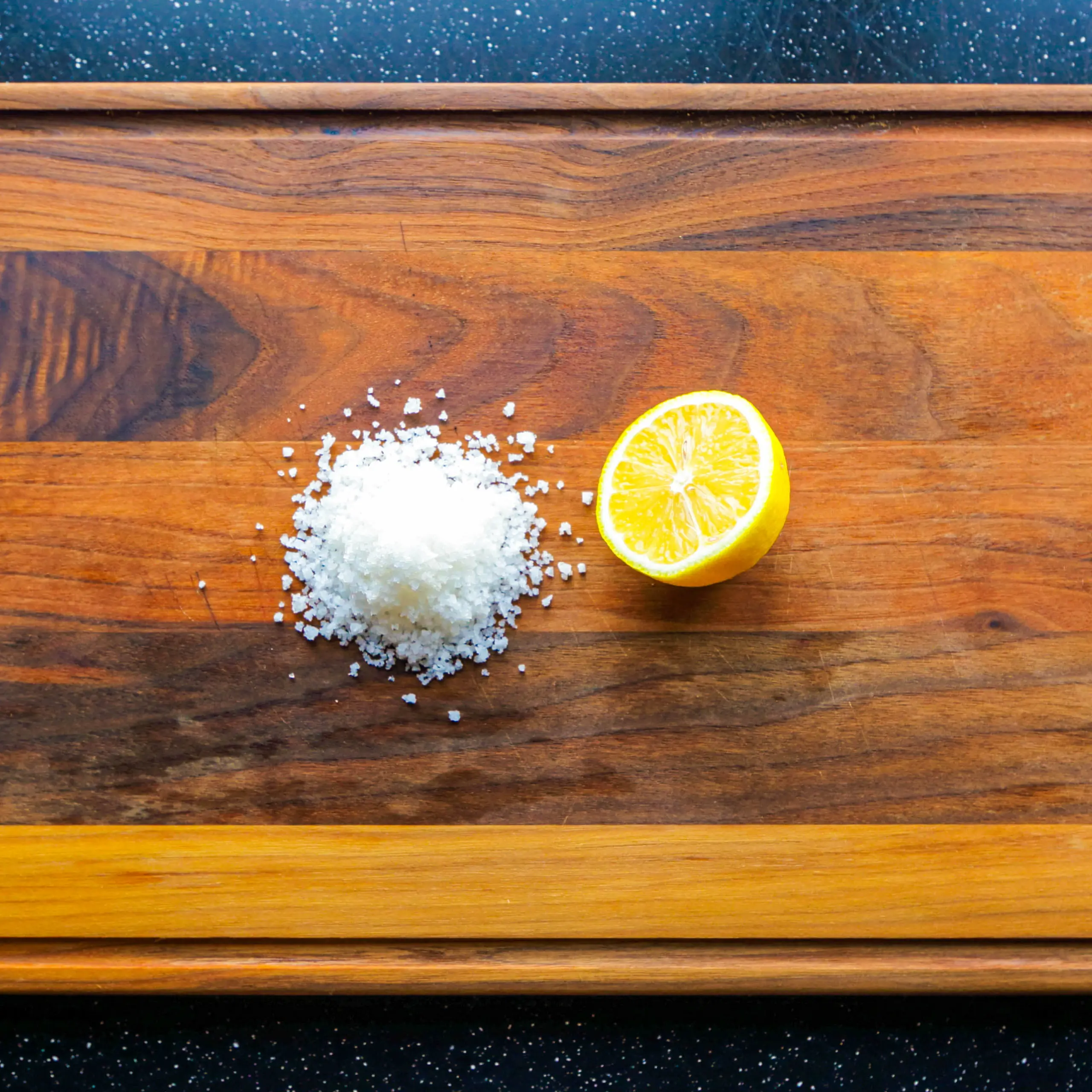
The fruity scent of a lemon is what I find myself gravitating towards whenever I pick up dishwashing liquid soaps and disinfecting products. One day, it hits me—is it possible to just use lemon instead? Can the real fruit actually help sanitize my kitchen tools like my chopping boards?
In cooking, garlic pairs well with the tartiness of lemon not just to neutralize its bitter taste but to balance its strong smell as well. Turns out, it can also work well with stains and scents for our chopping board.
How to Prepare Lemon for Cleaning Surfaces
How to squeeze the most juice out of your lemon? It’s in the way you cut it. Pick an under-ripe, firm lemon to act as your scrubbing tool, and cut it crosswise. This exposes most of the fruit’s juicy sacs for your chopping boards. For more delicate chopping boards made out of wood, it’s best to take out the seeds first to avoid any unwanted scratches.
Benefits for Wood vs. Plastic Chopping Boards
The lemon’s versatility also applies to the type of chopping board you have at home. Generally, its citrusy and acidic nature acts as a gentle cleaner and odor neutralizer. But let’s break down how you can maximize your lemon use for your chopping board’s finish.
Wood tends to trap smells because of its porous essence. Scrubbing lemon on the surface of your wooden chopping board can help in eliminating unwanted odors. But since it’s an acidic material that may dry up your board, make sure to spread a food-grade oil after cleaning with lemon to moisturize the wood and prevent it from cracking or breaking.
Getting frustrated at the turmeric and orange stains on your plastic chopping boards? Fret not, because your lemon’s to the rescue! Just rubbing the lemon itself again your board can work to loosen these pigments and make them easier to wash away. Don’t forget to rinse and dry your boards before storing them. Do note that for plastic chopping boards, your lemon functions better in combating stains than fighting bacteria.
Effective Lemon, Salt, and Baking Soda Mixtures
If you think lemon pairs well with salt just for your tequila shots, don’t miss out on it as a cleaning solution. For stubborn stains on your chopping board, sprinkle some salt all over it, then scrub the halved lemon to the surface. Gently squeeze your citrus fruit to release its juice as you cover all areas of your chopping board. Let it sit for 5 to 10 minutes before rinsing.
If you have more time to spare, making a lemon juice and baking soda paste can work, too. Apply it to the stained areas, then wait for at least 10 minutes (or even let it sit overnight) before you scrub and rinse your chopping board.
You can also take advantage of the hot weather and place your lemon-coated chopping board under direct sunlight for a natural bleaching technique. Do this for a couple hours, then wash your board before use.
Just a tip—while lemons can be a gentle, organic stain remover and cleaning agent to your chopping boards, it’s not meant to replace washing dirt away after every use. Just think of it as a citrusy note that offers an extra squeeze for stubborn stains and odors.
5 Steps to Sanitize a Board with Lemon and Salt
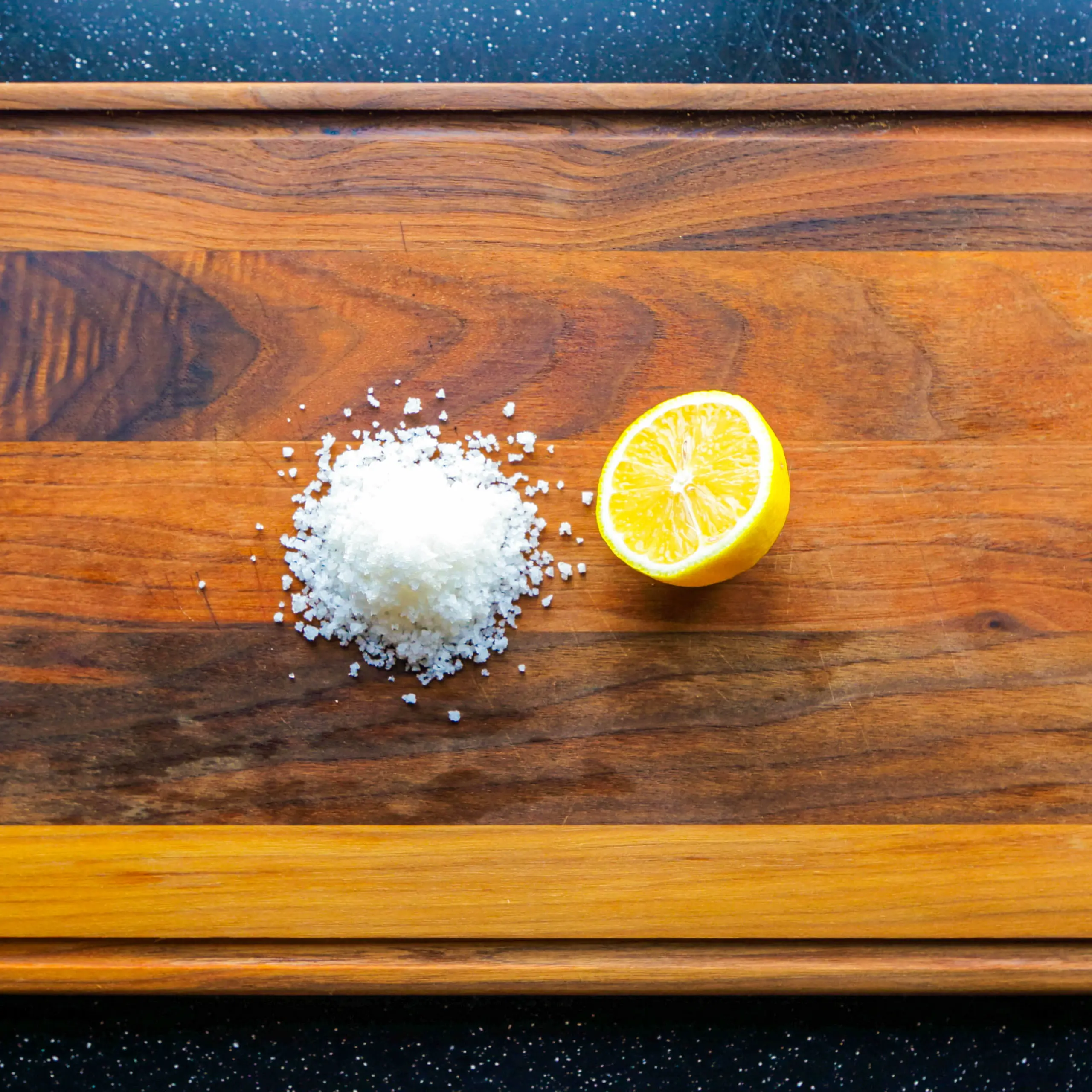
Get a spoonful of salt and half a lemon, cut crosswise.
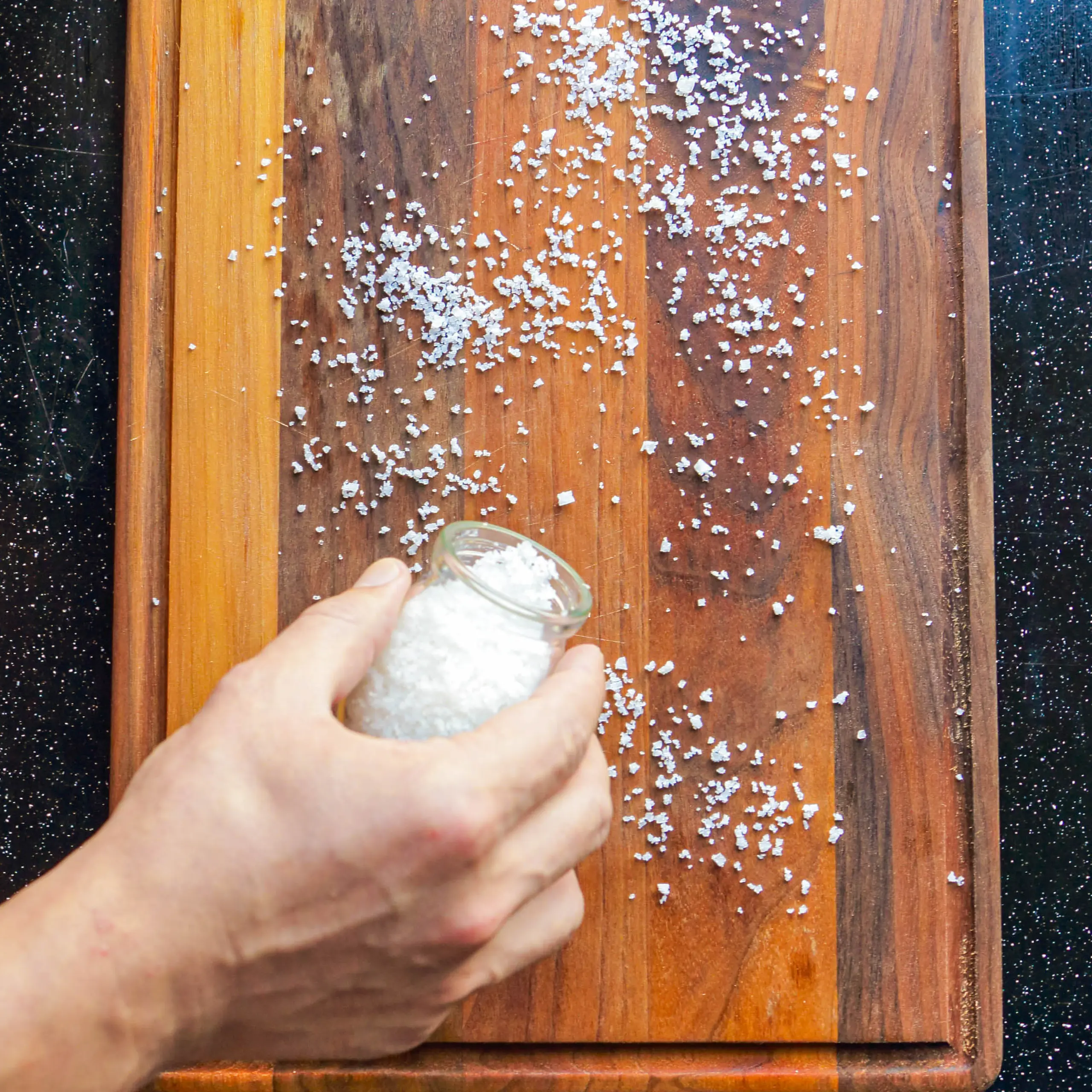
Sprinkle the salt all over the board.
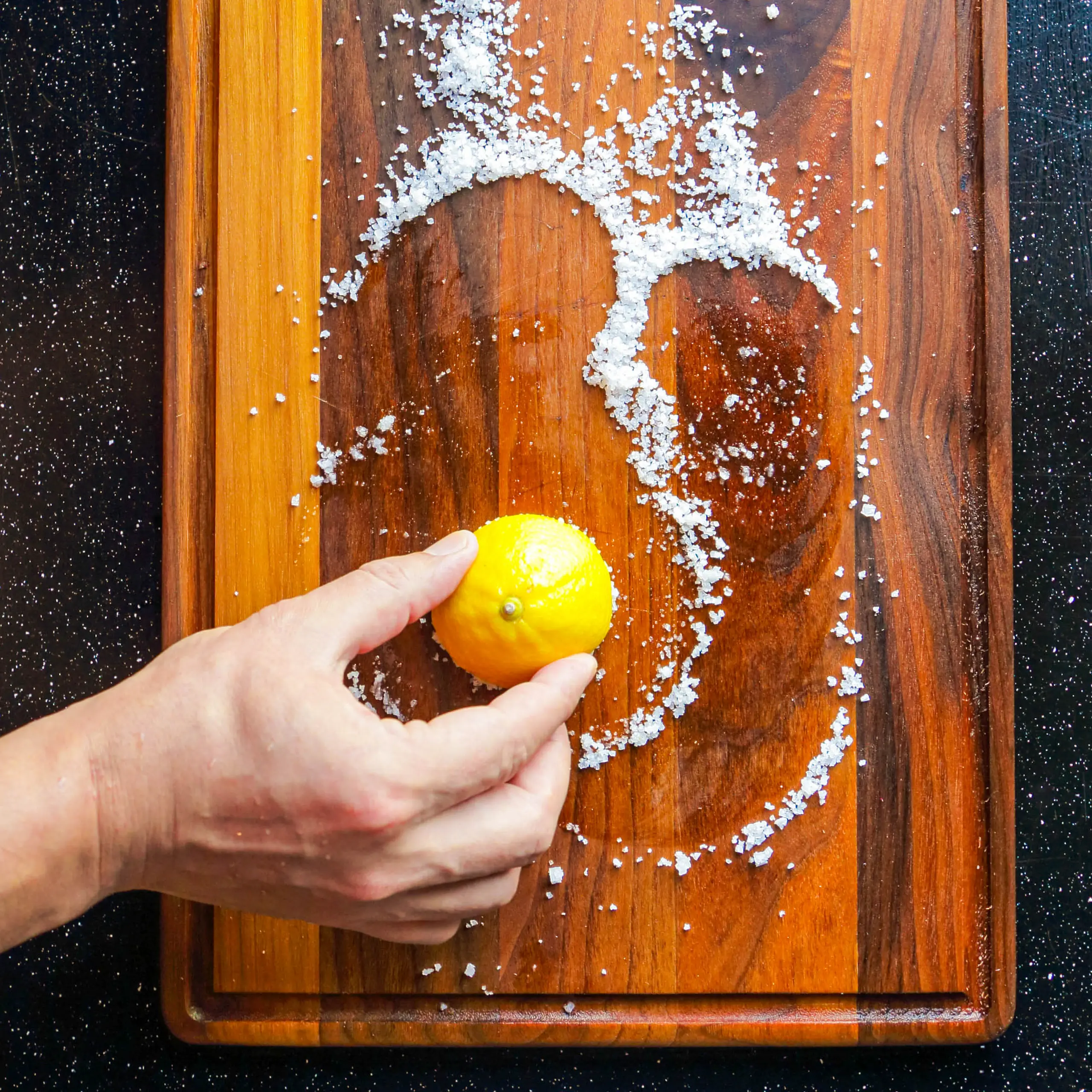
Using the cut lemon, rub the salt around the board, squeezing the lemon to release its juices.
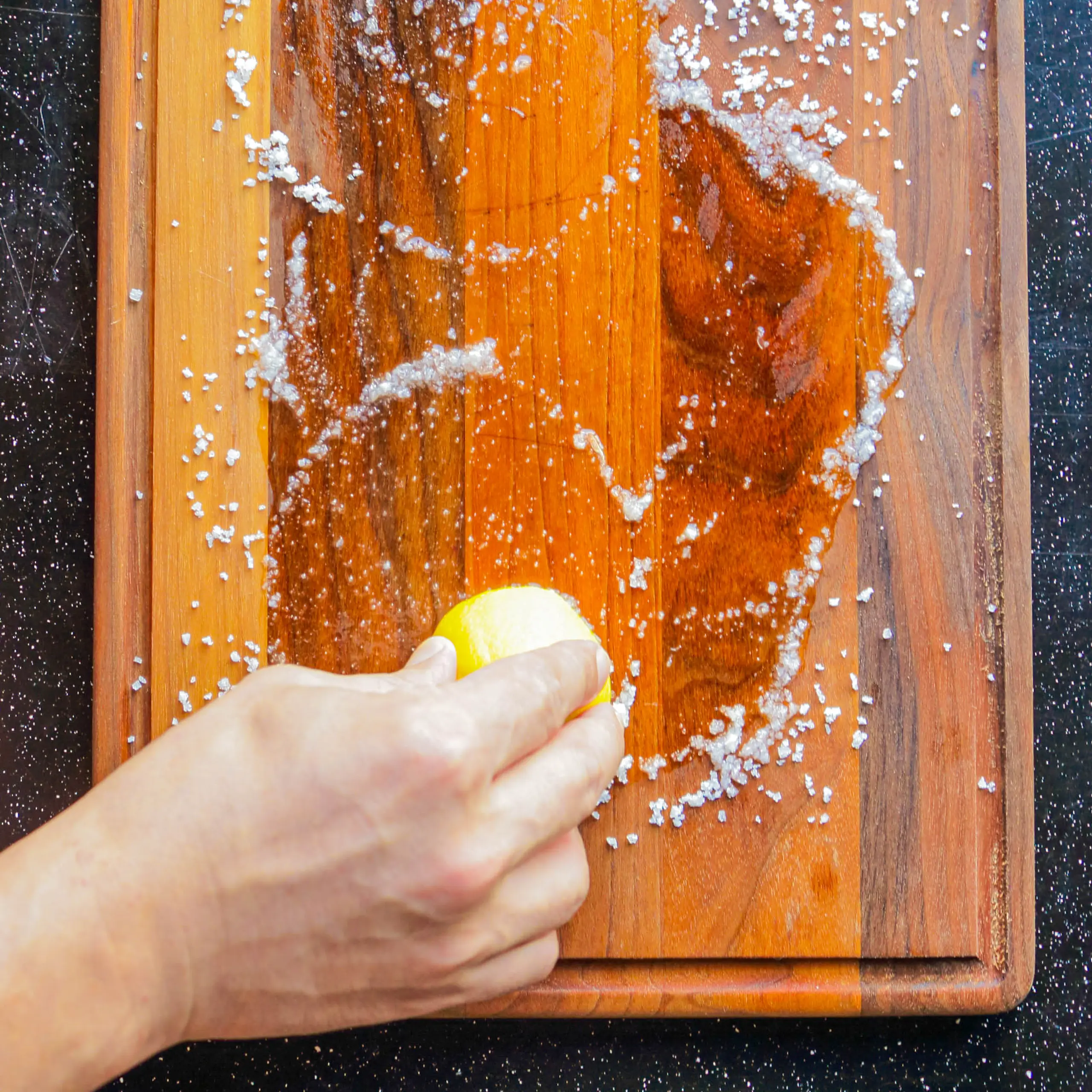
Make sure to scrub the lemon-salt mixture thoroughly all over, especially in the crevices and spots with stains. Let it sit for 5 to 10 minutes before rinsing.
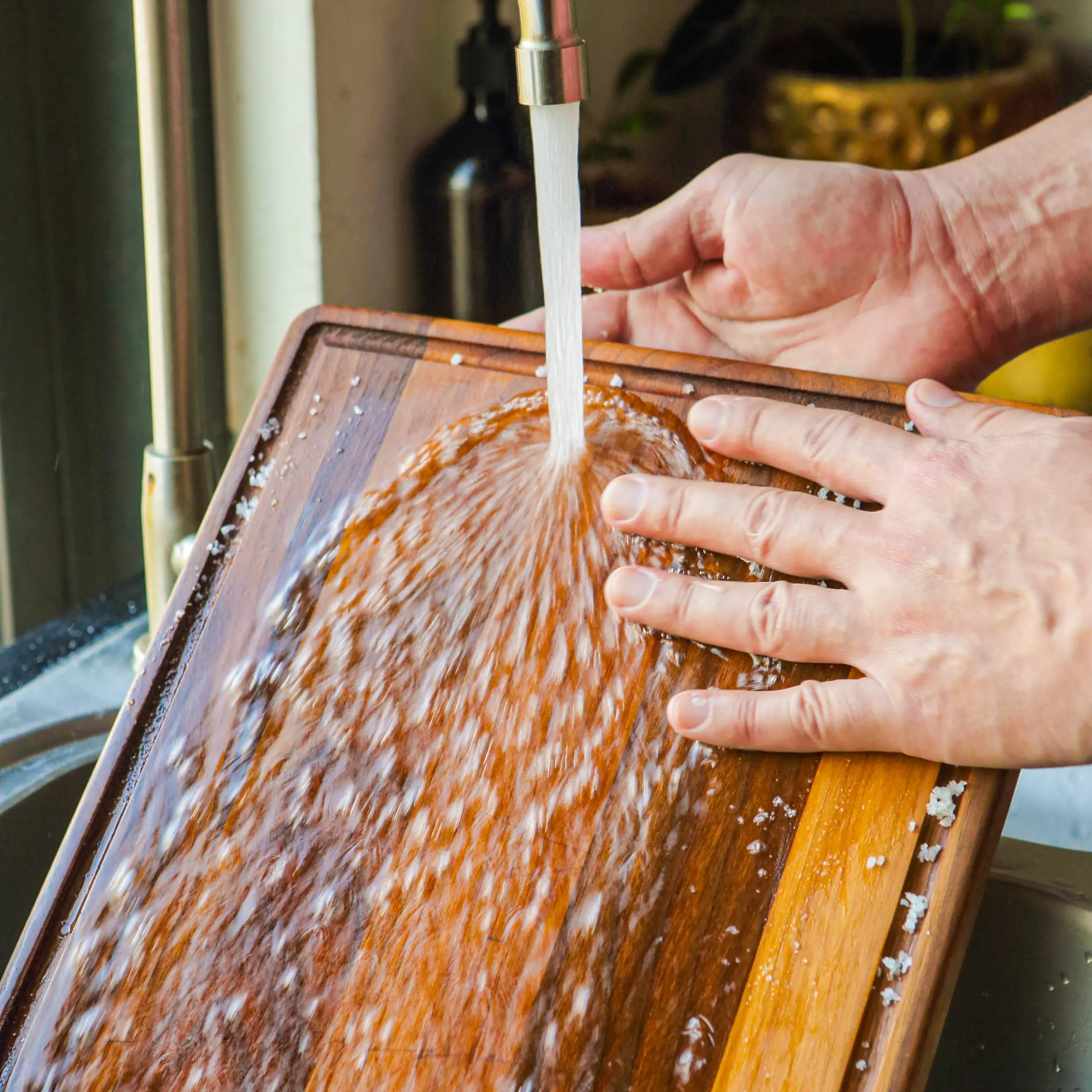
Rinse thoroughly and wipe dry. Leave on the kitchen counter or drying rack to air dry completely.

Frequently Asked Questions
To eliminate deep-seated odors, sprinkle a generous layer of coarse salt over the board and scrub vigorously with a lemon half, cut crosswise. The citric acid neutralizes sulfur compounds from aromatics like garlic, while the salt acts as a mechanical abrasive to lift trapped particles from the wood grain. Let the mixture sit for 10 minutes before rinsing with warm water to ensure the scent is fully neutralized.
While bottled lemon juice contains the necessary citric acid to loosen stains, it lacks the essential oils found in the rind and the mechanical scrubbing power of the fruit’s pulp. Using a fresh, firm lemon allows you to apply direct pressure to stubborn pigments like turmeric. If using bottled juice, mix it with baking soda to create a thick paste to mimic the physical scrubbing action required for a deep clean.
To prevent cracking, always apply a thin layer of food-grade mineral oil or beeswax to the board once it has completely dried following a lemon treatment. The high acidity of citrus can strip the wood of its natural moisture, leading to brittleness and warping over time. Conditioning the wood creates a protective barrier that seals the fibers and extends the lifespan of your kitchen tools.
Lemon is an excellent organic agent for lifting surface stains and odors on plastic, but it should not be used as a primary disinfectant for raw meat bacteria. While the low pH of citric acid inhibits some microbial growth, plastic boards require a high-heat dishwasher cycle or a diluted bleach solution for full sanitization. Use the lemon hack specifically for removing pigments from vegetables like carrots or beets rather than deep sterilization.
The most common mistake is failing to remove the lemon seeds before scrubbing, which can cause permanent scratches on the surface of softer wooden or bamboo boards. Always ensure the lemon is cut cleanly and the seeds are discarded to maintain a smooth finish. Additionally, avoid letting highly acidic juice sit on the board for more than 15 minutes without rinsing, as prolonged exposure can weaken the wood fibers.



It worked great! Thanks!