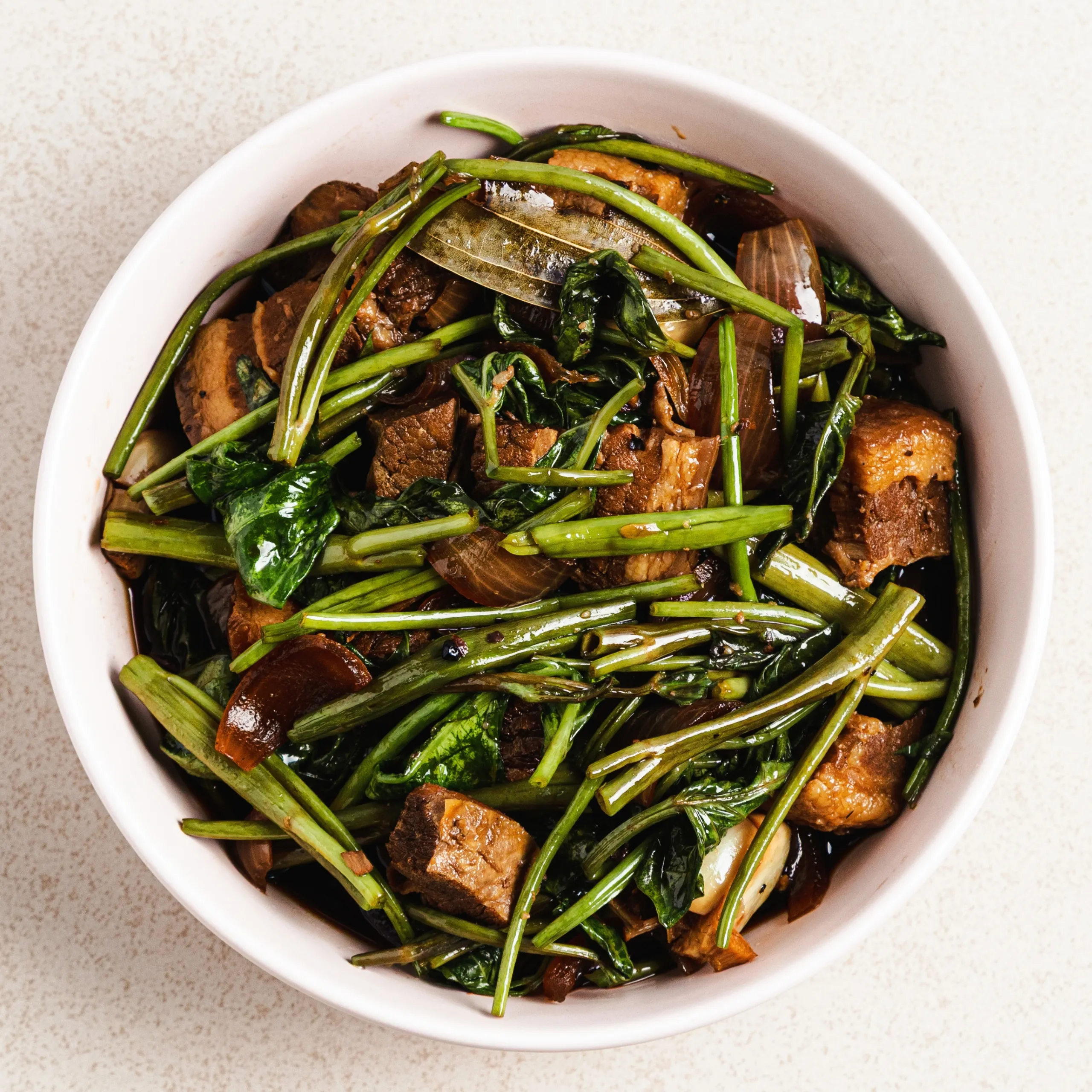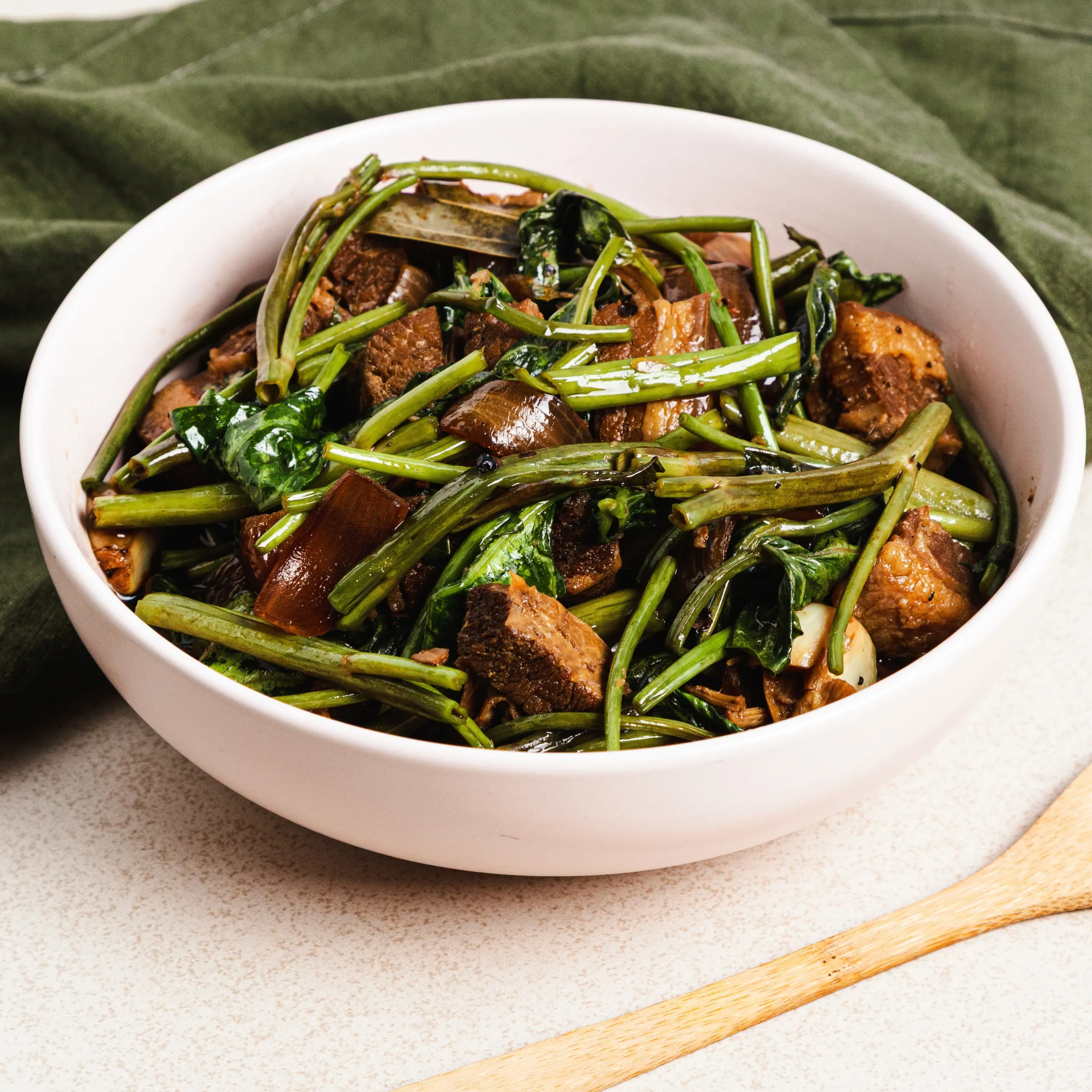
There are Filipino dishes that feel special because they take hours to prepare, and then there are dishes that become special simply because they remind you of home. Adobong Kangkong belongs to the second kind.
With tender kangkong, savory pork belly, plenty of garlic, soy sauce, vinegar, and a few simple seasonings, this dish turns an everyday vegetable into something deeply flavorful and comforting. It is the kind of food that does not need an elaborate presentation. Put it beside a steaming plate of rice, and suddenly you have a meal that feels complete.
What makes Adobong Kangkong especially appealing is its balance. The kangkong provides freshness and a slightly earthy flavor, while the pork adds richness. Soy sauce brings saltiness and umami, vinegar gives the dish its characteristic adobo tang, and garlic ties everything together with its unmistakable Filipino aroma.
It is also wonderfully practical. The ingredients are familiar, the cooking process is straightforward, and the recipe can easily be adjusted depending on what you have in the kitchen.
A Little History Behind Adobo and Kangkong
The word adobo is associated with a broad family of Filipino dishes cooked with ingredients such as vinegar, garlic, and often soy sauce or other seasonings. Rather than referring to only one fixed recipe, Filipino adobo has many regional and household variations.
The beauty of adobo is that there is no single way every Filipino family prepares it. Some versions are made with chicken, others with pork, seafood, vegetables, or combinations of different ingredients. Some are darker and saltier, while others emphasize the sharpness of vinegar. Some cooks add sugar for a subtle sweetness, while others prefer to keep the flavor more savory.
Kangkong, also known as water spinach or Ipomoea aquatica, is a leafy vegetable commonly enjoyed throughout Southeast Asia, including the Philippines. Its hollow stems and tender leaves make it particularly suitable for quick cooking.
When kangkong meets the familiar flavors of adobo, the result is a humble but satisfying dish. It is a good example of how Filipino cooking can transform simple, affordable ingredients into food that is full of personality.
What Makes Adobong Kangkong Special?
At first glance, Adobong Kangkong might seem like a very simple vegetable dish. But its appeal comes from the way several contrasting flavors work together.
The vinegar gives the dish acidity and brightness. The soy sauce provides saltiness and umami. Garlic adds warmth and aroma, while the pork belly contributes richness and savory flavor.
The kangkong itself is important because it absorbs the sauce while still retaining some of its fresh vegetable character.
One of the most important things to remember is not to overcook the kangkong. Unlike tougher vegetables that need a long simmer, kangkong cooks relatively quickly. Its leaves should be tender and wilted, while the stems should retain a pleasant bite.
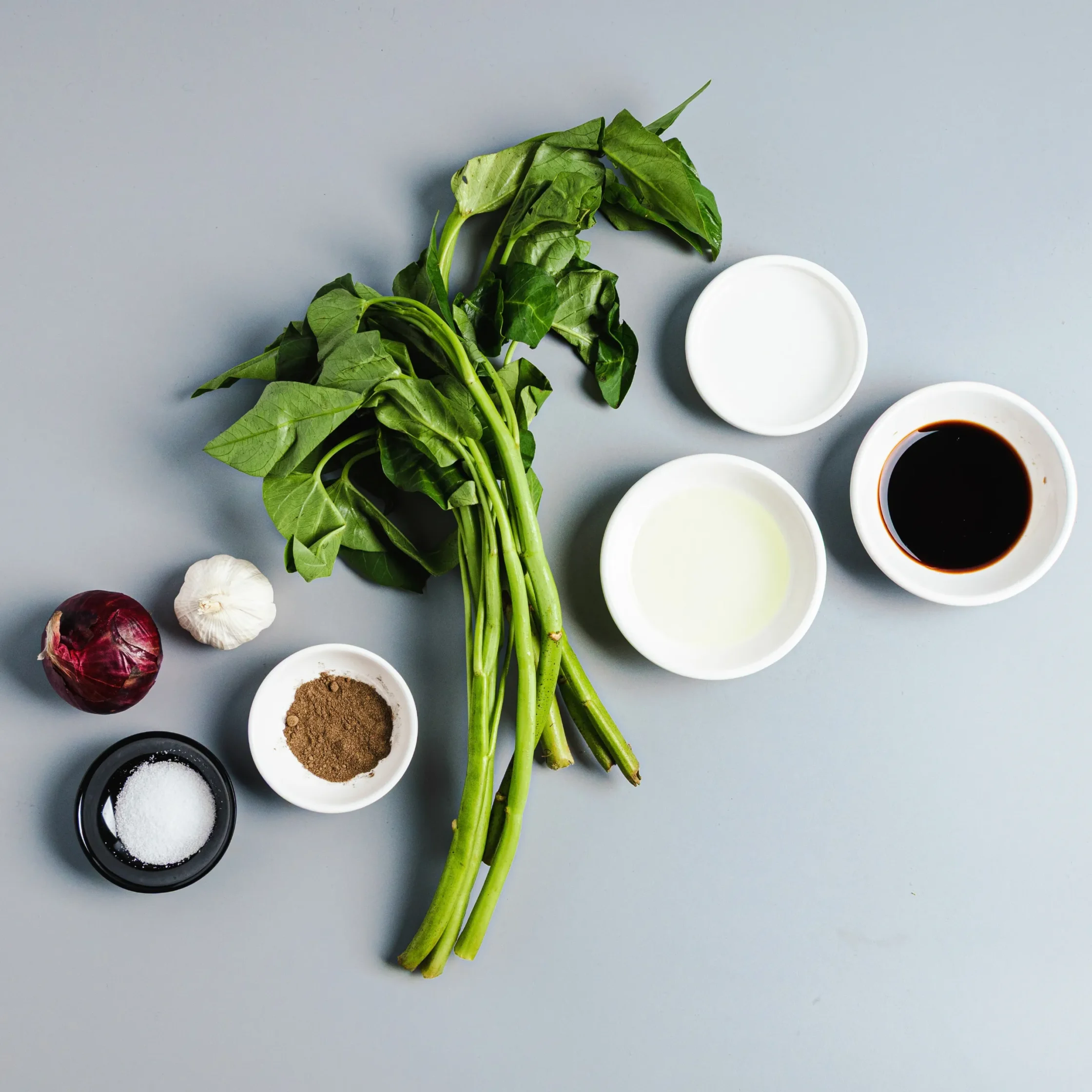
A Note About the Ingredients
The quantities above give you a flavorful, fairly saucy Adobong Kangkong. Because soy sauces differ in saltiness and vinegars differ in acidity, you may want to adjust the final seasoning according to your taste.
If you prefer a milder adobo, start with a little less soy sauce and add more later. If you enjoy a sharper adobo, you can increase the vinegar slightly.
The brown sugar is completely optional. It does not turn the dish into a sweet recipe; instead, a small amount can soften the sharpness of the vinegar and round out the salty flavors.
How to Prepare the Kangkong
Before cooking, wash the kangkong thoroughly under running water to remove dirt and grit.
Separate the thicker stems from the more delicate leaves if desired. Cut the stems into manageable pieces, around 2 to 3 inches long. Keep the leaves either whole or roughly chopped.
This small step makes a difference because the stems generally take slightly longer to cook than the leaves.
After washing, drain the kangkong well. Excess water can dilute the sauce and cause unnecessary splattering when the vegetable hits the hot pan.
Recipe Tips for Better Adobong Kangkong
Do not overcook the kangkong
Kangkong cooks quickly. Adding the stems before the leaves gives you better control over the texture.
Brown the pork first
Allowing the pork belly to develop some color adds another layer of flavor. It also allows some of the pork fat to render into the pan, creating a richer sauce.
Let the vinegar simmer
If the vinegar is added and immediately stirred aggressively, the sharp aroma can remain quite strong. Giving it a little time to simmer helps mellow the flavor.
Use a wide pan
A wide pan makes it easier to toss the kangkong without crushing the leaves. It also helps excess liquid evaporate more efficiently.
Taste before adding extra salt
The soy sauce already contributes significant saltiness, so additional salt may not be necessary.
Adjust the sauce to your preference
Some people prefer their adobo fairly dry and concentrated, while others love plenty of sauce soaking into their rice. Both styles can work beautifully.
Ingredient Substitutions
One of the best things about Adobong Kangkong is how flexible it can be.
Pork belly
If you do not have pork belly, you can use:
- Pork shoulder
- Thinly sliced pork
- Ground pork
- Chicken pieces
- Shredded leftover chicken
For a lighter vegetable-focused version, simply leave out the pork.
Soy sauce
Regular Filipino-style soy sauce works well. If you are watching your sodium intake, you can use a reduced-sodium soy sauce and adjust the amount according to taste.
Vinegar
Cane vinegar is a natural choice for a Filipino-style adobo. White vinegar can also work. Coconut vinegar may give the dish a slightly different character.
Brown sugar
Brown sugar is optional. You can leave it out completely or substitute a small amount of white sugar.
Onion
The onion can be omitted, although it adds sweetness and depth to the sauce.
Kangkong
If kangkong is unavailable, you can experiment with other leafy vegetables. Water spinach is the classic choice, but spinach or other tender greens can be used for a different interpretation. Keep in mind that different greens have different cooking times and textures.
What to Know About Kangkong
Kangkong is a leafy green vegetable with hollow stems and tender leaves. It is commonly used in Southeast Asian cooking and can be prepared in many ways, including stir-frying, sautéing, soups, and stews.
One reason it works so well in adobo is its texture. The stems can retain a pleasant crunch while the leaves soften and absorb the savory sauce.
It is also a vegetable that cooks quickly, making it convenient for busy home cooks.
Nutritionally, leafy vegetables such as kangkong can contribute vitamins, minerals, and other nutrients to the diet. USDA food-composition resources track nutrients such as vitamin A, vitamin C, folate, calcium, iron, potassium, and vitamin K across foods, although the exact nutritional content varies with the particular food, preparation method, and serving size.
Health Benefits of Adobong Kangkong
Adobong Kangkong can be part of a balanced meal, particularly because it combines a generous amount of vegetables with a source of protein.
Provides leafy vegetables
Kangkong contributes vitamins, minerals, and dietary fiber to the meal. Including a variety of vegetables in the diet is an easy way to increase the range of nutrients you consume.
Provides protein
The pork belly contributes protein, which helps make the dish more filling.
Contains flavorful aromatics
Garlic and onion contribute flavor without requiring complicated seasoning. They also contain naturally occurring plant compounds.
Can be adjusted for different eating preferences
You can make the dish more vegetable-forward by reducing the pork or leaving it out entirely. You can also reduce the amount of soy sauce if you want to lower the overall sodium content.
It is worth remembering, however, that the health profile of the finished dish depends on the ingredients and portions. Pork belly and soy sauce can contribute considerable fat and sodium, so portion size and the rest of the meal matter.
For a more balanced plate, serve Adobong Kangkong with a reasonable portion of rice and another source of protein or vegetables as needed.
How to Store Adobong Kangkong Properly
Because this dish contains cooked pork, proper storage is important.
After cooking, transfer the leftovers into a clean, shallow, covered container and refrigerate them promptly. USDA guidance recommends refrigerating leftovers at 40°F/4°C or below and using cooked leftovers within 3 to 4 days. Food should not be left at room temperature for more than 2 hours, or more than 1 hour when the surrounding temperature is above 90°F/32°C.
For longer storage, Adobong Kangkong can be frozen. Keep it in a well-sealed freezer-safe container or bag, leaving a little room for expansion.
For the best texture, however, it is worth noting that leafy vegetables can become softer after freezing and thawing.
Reheating
Reheat only the amount you plan to eat.
Warm the dish thoroughly in a pan or microwave. If frozen, thaw it safely in the refrigerator or use another safe thawing method. USDA guidance recommends reheating thawed leftovers to 165°F/73.9°C when appropriate.
If the sauce becomes too thick after refrigeration, add a small splash of water while reheating.
Final Thoughts
Adobong Kangkong is proof that a memorable meal does not have to begin with an expensive shopping list.
A bunch of fresh kangkong, a little pork belly, garlic, onion, soy sauce, vinegar, and a few pantry staples are enough to create something deeply satisfying. The dish brings together the flavors many people immediately associate with Filipino home cooking: savory, tangy, garlicky, comforting, and wonderfully suited to rice.
Perhaps that is what makes Adobong Kangkong so enjoyable. It is not trying to be complicated. It is the kind of dish you can cook on an ordinary weekday, serve to your family, and still find yourself going back for another spoonful.
And if you have ever watched a simple vegetable disappear from the dinner table because everyone kept reaching for more, you already understand the quiet magic of dishes like this.
Serve it hot, spoon plenty of that flavorful sauce over your rice, and enjoy it the way good Filipino home cooking is meant to be enjoyed: simply, generously, and together.