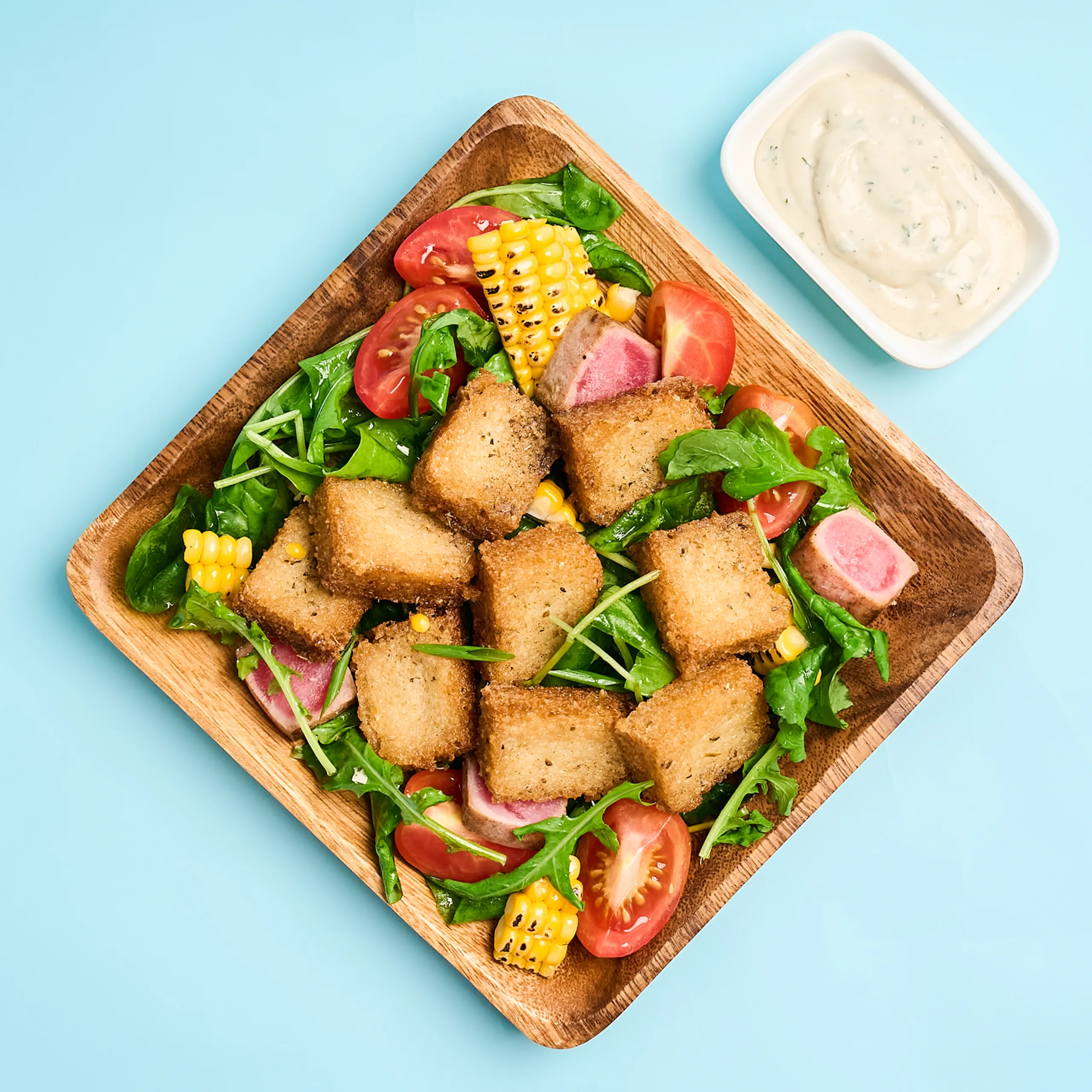


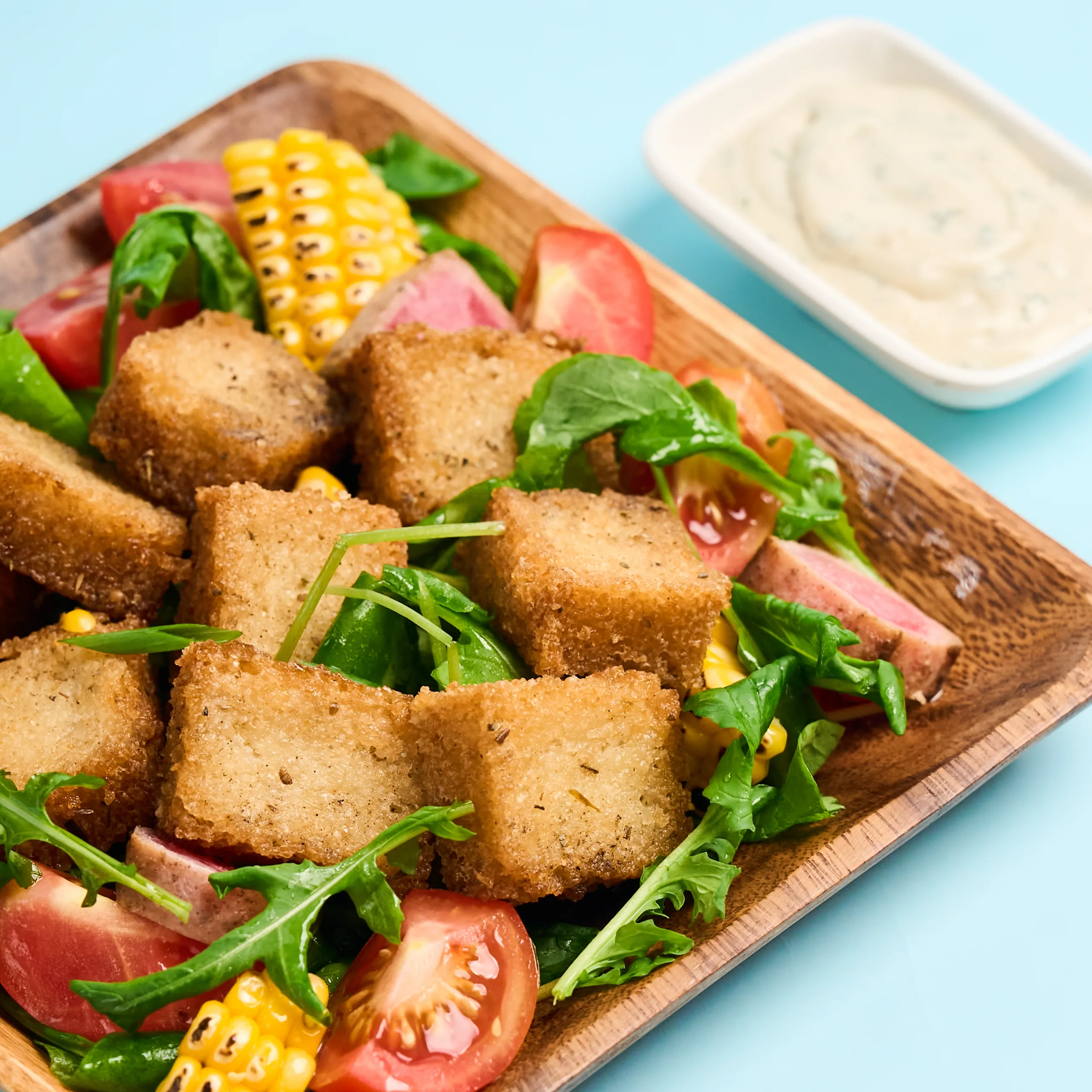
If you’re searching for a fresh, flavorful meal that combines wholesome ingredients with a modern twist, this Bigas na Mais with Seared Tuna Salad is a recipe worth adding to your menu. It brings together crispy fried bigas na mais, perfectly seared tuna, sweet corn, juicy tomatoes, peppery arugula, and a creamy wasabi dressing for a dish that’s light, satisfying, and packed with vibrant flavors.
While bigas na mais or corn rice has long been a staple in many Filipino households, it’s traditionally served as a rice substitute alongside hearty viands. This recipe takes that familiar ingredient in a new direction by transforming it into a crispy base that adds incredible crunch and texture to a fresh salad. It’s a creative way to enjoy a local favorite while introducing flavors inspired by contemporary cuisine.
The tuna is lightly seasoned and quickly seared over high heat to develop a beautifully caramelized crust while keeping the center tender and juicy. Combined with fresh vegetables and a creamy wasabi-dill dressing, every bite offers a delicious balance of savory, smoky, tangy, and slightly spicy flavors.
One of the best things about this recipe is its versatility. It works wonderfully as a healthy lunch, a light dinner, or an elegant dish to serve when entertaining family and friends. Despite its impressive presentation, it’s surprisingly easy to prepare using simple ingredients and straightforward cooking techniques.
Whether you’re looking for a nutritious seafood salad, exploring creative ways to cook with bigas na mais, or simply craving something fresh and satisfying, this recipe delivers restaurant-quality flavor with minimal effort. Serve it immediately while the tuna is warm and the crispy bigas na mais is still crunchy for the best dining experience.
Recipe Tips
These simple tips will help you make the most flavorful and perfectly balanced Bigas na Mais with Seared Tuna Salad every time.
Choose the freshest tuna possible.
Fresh, high-quality tuna is the highlight of this recipe. Look for firm, vibrant-colored fish with a clean, fresh smell. If you plan to serve the center slightly rare, use sushi-grade tuna whenever possible.
Dry the tuna before searing.
Patting the tuna dry with paper towels removes excess moisture, allowing the surface to develop a beautiful golden crust instead of steaming.
Season simply.
Salt and freshly ground black pepper are often all you need. The creamy dressing already provides plenty of flavor, allowing the natural taste of the tuna to shine.
Use a very hot pan.
A hot skillet creates a flavorful seared exterior while keeping the inside tender. Avoid moving the tuna too early so it develops an even crust.
Don’t overcook the tuna.
For the best texture, sear each side for about 1 to 2 minutes, depending on thickness. The center should remain slightly pink unless you prefer it fully cooked.
Let the tuna rest.
Allow the tuna to rest for several minutes after cooking before slicing. This helps retain its juices and keeps every slice tender.
Cook the bigas na mais until tender first.
Before frying, make sure the bigas na mais is fully cooked. Different brands absorb water differently, so add more water during simmering if necessary.
Fry until crisp and golden.
Cook the bigas na mais in small batches to achieve an even golden color and crispy texture. Avoid overcrowding the pan.
Use fresh vegetables.
Fresh tomatoes, crisp arugula, and sweet corn add brightness that perfectly balances the richness of the tuna and dressing.
Assemble just before serving.
To preserve the crunchy texture of the fried bigas na mais and keep the greens fresh, combine everything immediately before serving.
Ingredient Substitutions
This recipe is easy to customize depending on your preferences or available ingredients.
Fresh Tuna:
Substitute with fresh salmon, mahi-mahi, swordfish, grilled shrimp, or grilled chicken breast.
Bigas na Mais:
Brown rice, quinoa, barley, couscous, or crispy cooked rice make excellent alternatives.
Arugula:
Baby spinach, mixed salad greens, romaine lettuce, butter lettuce, or watercress work just as well.
Corn:
Fresh corn offers the sweetest flavor, but frozen or canned corn can be used after lightly sautéing or roasting.
Tomatoes:
Cherry tomatoes, grape tomatoes, heirloom tomatoes, or Roma tomatoes are all great choices.
Fresh Dill:
Fresh parsley, basil, cilantro, or chives provide different but equally delicious herb flavors.
Wasabi Paste:
Dijon mustard offers a milder substitute while still adding a pleasant tanginess.
Mayonnaise:
Greek yogurt, sour cream, or a combination of yogurt and mayonnaise creates a lighter dressing.
Lemon Juice:
Lime juice or rice vinegar both provide excellent acidity.
Garlic:
Finely minced shallots or garlic powder may be substituted if fresh garlic isn’t available.
Cooking Oil:
Canola, vegetable, avocado, or sunflower oil all work well for searing and frying.