
Advertisement
Advertisement

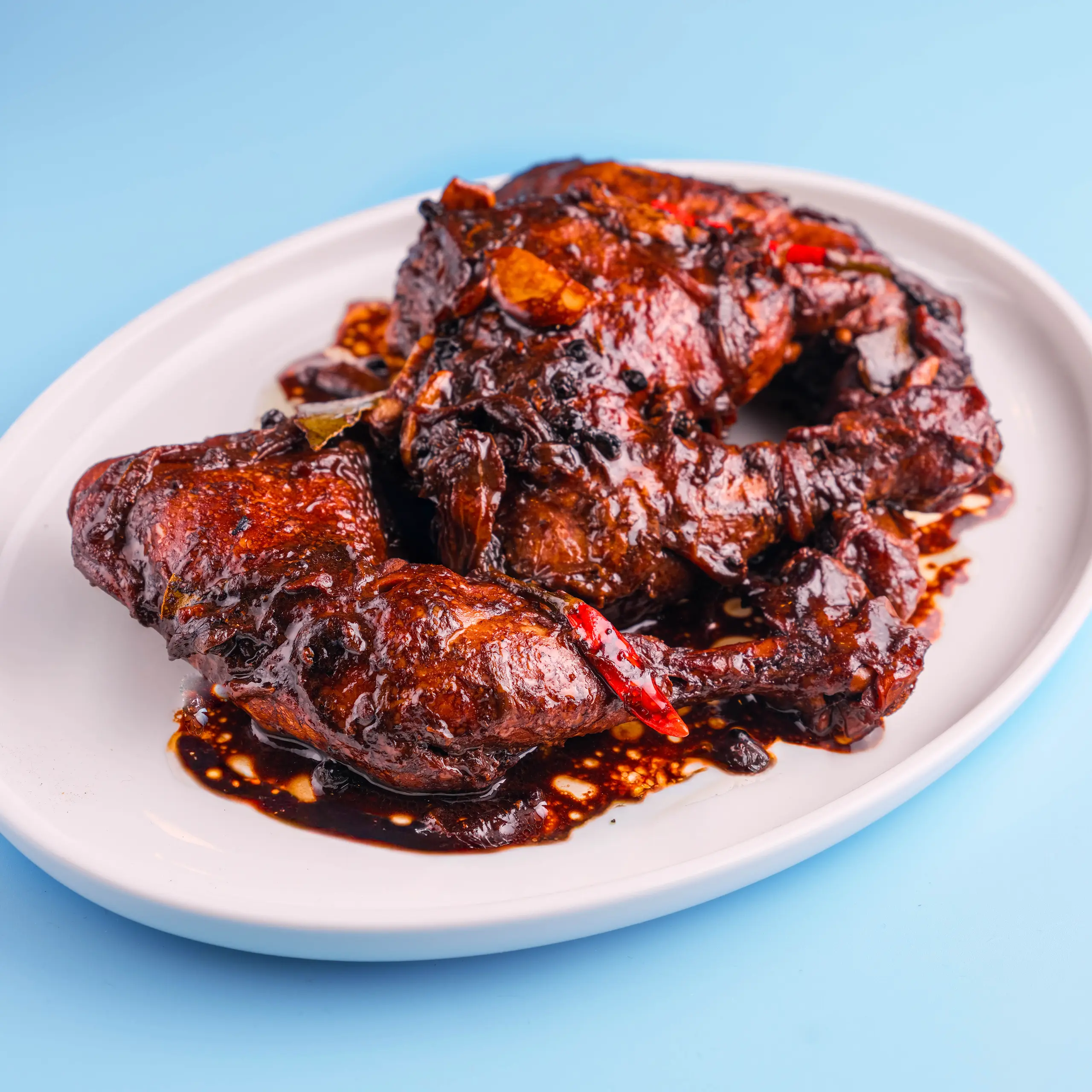
Chicken Adobo with Barako Coffee Recipe

The addition of strong barako coffee to this traditional Filipino dish adds a deep, earthy complexity that lends richness to the meat.
PHOTO: ED SIMON
YIELDS:
3 SERVING(S)
Prep Time:
10 MINS
Total Time:
35 MINS
Cal/Serv:
884

Nutritional Information

Calories 884 kcal
Fat 63 g
Saturated fat 15 g
Trans fat 0 g
Cholesterol 310 mg
Sodium 2627 mg
Carbohydrates 17 g
Fiber 2 g
Sugar 8 g
Protein 60 g
Vitamin D 0 µg
Calcium 89 mg
Iron 4 mg
Potassium 1063 mg

Note: The information shown is Edamam's estimate based on available ingredients and preparation. It should not be considered a substitute for a professional nutritionist's advice.

Every Filipino household would have their own version of adobo, and it’s always a colorful debate about whose recipe is better. Whether you have a favorite adobo recipe or shift preferences from a saucy version to a dry one, there’s no mistaking that adobo is a Filipino household staple.

If you’re looking for a way to change things up in the kitchen, here’s a chicken adobo recipe you must try for a truly Filipino adobo with a coffee twist!

Recipe Tips

  • When cooking garlic, make sure to keep your heat on low to moderate to keep it from burning. Be careful not to let the garlic get too brown as burnt garlic can taste bitter.
  • Brown the chicken pieces first before adding the rest of the ingredients. This helps lock in all the flavor you’ll be adding to the dish while adding a touch of color to the chicken.
  • Resist the urge to mix the sauce after adding the vinegar. This step is important as it helps cook off the strong vinegar taste, resulting in a dish with more balanced flavors.

Storage Tips

Adobo is the type of dish that has flavors that meld and develop further after it’s been cooked. It’s also been known to last and keep well for several days in the fridge. But realistically, do we really have leftover when the ulam served is adobo?

Advertisement

Ingredients

  • 2 Tablespoon cooking oil
  • 6 Clove garlic, sliced
  • 1 Small onion, sliced
  • 1 Kilogram chicken leg quarters
  • 0.5 Cup soy sauce
  • 0.5 Cup white vinegar
  • 0.5 Cup barako coffee powder
  • 2 Cup water
  • 3 Piece bay leaves
  • 1 Teaspoon whole peppercorn
  • 5 Teaspoon brown sugar, for balance
  • 3 Piece red bird's eye chili (siling labuyo)
  • 1 Teaspoon cocoa powder, for deeper flavor (optional)
Keep screen awake

Directions

Step 1

Start by heating vegetable oil in a pot over medium heat. Once the oil is warm, add the garlic and cook it gently until it becomes fragrant—be careful not to let it turn brown, as it can taste bitter. Next, add the onions and sauté them until they become soft and slightly translucent. This step builds a flavorful base for your dish.

Step 2

Place the chicken pieces into the pot, skin side down. Let them cook undisturbed for about 3 to 4 minutes, or until the skin turns lightly golden. Flip the pieces over and brown the other side as well. This step helps lock in flavor and adds a nice color to the chicken.

Step 3

Pour in the soy sauce, vinegar, coffee powder, and water. At this stage, resist the urge to stir just yet. Add the bay leaves, whole peppercorns, and chili for that kick and aroma.

Step 4

Allow the mixture to come to a boil without stirring for about 2 to 3 minutes. This is important because it helps cook off the strong, raw taste of the vinegar, giving your dish a smoother, more balanced flavor.

Step 5

After the initial boil, lower the heat to a gentle simmer. Cover the pot and let it cook for about 30 minutes, or until the chicken becomes tender and fully cooked. This slow cooking allows all the flavors to meld beautifully.

Step 6

Taste the sauce and add brown sugar little by little until you reach your desired balance of savory and slightly sweet.

Step 7

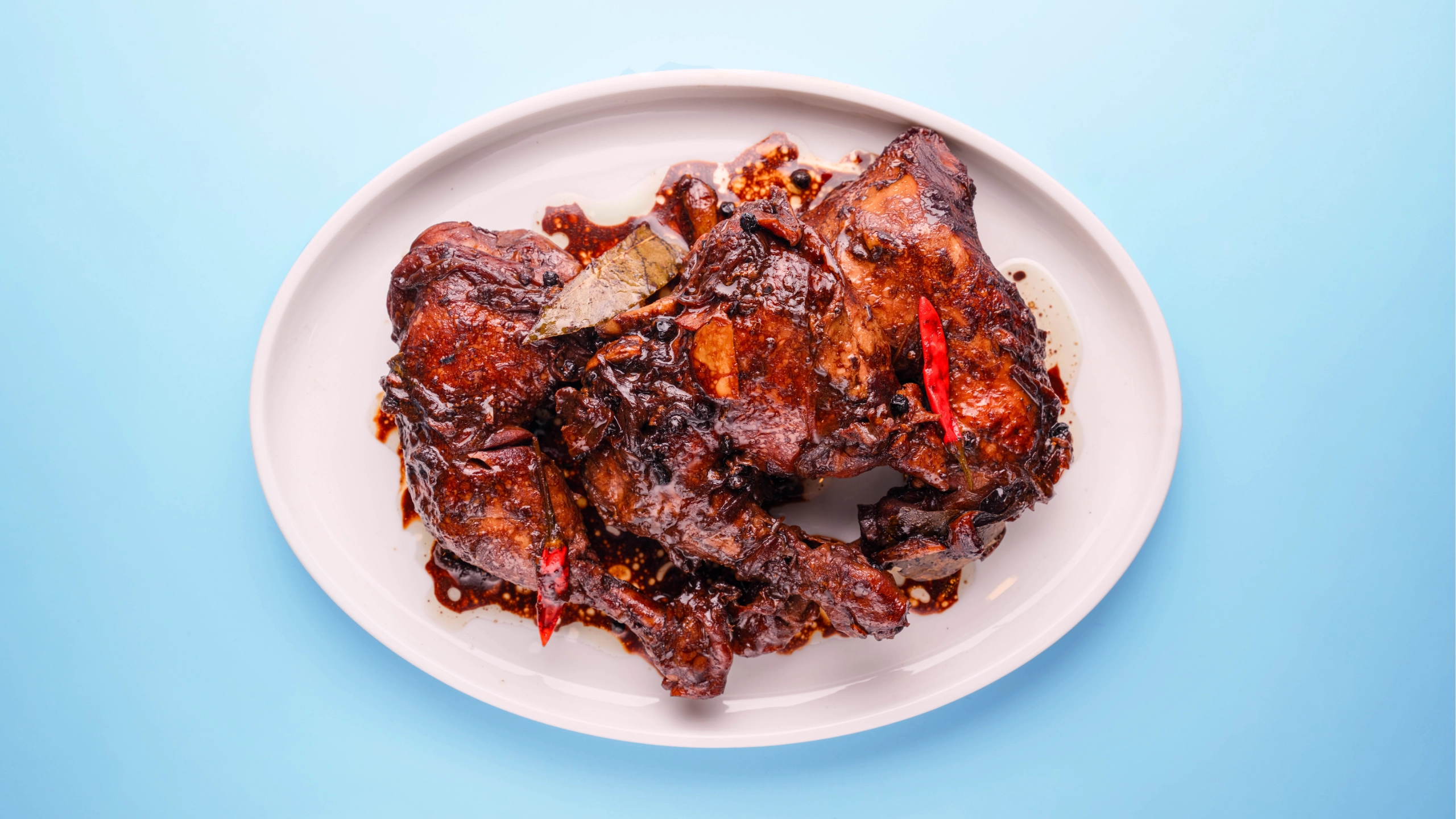
Finally, remove the lid and let the sauce simmer uncovered. This allows it to reduce and thicken slightly. You’ll know it’s ready when the sauce becomes richer and a bit of oil starts to rise to the surface.

PHOTO: ED SIMON

Frequently Asked Questions

Letting the vinegar boil undisturbed for 2–3 minutes is a classic Filipino technique that “cooks out” the harsh, sharp acidity, resulting in a mellow and balanced sauce. Stirring too early can result in a raw, metallic vinegar taste that overpowers the delicate, earthy notes of the Barako coffee. Once the initial pungent aroma dissipates, you can safely stir the pot to incorporate the coffee powder and spices.

For the best results, use bone-in, skin-on chicken thighs or drumsticks, as they remain juicy during the 30-minute simmering process and provide natural gelatin for a thicker sauce. Browning the skin first in Step 2 is crucial; it renders the fat that eventually combines with the coffee and soy sauce to create a glossy, flavorful emulsion. Leaner cuts like breasts tend to dry out and won’t absorb the complex coffee flavors as effectively.

You can use pure instant coffee granules in a pinch, but authentic Barako coffee powder is preferred for its unique floral aroma and woody undertones that complement the soy sauce. If substituting, ensure you use a dark roast and avoid any “3-in-1” mixes, as the creamer and sugar will ruin the sauce’s chemistry. Start with a smaller amount of instant coffee, as it is often more concentrated than traditional ground powder.

Your Adobo is ready when the sauce has reduced enough for the natural oils to separate and rise to the surface, a stage known as “naglana.” This indicates the flavors have concentrated and the coffee has fully integrated into the braising liquid. The sauce should be thick enough to coat the back of a spoon and possess a deep, mahogany sheen that looks rich and appetizing.

Like most stews, Chicken Adobo actually tastes better the next day because the chicken continues to absorb the coffee-infused vinegar and soy sauce. Store leftovers in an airtight container in the refrigerator for up to five days. When reheating, do so on the stovetop over low heat with a splash of water to loosen the sauce, ensuring the chicken reaches an internal temperature of 165°F without becoming rubbery.

0 0 votes
Total of Ratings
guest
Rating
Ratings for Article
0 Comments
Oldest
Newest Most Voted
Inline Feedbacks
View all comments
Advertisement

To provide a customized ad experience, we need to know if you are of legal age in your region.

By making a selection, you agree to our Terms & Conditions.