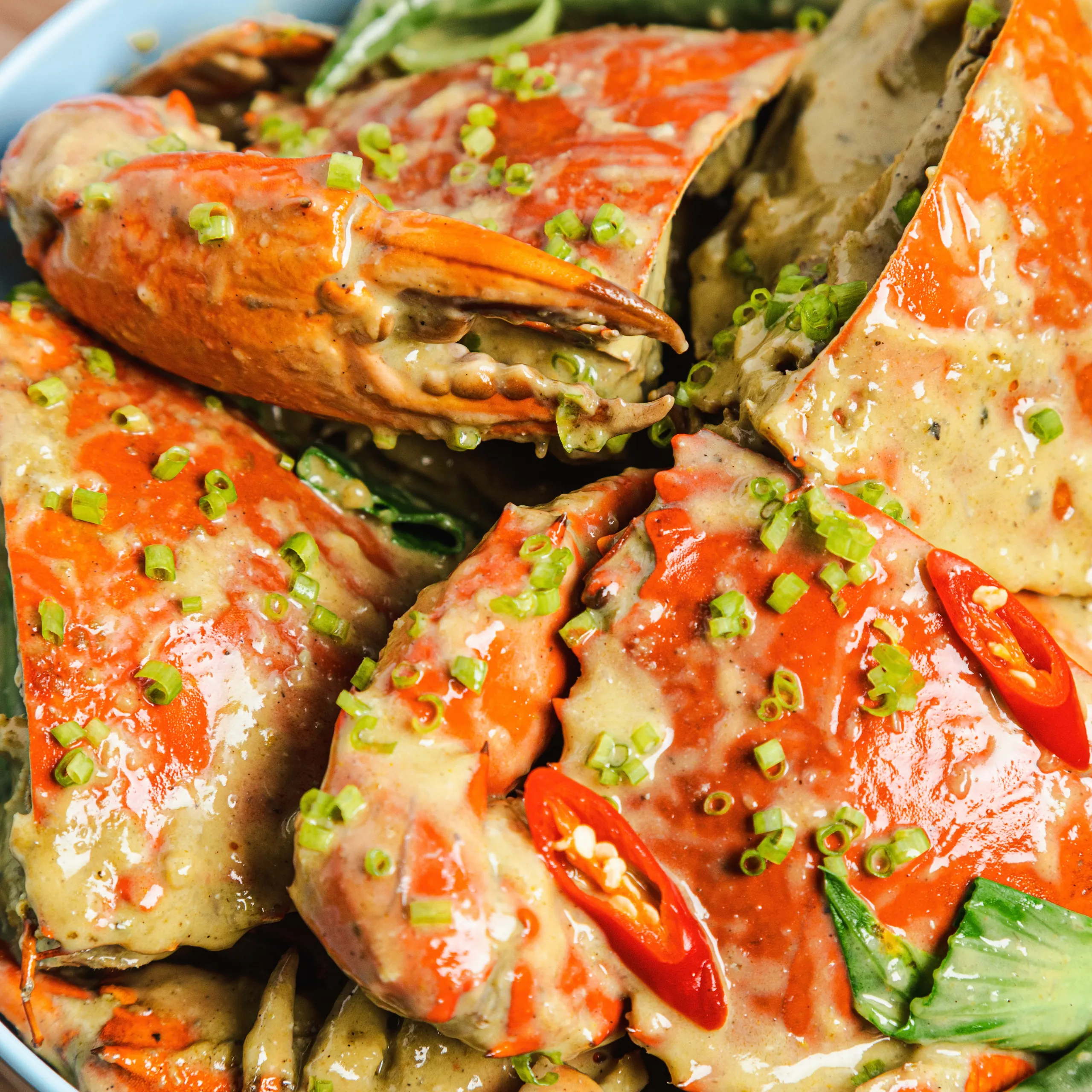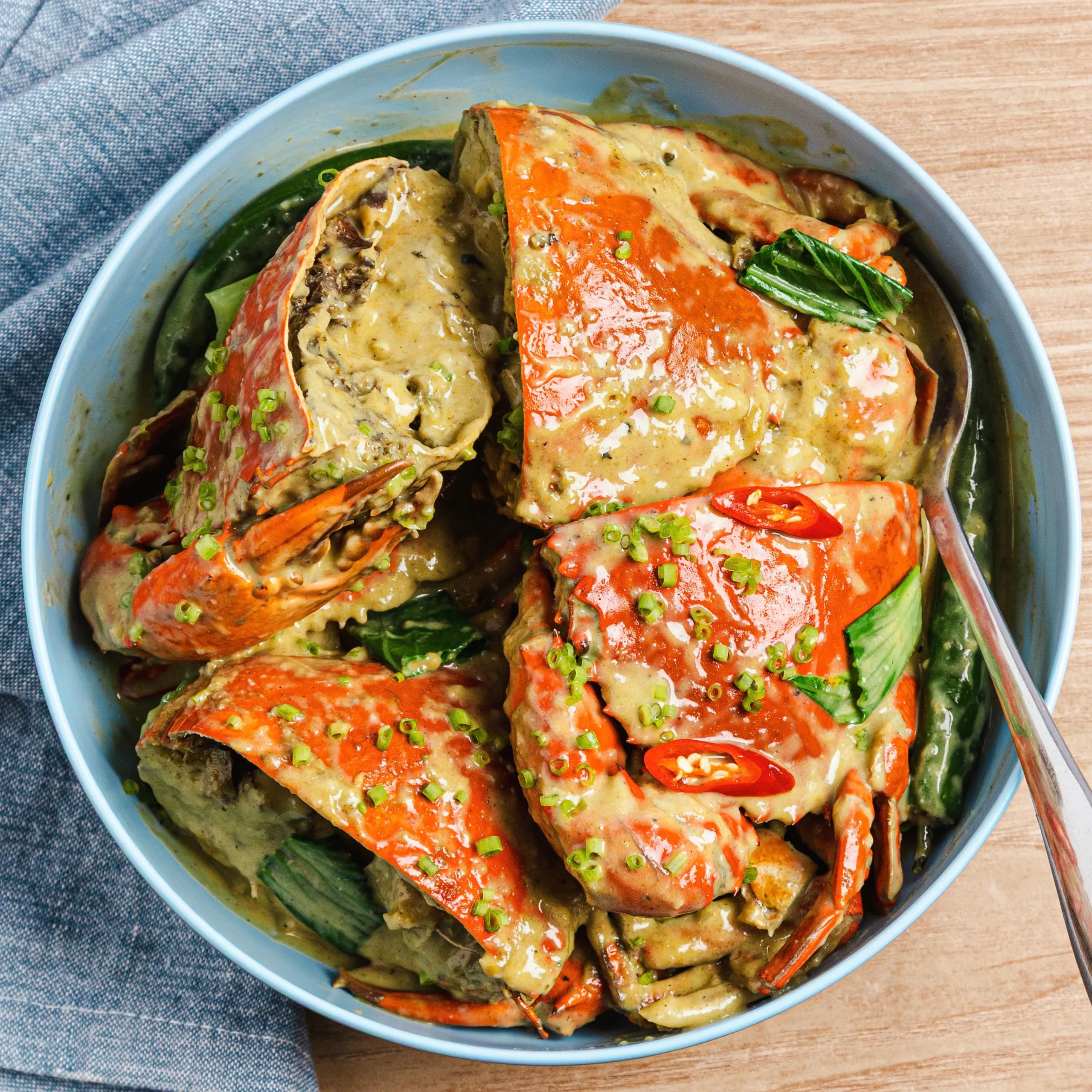
Ginataang Alimango is one of those Filipino dishes that immediately makes a meal feel special. The combination of fresh mud crab and creamy coconut milk creates a rich, savory sauce that is comforting without needing a long list of complicated ingredients. Add fragrant garlic, onion, ginger, and a little chili, and you have a dish that brings together some of the most familiar flavors of Filipino cooking.
For many Filipinos, seafood and coconut milk are a natural combination. Coastal communities in particular have developed countless ways of cooking fish, shellfish, and other seafood with gata, or coconut milk. Ginataang Alimango is a wonderful example of this tradition. The sweetness of fresh crab pairs beautifully with the creamy, slightly nutty flavor of coconut milk, while ginger and chili add warmth and balance.
It is also a dish that encourages people to slow down while eating. Crab is not exactly a food you rush through. There is something enjoyable about cracking the shells, picking out the tender meat, and dipping it into the rich coconut sauce. With a serving of hot steamed rice on the side, the combination is satisfying, flavorful, and unmistakably Filipino.
A Brief History of Ginataang Alimango
The word ginataan comes from gata, the Filipino term for coconut milk. In Filipino cuisine, ginataan refers broadly to dishes cooked with coconut milk. There are countless variations, ranging from vegetables and seafood to meat and desserts.
Coconut has long been an important crop in the Philippines, particularly in areas with warm tropical climates. Because coconuts are widely available in many regions, coconut milk became an important ingredient in traditional cooking. Freshly grated coconut was traditionally squeezed to extract its creamy milk, which could then be used to enrich savory dishes.
Crabs, meanwhile, have been an important source of food in many coastal and wetland communities. Mud crabs, locally called alimango, are valued for their sweet meat and rich flavor.
Combining the two ingredients creates a dish that makes excellent use of local resources: fresh seafood cooked in the creamy milk of a tropical fruit. Over time, families developed their own versions of Ginataang Alimango. Some add leafy vegetables, others use more chili, and some make the sauce thicker or more concentrated.
Like many Filipino home-cooked dishes, there is no single version that defines every household. The recipe can change depending on region, available ingredients, and personal taste.
What Makes Ginataang Alimango Special?
The magic of Ginataang Alimango comes from the contrast between the ingredients.
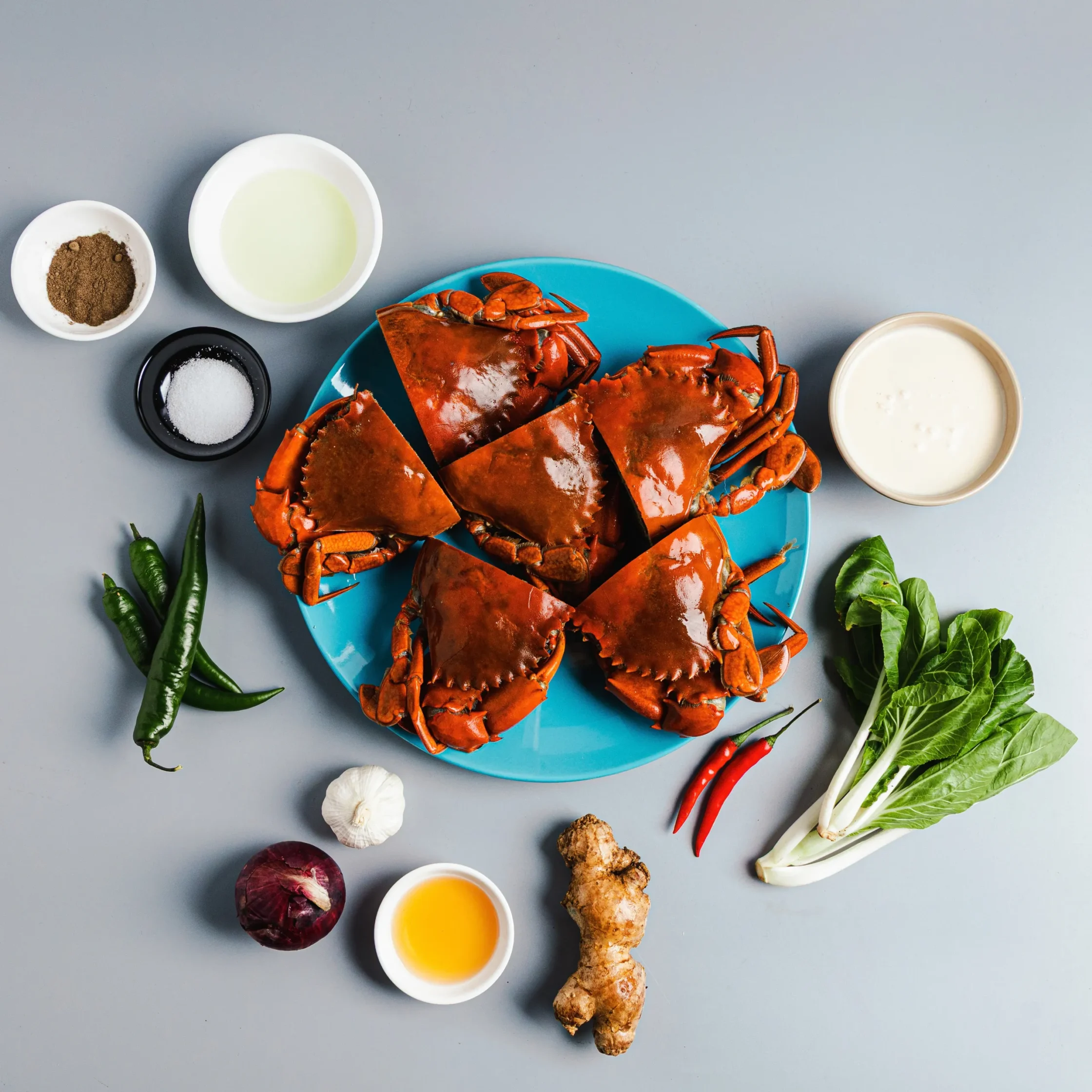
Mud crab has naturally sweet and delicate meat. Coconut milk is creamy and rich. Ginger adds freshness and warmth, while garlic and onion create a savory aromatic base. Green chilies contribute mild heat, and red chili can be added for people who enjoy a stronger kick.
Fish sauce adds saltiness and umami, helping bring the flavors together.
The finished sauce should be rich and flavorful without completely overwhelming the natural taste of the crab. Ideally, you should still be able to taste the sweetness of the seafood beneath the coconut milk.
Understanding the Ingredients
Mud Crabs
The crab is the centerpiece of the dish. Fresh mud crabs are ideal because their natural sweetness complements the coconut milk.
When buying crabs, choose live, fresh crabs from a reputable seafood seller when possible. They should smell fresh rather than strongly fishy.
Because crab shells can vary in size, the actual amount of meat you get from three crabs can differ considerably. The recipe is therefore flexible when it comes to the number of servings.
Coconut Milk
Coconut milk, or gata, gives the dish its creamy texture and rich flavor.
If using canned coconut milk, shake or stir it well before adding it to the pot because the coconut solids and liquid can separate during storage.
For a richer sauce, you can use full-fat coconut milk. If you prefer a lighter sauce, a reduced-fat variety can be used, although the flavor and texture will be different.
Garlic
Garlic gives the dish its savory foundation. It becomes especially fragrant when gently cooked in oil before the other ingredients are added.
Onion
Onion contributes sweetness and depth. As it cooks, it softens and blends into the coconut sauce.
Ginger
Ginger is particularly useful in seafood dishes. Its warm, fresh aroma complements the crab while helping create a cleaner, brighter flavor.
Siling Haba
Siling haba, or Filipino long green chili, provides mild heat and a fresh pepper flavor.
It can be adjusted according to your preference. You can use fewer chilies for a milder dish or more if you enjoy heat.
Red Chili
Red chili is optional. It provides additional heat and gives the finished dish a beautiful color.
If you are cooking for children or people who do not enjoy spicy food, simply leave it out.
Fish Sauce
Fish sauce provides saltiness and umami. Since crab naturally contains some salt and coconut milk is rich, add fish sauce gradually and taste before adding more.
Pechay
Pechay is optional but makes a useful addition. It adds color, texture, and vegetables to the dish.
Other leafy greens can also be used, depending on what is available.
Recipe Tips for Better Ginataang Alimango
1. Start with fresh crab
The quality of the crab makes a major difference. Since the recipe is relatively simple, the seafood remains one of the most noticeable flavors.
2. Don’t overpower the crab
It can be tempting to add lots of seasoning, but too much fish sauce or chili can hide the natural sweetness of the crab.
Season gradually.
3. Keep the coconut milk at a gentle simmer
High heat is unnecessary. A gentle simmer helps maintain a smooth and creamy sauce.
4. Use enough ginger
Ginger should complement the crab rather than dominate it. A thumb-sized piece is a good starting point, but you can adjust according to preference.
5. Add leafy vegetables near the end
Pechay cooks quickly. Adding it too early can make it overly soft.
6. Make extra sauce
If you love eating crab with rice, you may want to increase the coconut milk slightly. The sauce is excellent spooned over hot rice.
7. Don’t throw away the shells too quickly
Crab shells contribute flavor to the sauce. Even when you are not eating the shell itself, cooking the crab with its shell helps create a richer seafood flavor.
Ingredient Substitutions
Cooking is often about adapting to what is available, and Ginataang Alimango is flexible enough for several substitutions.
No Mud Crab?
You can use other edible crab varieties, although the flavor and amount of meat will vary.
You can also adapt the recipe using shrimp, prawns, mussels, clams, or other seafood. The cooking time should be adjusted because different seafood cooks at different speeds.
No Coconut Milk?
Coconut milk is a defining ingredient of ginataan, so replacing it completely will change the character of the dish.
If necessary, you can use a plant-based coconut milk alternative designed for cooking, but choose an unsweetened version.
No Siling Haba?
You can use another mild green chili or a small amount of bell pepper if you want the pepper flavor without much heat.
No Red Chili?
Simply omit it. The dish will still be flavorful.
No Pechay?
You can leave it out or substitute another leafy vegetable such as spinach, bok choy, or another suitable cooking green.
No Fish Sauce?
Soy sauce can provide saltiness and umami, although it will produce a different flavor. Add it gradually because it can become quite strong.
Want a Richer Sauce?
Use full-fat coconut milk and reduce the amount of added water slightly.
Food Knowledge: Why Does Crab Pair So Well With Coconut Milk?
The combination of seafood and coconut milk works particularly well because of the contrast between the natural sweetness of seafood and the richness of coconut.
Crab has a delicate sweetness that can become even more noticeable when paired with a creamy sauce. Coconut milk adds fat and body, allowing aromatic ingredients such as ginger, garlic, and chili to spread throughout the sauce.
This combination is not unique to one Filipino dish. Coconut and seafood are used together in many tropical cuisines, where coconuts are abundant and seafood is an important part of local diets.
In Filipino cooking, gata is particularly versatile. It can be used in savory dishes, desserts, soups, stews, and vegetable preparations.
Nutritional Information and Potential Health Benefits
Ginataang Alimango contains several nutritious ingredients, although it is also a rich dish because of the coconut milk.
Crab
Crab is a source of high-quality protein and provides nutrients such as vitamin B12, selenium, zinc, and other minerals. It is also naturally low in carbohydrates.
Coconut Milk
Coconut milk provides fat and calories and contributes to the creamy texture of the dish. Because it is energy-dense, portion size is worth considering if you are monitoring calorie intake.
Ginger
Ginger contains naturally occurring plant compounds and is commonly included in balanced diets. It also provides plenty of flavor without requiring large amounts of salt.
Garlic and Onion
Garlic and onion contribute plant compounds and flavor. Their strong aromas also mean you can create a flavorful dish without relying entirely on additional seasoning.
Chili
Chili peppers contain vitamin C and naturally occurring compounds such as capsaicin. The nutritional contribution depends on how much chili is used.
Pechay
Pechay adds vegetables, fiber, vitamins, and minerals to the meal.
Overall, Ginataang Alimango can fit into a balanced diet, particularly when served with a reasonable portion of rice and vegetables. However, the nutritional profile can vary significantly depending on the amount of coconut milk, fish sauce, crab meat, and other ingredients used.
Seafood and Food Safety
Because crab is highly perishable, food safety is especially important.
Buy seafood from a reliable source and keep it properly chilled before cooking. Avoid seafood that has an unusually strong unpleasant odor or other obvious signs of spoilage.
Cook the crab thoroughly. The meat should be opaque and firm rather than translucent or raw-looking.
Cross-contamination is another consideration. Keep raw seafood separate from ready-to-eat foods, and wash hands, utensils, cutting boards, and work surfaces appropriately after handling raw crab.
How to Store Ginataang Alimango Properly
Ginataang Alimango is best enjoyed fresh, but leftovers can be stored safely when handled properly.
Refrigeration
Transfer leftover crab and sauce to a clean, covered container and refrigerate promptly.
Do not leave cooked seafood at room temperature for an extended period.
For best quality and safety, refrigerated leftovers should generally be consumed within 3–4 days.
Freezing
Freezing is possible, although the texture of the crab and coconut sauce may change after thawing.
If you decide to freeze it, place the cooled dish in an airtight freezer-safe container. Label it with the date and use it within a reasonable period for the best quality.
Reheating
Reheat only the amount you intend to eat.
Warm the dish thoroughly over medium-low heat. Avoid violently boiling the coconut sauce because it can separate and become oily.
Add a small amount of water if the sauce has thickened considerably during refrigeration.
Final Thoughts
Ginataang Alimango is a dish that celebrates the natural flavors of Filipino ingredients. The sweetness of fresh crab, the richness of coconut milk, the warmth of ginger, the aroma of garlic and onion, and the gentle heat of chili all come together in one comforting pot.
What makes the dish especially memorable is that it does not need complicated techniques. The key is simply to start with good seafood, build a flavorful aromatic base, cook the crab properly, and keep the coconut gather around the table, share the sauce, crack shells, and enjoy the meal at a a comforting Filipino meal—rich, fragrant, satisfying, and deeply connected to the flavors of home sauce at a gentle simmer.
There is also something wonderfully communal about eating crab. It is the kind of food that naturally encourages people to gather around the table, share the sauce, crack shells, and enjoy the meal at a relaxed pace.
With a bowl of hot rice beside it, Ginataang Alimango becomes more than just a seafood dish. It becomes a comforting Filipino meal—rich, fragrant, satisfying, and deeply connected to the flavors of home.
Whether you prepare it for an ordinary family dinner or bring it out for a special gathering, Ginataang Alimango is a delicious reminder of how simple ingredients can create a meal worth remembering.