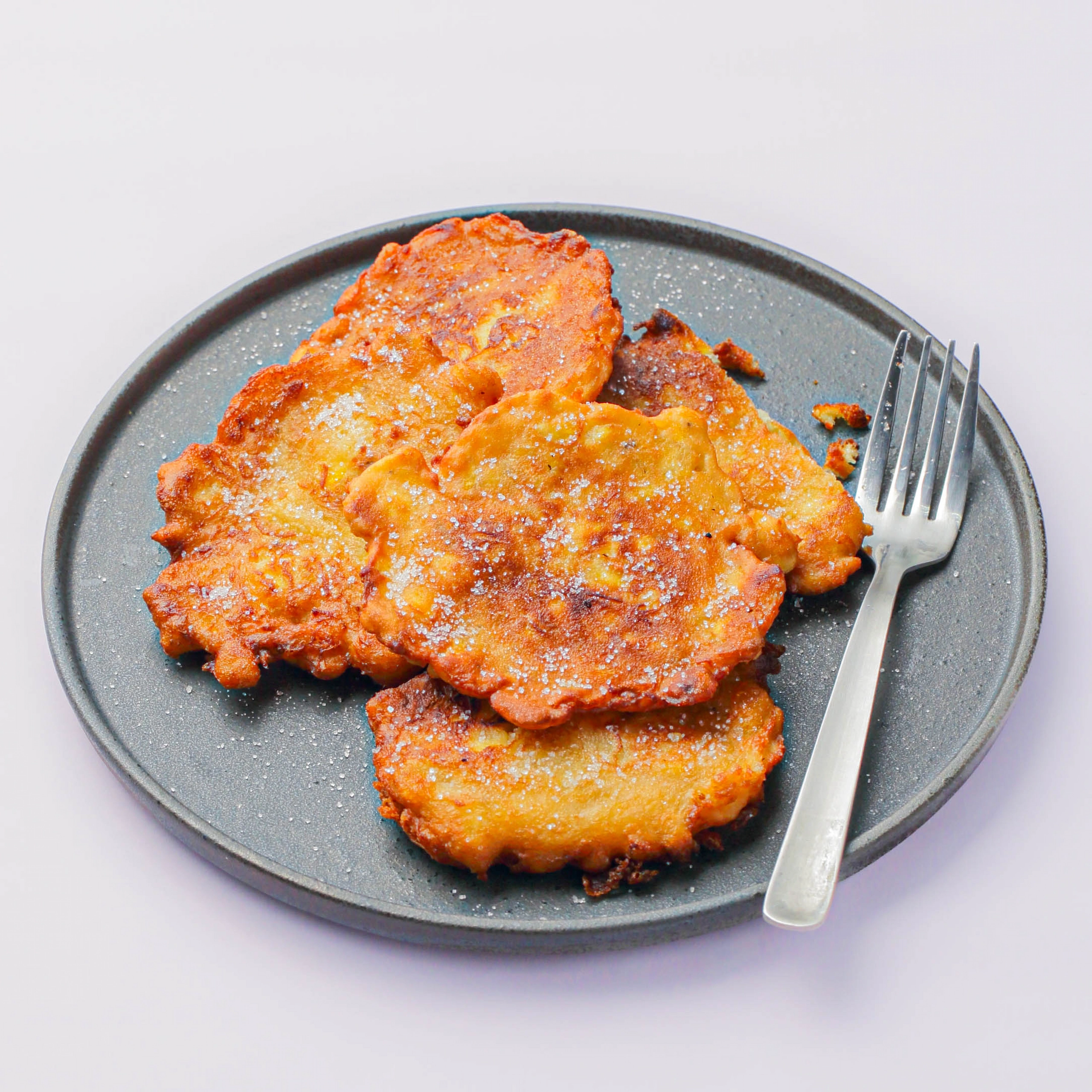


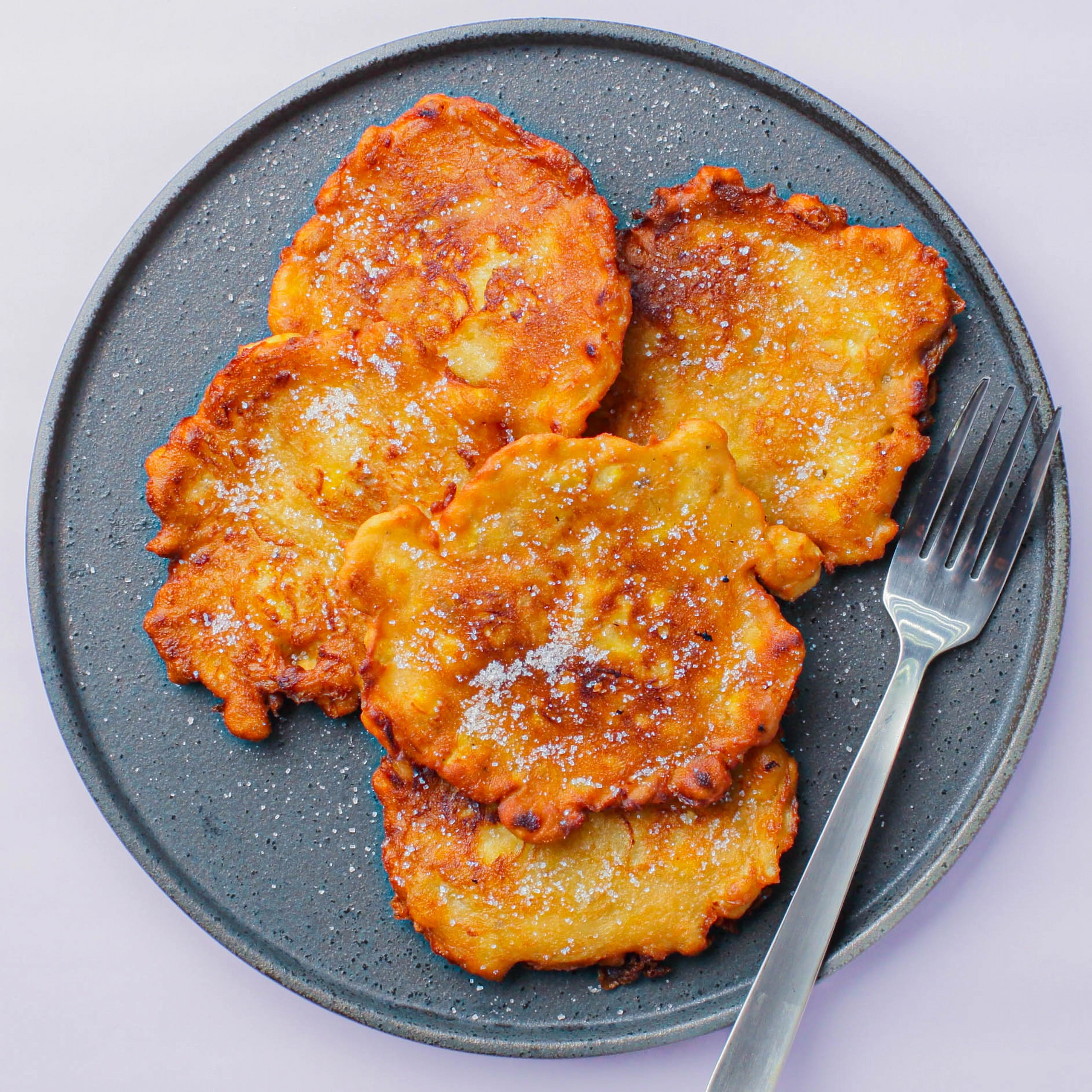
There is something wonderfully comforting about maruya. It is the kind of Filipino snack that doesn’t need fancy ingredients or complicated techniques to make people happy. A few ripe saba bananas, a simple batter, and hot oil are enough to create something crisp, golden, sweet, and soft inside.
For many Filipinos, maruya brings back memories of afternoon snacks, neighborhood merienda, school canteens, or a kitchen where someone was frying a batch while everyone waited for the first pieces to cool. It is inexpensive, filling, and easy to share, which is part of its charm.
This version uses mashed or flattened saba bananas coated in a lightly sweet batter made with flour, sugar, eggs, evaporated milk, and vanilla. The result is a tender banana fritter with a golden exterior that is delicious on its own or sprinkled with extra sugar while still warm.
A Little History of Maruya
Maruya, sometimes spelled maruya or referred to as Filipino banana fritters, is a traditional Filipino merienda made primarily from bananas and batter, then fried until golden. It is especially associated with saba bananas, a starchy cooking banana widely used in Filipino cuisine.
The exact historical origin of maruya is difficult to pinpoint, as many Filipino fried snacks developed through generations of home cooking and local adaptation. What is clear is that bananas have long been an important part of the Philippine food landscape, and Filipino cooks have found countless ways to turn them into both savory and sweet dishes.
Maruya belongs to the same beloved family of Filipino snacks that includes turon, banana cue, camote cue, and other fried merienda. These foods demonstrate a practical and delicious approach to cooking: use accessible ingredients, prepare them simply, and turn them into something satisfying enough to enjoy with coffee, tea, or a cold drink.
Different families also prepare maruya differently. Some flatten the banana and coat it with a thin batter, while others mash the bananas into the batter itself. Some make the fritters lightly sweet, while others add plenty of sugar or finish them with a generous dusting of white sugar.
There is no need to be overly strict about it. Homemade maruya is supposed to feel comforting and familiar.
Tips for Making Really Good Maruya
Choose the right bananas
Saba bananas are ideal because they are firm and starchy enough to withstand frying.
You want them ripe enough to be sweet, but not so soft that they fall apart when handled.
Very green saba will produce a less sweet and somewhat firmer fritter.
Extremely overripe saba can become difficult to slice and may make the fritter too soft.
A banana with yellow skin and some dark spots is often a good stage for maruya.
Don’t make the batter too thin
A thin batter may slide off the banana and produce a fritter with very little coating.
You want enough batter to form a light, golden shell.
Don’t make it too thick either
An overly thick batter can make maruya heavy and doughy.
The banana should remain the star.
Keep the oil temperature steady
Oil that is too cool causes the fritters to absorb more oil.
Oil that is too hot can burn the outside before the batter and banana are properly heated.
Maintaining medium to medium-high heat and adjusting as you add batches is important.
Don’t overcrowd the pan
Adding too many fritters at once lowers the oil temperature.
This can lead to greasy, pale maruya.
Give each piece enough room to fry properly.
Drain properly
Let the fritters drain immediately after frying.
For the crispiest result, use a wire rack rather than stacking the fritters on top of each other.
Ingredient Substitutions
Maruya is forgiving, so you can make adjustments depending on what you have.
Saba banana
Saba is the traditional choice, but you can use other cooking bananas if available.
Regular ripe dessert bananas can work, but they are generally softer and sweeter. Handle them gently and avoid using bananas that are excessively ripe.
Evaporated milk
You can substitute:
- Fresh milk
- Whole milk
- Coconut milk
- Unsweetened plant-based milk
Coconut milk gives the fritters a subtle tropical flavor that works particularly well with banana.
All-purpose flour
All-purpose flour is the simplest choice.
You can experiment with:
- Rice flour
- Cornstarch mixed with flour
- Whole-wheat flour
Rice flour can help create a lighter, crispier coating.
If using whole-wheat flour, expect a slightly denser texture and nuttier flavor.
White sugar
You can use:
- Brown sugar
- Coconut sugar
Brown sugar gives the batter a deeper, caramel-like flavor.
Be careful when using very dark sugar because it can make the fritters brown more quickly during frying.
Vanilla
Vanilla is optional.
You can leave it out for a more traditional, straightforward banana flavor.
You can also use a small amount of cinnamon instead.
What Makes Saba Banana Special?
Saba is one of the most important cooking bananas in Filipino cuisine.
Unlike many dessert bananas, saba is particularly versatile when cooked. It can be boiled, fried, grilled, caramelized, added to stews, or used in desserts.
You will find it in familiar Filipino foods such as:
- Maruya
- Turon
- Banana cue
- Minatamis na saba
- Ginataang bilo-bilo
- Pochero
- Arroz a la cubana
Its firm texture makes it particularly useful for cooking.
When fried, the outside can caramelize while the inside becomes soft and creamy.
That’s exactly what makes saba so good in maruya.
The Role of Each Ingredient
Banana
The banana provides the main sweetness, aroma, moisture, and soft texture.
Flour
Flour creates the structure of the batter and forms the golden coating around the banana.
Eggs
Eggs help bind the batter and contribute richness, color, and tenderness.
Evaporated milk
Milk gives the batter a richer flavor and softer texture.
Sugar
Sugar sweetens both the batter and the finished snack.
Some of the sugar also contributes to browning during frying.
Salt
A small amount of salt is important because it balances the sweetness and makes the banana flavor stand out.
Vanilla
Vanilla adds aroma and makes the fritters smell especially inviting, but it isn’t necessary.
Oil
Oil provides the heat needed to fry the batter and create the crisp exterior.
Is Maruya Healthy?
Maruya can certainly be part of a balanced diet, but it is best thought of as an occasional snack or dessert, particularly because it is fried and contains added sugar.
The bananas themselves provide useful nutrients, including carbohydrates, fiber, potassium, and vitamin B6.
Eggs contribute protein and several vitamins and minerals.
Milk contributes protein, calcium, and other nutrients.
However, deep-frying increases the energy density of the food, while added sugar increases its overall sugar content.
So while maruya contains nutritious ingredients, it shouldn’t necessarily be treated as a “health food.”
It’s more accurate to think of it as a comforting homemade snack that can be enjoyed in moderation.
Potential Nutritional Benefits of the Ingredients
Bananas
Saba bananas provide carbohydrates for energy and contain dietary fiber and potassium.
Their natural sweetness also means you can make a flavorful snack without relying entirely on added sugar.
Eggs
Eggs provide high-quality protein and nutrients such as vitamin B12, selenium, and choline.
Milk
Evaporated milk contributes protein, calcium, and other nutrients.
Flour
Flour provides carbohydrates and energy.
If you substitute part of the flour with whole-grain flour, you can increase the fiber content, although the texture will change.
Cinnamon
If you choose cinnamon sugar as a topping, cinnamon adds flavor without requiring a large amount.
How to Make a Slightly Lighter Maruya
If you want to enjoy maruya while reducing some of its richness, you can make a few changes.
Use a thinner batter so that there is less coating around each banana.
Reduce the sugar in the batter if your saba bananas are already very ripe and sweet.
Drain the fritters thoroughly after frying.
You can also experiment with air-frying, although the texture will be different from traditionally deep-fried maruya.
Another option is to pan-fry the fritters in a smaller amount of oil. Again, the result won’t have exactly the same crispness, but it can still be tasty.
How to Get Crispier Maruya
If crispness is your priority, a few small details make a big difference.
Use a batter that isn’t excessively thick.
Make sure the oil is properly heated before frying.
Don’t overcrowd the pan.
Fry in small batches.
Drain the finished fritters on a wire rack.
And most importantly, eat them while they’re fresh.
Like many fried foods, maruya gradually loses its crispness as it cools.
How to Serve Maruya
Freshly fried maruya is delicious with a simple cup of:
- Filipino coffee
- Hot chocolate
- Tea
- Milk
- Salabat
For a more indulgent dessert, serve it with:
- Condensed milk
- Caramel sauce
- Chocolate sauce
- Vanilla ice cream
- Coconut caramel
A simple dusting of sugar, however, is often all you need.
There’s something particularly satisfying about biting into a warm, crisp fritter and finding a soft, sweet saba banana inside.
Maruya vs. Turon vs. Banana Cue
These three Filipino banana snacks are easy to confuse, but they’re prepared differently.
Maruya generally consists of banana coated in batter and fried.
Turon typically wraps banana, often with jackfruit, in spring-roll wrapper before frying and caramelizing.
Banana cue usually involves saba bananas coated in caramelized brown sugar and skewered.
All three are popular Filipino merienda, but their textures and preparation methods are quite different.
Maruya stands out because of its golden batter coating.
Common Mistakes to Avoid
Using very soft bananas: They can break apart while being coated.
Overmixing the batter: This can make the coating heavier.
Using cold oil: The fritters may absorb too much oil.
Using extremely hot oil: The outside can burn before the banana and batter are properly cooked.
Adding too much sugar to the batter: The exterior can brown too quickly.
Overcrowding the pan: This lowers the oil temperature.
Stacking freshly fried maruya: Steam can make the crisp coating soggy.
A Few Ways to Customize Your Maruya
Once you’ve mastered the basic recipe, you can have fun with it.
Coconut Maruya
Replace some of the evaporated milk with coconut milk and add a little grated coconut to the batter.
Cinnamon Maruya
Add a small amount of ground cinnamon to the batter and finish with cinnamon sugar.
Chocolate Maruya
Add a small amount of cocoa powder to the batter or drizzle finished fritters with melted chocolate.
Cheese Maruya
For a Filipino-style sweet-and-savory combination, serve the warm banana fritters with a little grated cheese.
Jackfruit Maruya
Add small pieces of ripe jackfruit to the batter for an extra tropical flavor.
Final Words
Maruya is proof that some of the best Filipino snacks don’t need complicated ingredients or elaborate presentation.
A few saba bananas, a simple flour batter, and a pan of hot oil can produce something wonderfully comforting. The outside becomes golden and crisp, while the banana inside turns soft, warm, and naturally sweet.
What makes maruya especially charming is its connection to Filipino merienda culture. It is food meant to be shared casually. You don’t need a special occasion to make it. You can prepare a batch on an ordinary afternoon, put it on a plate, sprinkle it with sugar, and suddenly everyone in the house seems to find a reason to gather in the kitchen.
And like many traditional Filipino recipes, maruya leaves plenty of room for personal touches. You can make it sweeter, lighter, crispier, softer, more coconutty, or simply keep it exactly the way you remember it.
If you have ripe saba bananas sitting in the kitchen, don’t underestimate them. With just a few pantry ingredients, they can become a snack that feels nostalgic, generous, and homemade.
Serve maruya warm, share it with family or friends, and enjoy it slowly with your favorite drink. Sometimes, a simple banana fritter is all you need to turn an ordinary afternoon into a memorable Filipino merienda.