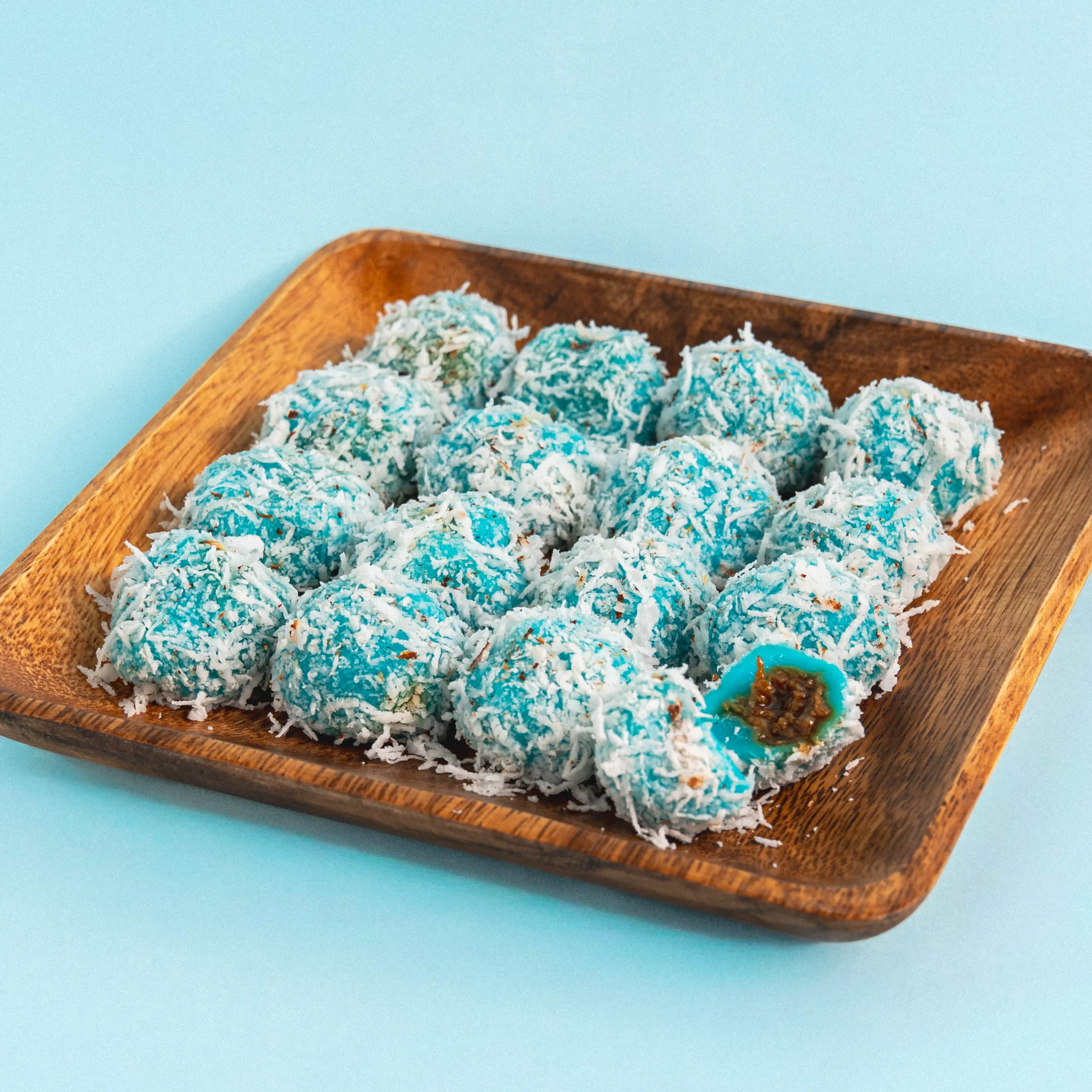


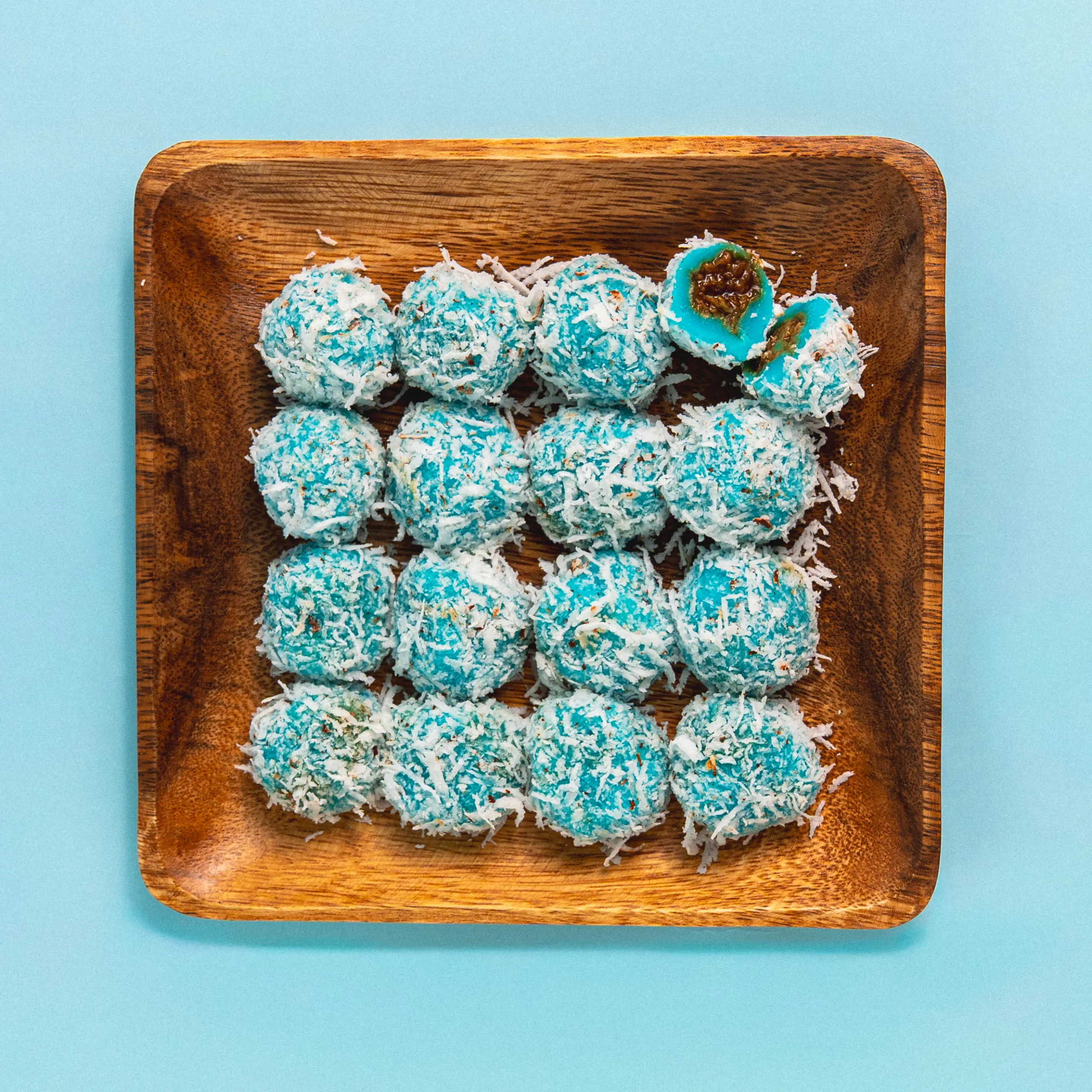
Putli Mandi is one of the most beloved traditional delicacies from Jolo, Sulu Province in the southern Philippines. Often served during celebrations, family gatherings, and special occasions, this colorful rice cake is known for its soft, chewy glutinous rice dough that surrounds a rich, sweet coconut filling. Each piece is then generously coated with freshly grated coconut, creating a dessert that’s simple in appearance but wonderfully satisfying in both flavor and texture.
The name Putli Mandi is commonly associated with the Tausug people, whose rich culinary traditions have been passed down through generations. Although the recipe uses only a handful of pantry ingredients, every bite reflects the careful preparation and patience that make many traditional Filipino delicacies so special. The contrast between the tender rice dough, the gooey caramelized coconut filling, and the light coating of fresh coconut makes this dessert both comforting and memorable.
While ube food coloring gives the dough its signature purple hue, the color is completely optional and doesn’t affect the flavor. The beauty of Putli Mandi lies in its soft, chewy texture and sweet coconut center, making it a favorite among both children and adults. Whether you’re preparing it for a festive occasion or simply exploring regional Filipino cuisine, this homemade version brings the authentic flavors of Sulu right into your kitchen.
Recipe Tips
- Use freshly grated coconut whenever possible for the best flavor and texture.
- Stir the coconut filling frequently while cooking to prevent burning.
- Allow the filling to cool completely before shaping to make assembling much easier.
- Keep the dough covered whenever you’re not using it to prevent it from drying out.
- Seal each rice ball carefully to prevent the filling from leaking during boiling.
- Avoid adding too much food coloring—a few drops are enough to achieve the traditional light purple color.
- Cook the rice balls in batches so they have enough room to float freely.
- Coat the rice balls with grated coconut while they’re still warm for better coverage.
- If using frozen grated coconut, thaw and drain any excess moisture before coating.
- Putli Mandi is best enjoyed on the day it’s made, when the dough is at its softest and the coconut is at its freshest.
Ingredient Substitutions
Muscovado Sugar
Brown sugar is the closest substitute and creates a similar caramel flavor. Coconut sugar or panocha sugar can also be used for a deeper, more traditional sweetness.
Fresh Grated Coconut
If fresh coconut isn’t available, frozen grated coconut can be used after thawing and draining well. Unsweetened desiccated coconut may also work, although it has a drier texture and won’t provide the same freshness.
Glutinous Rice Flour
For the authentic chewy texture, glutinous rice flour is highly recommended and should not be substituted with regular rice flour, as the texture will be very different.
Vanilla Extract
Vanilla is optional and simply enhances the aroma. You can omit it or replace it with a small amount of pandan extract for a different but equally delicious fragrance.
Ube Food Coloring
The food coloring is purely for appearance. You can omit it entirely for a traditional white version or use natural purple yam extract if available for both color and a subtle flavor. In fact you can play with colors you desire.
Sugar
The tablespoon of sugar in the dough is optional but adds a hint of sweetness. It can be omitted if you prefer the filling to be the main source of sweetness.