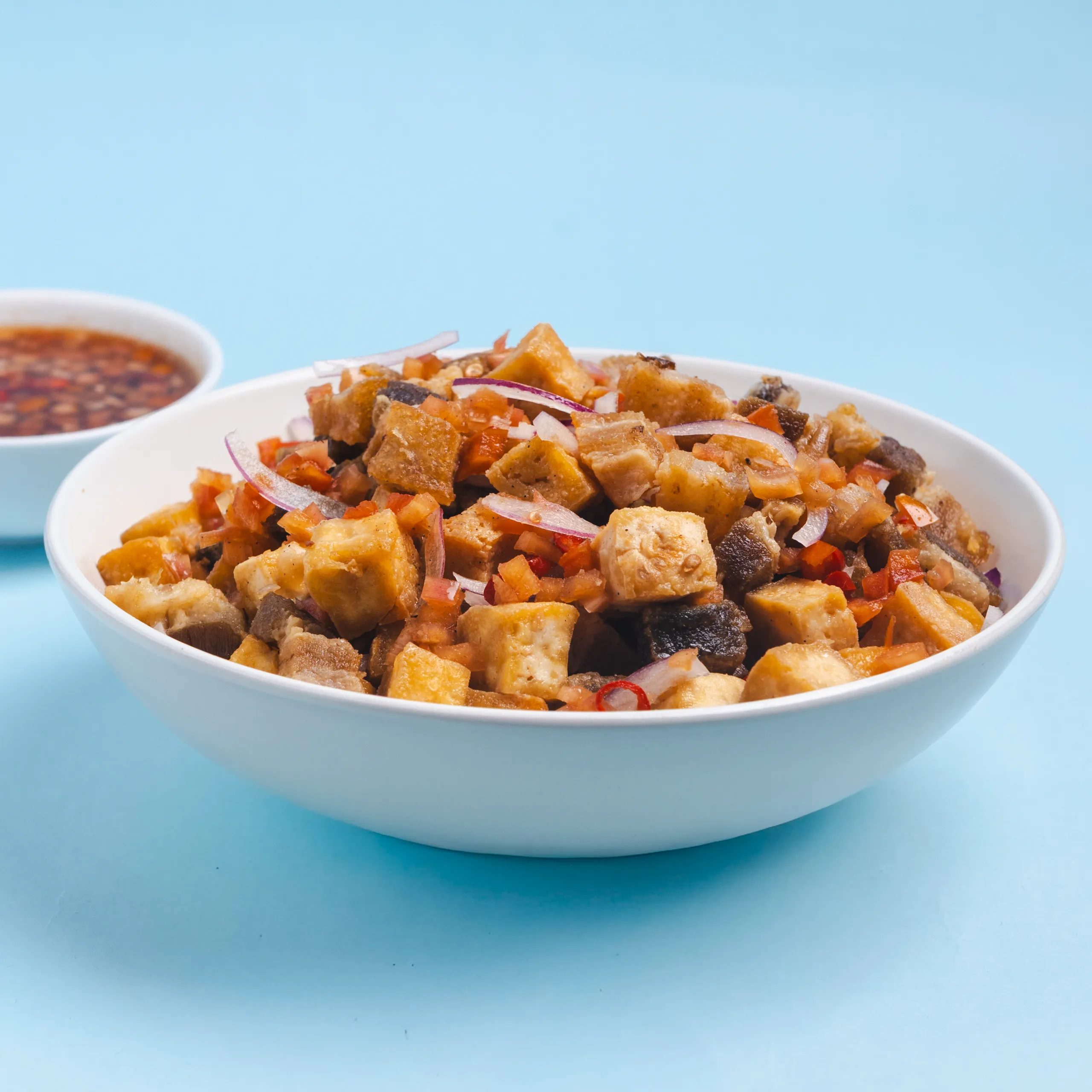


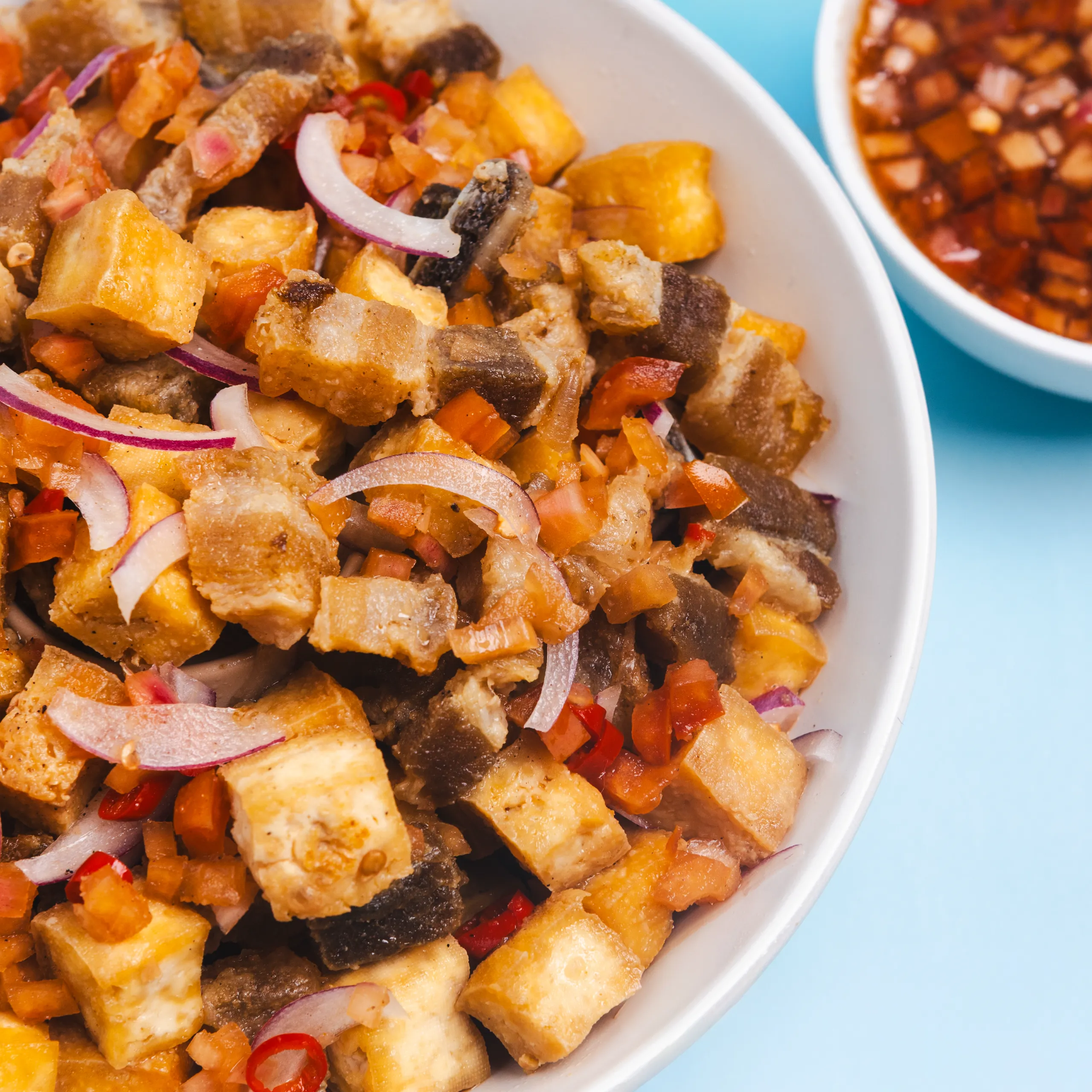
Tokwa’t Baboy is a well-loved Filipino appetizer and pulutan that combines crispy fried tofu with tender pork belly, all tossed in a bold, tangy, and savory vinegar-soy dressing. It’s a simple dish made with everyday ingredients, yet it delivers an irresistible combination of textures and flavors. The crispy exterior of the tofu pairs perfectly with the rich, juicy pork, while the garlic, onions, vinegar, soy sauce, and chilies create a refreshing dressing that ties everything together.
Although Tokwa’t Baboy is often enjoyed as a side dish or beer match during gatherings, it’s also hearty enough to be served as a main course with a generous bowl of steamed rice. It’s a popular choice in many Filipino households because it’s easy to prepare, budget-friendly, and incredibly versatile. Some even enjoy serving it alongside arroz caldo, lugaw, or goto, where its savory and tangy flavors complement the warm rice porridge beautifully.
The secret to a delicious Tokwa’t Baboy lies in balancing the textures. The pork should be tender with just enough bite, while the tofu should be golden and crisp on the outside yet soft and silky inside. The dressing should be bright and flavorful, with the right balance of sourness, saltiness, sweetness, and a touch of heat. Once everything is combined, each bite becomes a satisfying mix of crunchy, tender, savory, and tangy goodness that keeps you coming back for more.
Whether you’re preparing it for family dinners, parties, or simply craving a classic Filipino favorite, this homemade Tokwa’t Baboy is sure to become one of your go-to recipes.
Recipe Tips
- Simmer the pork gently instead of boiling vigorously to keep it tender and juicy.
- Skim off the foam while boiling for a cleaner-tasting pork.
- Pat the tofu completely dry before frying to reduce oil splatter.
- Fry the tofu in batches so each cube becomes evenly golden and crispy.
- Let the fried tofu cool slightly before mixing it with the sauce to help maintain its crisp exterior.
- Allow the dressing to sit for a few minutes before using so the garlic, onions, and chilies have time to release their flavors.
- Adjust the vinegar and soy sauce ratio to match your preferred balance of tangy and savory flavors.
- If you enjoy extra spice, add more chopped bird’s eye chilies or a pinch of chili flakes.
- Serve the dish shortly after tossing to keep the tofu from becoming overly soft.
- Leftovers become even more flavorful as the pork absorbs the dressing, though the tofu will soften over time.
Ingredient Substitutions
Pork Belly
Pork shoulder, pork jowl, pork ham, or pork loin can be used as leaner alternatives. If you prefer less fat, pork tenderloin also works well, though it won’t have the same richness as pork belly.
Firm Tofu
Extra-firm tofu is an excellent substitute and tends to hold its shape even better during frying. Avoid using soft or silken tofu, as they are too delicate for this recipe.
Vinegar
Cane vinegar is a traditional choice, but coconut vinegar, white vinegar, rice vinegar, or apple cider vinegar may also be used. Each variety brings a slightly different level of acidity and flavor.
Soy Sauce
Regular soy sauce works best, but low-sodium soy sauce can be used if you prefer a lighter seasoning. Tamari is also a suitable gluten-free alternative.
Sugar
White sugar provides clean sweetness, while brown sugar adds a subtle caramel note. Honey can also be used, though it will slightly change the flavor of the dressing.
Bird’s Eye Chilies
If bird’s eye chilies aren’t available, use serrano peppers, jalapeños, or crushed red pepper flakes. For a non-spicy version, simply omit the chilies.
Onion
Red onions are traditional because of their mild sweetness, but white onions or shallots can also be used.
What Makes Tokwa’t Baboy Special?
At first glance, Tokwa’t Baboy may seem like a simple combination of pork and tofu. But its appeal comes from the contrast between the ingredients.
The pork belly is tender, rich, and savory.
The tofu is crisp on the outside and soft inside when freshly fried.
The vinegar adds acidity that cuts through the richness of the pork.
The soy sauce contributes saltiness and umami.
The garlic and onion add aroma and sweetness.
The chili brings heat and keeps the dish from tasting too heavy.
That balance is what makes the dish work so well. No single ingredient needs to dominate. Instead, they complement each other.
Understanding the Ingredients
Tofu
Tofu is made from soybeans and is a popular plant-based source of protein.
Its mild flavor makes it particularly useful in dishes with strong sauces because it absorbs and carries the flavors around it.
When fried, tofu develops a golden exterior while retaining a soft interior, making it a great textural contrast to the pork.
Pork Belly
Pork belly contains more fat than many other cuts of pork, which is why it becomes especially tender and flavorful when slowly simmered.
The fat also contributes to the richness that makes Tokwa’t Baboy so satisfying.
If you want a lighter dish, you can reduce the amount of pork belly or choose a leaner cut.
Vinegar
Vinegar is one of the defining ingredients in this recipe.
Beyond its sour taste, vinegar helps brighten rich foods. In Tokwa’t Baboy, it cuts through the fatty pork and gives the dish its characteristic sharpness.
This is why the vinegar shouldn’t be treated as just another seasoning—it is a major part of the dish’s identity.
Garlic
Garlic adds an intense savory aroma and depth to the sauce.
It also contains sulfur-containing compounds and various antioxidant compounds that have been studied for their potential health effects.
Onion
Fresh onion gives the sauce sweetness, crunch, and aroma.
It also contains fiber and plant compounds such as quercetin.
Chili
Chili peppers contain vitamin C and carotenoids, and many varieties contain capsaicin, the compound responsible for their heat.
Capsaicin has been studied for its potential metabolic and antioxidant effects, although the amount consumed in a dish like this should be viewed as part of an overall diet rather than a medicinal dose.
Health Benefits of the Ingredients
Tokwa’t Baboy is a rich and satisfying dish, so portion size matters, especially because pork belly and fried tofu can contribute a significant amount of fat and calories.
That said, several ingredients provide valuable nutrients.
Tofu supplies plant-based protein and, depending on how it is made, can also provide calcium and iron. It can be a nutritious addition to a balanced diet.
Pork provides protein along with nutrients such as vitamin B12, zinc, selenium, and several B vitamins.
Garlic and onions contribute antioxidants and beneficial plant compounds while adding flavor without requiring large quantities of additional seasoning.
Chili peppers can contribute vitamin C and other plant compounds.
Vinegar adds flavor with relatively few calories, making it useful for creating a bold sauce without relying on large amounts of sugar or fat.
Because the dish contains salty soy sauce and fatty pork, those watching their sodium or saturated-fat intake may want to enjoy a smaller portion and balance it with vegetables and other lighter foods.
How to Make It a Little Healthier
You can make a few simple adjustments without losing the character of Tokwa’t Baboy.
- Use a leaner cut of pork or reduce the amount of pork belly.
- Choose extra-firm tofu and fry it in a controlled amount of oil.
- Drain the fried tofu thoroughly.
- Use less soy sauce and adjust the vinegar, garlic, onion, and chili for flavor.
- Add more fresh onion to increase the vegetable component.
- Serve it alongside steamed vegetables or a simple vegetable dish.
- Keep portions moderate and pair the dish with rice and other nutrient-rich foods.
You don’t have to completely eliminate the fried tofu or pork belly to enjoy the dish. Tokwa’t Baboy is meant to be a flavorful and indulgent part of a meal, and balance is more realistic than trying to turn every traditional dish into a low-fat recipe.
How to Serve Tokwa’t Baboy
Tokwa’t Baboy is incredibly versatile.
It can be served as:
- An appetizer
- A Filipino side dish
- A pulutan
- A rice topping
- A partner for lugaw
- A side dish for arroz caldo
- Part of a larger Filipino meal
For a simple family meal, serve it with hot steamed rice and a fresh vegetable side.
For a gathering, place the pork and crispy tofu on a large serving plate and spoon the vinegar sauce over them just before serving. Add extra sliced onions and chilies on top for a more attractive presentation.
Final Thoughts
Tokwa’t Baboy is a wonderful example of why Filipino food doesn’t need to be complicated to be memorable.
With just tender pork, crispy tofu, sharp vinegar, salty soy sauce, fragrant garlic, fresh onions, and a little chili, you get a dish with an incredible range of textures and flavors.
There is something satisfying about biting into a piece of golden tofu alongside tender pork and getting that sudden hit of tangy vinegar and fresh onion. The richness of the pork is balanced by the acidity of the sauce, while the tofu brings another layer of texture to every bite.
It is also the kind of recipe that feels very personal. One family may prefer it extra sour, another may add more garlic, and someone else may want enough chili to make the sauce seriously spicy. Those small adjustments are part of what makes Filipino home cooking so enjoyable.
Whether you serve it with lugaw, arroz caldo, steamed rice, or simply put it on the table as a flavorful appetizer, Tokwa’t Baboy has a way of making an ordinary meal feel a little more special.
At its heart, Tokwa’t Baboy is comfort food: simple ingredients, bold Filipino flavors, and a dish that is best enjoyed slowly with good food and good company.