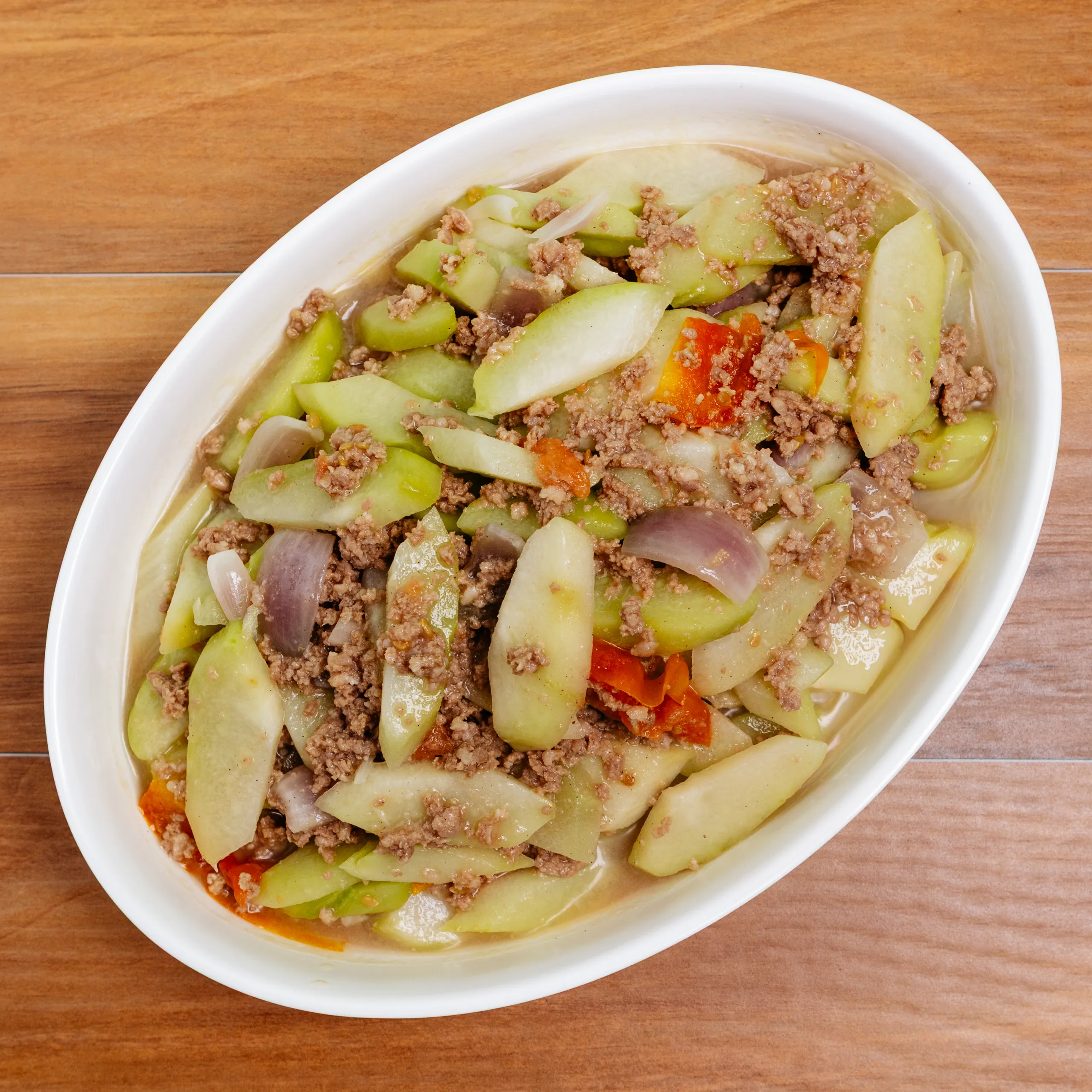


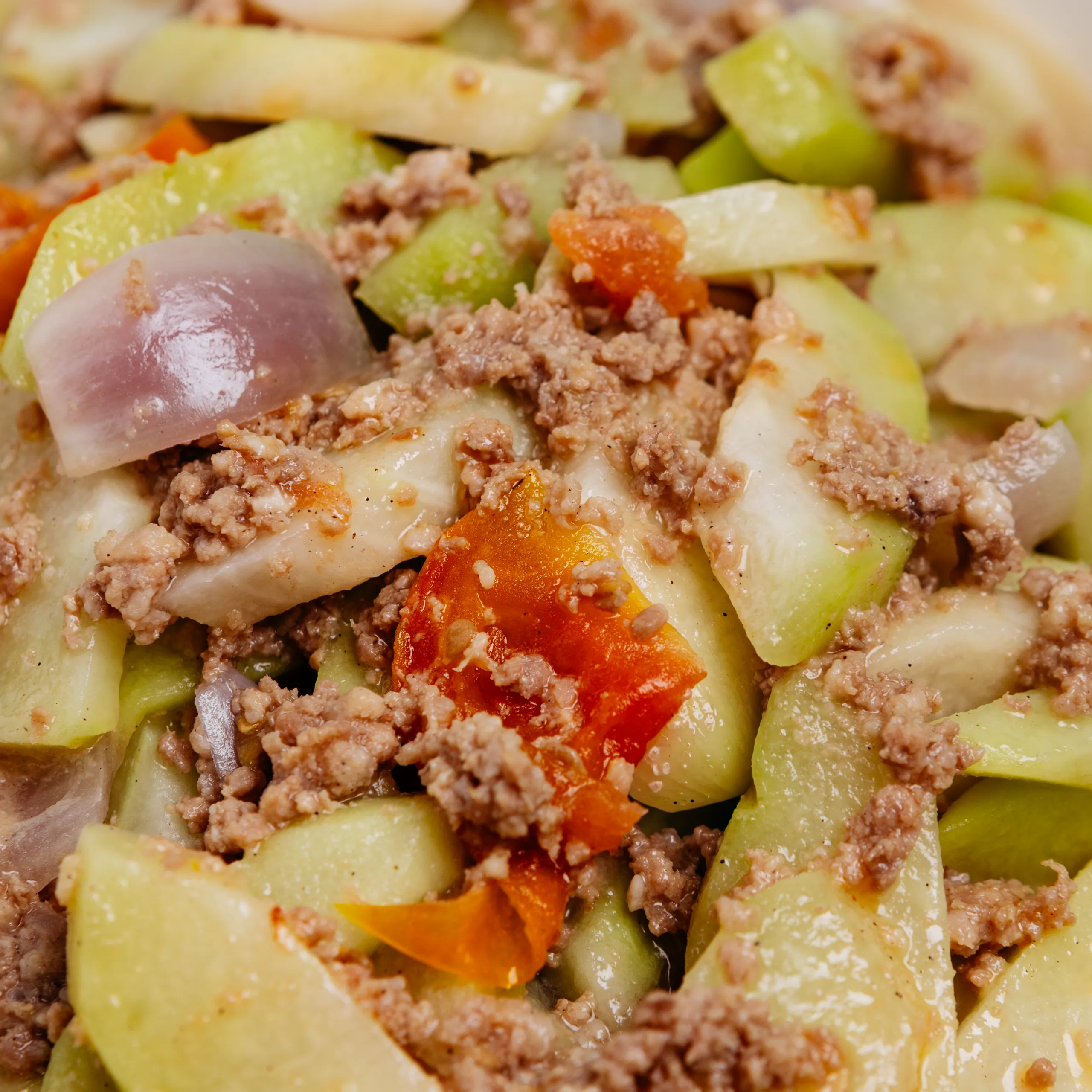
If you’re looking for an easy, affordable, and delicious Filipino dish to add to your weekly meal rotation, Ginisang Sayote with Pork Giniling is a recipe you’ll want to keep on hand. This classic Filipino vegetable dish combines tender slices of sayote (chayote squash) with savory ground pork, garlic, onions, tomatoes, and fish sauce to create a simple yet incredibly satisfying meal. It’s a staple in many Filipino households because it’s budget-friendly, nutritious, and comes together in less than 30 minutes.
Sayote is a mild-flavored vegetable that absorbs the rich flavors of the ingredients it’s cooked with, making it perfect for ginisa or sautéed dishes. Paired with juicy pork giniling, the result is a comforting meal that’s hearty without feeling too heavy. The tomatoes provide a subtle sweetness and slight acidity, while fish sauce adds the signature umami flavor found in many traditional Filipino recipes.
One of the reasons this recipe has remained a family favorite for generations is its versatility. You can easily add more vegetables, adjust the seasonings to your liking, or even substitute the ground pork with chicken, beef, or tofu. Whether you’re preparing a quick lunch, a simple dinner, or meal prepping for the week, this recipe fits almost any occasion.
Even if you’re new to Filipino cooking, you’ll find this dish approachable and beginner-friendly. It uses everyday ingredients and requires only a few easy cooking techniques, making it an excellent recipe for anyone wanting to learn authentic Filipino home cooking. Best of all, it’s delicious served over a generous bowl of freshly steamed rice, making every bite warm, comforting, and satisfying.
Whether you know it as Ginisang Sayote, Sayote with Ground Pork, or Pork Giniling with Sayote, this wholesome dish is proof that simple ingredients can create wonderful homemade meals the whole family will enjoy.
Recipe Tips
Making Ginisang Sayote with Pork Giniling is simple, but a few helpful techniques can make your dish even more flavorful and delicious.
Use fresh, firm sayote.
Choose sayote with smooth green skin that’s firm to the touch. Avoid vegetables with wrinkles, bruises, or soft spots, as they may already be overripe and have a less pleasant texture after cooking.
Slice the sayote evenly.
Cutting the sayote into similar-sized slices helps everything cook at the same rate. Uniform slices also give the finished dish a more attractive presentation.
Brown the ground pork properly.
Instead of stirring constantly, allow the pork to cook undisturbed for a minute or two before mixing. This helps develop deeper flavors through light browning.
Cook the tomatoes until soft.
Don’t rush this step. Softened tomatoes release their juices and naturally create a richer, more flavorful sauce without needing additional ingredients.
Season gradually.
Fish sauce already adds plenty of saltiness, so taste the dish before adding extra salt. It’s always easier to add seasoning than to remove it.
Avoid overcooking the sayote.
Sayote cooks fairly quickly. It should be tender while still having a slight bite. Overcooked sayote can become watery and lose its pleasant texture.
Add vegetables for extra nutrition.
This recipe is easy to customize with carrots, green peas, bell peppers, spinach, pechay, cabbage, or malunggay leaves. These vegetables blend well with the existing flavors.
Adjust the consistency.
If you prefer a soupier dish, simply add a little more water or broth. For a thicker consistency, simmer uncovered for a few extra minutes until the liquid reduces.
Make it spicy.
If you enjoy spicy food, add chopped bird’s eye chilies or red chili flakes while sautéing the garlic and onions for a gentle heat.
Serve immediately.
Although leftovers taste wonderful, this dish has the best texture when served fresh and hot over steamed rice.
Ingredient Substitutions
One of the best things about Ginisang Sayote with Pork Giniling is how flexible it is. Here are several substitutions that work well if you’re missing an ingredient.
Ground Pork:
Ground chicken, ground turkey, ground beef, or even crumbled firm tofu make excellent alternatives.
Sayote:
Green papaya, zucchini, bottle gourd (upo), patola, or even yellow squash can be used if sayote isn’t available.
Fish Sauce:
Replace it with light soy sauce, coconut aminos, or simply season with salt to taste.
Tomatoes:
Fresh tomatoes can be substituted with canned diced tomatoes or a few tablespoons of tomato sauce.
Garlic:
Garlic powder works if fresh garlic isn’t available, although fresh garlic provides the best flavor.
Onion:
White, yellow, or red onions are all suitable for this recipe.
Cooking Oil:
Vegetable oil, canola oil, avocado oil, or coconut oil can all be used.
Water:
Chicken broth or pork broth adds extra depth of flavor if you have it available.
Health Benefits of the Ingredients
Ginisang Sayote with Pork Giniling can be part of a balanced meal, especially when you keep the amount of oil and salty seasonings moderate.
Sayote provides fiber and several vitamins and minerals while being relatively light in calories. The fiber can contribute to healthy digestion and help make a vegetable-rich meal more filling.
Tomatoes provide vitamin C and antioxidant compounds such as lycopene. Cooking tomatoes can also make lycopene more bioavailable.
Garlic and onions contribute beneficial plant compounds and antioxidants while adding plenty of flavor without requiring large amounts of oil.
Pork provides high-quality protein as well as nutrients such as vitamin B12, zinc, selenium, and other B vitamins. Choosing leaner pork can make the dish a little lighter.
For a more balanced plate, serve a generous portion of sayote alongside a moderate portion of pork and pair it with an appropriate serving of rice.
If you’re watching your sodium intake, use less fish sauce and soy sauce and rely more on garlic, onion, tomato, black pepper, and other herbs or spices for flavor.
Ways to Make It Healthier
You don’t have to completely change the recipe to make it more nutritious.
Try these simple adjustments:
- Use lean ground pork.
- Increase the amount of sayote compared with pork.
- Add carrots, bell peppers, or green beans for more vegetables.
- Use only enough oil to sauté the aromatics.
- Reduce fish sauce or soy sauce if you need to limit sodium.
- Serve with a moderate portion of rice.
- Use brown rice or another whole grain if you enjoy it.
- Add a fresh fruit or vegetable side dish to round out the meal.
The goal isn’t to remove everything that makes the dish enjoyable. Filipino food is meant to be flavorful and satisfying. Small changes can improve the nutritional balance while keeping the character of the dish intact.
Final Thoughts
Ginisang Sayote with Pork Giniling is a wonderful example of how simple Filipino cooking can be incredibly satisfying.
It doesn’t rely on expensive ingredients, elaborate techniques, or a long list of seasonings. Instead, it gets its character from familiar ingredients—garlic, onion, tomatoes, pork, and sayote—cooked together until their flavors become one comforting dish.
What makes recipes like this especially meaningful is their everyday quality. This is the kind of food that can appear on a family’s dinner table on an ordinary evening, served alongside hot rice and enjoyed without much fuss. It is practical, affordable, flavorful, and easy to adjust according to what you have in the kitchen.
Whether you’re cooking Filipino food for the first time or simply looking for another comforting vegetable-and-meat dish to add to your weekly rotation, Ginisang Sayote with Pork Giniling is worth trying.
Sometimes, the best meals really are the uncomplicated ones—the dishes that remind us that good food doesn’t have to be complicated to feel special.