

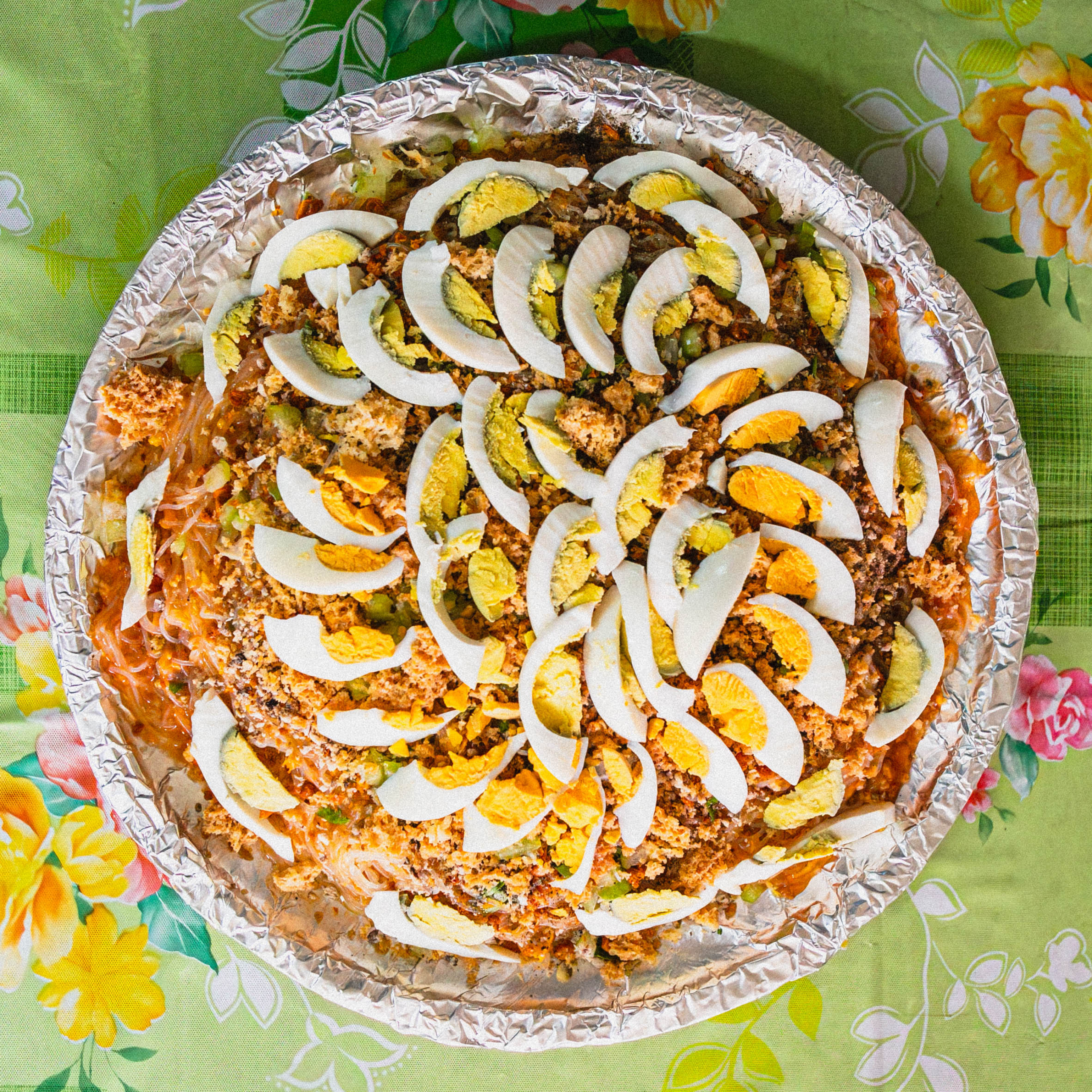
Despite living in the town next to Marilao, I had never seen or tasted its pancit, a version of palabok so famed that it bears the town’s name.
I had only learned of its existence through the food writers Doreen Fernandez and Michaela Fenix, who mentioned it with fascination in their books. That was until one recent afternoon.
Inside the Home That Keeps Marilao’s Famous Pancit Alive
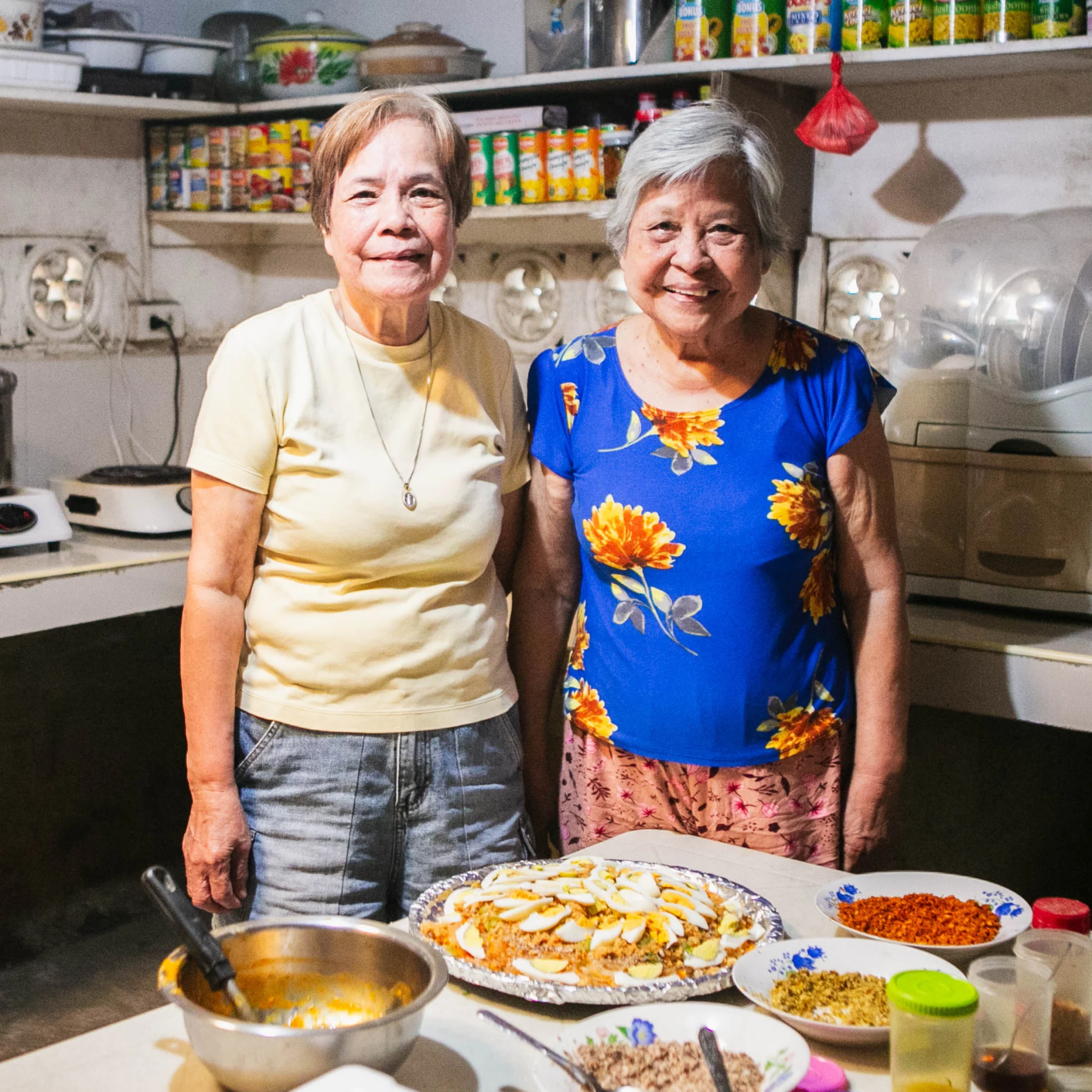
It was easy to miss: there were no signs announcing the store. But in a stout house by the street leading to the town’s church, Corazon and Florida Raymundo, the pancit makers, welcomed us to their home kitchen. On the table were ingredients prepared by Florida, Corazon’s 79-year-old sister. Corazon, who is 75 years old, learned to cook the pansit from her aunt Simeona, who lived with them and put up a panciteria in their house in the fifties. Eventually, her pansit became famous; Corazon claimed that the former presidents Benigno Aquino III and Joseph Estrada ordered from them regularly. Simeona died in 2014, at 94.
What Makes Pancit Marilao Different From Every Other Pinoy Noodle
Corazon strained a heap of bihon noodles and placed it on a foil-lined bilao. She flung in bits of fried garlic, then ladled the sauce on the steaming noodles. The sauce was made simply with water, thickened with cornstarch and wisps of egg, and tinted a bright orange with atsuwete. She sprinkled flaked tinapang galunggong and shrimp bits fried in annatto oil.
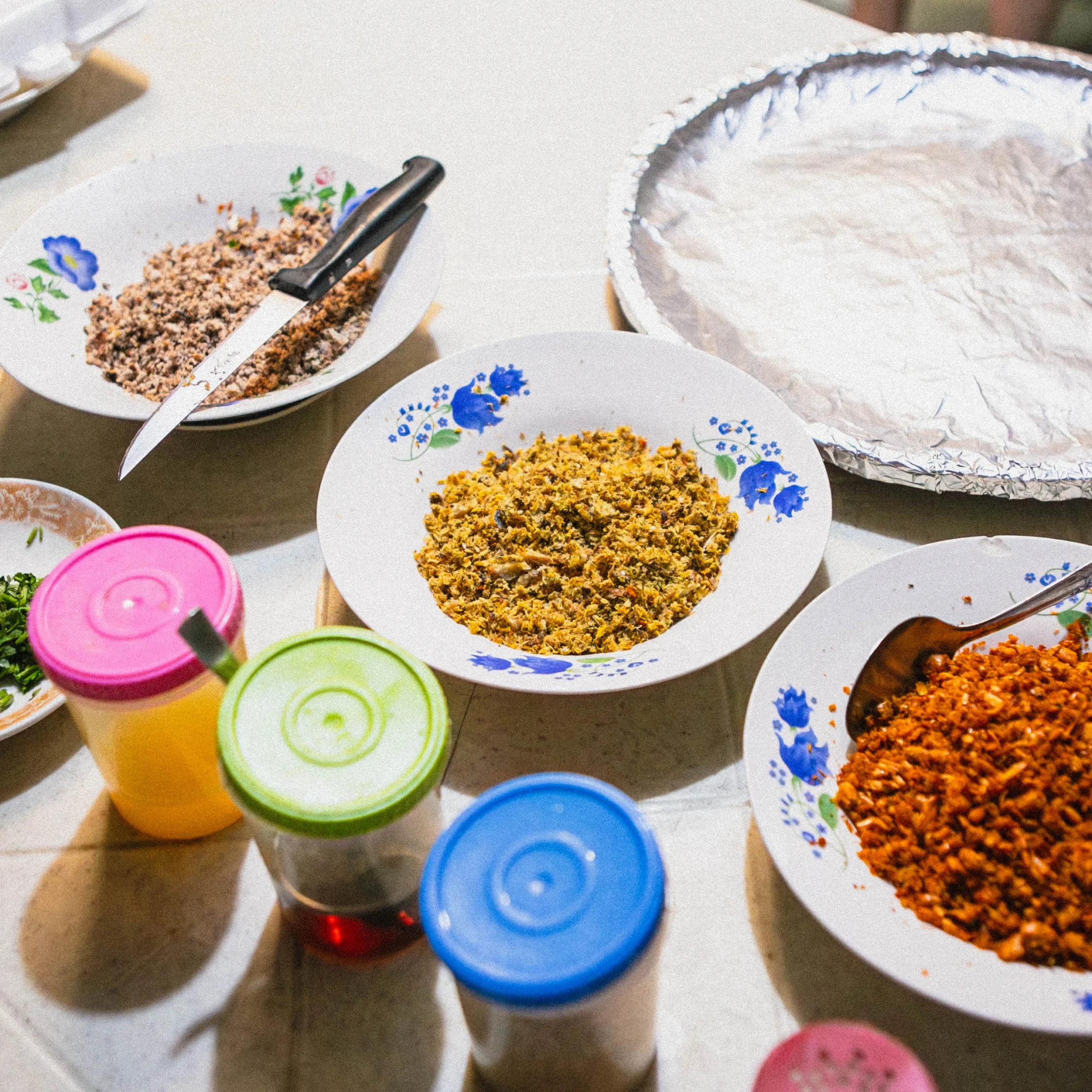
We were surprised when Corazon then placed another bed of noodles, swiftly spooned in fish sauce and calamansi juice, ladled it with more sauce, and dusted it with fried garlic, shrimp, black pepper, tinapa, and chopped kinchay before mixing. The pièce de résistance was the homemade okoy, a large, lacy disk of fried batter made with ground rice and egg yolks. It’s different from the common okoy with shrimp and squash.
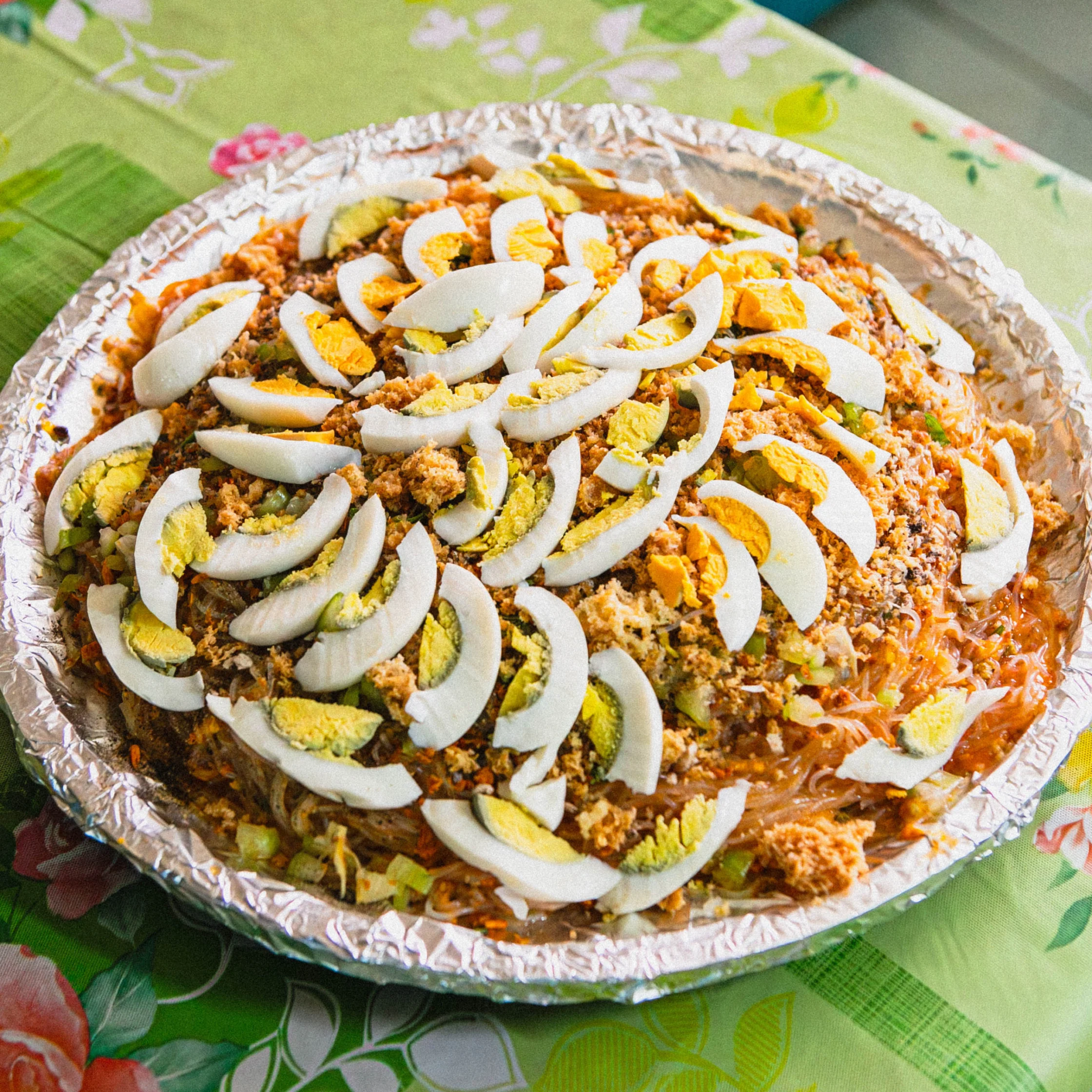
Corazon said that frying okoy required constant attention, so that one batch made with five cups of rice takes four and a half hours to finish. But to her, it’s worthwhile; unlike the usual pork chicharon, the okoy stays crunchy for hours when topped with the sauce. Fernandez traced this ingenious use of rice to the province’s abundance of rice fields. Corazon finished her work with a shower of the okoy bits, kamias (her addition to the original recipe), and sliced hard-boiled eggs.
The Heritage Recipe That Continues to Bring Diners Back
Nowadays, Corazon opens her store for take-out orders on Tuesdays and through Thursdays and Saturdays, though she closes whenever she and her friends get together. She also hates being woken up, though she goes to the market at 6:30 a.m. to buy ingredients. “I don’t tire myself out,” she told us, in Filipino. “We are at an age where we just want to enjoy life.”
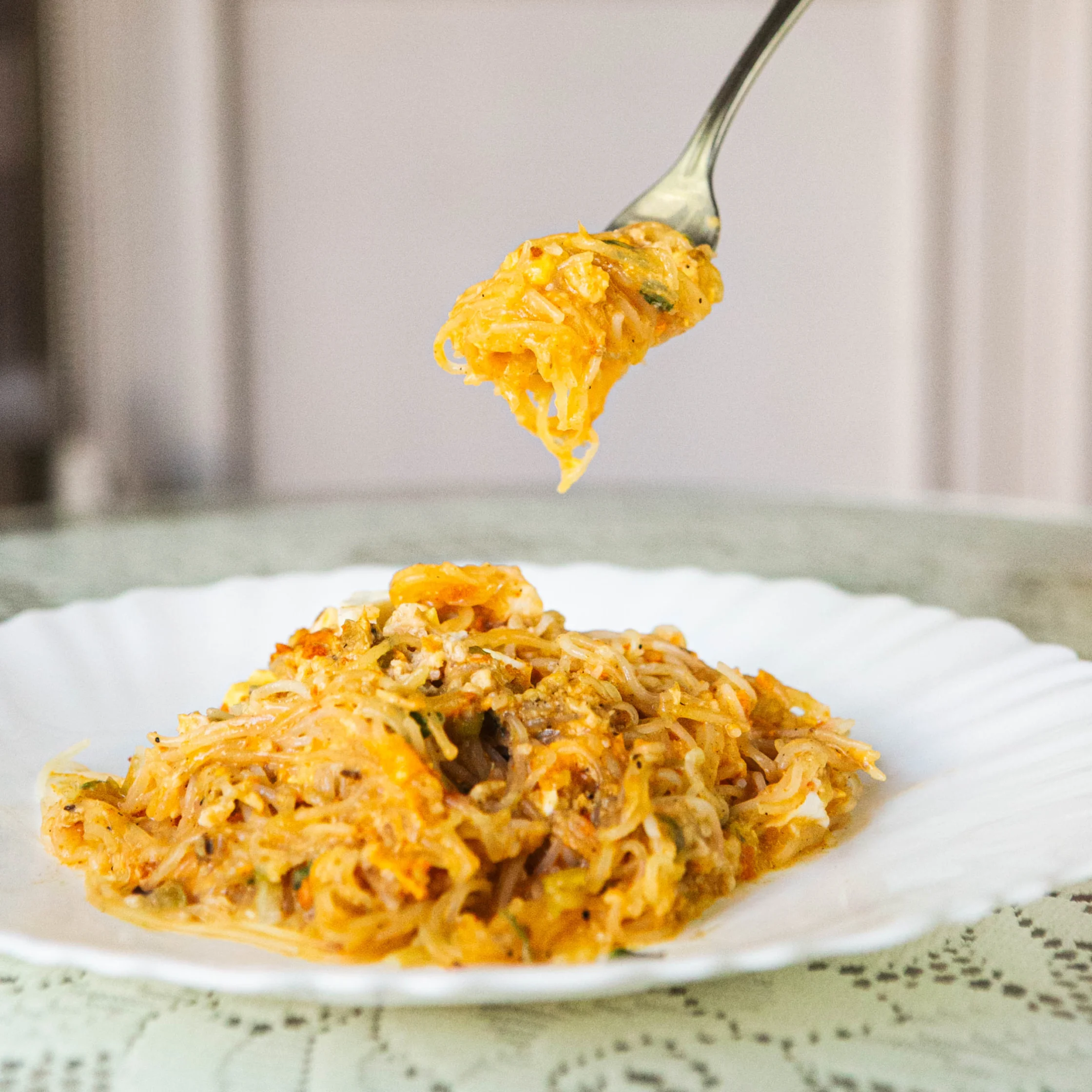
As we hunkered down at the sisters’ dining table, savoring this newfound pansit, I remembered the belief that eating noodles prolongs one’s life. If it were true—which seemed so with the sisters’ sprightliness—then save me some more.
Pansitan ni Aling Simeona, 74 San Miguel Street, Poblacion 1, Marilao, Bulacan

Frequently Asked Questions
Pancit Marilao is a Bulacan specialty similar to palabok, known for its annatto-colored sauce, bihon noodles, smoked fish, shrimp, and signature homemade okoy topping.
Unlike traditional palabok, Pancit Marilao is finished with a large, crispy homemade okoy instead of pork chicharon, adding a unique texture and flavor.
Corazon and Florinda Raymundo continue the family recipe started by their aunt, Aling Simeona, who established the home-based panciteria in the 1950s.
You can enjoy it at Pansitan ni Aling Simeona on San Miguel Street in Poblacion 1, Marilao, Bulacan.