

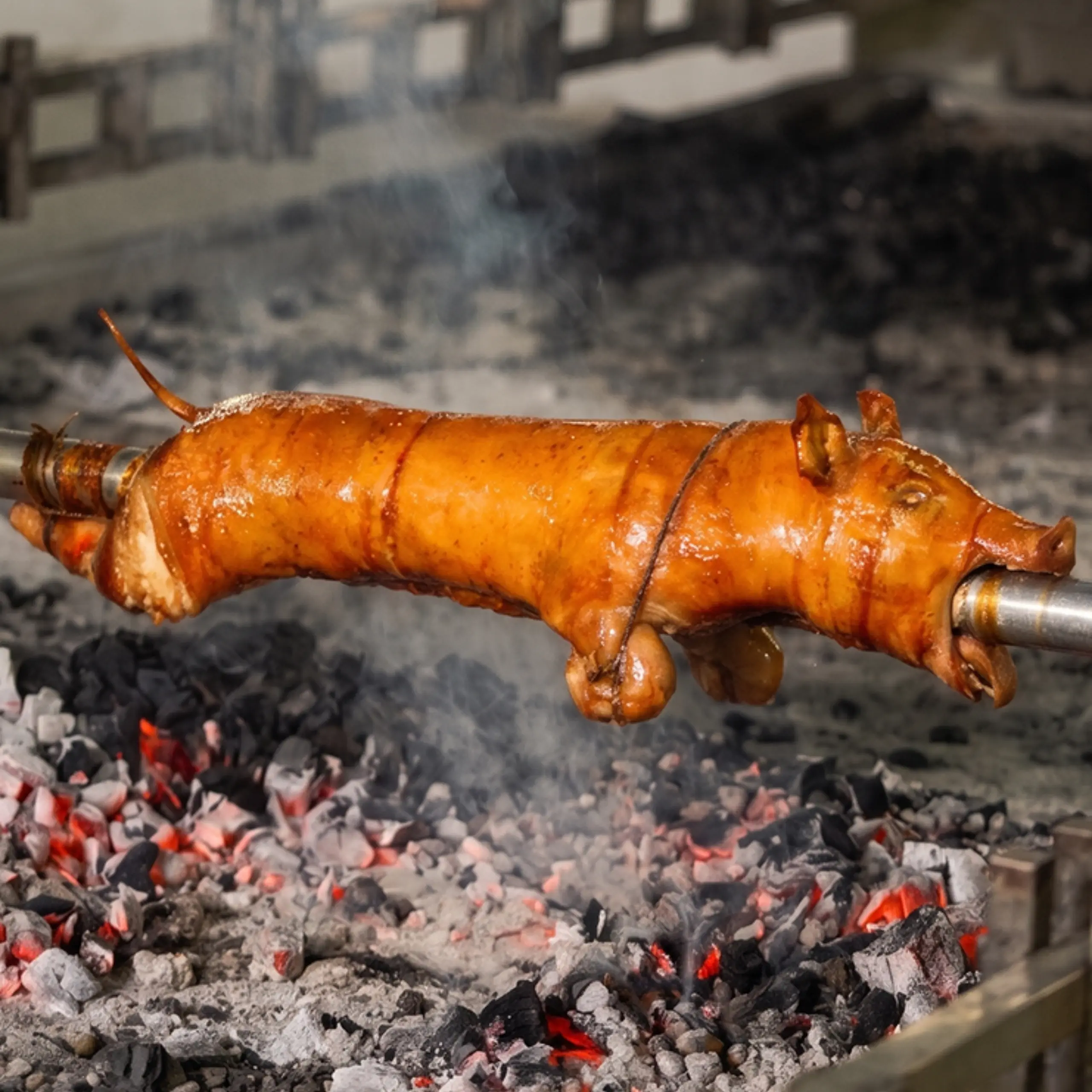
One of Cebu’s most enduring names when it comes to roast pig is bringing its quiet legacy to the capital, proving that some food traditions don’t need fanfare, only faithful craftsmanship.
Why Cebu Still Owns the Lechon Conversation
Few dishes capture the Filipino way of celebrating quite like lechon. It’s the centerpiece that signals a standard Filipino occasion, never absent from the table at a family gathering. But while almost every region has its own version, ask seasoned food lovers where to find the country’s gold standard and the answer almost always points south.
Cebu’s reputation wasn’t built overnight. For nearly a century, its lechon tradition has evolved around slow charcoal roasting, hand-turning, and seasoning that makes the meat itself a standalone dish. The result is a roast pig that’s celebrated for its crackling skin, aromatic meat, and the confidence to be served with nothing more than spiced vinegar. It’s a style that has become synonymous with Cebuano food culture and remains one of the province’s defining culinary icons.
Within that tradition, Cang’s Lechon has occupied a special place since the 1950s.
Unlike brands that built their following through aggressive expansion or tourism-driven visibility, Cang’s earned its reputation the old-fashioned way. For decades, it became one of those names locals recommended to family and friends not because it was the loudest, but because it consistently delivered the kind of lechon that leaves a good memory—in mind and on the palate. That longevity says something about Cebu, where competition is fierce and discerning locals have no shortage of options.
The Difference Is in the Roast
What separates Cebu lechon from many versions found elsewhere is its long-held traditions. Rather than treating the roast as something that needs to be “finished” with sauce, the seasoning is built into the pig itself. Herbs, aromatics, spices, and salt are worked deep into the cavity before hours of slow roasting over charcoal, allowing the flavors to permeate the meat. Every turn over the fire renders fat beneath the skin while gently basting the pork from within, creating the balance of crisp skin and succulent meat that defines the Cebu style.
For Cang’s, that technique is taken even further through a proprietary family spice rub that has been passed down through generations. The blend, said to carry subtle Chinese culinary influences, is applied by hand before roasting, allowing the seasoning to penetrate beyond the surface. Instead of a one-dimensional saltiness, each bite develops layers of savory spice and aromatics that linger without overpowering the pork itself.
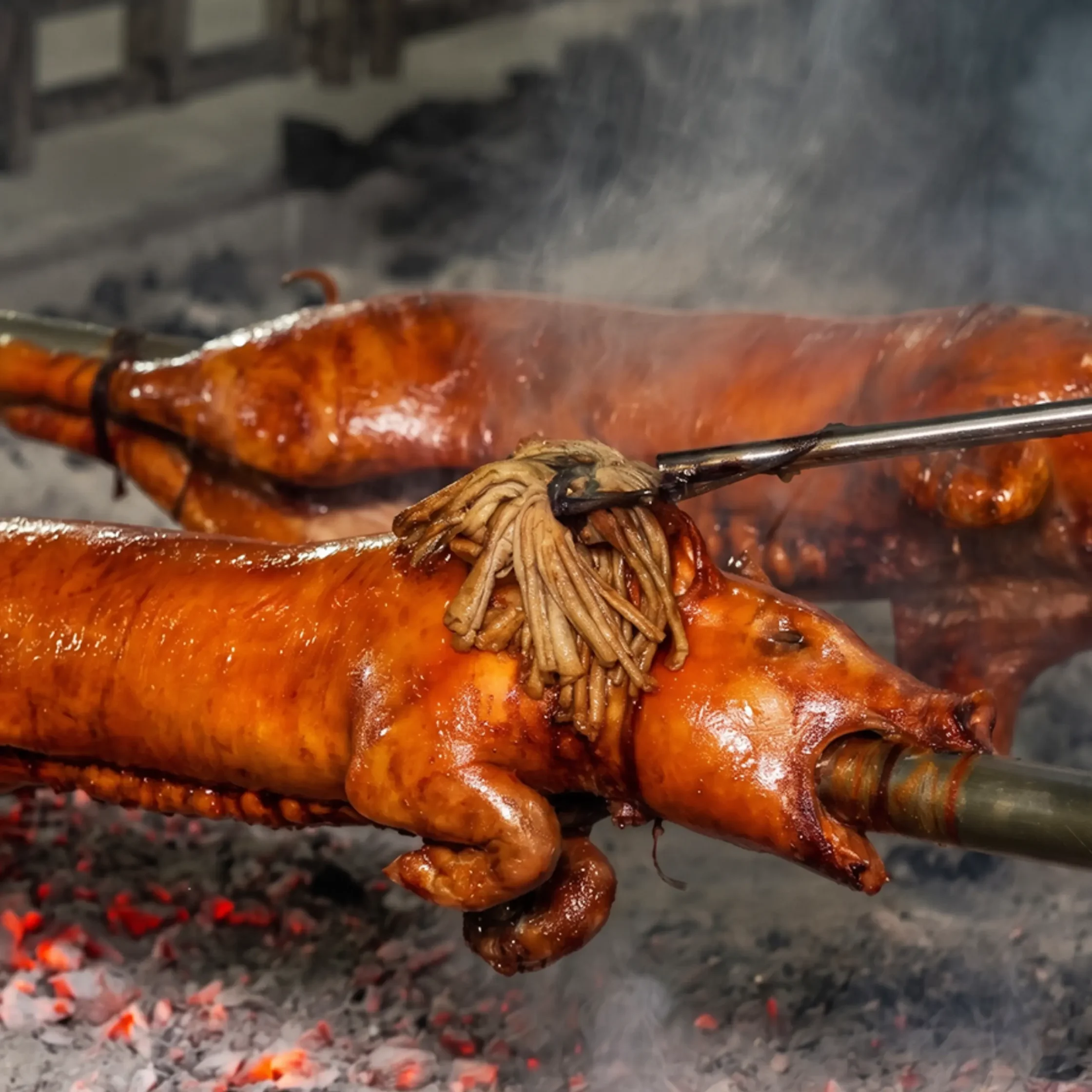
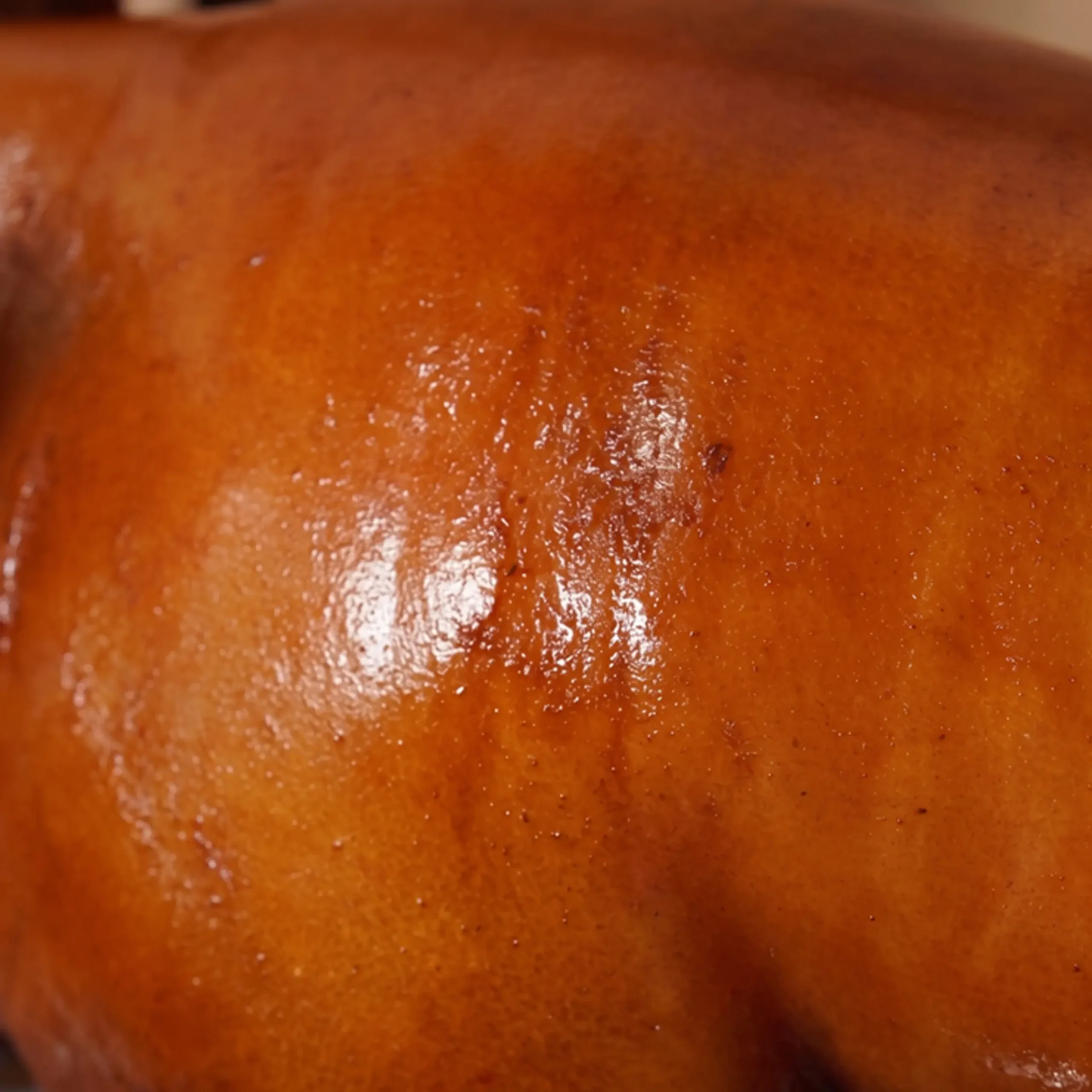
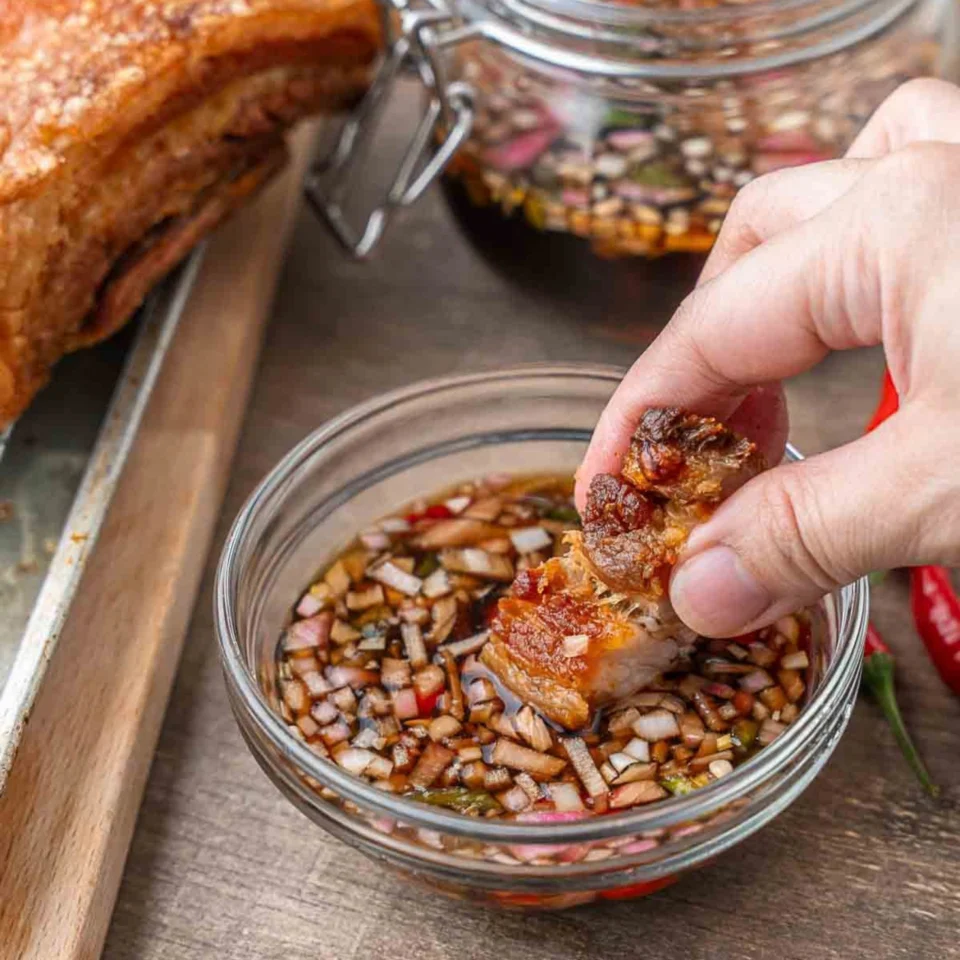
The skin delivers the satisfying snap expected of exceptional lechon, but it’s the meat that leaves the stronger impression—juicy, deeply seasoned, and flavorful enough that serving it with gravy almost feels unnecessary. In Cebu, that’s hardly a radical statement. Many locals consider spicy vinegar the only accompaniment worth reaching for, offering brightness that cuts through the richness rather than masking it.
That restraint is perhaps Cang’s biggest strength. In an era where bigger flavors often mean heavier sauces or bolder gimmicks, the brand stays remarkably focused on fundamentals: careful seasoning, patient roasting, and consistency from one pig to the next.
A Cebu Institution Finds a New Home
Bringing an established regional favorite to Manila isn’t simply about opening another branch—it’s about transporting a culinary tradition without losing what made it meaningful in the first place. Cang’s Manila is led by members of the Clavano family, descendants of the original founders, who have partnered to introduce the heritage brand to a wider audience while preserving the recipe and techniques that built its reputation back home. The goal isn’t to reinvent Cebu lechon for Manila, but to recreate the experience as faithfully as possible.
For diners, that arrival comes at an interesting moment. Filipino food culture has become increasingly interested in provenance—where recipes come from, who has been making them the longest, and what traditions have survived through generations rather than trends. Heritage brands resonate not because they’re nostalgic, but because they offer continuity in a dining landscape that’s constantly changing. That’s exactly where Cang’s fits into today’s food conversation. It isn’t chasing novelty or social media virality. Instead, it represents something rarer: a family recipe refined over decades, a reputation built through local loyalty, and a style of lechon that has helped define one of the Philippines’ greatest culinary traditions.
For longtime Cebu lechon devotees, its arrival in Manila offers a taste of home without boarding a plane. For everyone else, it’s an invitation to understand why Cebu remains the country’s lechon capital and why sometimes the best way to appreciate a great roast pig is the simplest: crisp skin, succulent meat, a splash of vinegar, and nothing getting in the way.
Cang’s Lechon is located at JCI Building, 18km West Service Road, Sucat, Parañaque City.

Frequently Asked Questions
Cebu lechon is known for seasoning the pig from the inside with herbs, aromatics, spices, and salt before slow-roasting it over charcoal. This creates crisp skin and deeply seasoned, succulent meat that can be enjoyed without a heavy sauce.
Cang’s Lechon has been part of Cebu’s lechon tradition since the 1950s. Its reputation was built over decades through family recipes, traditional roasting techniques, and consistent quality.
Cang’s uses a proprietary family spice rub passed down through generations. The blend, which is said to have subtle Chinese culinary influences, is applied by hand before roasting to give the pork layers of savory spice and aromatics.
Cang’s Lechon is located at JCI Building, 18km West Service Road, Sucat, Parañaque City. The Manila location is led by members of the Clavano family, descendants of the original founders.
Cebu-style lechon is often enjoyed simply, with crisp skin, succulent meat, and a splash of spicy vinegar. Unlike versions that rely on gravy or rich sauces, the seasoning and roasting technique are intended to let the flavor of the pork shine.