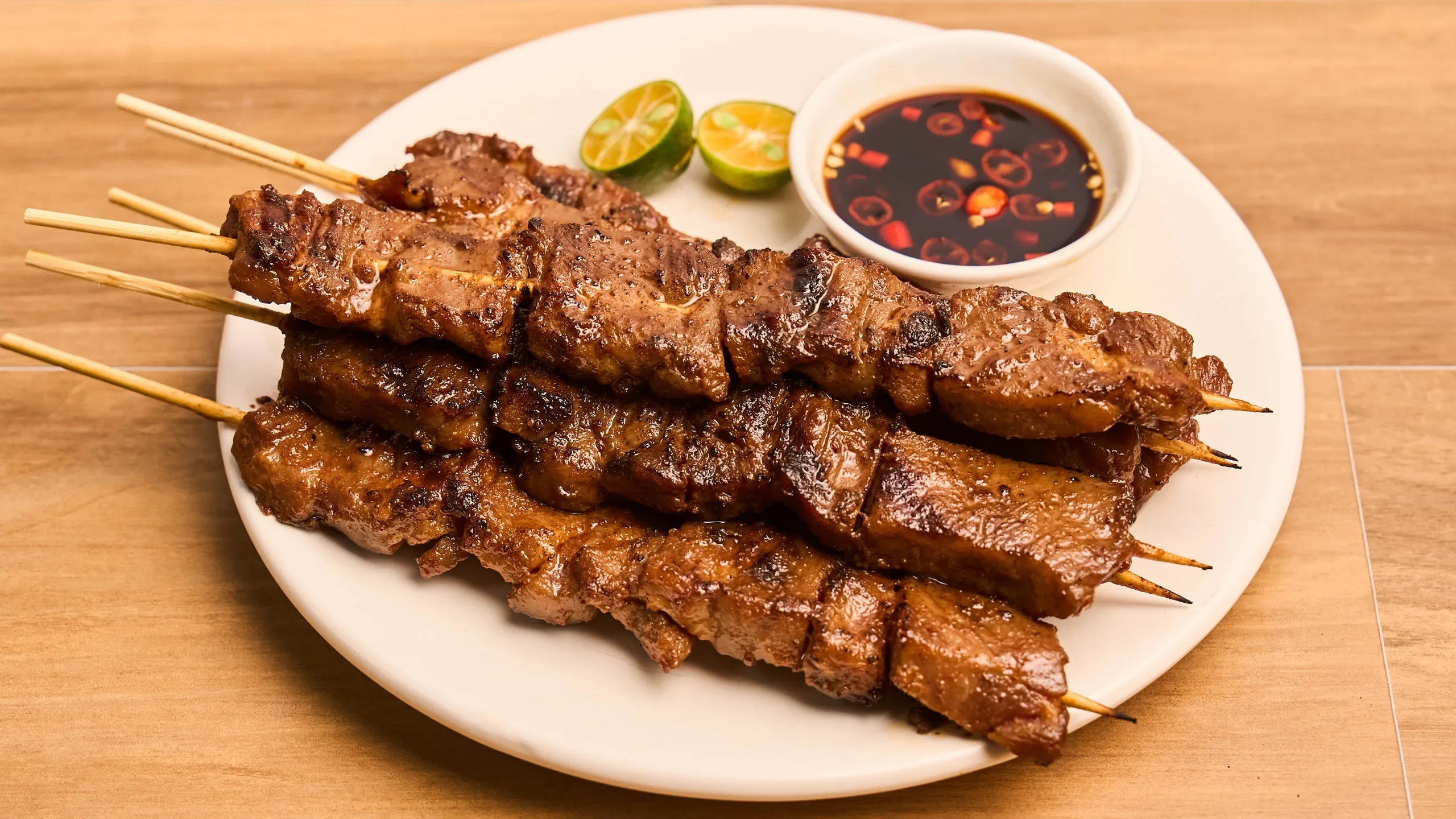


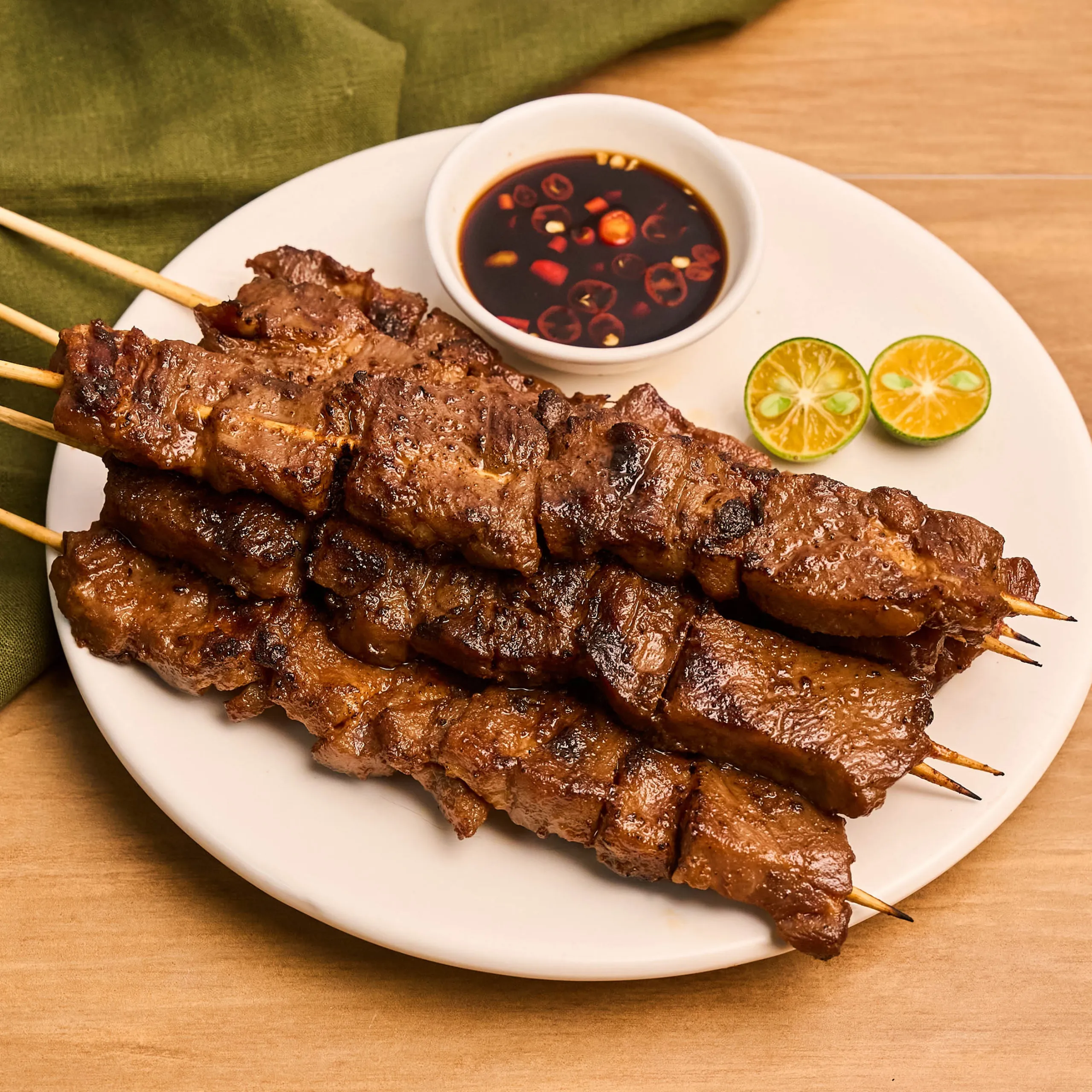
There is something special about the aroma of Filipino-style pork barbecue sizzling over hot charcoal. The sweet, smoky, and savory scent drifting through the air instantly reminds many Filipinos of family gatherings, birthday celebrations, beach outings, fiestas, and even simple afternoons spent with loved ones. Whether served as a quick street food snack or as the centerpiece of a backyard barbecue, Filipino pork BBQ is one of the country’s most loved grilled dishes.
Unlike Western barbecue that often relies on dry rubs or smoky sauces, Filipino pork barbecue is known for its flavorful marinade made with banana ketchup, soy sauce, calamansi, garlic, brown sugar, and spices. The combination creates a beautiful balance of sweet, tangy, salty, and slightly smoky flavors. During grilling, the meat is repeatedly brushed with marinade, allowing the sugars to caramelize into a glossy coating that gives every skewer its signature flavor and irresistible char.
This easy recipe is perfect for serving three people and delivers juicy, tender pork packed with authentic Filipino flavors. Whether paired with steamed rice, garlic rice, or enjoyed on its own, this homemade Filipino pork BBQ is guaranteed to become a favorite.
History of Filipino Pork BBQ
Filipino barbecue has its roots in centuries of culinary influences. Long before modern grilling techniques became popular, early Filipinos were already cooking meat over open fires using bamboo sticks and wooden skewers. Spanish colonization introduced new ingredients and cooking methods, while Chinese traders influenced the use of soy sauce in many Filipino marinades.
As time went on, Filipinos developed their own unique barbecue style by combining local ingredients like calamansi and banana ketchup with imported seasonings. Banana ketchup, invented during the 1940s due to tomato shortages, eventually became one of the defining ingredients of Filipino barbecue because it added sweetness, vibrant color, and a subtle fruity flavor.
Today, pork barbecue is one of the country’s most recognizable street foods. Vendors can be found grilling skewers outside schools, markets, transportation terminals, and neighborhood stores. During holidays and celebrations, it is common to see dozens of pork skewers cooking over charcoal grills while family members gather around waiting for the first batch to finish.
Filipino pork BBQ continues to represent warmth, hospitality, and togetherness, making it much more than just grilled meat.
Why You’ll Love This Recipe
- Sweet, savory, and slightly tangy flavors.
- Tender pork thanks to a flavorful marinade.
- Affordable ingredients that are easy to find.
- Perfect for family meals or small gatherings.
- Great for grilling outdoors or using an indoor grill pan.
- Authentic Filipino street-food taste at home.
Recipe Tips
- Marinating overnight creates deeper flavor and more tender meat.
- Use pork shoulder for a meatier bite and pork belly for a richer, juicier barbecue.
- Grill over medium heat rather than high heat to prevent burning.
- Keep turning the skewers to cook them evenly.
- Boil any reserved marinade before using it for basting to make it safe.
- Avoid overcrowding the grill, as this lowers the temperature and reduces browning.
- Let the cooked skewers rest for a few minutes before serving so the juices redistribute.
- A small amount of char adds flavor, but avoid heavy charring, which can create a bitter taste.
Ingredient Substitutions
If some ingredients are unavailable, you can still make delicious Filipino-style pork BBQ with these alternatives:
- Pork shoulder: Pork loin for a leaner option or chicken thigh for poultry.
- Pork belly: Boneless chicken thighs or beef sirloin, adjusting cooking time as needed.
- Banana ketchup: Tomato ketchup mixed with a little brown sugar.
- Calamansi: Lemon or lime juice.
- Brown sugar: White sugar, coconut sugar, or muscovado.
- Oyster sauce: Hoisin sauce or an additional splash of soy sauce.
- Paprika: Smoked paprika for extra smokiness or omit it entirely.
- Fresh garlic: Garlic powder in a pinch, though fresh gives the best flavor.
- Red chili: Siling labuyo, bird’s eye chili, or omit for a milder sauce.
Knowledge About Filipino Pork BBQ
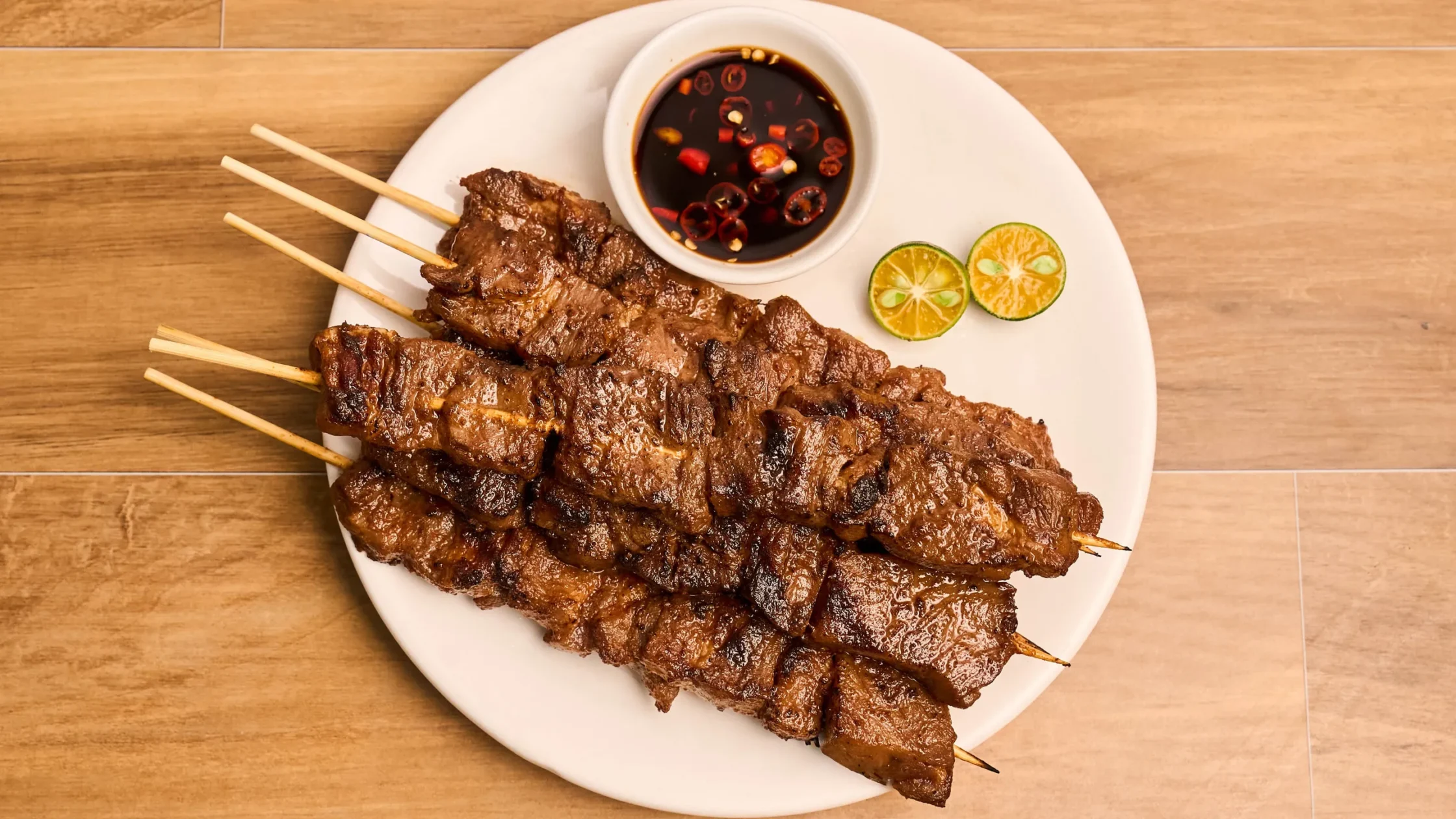
Filipino pork BBQ stands out from many other barbecue styles because of its signature sweet marinade. The sugars from the banana ketchup and brown sugar caramelize during grilling, creating the glossy coating and slightly sticky texture that many people associate with Filipino street food.
The choice of pork also influences the final result. Pork shoulder offers a balance of lean meat and fat, while pork belly provides richer flavor and extra juiciness due to its higher fat content.
Traditional charcoal grilling adds a subtle smoky aroma that is difficult to replicate with electric grills, though grill pans can still produce delicious results.
Many Filipino households have their own “secret marinade,” often passed down through generations, making every family’s pork barbecue unique.
Health Benefits of the Ingredients
Although Filipino pork BBQ is considered a hearty comfort food, it also provides several nutrients when enjoyed in moderation.
Pork
Pork is an excellent source of high-quality protein, which helps build and repair muscles. It also provides B vitamins such as thiamine, niacin, and vitamin B12, along with minerals like zinc, phosphorus, and iron.
Garlic
Garlic contains antioxidants and natural sulfur compounds that may help support heart health and normal immune function. It also contributes rich flavor without adding many calories.
Onion
Onions contain vitamin C, antioxidants, and plant compounds that support overall wellness while adding natural sweetness to the marinade.
Calamansi
Calamansi is rich in vitamin C and contributes bright acidity that helps balance the richness of the pork.
Brown Sugar
Brown sugar adds sweetness and promotes caramelization during grilling. Since it is still a form of added sugar, using it in moderation is recommended.
Soy Sauce
Soy sauce provides savory umami flavor. Choosing a reduced-sodium version can help lower the overall salt content of the dish.
Banana Ketchup
Banana ketchup contributes sweetness, color, and a small amount of nutrients from bananas and spices, though it should mainly be viewed as a flavorful condiment.
Final Thoughts
Filipino-Style Pork BBQ is more than just a grilled meat dish—it reflects the warmth of Filipino hospitality and the joy of sharing good food with family and friends. Its signature combination of sweet, savory, tangy, and smoky flavors has made it a beloved staple at celebrations, street food stalls, and weekend cookouts across the Philippines.
With simple ingredients, a well-balanced marinade, and patient grilling, you can recreate the authentic taste of Filipino pork barbecue right at home. Serve it fresh off the grill with hot rice, your favorite dipping sauce, and good company for a meal that is comforting, satisfying, and full of tradition. Whether it’s your first time making Filipino pork BBQ or a family favorite you’ve enjoyed for years, this recipe is sure to bring people together one delicious skewer at a time.