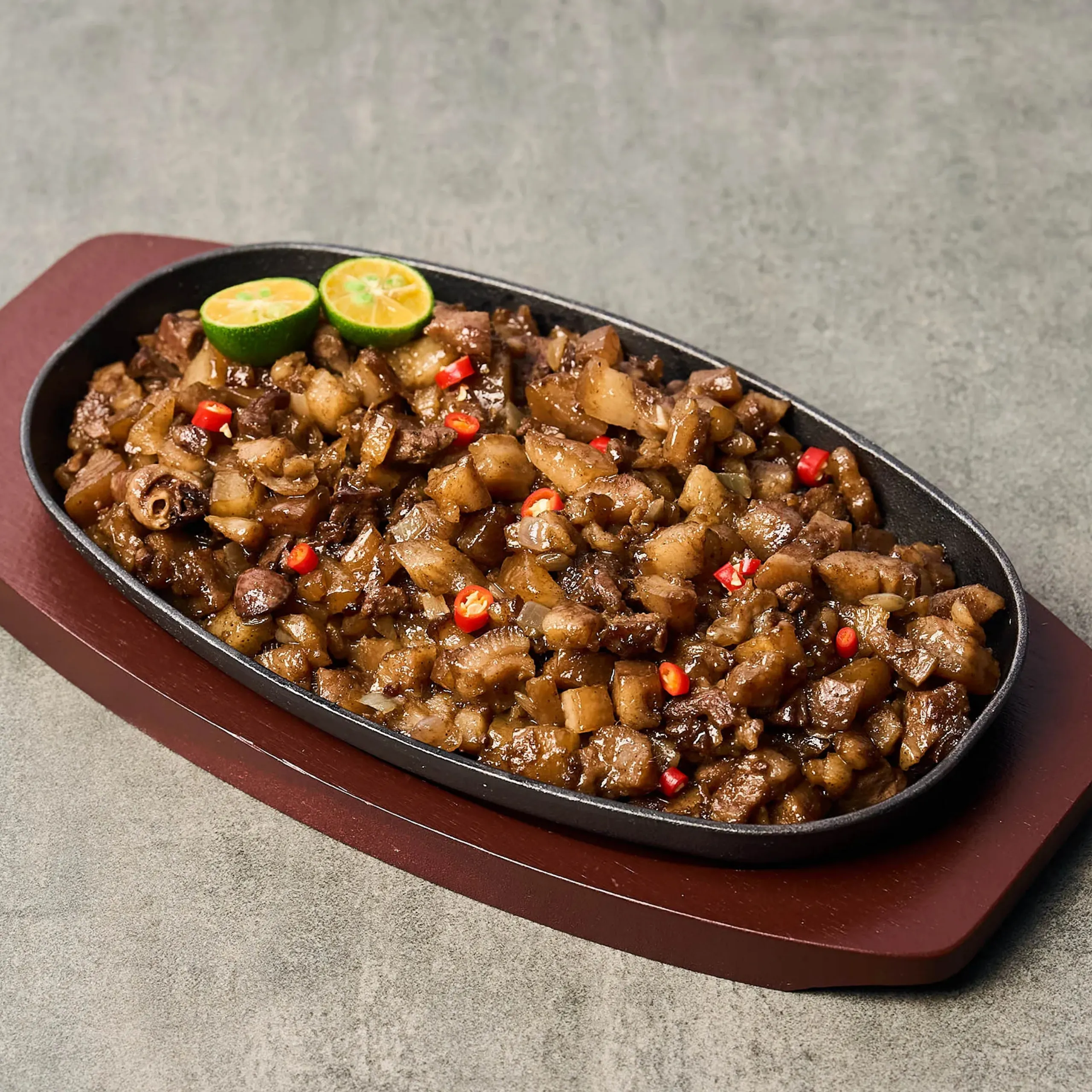


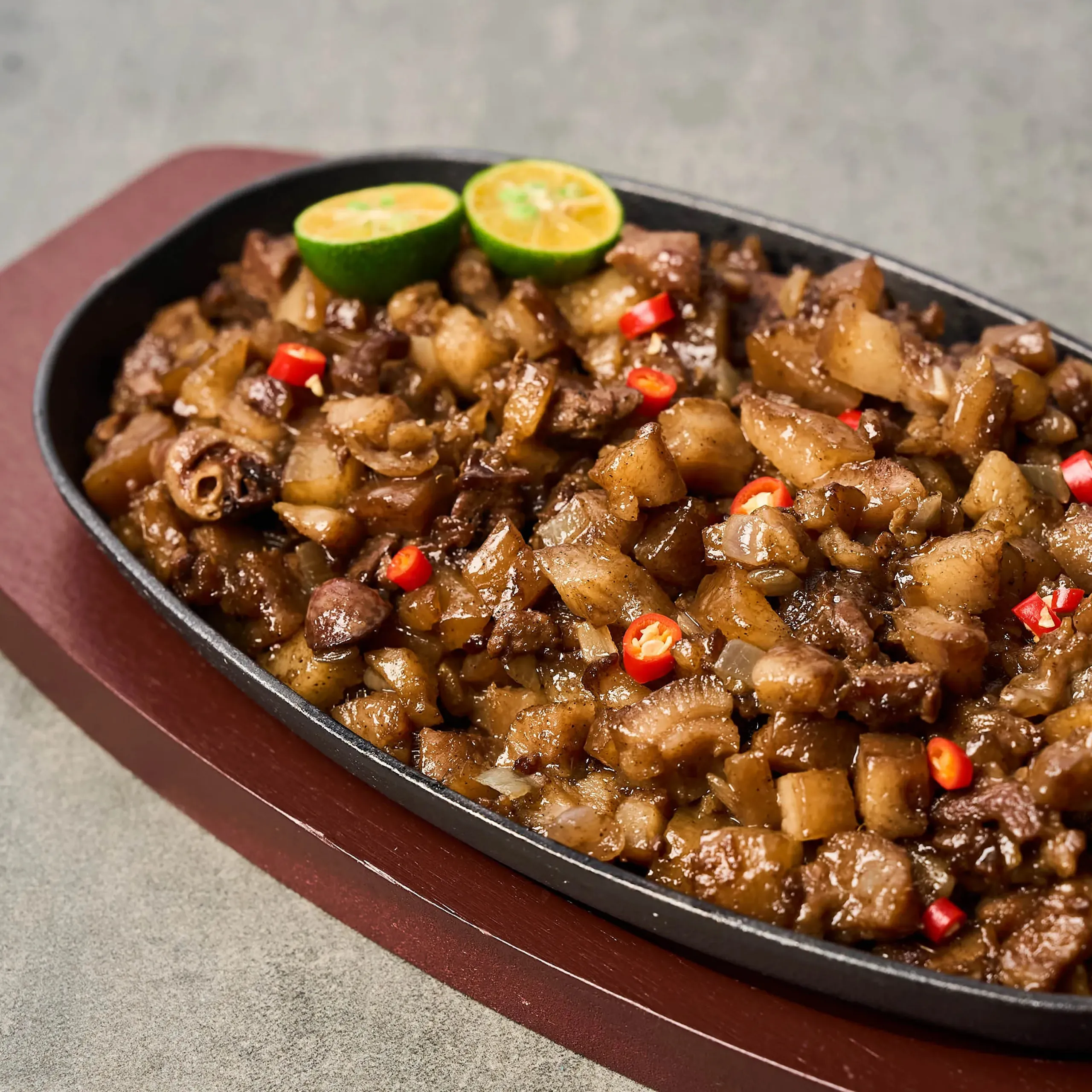
Sisig is one of those Filipino dishes that feels almost impossible to eat quietly. The moment a sizzling plate hits the table, the sound, aroma, smoky pork, sharp calamansi, chilies, and sweet onions practically announce that something good is about to happen.
This copycat version is inspired by the Angeles City, Pampanga style associated with Lucia “Aling Lucing” Cunanan, often credited with helping popularize the modern sizzling form of sisig in the 1970s. Her version became particularly known for boiled and grilled pork face—especially ears and cheeks—combined with liver, onions, vinegar, calamansi, and chili, then served hot.
It is important to call this a copycat or inspired recipe, rather than the exact restaurant recipe. Aling Lucing’s family has historically kept parts of their seasoning formula private, so no home recipe can honestly claim to reproduce the secret recipe exactly.
A Little History Behind Sisig
The story of sisig is much older than the sizzling plate that most Filipinos recognize today.
The word sisig has been traced to early Kapampangan dictionaries, where it referred to a sour preparation or salad dressed with vinegar. Over time, the idea evolved into preparations involving pork, particularly parts of the pig’s head, seasoned with souring ingredients, salt, pepper, onions, and chilies.
The modern Angeles City version developed much later. Lucia Cunanan, popularly known as Aling Lucing, is widely credited with transforming sisig into the grilled, chopped preparation that became famous beyond Pampanga. Historical accounts describe her use of pig ears and cheeks, grilling the boiled meat before chopping it and combining it with seasonings and chicken liver.
The sizzling presentation also became an important part of sisig’s evolution. Serving the chopped pork on a hot plate helped keep the fatty mixture hot and prevented it from becoming greasy and solid as it cooled.
That’s why a good sisig is more than simply chopped pork. It is about contrast: crunchy and tender, fatty and acidic, smoky and fresh, savory and spicy.
The Secret to Great Sisig
There isn’t one secret ingredient that suddenly makes sisig extraordinary.
There are several small things working together.
1. Use pork mask
Ears provide cartilage and chew. Cheeks and jowls contribute meat and fat.
That combination produces much better texture than lean pork alone.
2. Don’t skip grilling
Boiled pork is tender, but it doesn’t have the smoky character associated with the Angeles City style.
Grilling gives you caramelization, char, and crisp edges.
3. Don’t drown it in mayonnaise
Modern restaurant sisig is sometimes mixed with mayonnaise for creaminess. That’s delicious in its own way, but this particular recipe doesn’t need it.
The richness should come from the pork and liver.
4. Don’t overdo the vinegar
Sisig should be bright and tangy, but it shouldn’t taste like you’re eating pork soaked in vinegar.
Start with the recommended amount and adjust gradually.
5. Use calamansi at the end
Fresh calamansi has a distinctive Filipino citrus aroma.
Bottled calamansi juice can work, but fresh calamansi is preferable whenever available.
Ingredient Substitutions
Sometimes the exact ingredients aren’t available, and that’s perfectly fine.
Pork mask
If you can’t find pork mask, you can use:
- Pork ears
- Pork cheeks
- Pork jowl
- Pork belly
- Pork snout
- A combination of pork belly and ears
For the best texture, try to retain at least one collagen-rich component such as ears or cheeks.
Lean pork loin isn’t an ideal replacement because it doesn’t provide the fat and texture that make classic sisig distinctive.
Chicken liver
Chicken liver can be replaced with:
- Pork liver
- Duck liver
- A smaller amount of beef liver
Chicken liver is generally milder and softer, making it particularly suitable for this recipe.
If using pork liver, start with a smaller amount because its flavor can be stronger.
Calamansi
If calamansi isn’t available, substitute:
- Philippine lime or other small local citrus
- Key lime
- Regular lime
- A combination of lime and a little lemon
The flavor won’t be identical, but the acidity will still perform the same job.
Cane vinegar
You can use:
- Coconut vinegar
- Sukang paombong
- White vinegar
- Apple cider vinegar
Cane vinegar is a particularly good choice because its flavor is relatively clean and mild.
Siling labuyo
For less heat, use:
- Finger chilies
- Jalapeño
- Serrano
- Thai chili in a smaller quantity
For a completely mild version, omit the chilies and serve them separately.
Margarine
Butter works beautifully.
You can also use a neutral cooking oil, although butter or margarine contributes a little extra richness and aroma to the sizzling plate.
How to Make It Even Crispier
If you love crispy sisig, try this technique.
After boiling the pork, cool it completely and refrigerate it uncovered.
Before grilling, pat it dry once more.
Grill it until deeply browned.
After chopping, you can briefly fry portions of the pork in a very hot skillet before adding the onions and seasonings.
The important thing is not to make the entire batch crunchy. Sisig is more enjoyable when you have a combination of crisp bits, chewy cartilage, juicy meat, and soft liver.
Can You Make Sisig Without a Grill?
Absolutely.
If you don’t have a charcoal or gas grill, use a heavy skillet.
Heat it until very hot, add a little oil, and brown the boiled pork in batches.
Don’t overcrowd the pan.
You can also use an oven broiler or air fryer to brown the pork.
For an air fryer, cut the boiled pork into large chunks first and cook until the edges are deeply browned and crisp, turning occasionally.
The exact cooking time depends on the appliance and size of the pieces, so watch the pork closely.
Nutritional and Health Considerations
Sisig is an excellent example of a dish where nutritional value and indulgence coexist.
Pork provides protein, while chicken liver is particularly nutrient-dense and supplies protein, iron, vitamin B12, and vitamin A. Onions contribute small amounts of vitamins, minerals, antioxidants, and beneficial plant compounds. Chilies provide vitamin C and capsaicin, while calamansi adds acidity and vitamin C.
However, sisig is also naturally rich in fat and calories, particularly when made from pork ears, cheeks, and jowls. The amount of saturated fat and sodium can become significant depending on the pork used and how much salt or additional seasoning is added.
So while the dish contains nutritious ingredients, it is best thought of as an occasional indulgent meal or shared dish, rather than something that needs to be eaten in large portions every day.
Ways to make it lighter
You can:
- Reduce the amount of pork jowl.
- Use more pork cheek and leaner portions.
- Increase the onion-to-pork ratio.
- Use less butter or margarine.
- Reduce added salt.
- Serve smaller portions with plenty of rice and vegetables.
- Use chicken or fish for a completely different, lighter style of sisig.
There is no need to turn sisig into a health-food dish, though. Sometimes the joy of the recipe comes from respecting what makes it special.
Food Safety Tips
Because this recipe uses pork and liver, proper cooking and handling are important.
- Keep raw pork and liver refrigerated until you’re ready to cook them.
- Use separate utensils or wash utensils thoroughly between raw and cooked ingredients.
- Cook the pork until tender and fully cooked.
- Cook the chicken liver completely.
- Don’t rely on color alone to determine whether meat is safely cooked; a food thermometer is the most reliable approach.
- Refrigerate leftovers promptly.
- Reheat leftovers thoroughly before serving.
- Don’t leave cooked sisig sitting at room temperature for extended periods.
And be particularly careful with the sizzling plate: cast iron can remain dangerously hot long after the sisig stops sizzling.
How to Serve It Like a Filipino Pulutan
Sisig is famously associated with pulutan—food enjoyed alongside drinks—but there’s no reason to limit it to that role.
For a full Filipino meal, serve it with:
- Steamed white rice
- Atchara
- Ensaladang talong
- Grilled vegetables
- Pinakbet
- Fresh tomatoes
- Extra calamansi
The sourness of atchara or calamansi is particularly good alongside the fatty pork.
For a party, prepare the pork ahead of time and keep the seasoned mixture refrigerated. When guests arrive, heat individual portions on sizzling plates.
That way, everyone gets the best part: the dramatic sizzle and the crisp edges right off the pan.
A Few Final Tips for the Best Copycat Version
If I were making this at home, I’d pay special attention to these five things:
- Don’t rush the boiling. Tough pork mask needs enough time to become tender.
- Dry the pork before grilling. Moisture is the enemy of good browning.
- Get serious char on the pork. That smoky flavor is what separates this from simply boiled sisig.
- Keep the onions fresh. You want some crunch and sweetness.
- Taste the acidity at the very end. Calamansi is one of the ingredients that makes the whole dish come alive.
And most importantly, don’t obsess over making every batch identical.
Sisig has always evolved. Historical accounts describe different versions across Pampanga, and the dish itself changed significantly as cooks experimented with pork cuts, grilling, liver, seasonings, and presentation.
That’s part of what makes sisig such a distinctly Filipino dish: it began as a resourceful way of turning humble ingredients into something delicious and eventually became one of the country’s most recognizable foods.
Final Words
A great plate of sisig isn’t about piling as many ingredients as possible onto pork.
It’s about balance.
The ears give you crunch and cartilage. The cheeks and jowls bring richness. The liver adds depth. Onions provide sweetness and freshness. Siling labuyo brings heat. Cane vinegar and calamansi cut through the fat. And the final sizzling plate brings everything together with heat, aroma, and a little bit of theater.
That combination is what makes sisig so memorable.
Make the pork ahead, grill it until beautifully charred, chop it—not too finely—season it boldly but carefully, and finish it on a screaming-hot plate.
Then squeeze fresh calamansi over the top, listen to that satisfying sizzle, grab a spoonful with rice, and you’ll understand why this humble Kapampangan dish became such an enduring Filipino favorite.