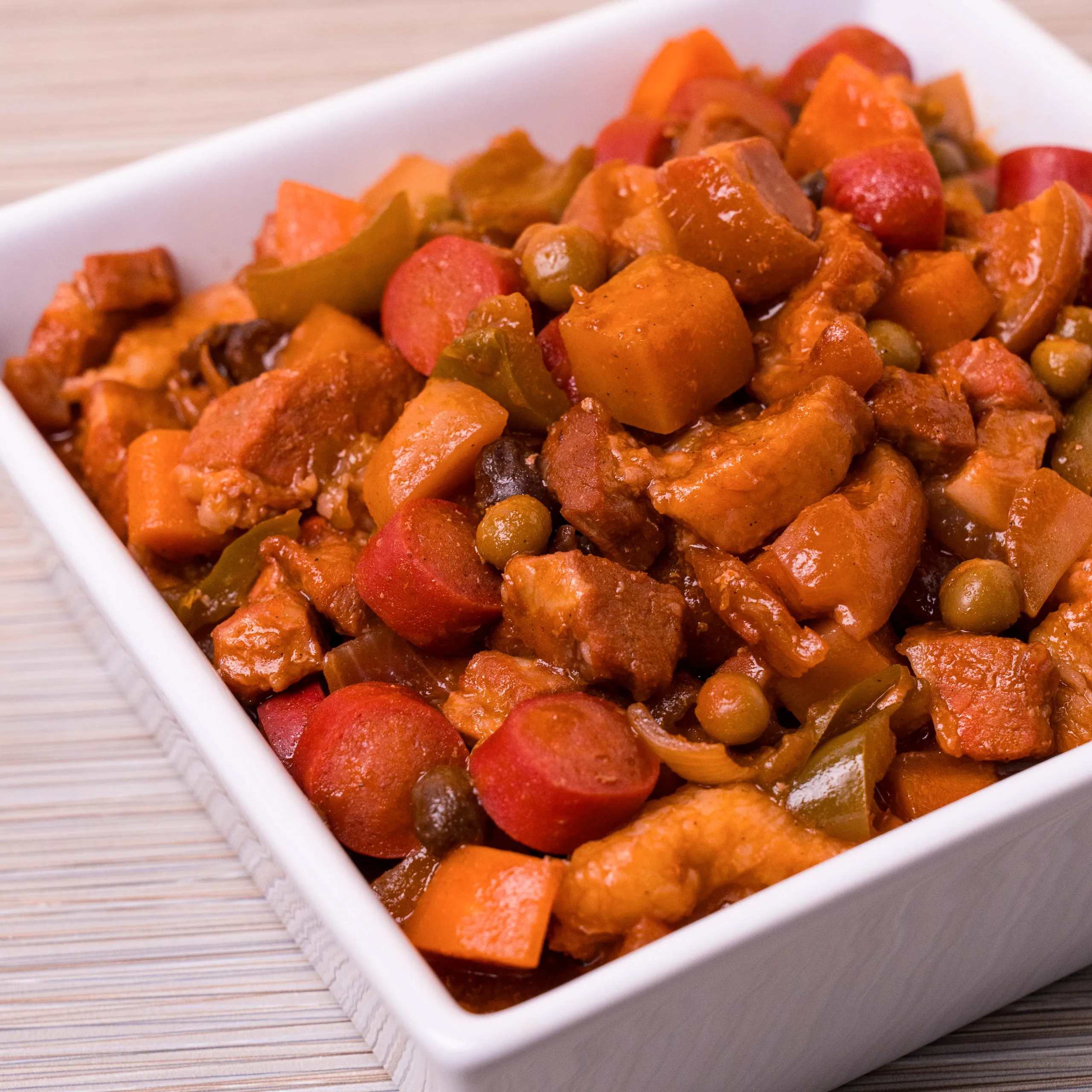


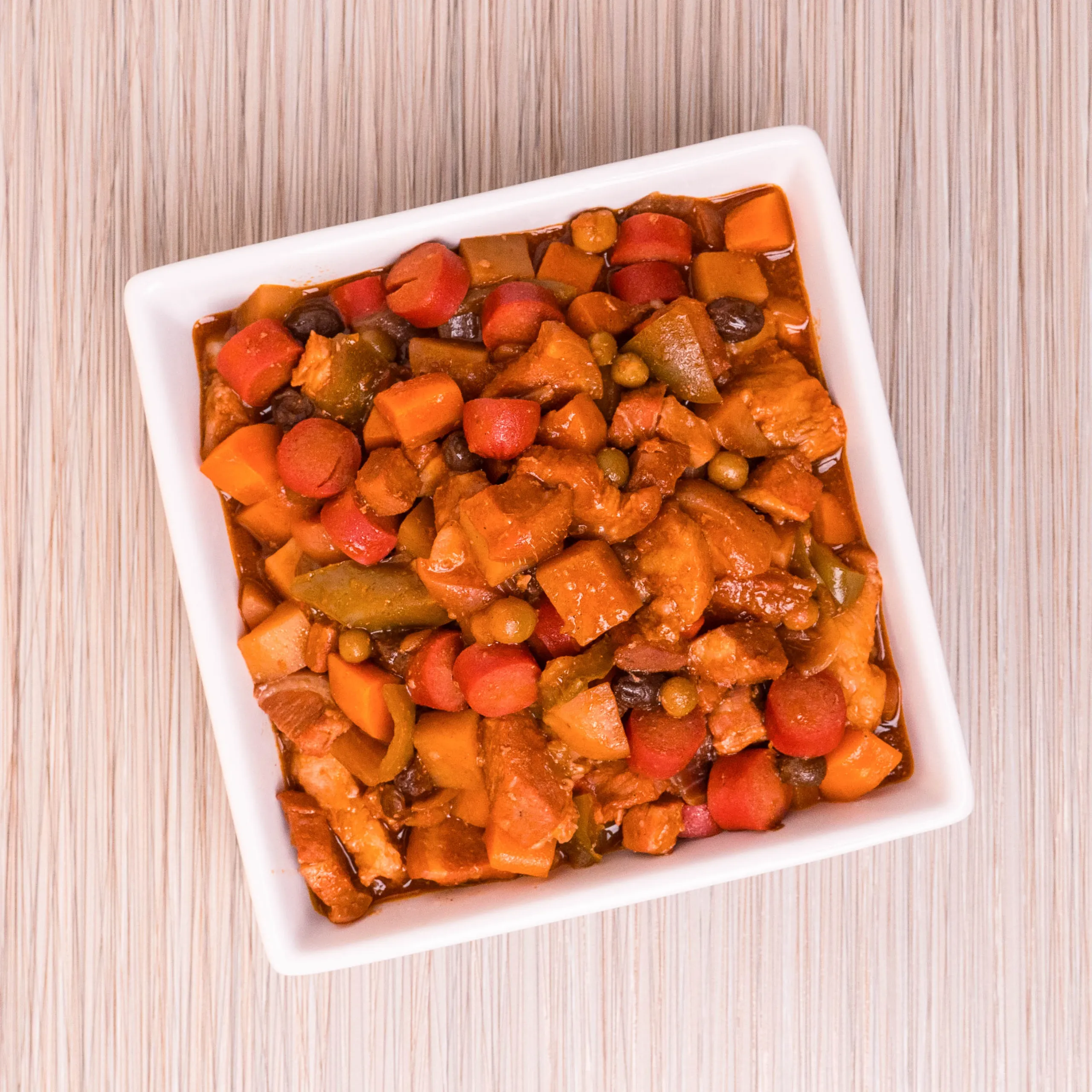
Pork Menudo is one of the most beloved comfort foods in Filipino cuisine. Rich, hearty, and packed with colorful vegetables, tender pork, and a savory tomato-based sauce, it’s a dish that’s almost always present during birthdays, fiestas, Christmas celebrations, and family reunions. While every household has its own version, the heart of Pork Menudo remains the same: a delicious combination of pork simmered until tender with vegetables and a flavorful tomato sauce.
Unlike Mexican menudo, which is a tripe soup, Filipino Pork Menudo is a completely different dish. It is a tomato-based pork stew that has evolved over generations, blending Spanish culinary influences with local Filipino ingredients and flavors. Today, it’s considered one of the country’s classic home-cooked meals that’s equally perfect for everyday lunches or special occasions.
This recipe creates a rich, comforting Pork Menudo with tender meat, vibrant vegetables, and a balanced sweet-savory tomato sauce that pairs perfectly with steaming hot rice.
History of Pork Menudo
Pork Menudo traces its origins to the Spanish colonial period in the Philippines. Spanish settlers introduced tomato-based stews and cooking techniques that eventually blended with local ingredients and Filipino tastes. The word “menudo” itself comes from the Spanish language, meaning “small pieces,” referring to the bite-sized cuts of meat used in the dish.
Traditional Filipino menudo often included pork liver along with pork meat, as families made use of every part of the animal. Over time, many households adapted the recipe according to personal preference. Some versions omit liver altogether, while others add hotdogs, raisins, bell peppers, or even cheese for a richer flavor.
Today, Pork Menudo has become one of the Philippines’ signature comfort foods. Every region and household has its own variation, but the essence remains unchanged: tender pork cooked in a flavorful tomato sauce with vegetables that create a satisfying, well-balanced meal.
Why You’ll Love This Recipe
- Rich and savory tomato-based sauce
- Tender, juicy pork in every bite
- Colorful vegetables add freshness and texture
- Perfect for family meals or celebrations
- Tastes even better the next day
- Budget-friendly and easy to prepare
- Great for meal prep and leftovers
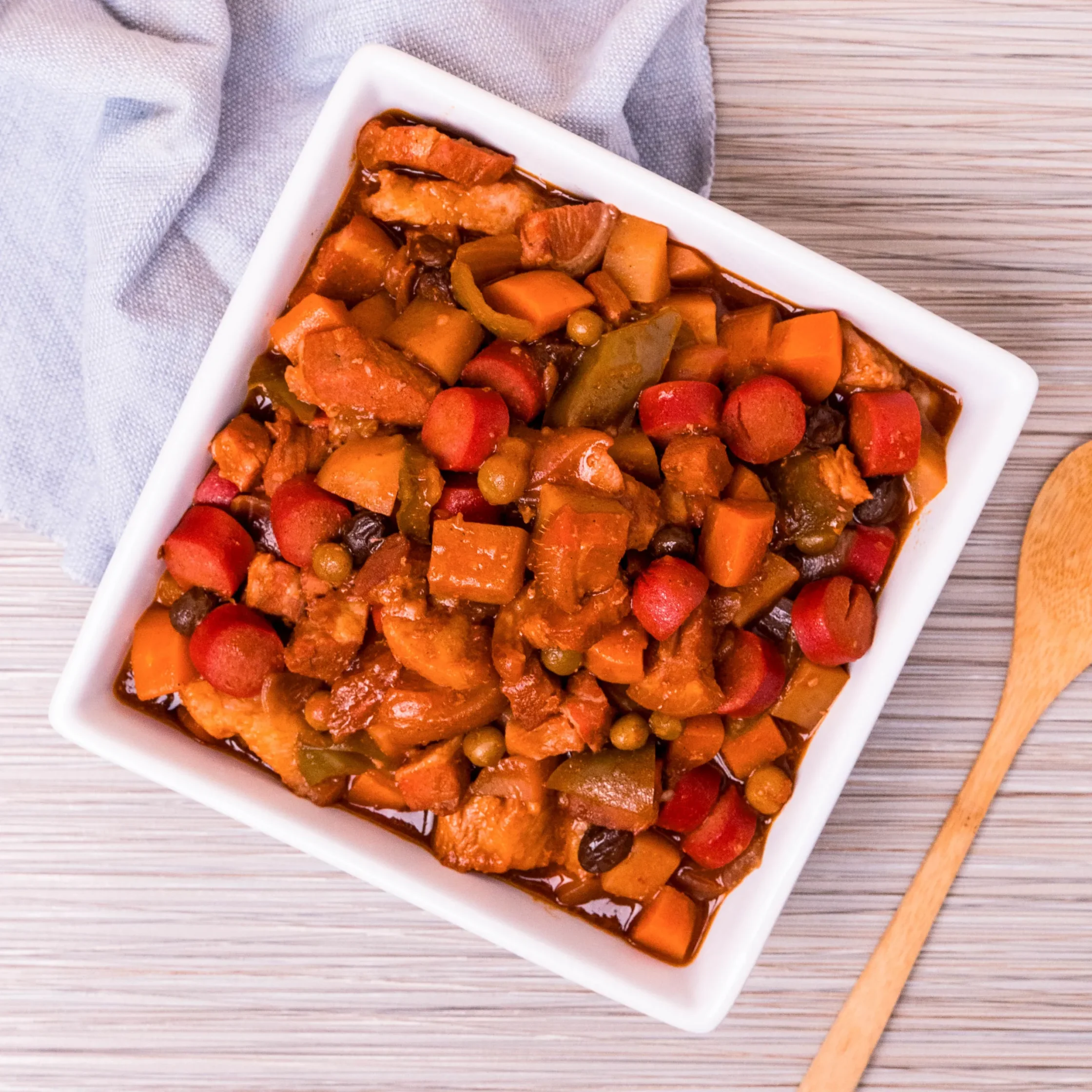
Ingredient Spotlight
Pork Shoulder or Pork Belly
Pork shoulder is leaner while remaining tender after simmering, making it ideal for everyday cooking. Pork belly, on the other hand, contains more fat, resulting in a richer and more flavorful stew. Either cut works wonderfully depending on your preference.
Tomato Sauce
Tomato sauce forms the base of the dish and provides a slightly sweet and tangy flavor. Combining it with tomato paste creates a deeper, richer sauce with a more vibrant color.
Potatoes
Potatoes naturally absorb the flavorful sauce while helping slightly thicken the stew as they cook.
Carrots
Carrots contribute natural sweetness that balances the acidity of the tomatoes while adding bright color and nutrition.
Bell Peppers
Red and green bell peppers provide freshness, sweetness, and a subtle crunch that complements the tender meat and vegetables.
Raisins
Although optional for some families, raisins are a classic Filipino addition. Their sweetness balances the savory tomato sauce and creates the signature sweet-savory flavor profile that many Filipinos love.
Green Peas
Green peas add color, texture, and a mild sweetness while making the dish more visually appealing.
Hotdogs
Adding sliced hotdogs is a uniquely Filipino twist inspired by festive cooking. They add extra flavor and make the dish especially popular with children.
Bay Leaf
Bay leaf gently infuses the stew with earthy herbal notes that enhance the overall aroma without overpowering the dish.
Recipe Tips
- Brown the pork before simmering for a richer flavor.
- Simmer slowly rather than boiling rapidly to keep the meat tender.
- Add bell peppers near the end to preserve their color and texture.
- Don’t overcook the potatoes to prevent them from falling apart.
- Pork broth provides a deeper flavor than plain water.
- Tomato paste is optional but creates a thicker, richer sauce.
- Raisins can be adjusted depending on your preferred sweetness.
- Menudo tastes even better after resting overnight because the flavors continue to develop.
Ingredient Substitutions
Pork
- Chicken thighs
- Beef chuck (increase cooking time)
- Turkey for a leaner alternative
Tomato Sauce
- Crushed tomatoes
- Tomato puree with a little sugar
- Fresh blended tomatoes
Tomato Paste
- Extra tomato sauce simmered longer
- Tomato puree reduced until thick
Potatoes
- Sweet potatoes
- Yukon Gold potatoes
- Baby potatoes
Carrots
- Butternut squash
- Pumpkin
- Parsnips
Bell Peppers
- Cubanelle peppers
- Sweet mini peppers
- Omit if unavailable
Green Peas
- Corn kernels
- Green beans
- Edamame
Raisins
- Dried cranberries
- Chopped dried apricots
- Omit completely if preferred
Hotdogs
- Chorizo
- Smoked sausage
- Ham cubes
- Omit for a more traditional version
Storage Tips
Refrigerate leftovers in an airtight container for up to 4 days.
Freeze for up to 2 months.
Reheat gently over low heat or in the microwave until heated through. Add a splash of water if the sauce becomes too thick.
Nutritional Highlights
Pork Menudo provides a balanced combination of protein, carbohydrates, and vegetables.
- Pork supplies protein, iron, zinc, and B vitamins.
- Carrots are rich in vitamin A for eye health.
- Potatoes provide carbohydrates and potassium for energy.
- Green peas add fiber, protein, and vitamin C.
- Bell peppers are excellent sources of vitamins A and C.
- Tomatoes contain lycopene, a beneficial antioxidant associated with heart health.