

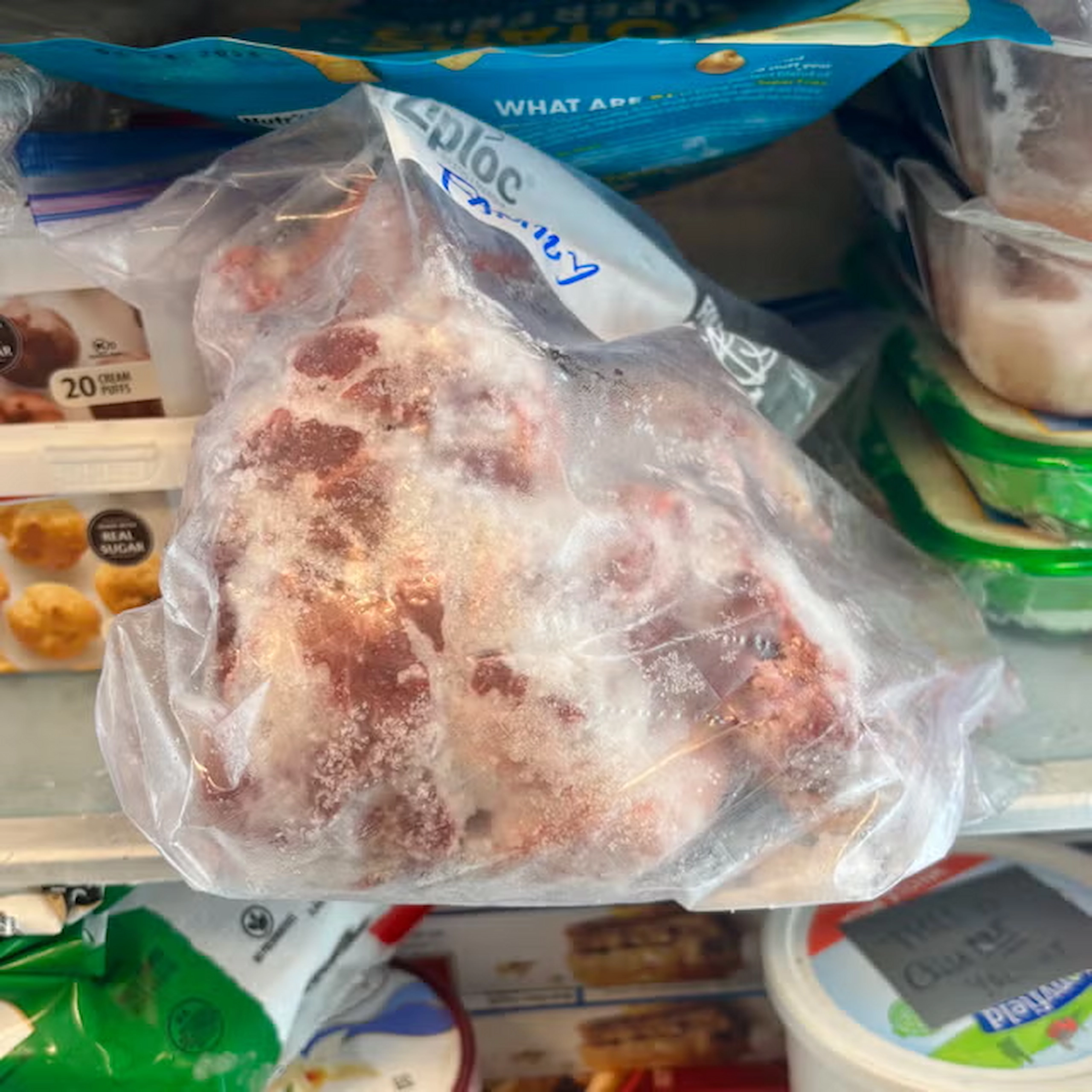
- Freezing meat in store packaging can cause freezer burn, making the meat dry and leathery when thawed.
- Divide the meat into meal-sized portions (about 6 ounces per person) to make thawing a breeze and reduce waste.
- Label the portions with type, quantity, and date to keep your freezer organized.
If your freezer is a graveyard of freezer-burned mystery meat, I have the solution to fix everything. This simple fix will save you money, time, and make weeknight cooking easier, especially if you like to buy in bulk. Instead of just tossing the still-packaged meat into the freezer after your weekly grocery haul, add this tiny bit of prep to your process to preserve what you buy so it doesn’t go to waste. If you’re thinking, What’s so wrong with freezer burn? I have some news for you. Freezer-burnt things are technically plenty safe to eat—but it does result in meat that’s dehydrated and leathery, and dinner guests that are less than impressed. Here’s what you can do to fix that. The method is simple: Portion, wrap, flatten, label, and freeze.
Portion
Remove the meat from the store packaging and divide it into meal-sized portions. As an easy rule of thumb, 6 ounces is the standard portion for 1 person. So if you’re flying solo, make 6-ounce portions, but if you’re feeding a family of 4, make 24-ounce (1 1/2-pound) portions. This makes it easy to thaw what you need. Bonus points if you pat the meat dry! Removing that extra moisture will help keep ice crystals from forming on the surface of the meat.
Wrap
Once you’ve got your portions measured out, wrap each portion tightly with plastic wrap, freezer paper, or butcher paper. Wrapping the meat as tightly as you can without damaging it will help keep air out, and excess air exposure is the main cause of freezer burn.
Flatten
Place all of your wrapped portions into freezer-safe resealable bags. Resealable bags that are designated for the freezer typically have an extra layer or two of plastic to help keep out excess air. Place the portions in the bag so that they lie flat. This will help them freeze faster, stack neatly, and thaw in minutes.
Label
Don’t skip this step! It’s crucial, and it will ensure that none of your hard work goes to waste. Use a permanent marker to label the resealable bags with the type of meat, the quantity, and the date. If you want to reuse the bags to save the environment and a few dollars, stick a piece of freezer tape on the bag first and write on that instead of writing directly on the bag.
Freeze
Stack the resealable bags in the freezer and let them sit until they are completely frozen. From there, you can leave them like that or store them upright, and suddenly your freezer becomes a super-organized library of ready-to-cook protein.
This might seem like a pain to do every time you bring home groceries, but a few minutes of prep now means fast, easy dinners later. Your freezer will thank you. Do this once, and you’ll never shove a giant frozen block of meat into your sink again.
This article was originally published in Delish US.

Frequently Asked Questions
Yes, meat with freezer burn is technically safe to eat, as the cold temperature prevents bacterial growth. However, it results in a poor culinary experience because the affected areas become dehydrated, tough, and leathery, often losing their natural flavor.
Flattening meat inside resealable bags serves two major purposes: it allows the meat to thaw in a fraction of the time compared to a thick block, and it creates uniform shapes that stack neatly, preventing your freezer from becoming a disorganized “graveyard” of food.
The standard individual portion is 6 ounces. To make meal prep easier, you should freeze meat in increments based on your household size—for example, a 24-ounce (1.5-pound) pack for a family of four—so you only thaw exactly what you need.
To block out air (the main cause of freezer burn), you should double-wrap. First, wrap the meat tightly in plastic wrap, butcher paper, or freezer paper. Then, place those bundles into a heavy-duty freezer-safe bag, pressing out all remaining air before sealing.
Patting the meat dry removes surface moisture that would otherwise turn into ice crystals. By reducing this moisture before sealing, you significantly lower the chances of ice forming inside the package, which helps preserve the meat’s original texture.