


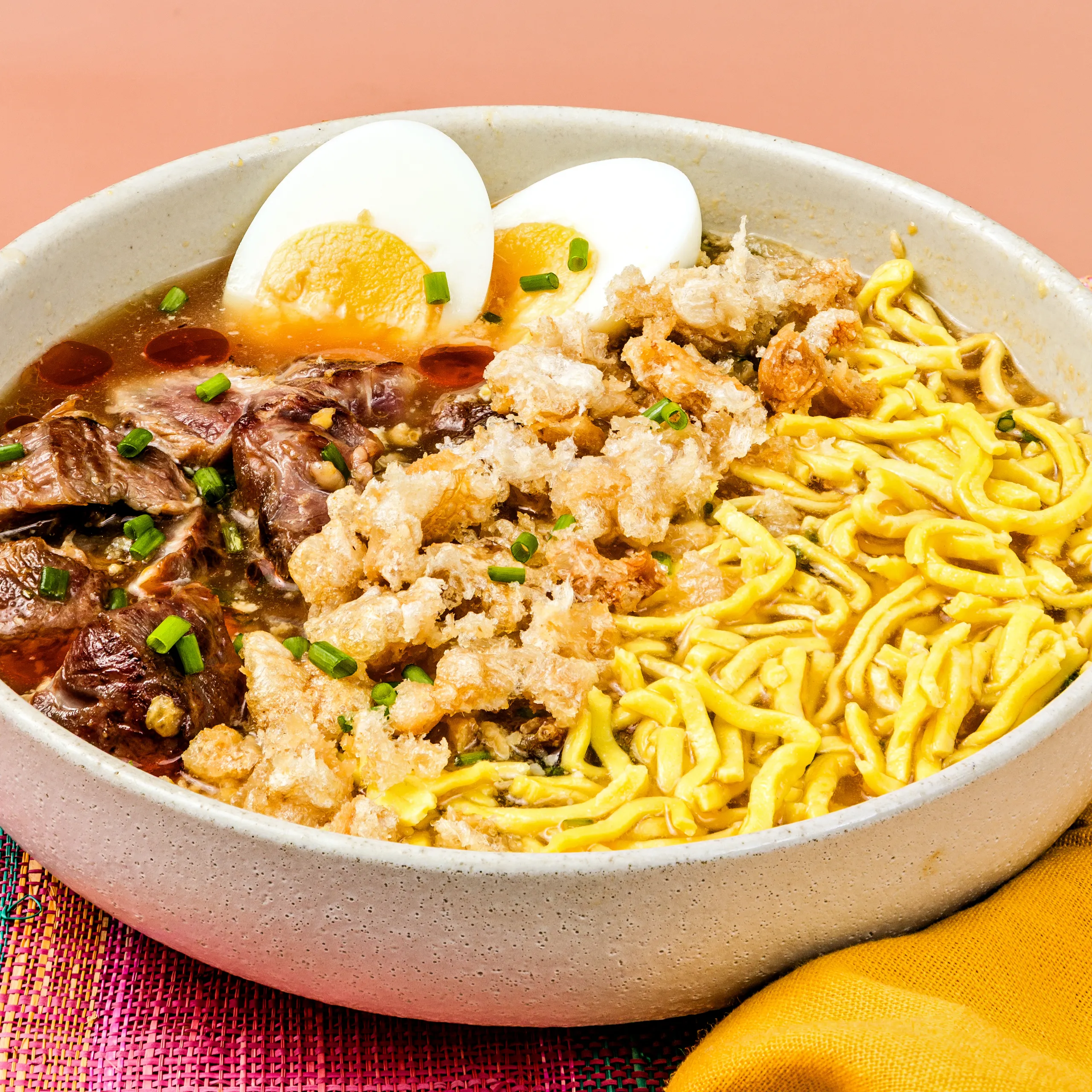
Kinalas is more than just a bowl of noodles and broth—it is a dish deeply connected to the food culture of Naga City and the Bicol Region. Known for its rich, deeply savory broth and distinctive kinalas sauce, this comforting noodle dish is especially satisfying when served piping hot, with tender beef, spring onions, and a generous drizzle of chili oil.
For many people, kinalas is the kind of food that feels both humble and special. It makes use of beef parts that can take time and patience to cook, transforming them into an intensely flavorful broth. The long simmering process extracts flavor from the beef head and creates a hearty base that gives the dish its characteristic depth.
What makes kinalas particularly recognizable is its thick, savory sauce, traditionally associated with the use of pig brain, dried shrimp, garlic, and flour. Combined with the beef stock, the sauce gives the noodles a richer and more complex taste than an ordinary noodle soup.
This recipe follows a traditional-style preparation while presenting the process in a practical format suitable for home cooks, culinary students, and food enthusiasts.
A Brief History and Food Culture of Kinalas
Kinalas is closely associated with Naga City, Camarines Sur, where it has become one of the city’s recognizable local dishes. Like many beloved regional Filipino foods, its exact origins are difficult to trace to one individual or precise historical date. Instead, the dish developed as part of the everyday food traditions of the community.
The name kinalas is commonly associated with the process of separating or scraping the tender meat from the bones of the beef head after prolonged cooking. This reflects an important characteristic of traditional Filipino cooking: making the most of available ingredients and turning inexpensive or less commonly used cuts into something flavorful and satisfying.
The beef head is particularly valuable in this preparation because it contains meat, connective tissue, cartilage, and bones that contribute considerable flavor to the stock. Slow cooking allows these components to release their savory qualities into the broth.
Kinalas also demonstrates the Filipino preference for layering flavors. Instead of relying on a single ingredient, the dish develops its taste through several components:
- Beef head provides the foundation of the broth.
- Scallions add freshness and aroma.
- Garlic contributes sweetness and savoriness.
- Dried shrimp gives the sauce an umami-rich seafood character.
- Pig brain contributes richness and a creamy texture.
- Flour helps thicken the sauce.
- Fish sauce provides saltiness and fermented depth.
- Chili oil adds heat and fragrance.
The result is a bowl that is hearty, aromatic, savory, slightly spicy, and distinctly regional.
Recipe Tips for Better Kinalas
Use a gentle simmer
One of the biggest secrets to a good beef stock is patience. Avoid aggressively boiling the beef throughout the cooking process. A gentle simmer encourages gradual extraction of flavor.
Skim the stock
During the early stages of cooking, skim away foam and impurities that rise to the surface. This can help produce a cleaner broth.
Do not over-salt early
The stock will eventually be combined with fish sauce, dried shrimp, and the kinalas sauce. Seasoning too heavily at the beginning can make the finished dish excessively salty.
Taste the sauce more than once
Taste after adding the fish sauce and again near the end of simmering. The flavors will change as the sauce cooks and concentrates.
Keep the broth hot
A lukewarm bowl of kinalas will not have the same appeal. Keep the finished stock hot until assembly.
Don’t drown the noodles
The recommended 240 mL of broth provides a useful starting point, but the ideal amount depends on the bowl and noodle texture. Too much liquid can dilute the sauce.
Balance richness with freshness
Scallions and chili oil are not merely decorations. Their freshness and heat help balance the richIf you have the time, prepare the beef stock a day ahead. Chilling it overnight also makes beef and sauce.
Make the stock ahead
If you have the time, prepare the beef stock a day ahead. Chilling it overnight also makes it easier to remove excess fat from the surface before reheating.
Ingredient Substitutions
Some ingredients in traditional kinalas can be difficult to find outside the Philippines or certain regions.
Beef head
If beef head is unavailable, you can use a combination of beef shank, beef bones, oxtail, or other collagen-rich beef cuts.
The flavor will not be exactly the same, but these cuts can still produce a flavorful broth.
Pancit Sabang
If authentic Pancit Sabang is unavailable, another suitable Filipino noodle may be used depending on availability.
Choose a noodle with enough body to withstand being served in hot broth.
Pig brain
Pig brain is one of the most distinctive ingredients in the sauce, but it may be unavailable or unsuitable for some cooks.
For a simplified alternative, you can omit it and adjust the sauce’s body with additional flour or another thickening method. However, the resulting sauce will not be identical to the traditional preparation.
Dried shrimp
If dried shrimp is unavailable, a small amount of shrimp powder or another seafood-based seasoning may provide some of the desired umami character.
If you have a shellfish allergy, omit it rather than substituting with another shellfish ingredient.
Fish sauce
Fish sauce can be replaced with another savory seasoning, although this will change the flavor considerably. Soy sauce can provide saltiness and umami, but the finished sauce will have a different character.
Chili oil
Chili oil can be adjusted according to heat tolerance. For a milder bowl, reduce the amount or serve it separately.
What Makes Kinalas Different?
Kinalas has several characteristics that distinguish it from other Filipino noodle soups.
First is the beef-head-based stock. Beef head provides a combination of meat, bones, connective tissue, and fat, creating a broth with substantial body.
Second is the kinalas sauce. Rather than simply seasoning the broth, the sauce introduces a concentrated mixture of garlic, dried shrimp, flour, pig brain, and seasonings.
Third is the combination of textures. You have soft noodles, tender beef, a rich broth, thick sauce, fresh scallions, and fragrant chili oil.
The dish is therefore not simply “noodles in soup.” Each component contributes something different to the final experience.
Nutritional and Health Considerations
Kinalas can provide several usefulThe beef contributes protein, which is important for maintaining muscles nutrients, particularly from the beef and broth.
Protein
The beef contributes protein, which is important for maintaining muscles and supporting normal body functions.
Iron and minerals
Beef is a source of iron, zinc, vitamin B12, and other nutrients.
Energy
The noodles provide carbohydrates, making the dish a substantial meal capable of providing energy.
Collagen and gelatin
Long-simmered beef bones and connective tissues can contribute gelatin and collagen-derived proteins to the broth. However, it is important not to treat the broth as a miracle source of collagen or as a replacement for a balanced diet.
Aromatic ingredients
Garlic and scallions contribute plant compounds and micronutrients while also providing much of the dish’s aromaKinalas can be relatively high in sodium because and flavor.
Important consideration: sodium
Kinalas can be relatively high in sodium because it contains fish sauce, dried shrimp, salt, and seasoned components.
People who need to limit sodium should reduce the fish sauce and added salt and avoid excessive chili oil or salty beef head and organ-based ingredients that can contribute to significant fat and cholesterol. If you prefer a lighter bowl, chill the stock and remove some ingredients.
Important consideration: fat
Beef head and organ-based ingredients can contribute significant fat and cholesterol. If you prefer a lighter bowl, chill the stock and remove some of the solidified fat before reheating.
Food safety
Because this recipe contains beef head and pig brain, careful handling and thorough cooking are particularly important. Keep raw ingredients refrigerated, avoid cross-contamination, and cook animal products thoroughly.
How to Store Kinalas Properly
Kinalas is best when freshly assembled, but the components can be stored separately.
Beef stock
Allow the stock to cool promptly and transfer it into clean, shallow containers.
Refrigerate it and use it within a few days, or freeze it for longer storage.
If storing a large quantity, divide it into smaller containers so it cools more quickly.
Cooked beef
Store the cooked beef in a clean, covered container with a small amount of broth to help prevent it from drying out.
Kinalas sauce
Store the sauce separately in a sealed container and refrigerate it promptly.
When reheating, warm it thoroughly and stir well. If it has thickened significantly during refrigeration, loosen it with a little beef stock.
Noodles
It is preferable to store cooked or blanched noodles separately from the broth.
If noodles are left sitting in the broth for an extended period, they can absorb too much liquid and become soft.
Freezing
The beef stock generally freezes well. You can freeze it in portion-sized containers for convenient future servings.
For best quality, freeze the stock and cooked beef separately from the noodles and fresh garnishes.
Reheating
Reheat the broth and sauce until thoroughly hot before assembling the dish.
Prepare fresh noodles when possible, then combine the hot components immediately before serving.
Chef’s Practical Notes
For a more polished result, think of kinalas as three separate preparations coming together at the last moment: a flavorful beef stock, a concentrated kinalas sauce, and freshly prepared noodles.
The stock should be deeply savory but not excessively salty. The sauce should be rich and thick but still able to blend smoothly into the broth. The noodles should be tender without becoming mushy.
The final bowl should have balance. The beef provides richness, the broth provides warmth and depth, the sauce contributes concentration and texture, the scallions provide freshness, and the chili oil brings aroma and heat.
Most importantly, don’t rush the beef stock. Much of the character of kinalas comes from giving the beef enough time to become tender and allowing its flavors to develop.
Final Words
Kinalas represents the beauty of Filipino regional cooking: simple ingredients, patient preparation, and bold flavor coming together in one comforting bowl.
Its character comes from ingredients that might otherwise be overlooked. Beef head is slowly transformed into a deeply flavorful broth, tender meat is recovered and served with noodles, and a rich sauce brings together garlic, dried shrimp, pig brain, flour, and seasonings. Nothing is treated as ordinary once it enters the pot.
A good bowl of kinalas is meant to be enjoyed hot, generously garnished, and without too much fuss. The broth warms you, the noodles make the dish satisfying, the beef provides substance, and the chili oil gives every bite a little excitement.
Whether prepared as a culinary-school recipe, a family meal, or an introduction to the food traditions of Naga City, kinalas is a wonderful example of how Filipino cuisine turns patience and resourcefulness into deeply memorable food.