Advertisement

Do You Remember Eating These 16 Old School Candies?

Potchi, Haw-Haw, Yakee, Nips—which of these was your go-to sweet?

Which of these candies was your favorite growing up?

The Filipino love of all things sweet runs deep, its roots going all the way back to the days of our youth when candy, typically purchased at sari-sari stores near our schools and in our neighborhoods, seemed to solve any and all of life’s problems.

With adulthood comes a ton more complications than those much simpler times, but there’s no reason you can’t turn to the same confections (in moderation!) for a quick dose of comfort. Below are some of the classic candies that have carved a place in our hearts, and continue to bring sweet, sugary joy to otherwise-mundane days.

1. Potchi

Potchi is pretty much the little black dress of the Pinoy candy world—it’s just about universally loved and can be had for a fast, fruity boost any time of the day. This strawberries-and-cream flavored gummy candy is soft, sweet, and just a tad tangy without being overly sour. Past its crystallized exterior, it’s the right amount of bouncy and chewy that you can eat piece after piece without your jaw getting tired.
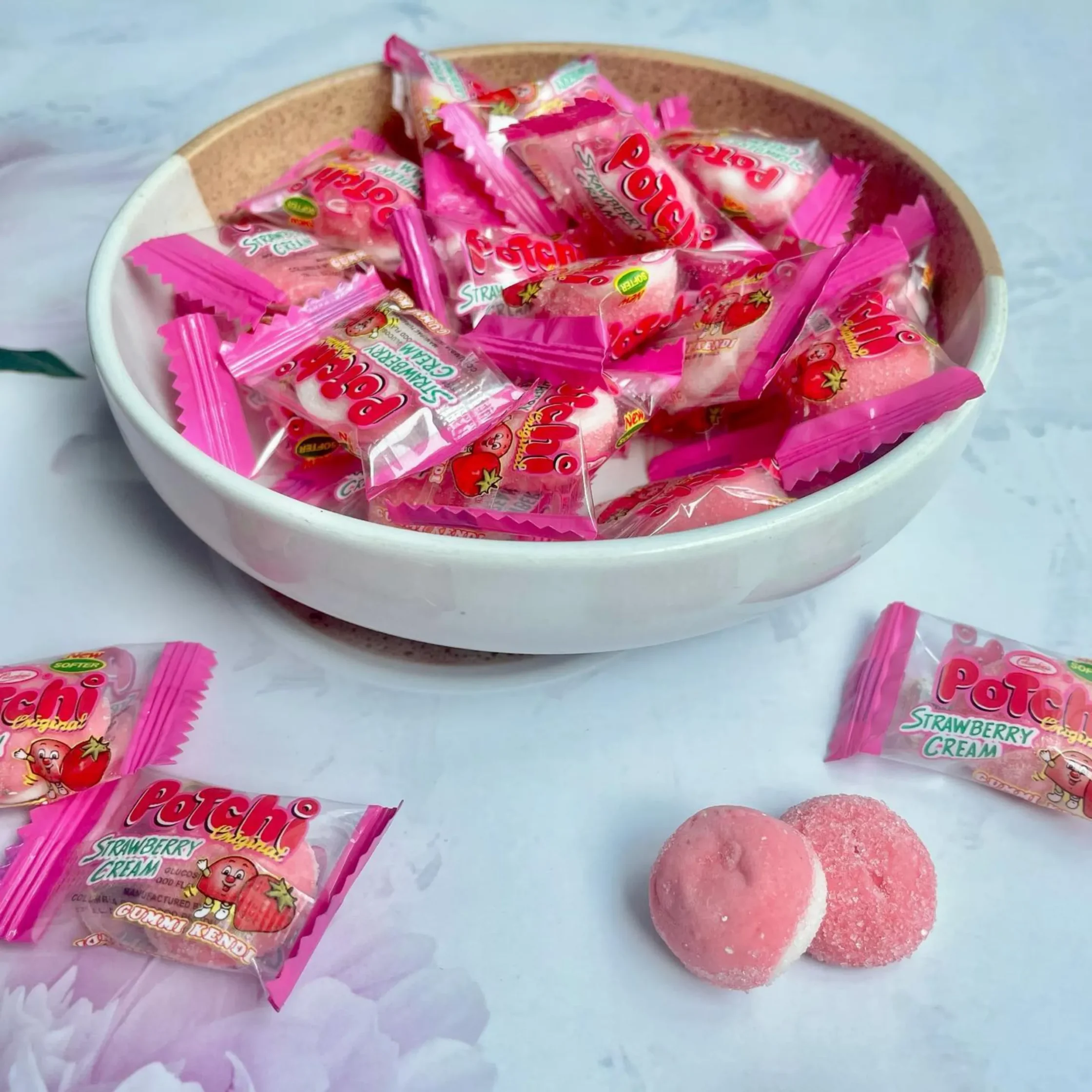
The strawberry cream flavor Potchi was a classic for a lot of Filipinos growing up. [PHOTO COURTESY OF ThePatKidInside on Instagram]

2. Haw-Haw

Filipinos love their milk—not just for actual drinking, but even as a candy flavor-slash-theme. Most iconic of the genre is Haw-Haw, a compressed-type candy of sugar, whey, and buttermilk powders that melts into a sweet, creamy mix in the mouth.
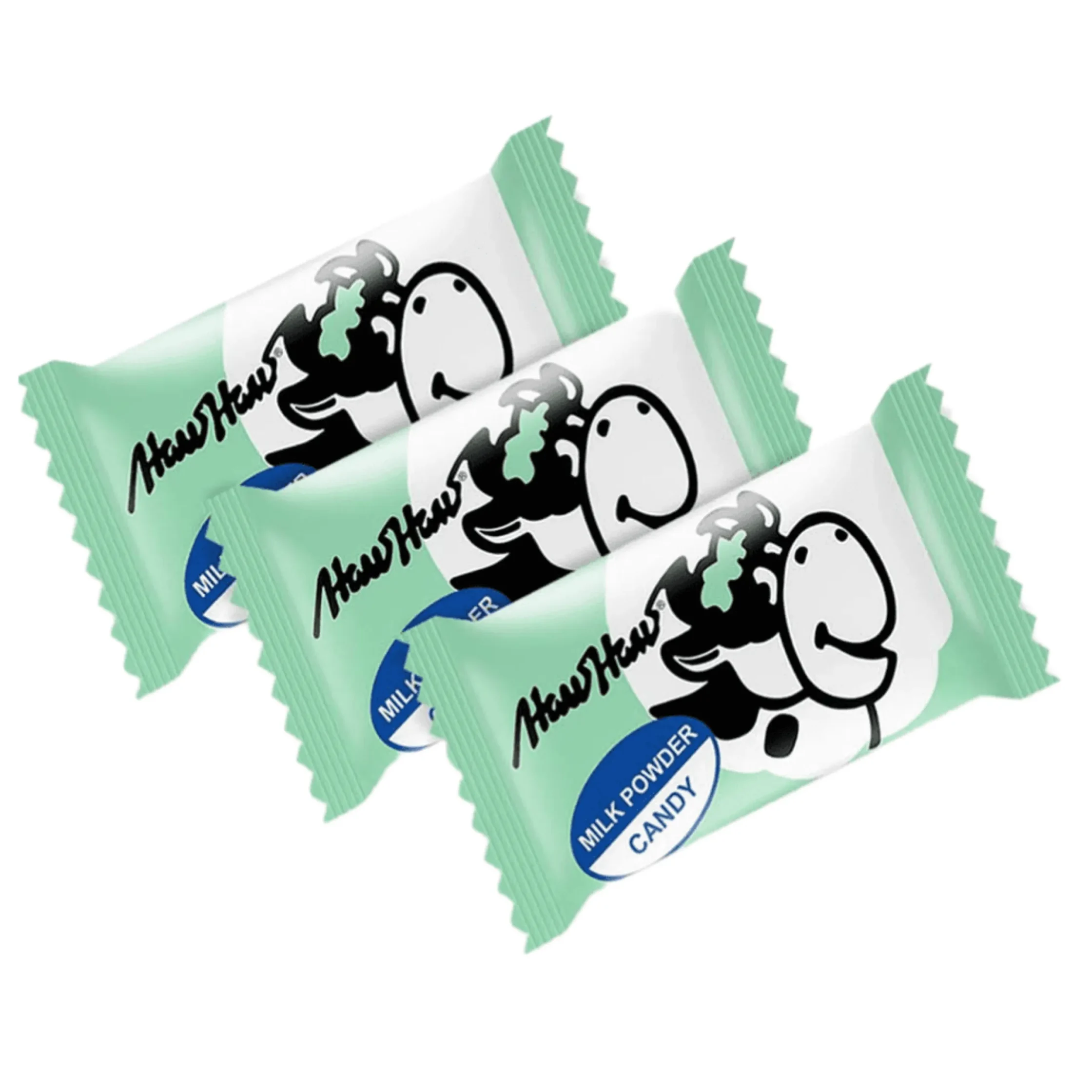
For many Filipinos, the simple milky taste of Haw-Haw brings back the sweetest childhood memories. [PHOTO COURTESY OF Super Candy Official Website]

3. Mik-Mik

Related to Haw-Haw—the anti Haw-Haw, if you will—is Mik-Mik, which also spotlights the taste of milk but in a different format. Mik-Mik comes as sachets of a loose mix of sugar and milk powder; plus tiny blue straws for sucking out the powder from its packets.
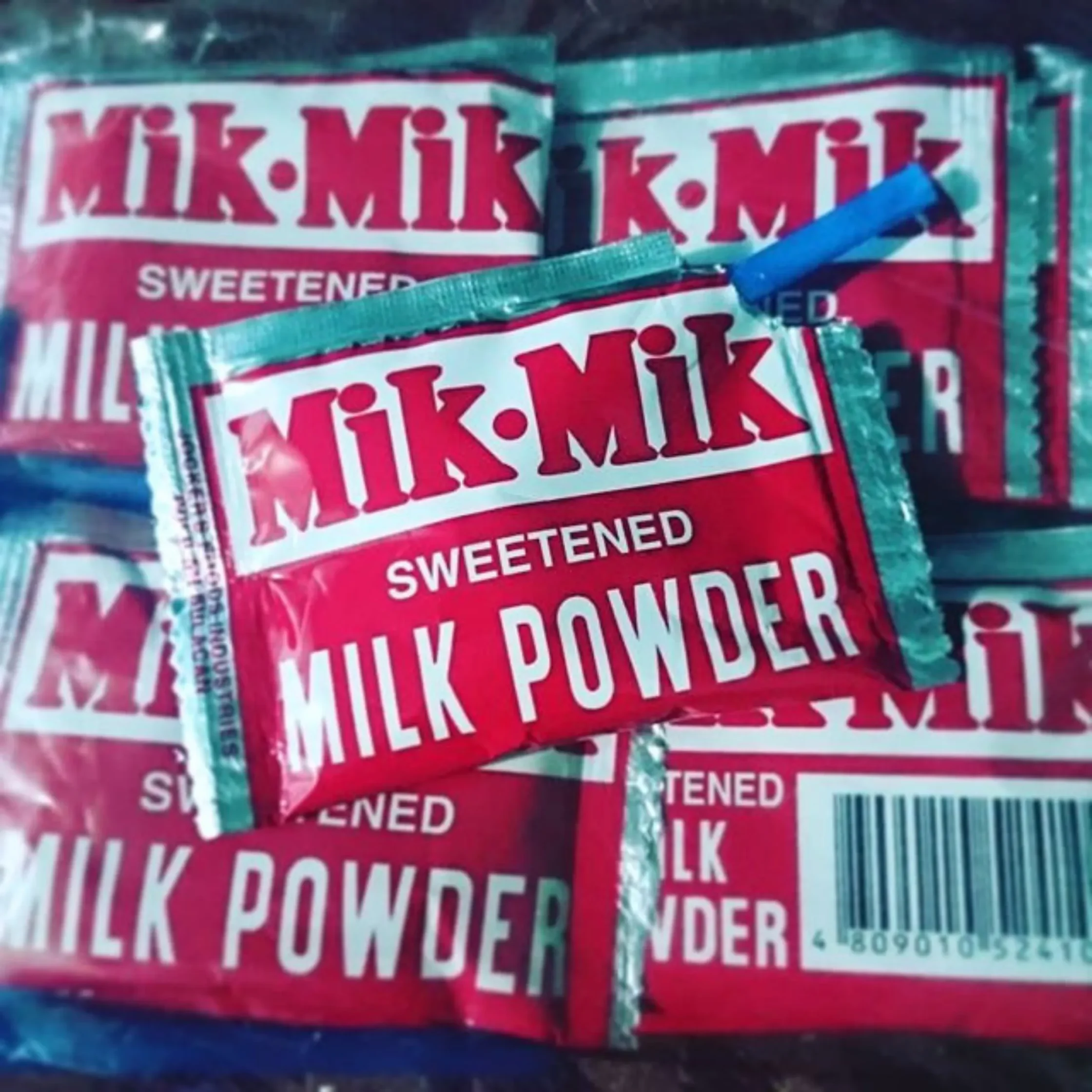
There was no better feeling than when the milk powder lands on your tongue! [PHOTO COURTESY OF About Filipino Food]

4. White Rabbit

Kids in the ‘80s and ‘90s will likely have grown up with the original White Rabbit candies easily within reach. This original version is a chewy, creamy milk candy wrapped in edible rice paper, which keeps the candy from sticking to the wrapper and magically melts on the tongue.
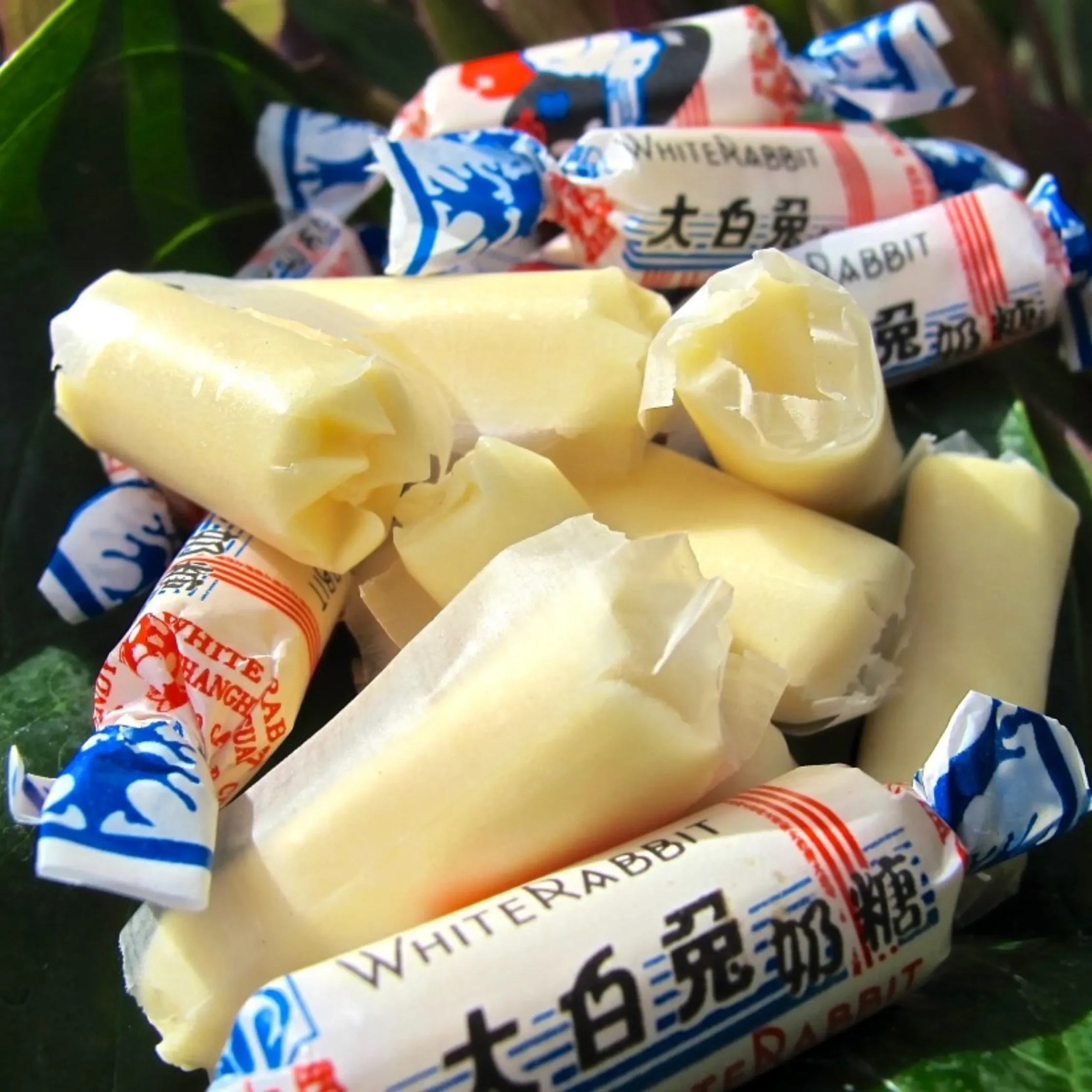
Do you remember the first time you found out paper that wrapped around the candy was edible? [PHOTO COURTESY OF Tales of Wander]

5 & 6. Flat Tops and Curly Tops

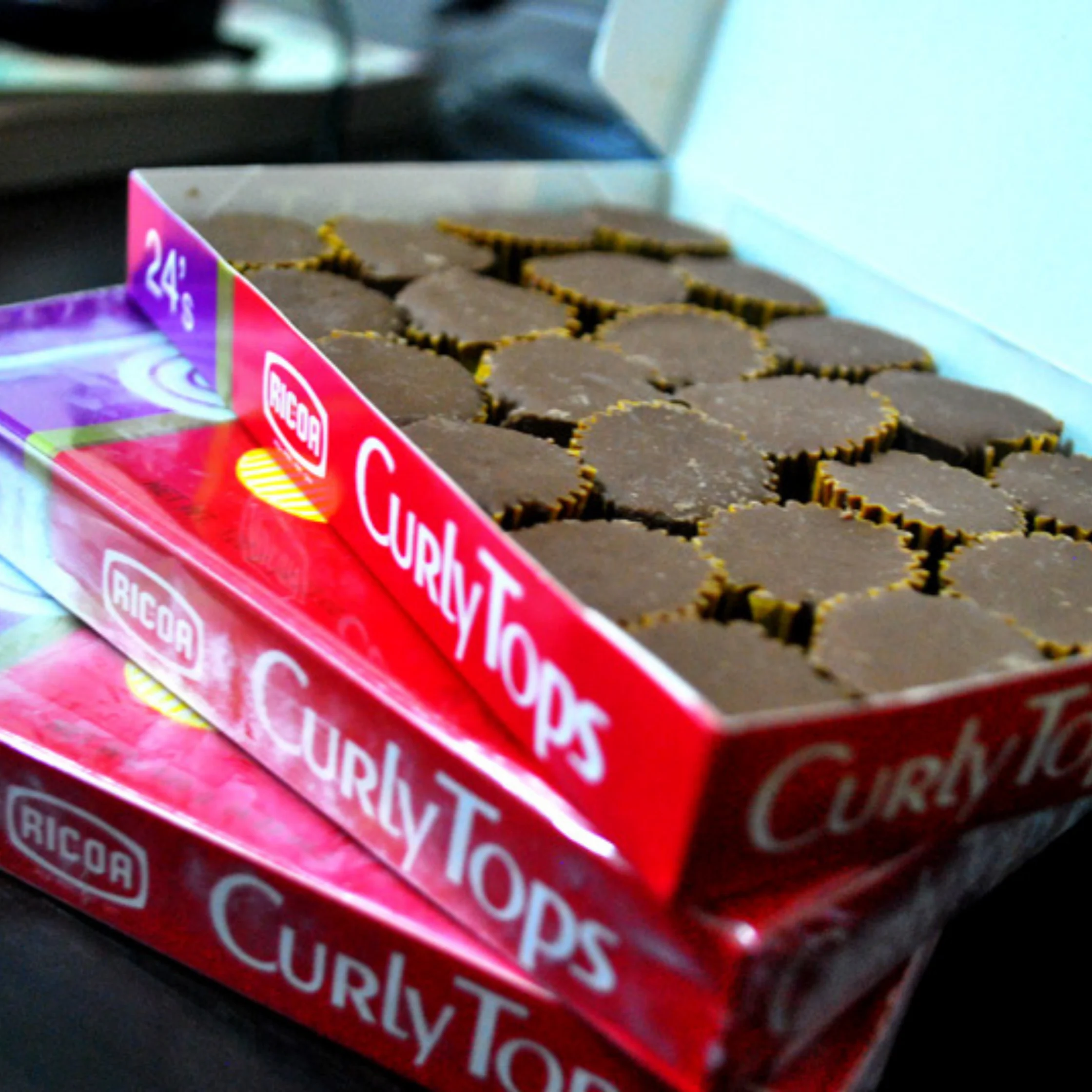
We’re willing to bet that most Filipinos’ first taste of chocolate came in the form of Flat Tops, and/or Curly Tops. Both are chocolate-y confections from the Filipino brand Ricoa shaped like flattened domes; Curly Tops used to have, well, curlier tops, but has gotten flatter over the years. Flat Tops can be thought as the more rustic sibling of the two with its slightly more coarse texture and milk-forward taste. Curly Tops has a more sophisticated feel to it with its stronger cocoa note and smoother melt. 
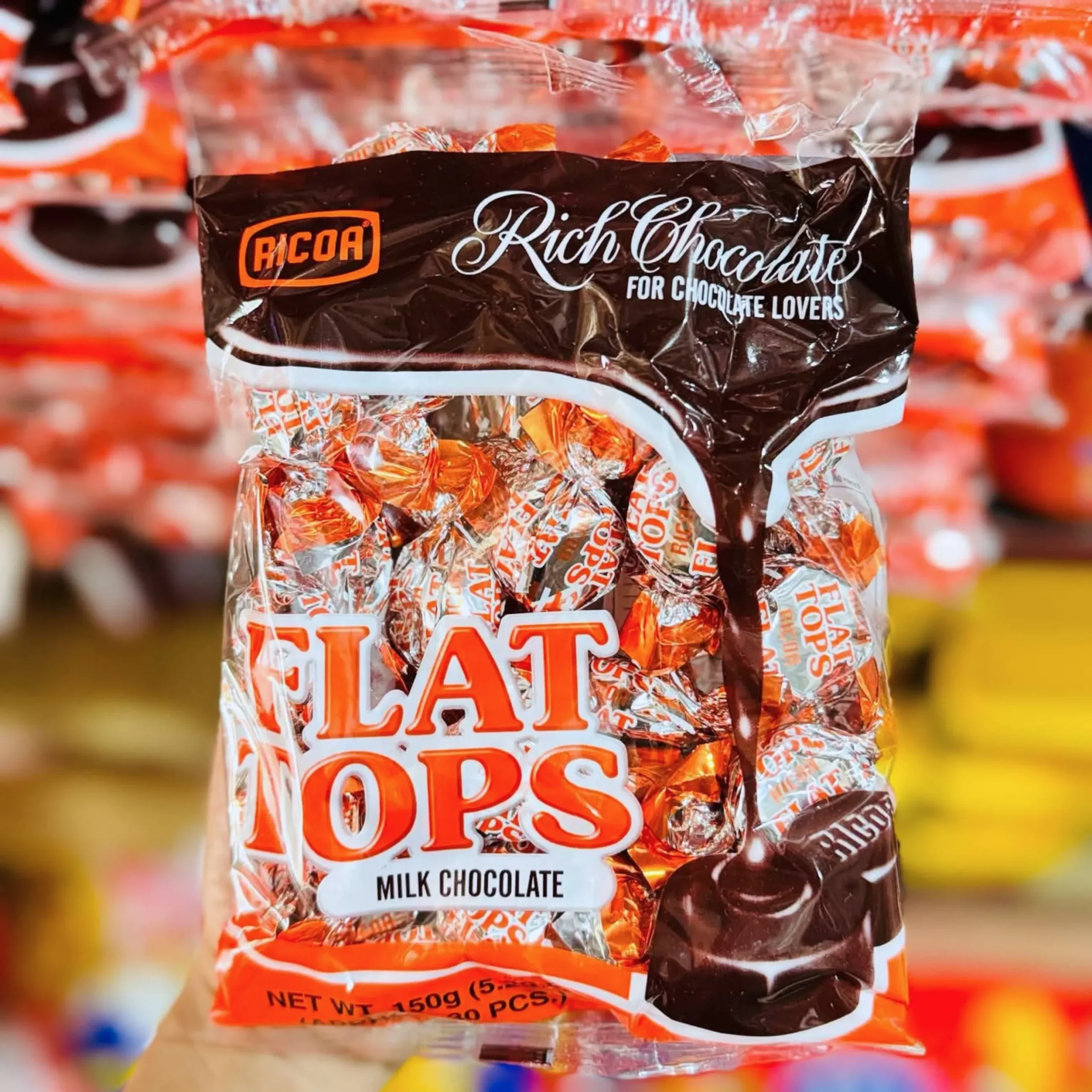
Which one did you try first, Flat Tops or Curly Tops? [PHOTO COURTESY OF Heart N’ Ghels Pasalubong on Facebook]
Which one to you prefer, the stronger cocoa flavor of Curly Tops or the more rustic style of Flat Tops? [PHOTO COURTESY OF Kalayaan at Pag-ibig Official Website]

7 & 8. Choc Nut and Hany

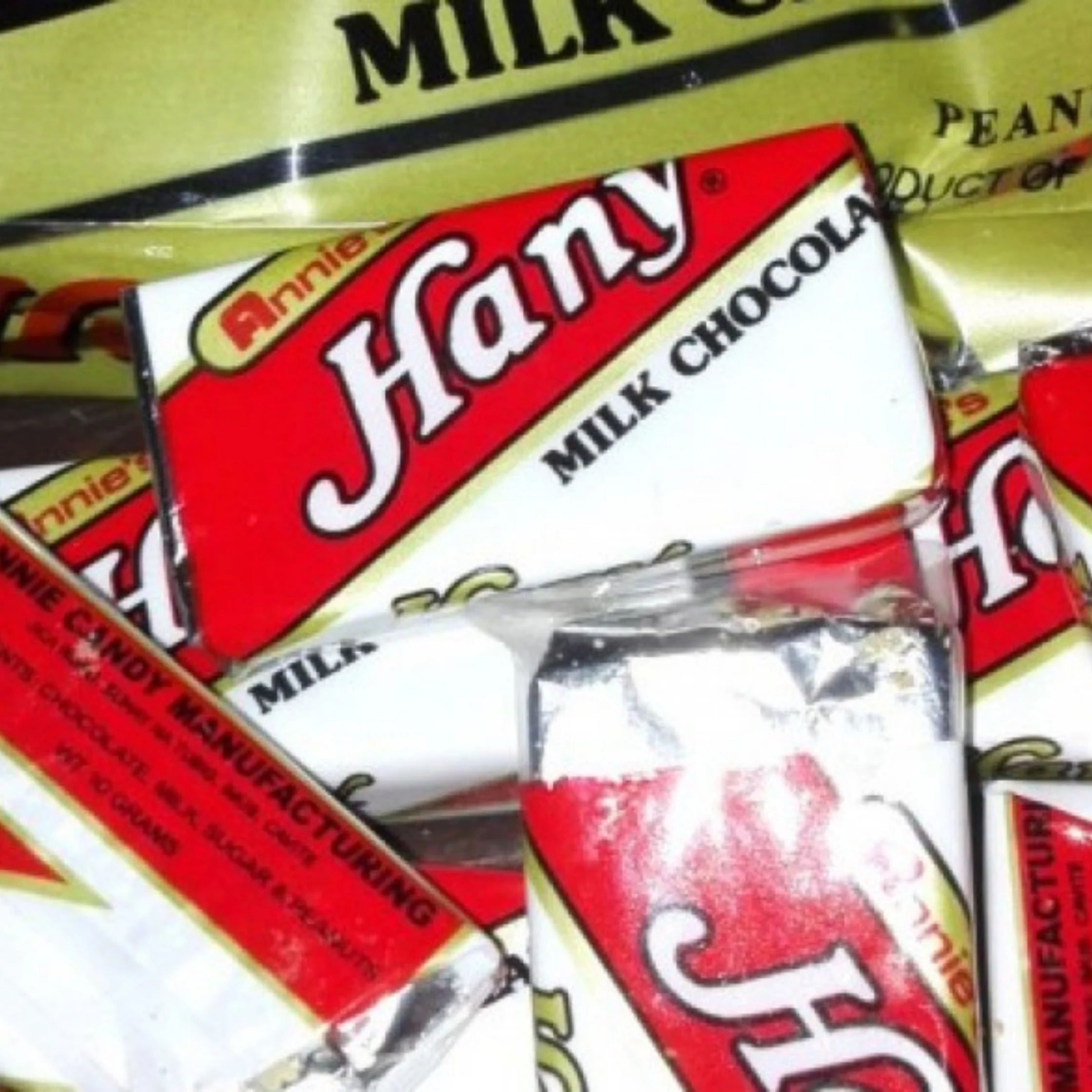
If the U.S. has its peanut butter cups, the Philippines has chocolate-peanut candies, the most popular brands being Choc Nut and Hany. Both are nutty-sweet confections with ground peanuts, cocoa, powdered milk, and other ingredients packed together into a moist but crumbly mix. Hany has a bit of a grittier mouthfeel however, and a stronger roasted-peanut note versus Choc Nut’s smoother, more uniform mix.
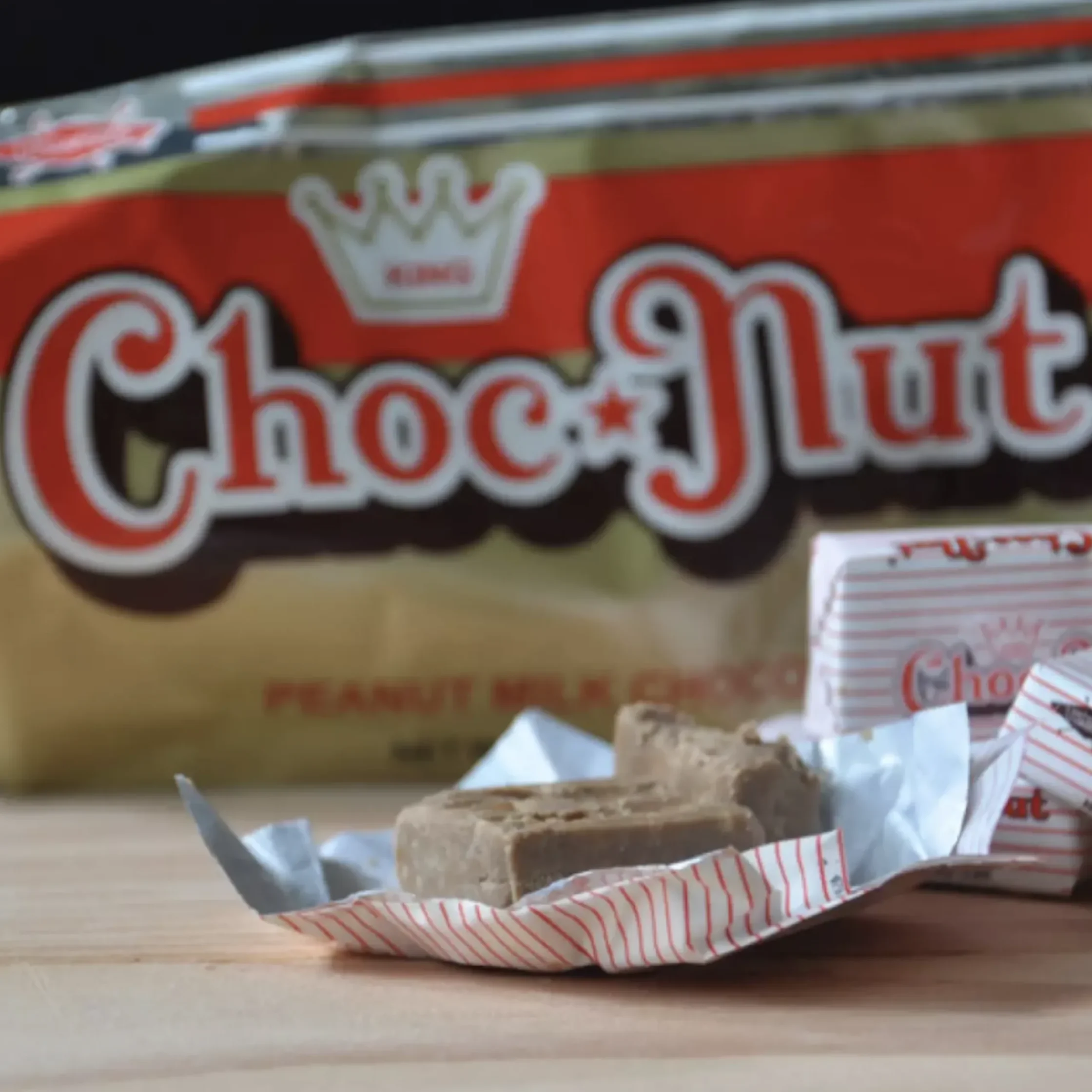
Once you eat one Choc Nut, you’ll want to eat more! [PHOTO COURTESY OF IFEX Connect Official Website]
Did you use to play that game where you try to unwrap the candy bar without breaking it? [PHOTO COURTESY OF About Filipino Food]

9. Nips

It doesn’t get any more whimsical than Nips, the Philippines’ own candy-coated chocolate candies with a colorful makeup. Being coated in a candy shell, these allow you to get your chocolate fix without the risk of it prematurely melting in your hand.
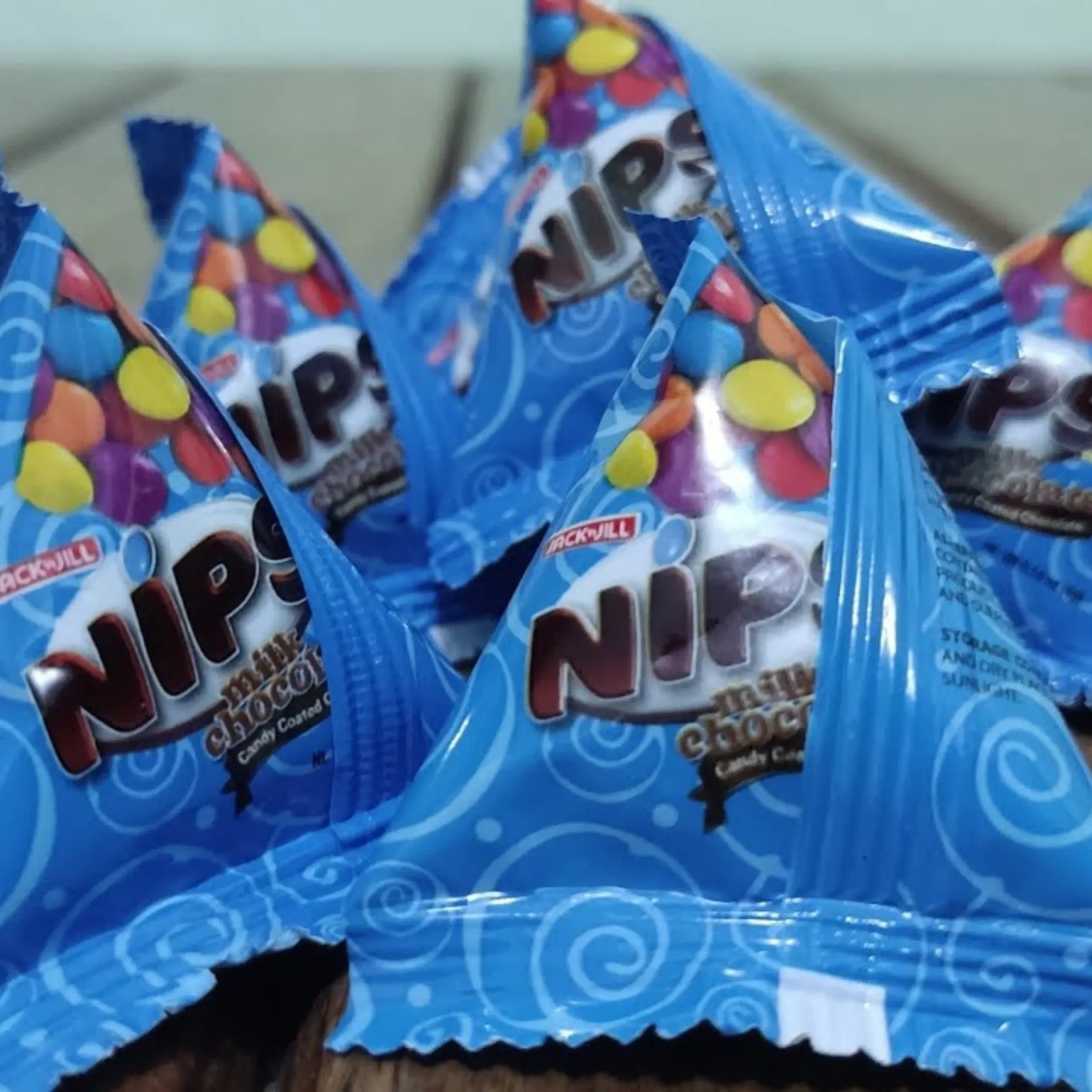
The miniature triangle shaped packed Nips were particularly addicting! [PHOTO COURTESY OF TWKNIK SA BUHAY Official Youtube]

10. Haw Flakes

Originating from China, Haw Flakes are typically packaged in paper rolls with an eye-catching magenta hue. The candy itself comes as thin slices that are pale-red in color, somewhat resembling salami. Made with the fruit of the Chinese hawthorn tree, these candies can be chewed or melted in the mouth and have a lightly sweet, tangy taste.
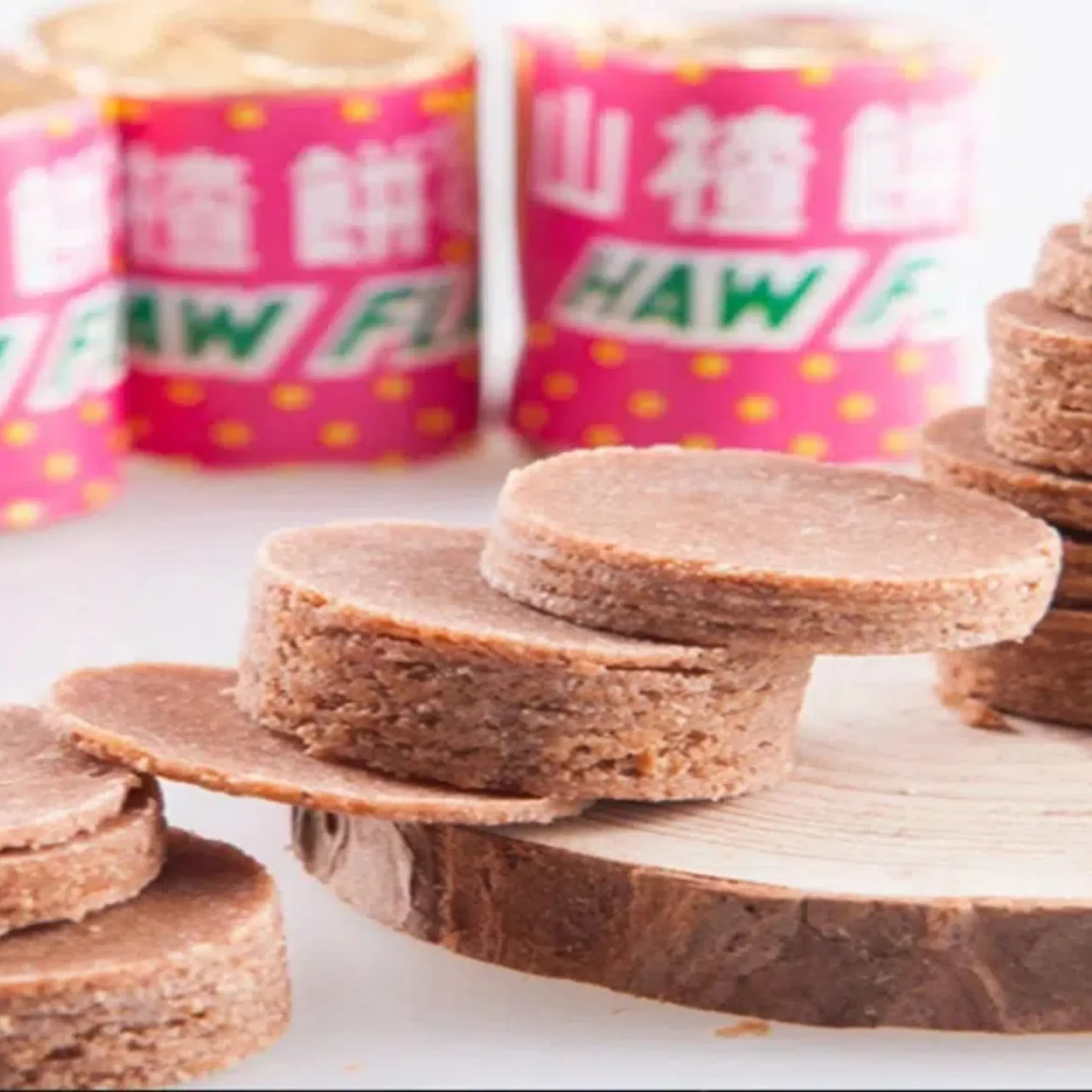
It may look like meat, those who grew up eating it already know it’s made with the fruit of the Chinese hawthorn tree. [PHOTO COURTESY OF Snack History]

11 & 12. Dynamite and Kendi Mint

The chocolate-mint combo might be polarizing for some, but for the pro camp, there are candies like Dynamite and Kendi Mint. Both have a body of peppermint hard candy paired with a chocolatey paste in the middle—a reward of sorts for waiting for the layer of candy to melt, though the impatient might be inclined to just chomp their way to get to the center.
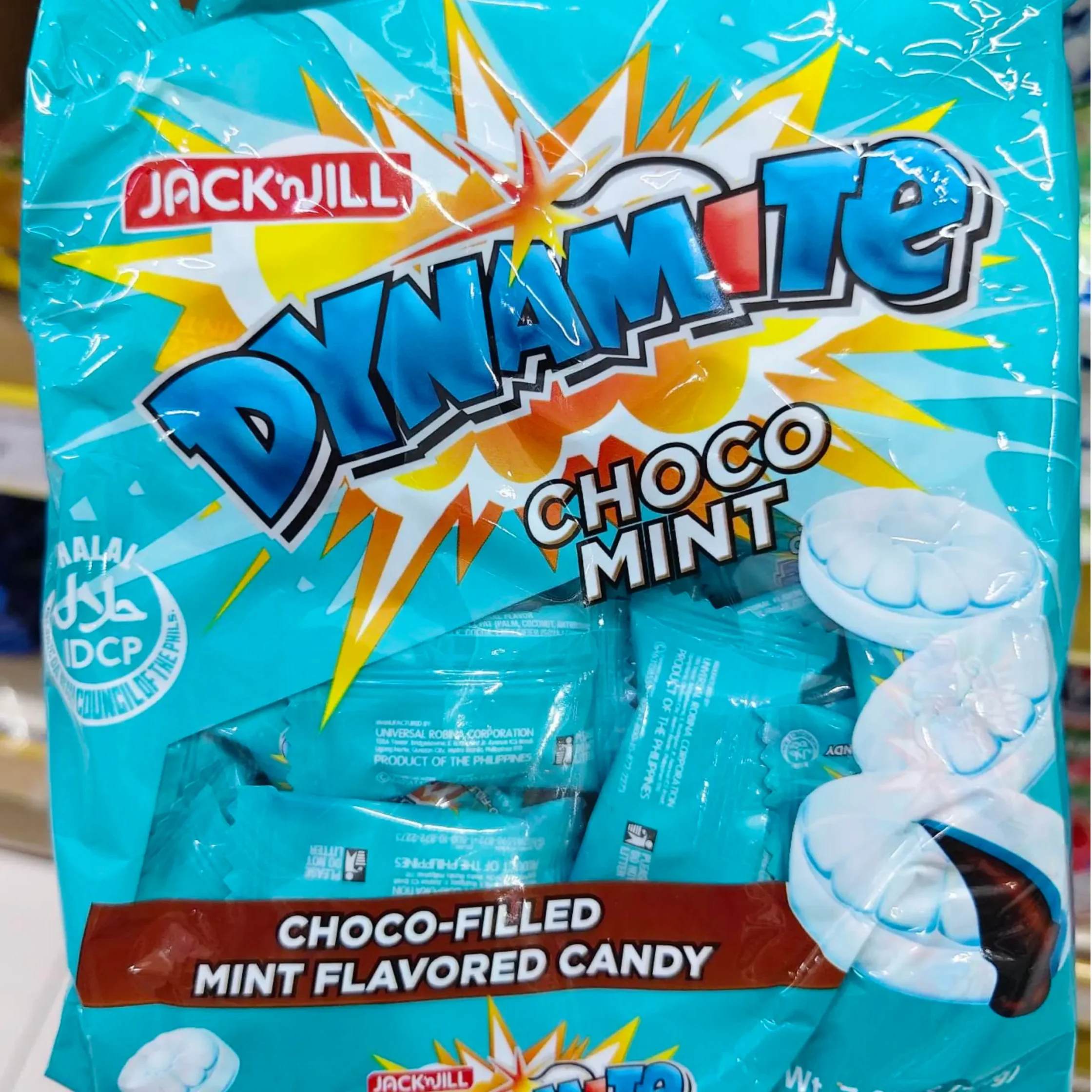
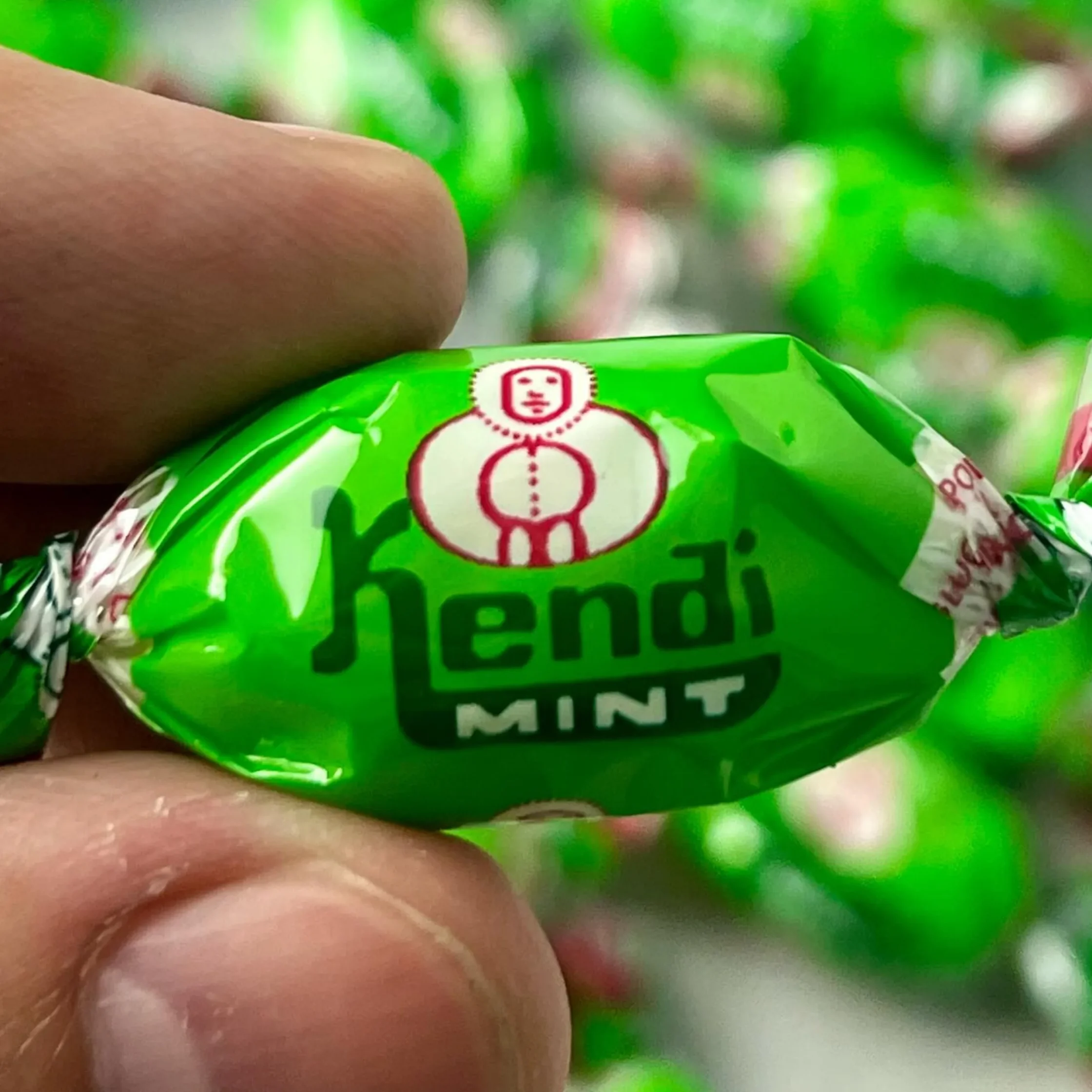
Even mint chocolate haters can’t deny the nostalgia from eating Dynamite. [PHOTO COURTESY OF Jelyn Baltazar-Codon on Facebook]
Some prefer to bite and crack the minty hard shell, while others prefer letting it melt in their mouth. [PHOTO COURTESY OF ThePatKidInside Official Instagram]

13. Peter’s Butter Ball

Peter’s Butter Ball is pretty straightforward: these are hard candies shaped like a ball, with a bright yellow color that resembles melted clarified butter. Taste-wise, these are all about butter—compared to the usual caramels that have caramelized sugar and cream, or the butterscotch candies that use brown sugar, Butter Ball keeps things minimal on the flavor front, with just butter, sugar for sweetness, and a good hint of salt for balance.
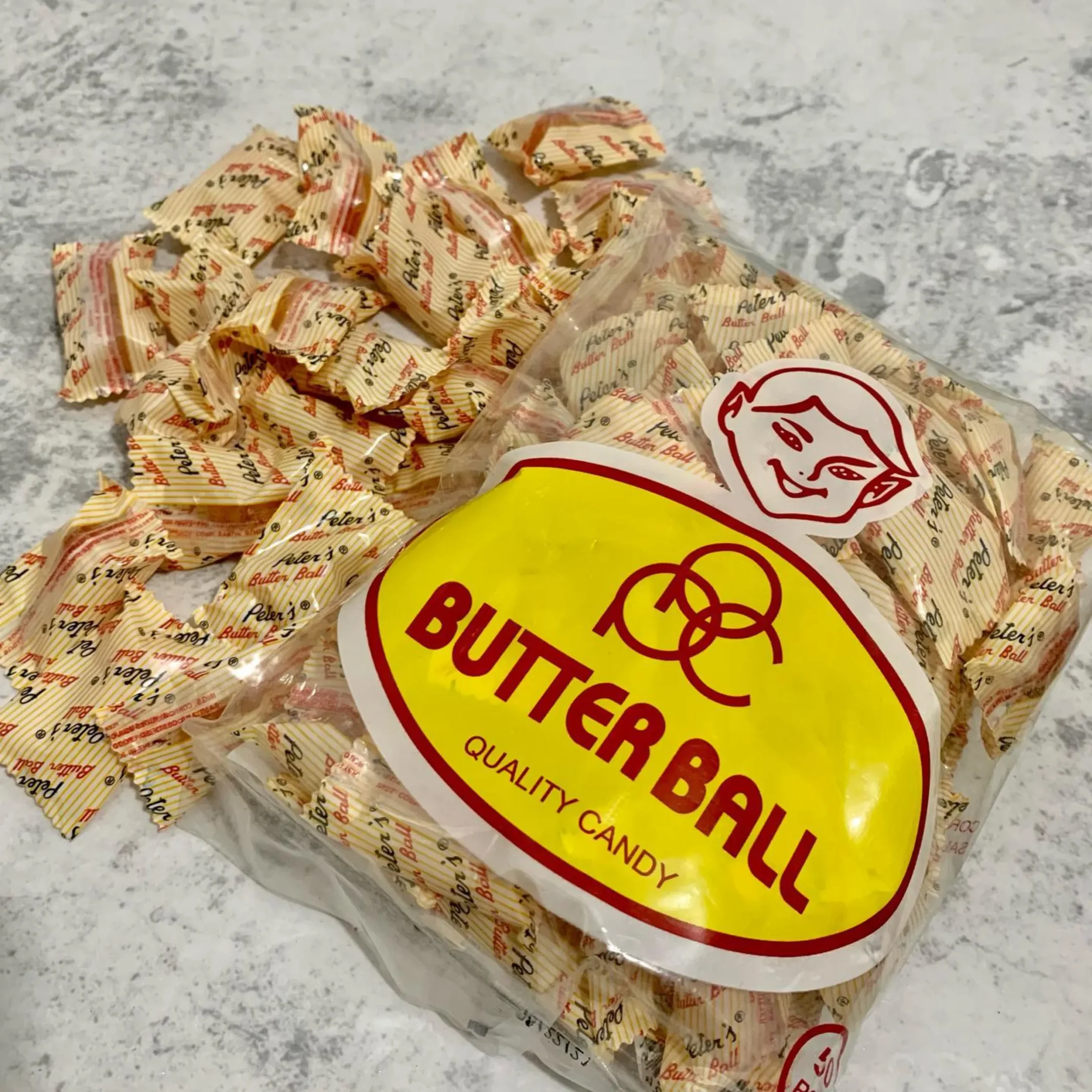
Peter’s Butter Ball is the perfect mix of the butter flavor, sweetness from the sugar, and a bit of salt to pull it all together. [PHOTO COURTESY OF ThePatKidInside Official Instagram]

14. Lipps

These hard candies not only boast a pleasing, sweet-tangy taste; they also double as a lip tint of sorts with their ability to stain, hence the name. Lipps comes in a bunch of flavors, most popular being the strawberry that turns lips and tongues a reddish pink.
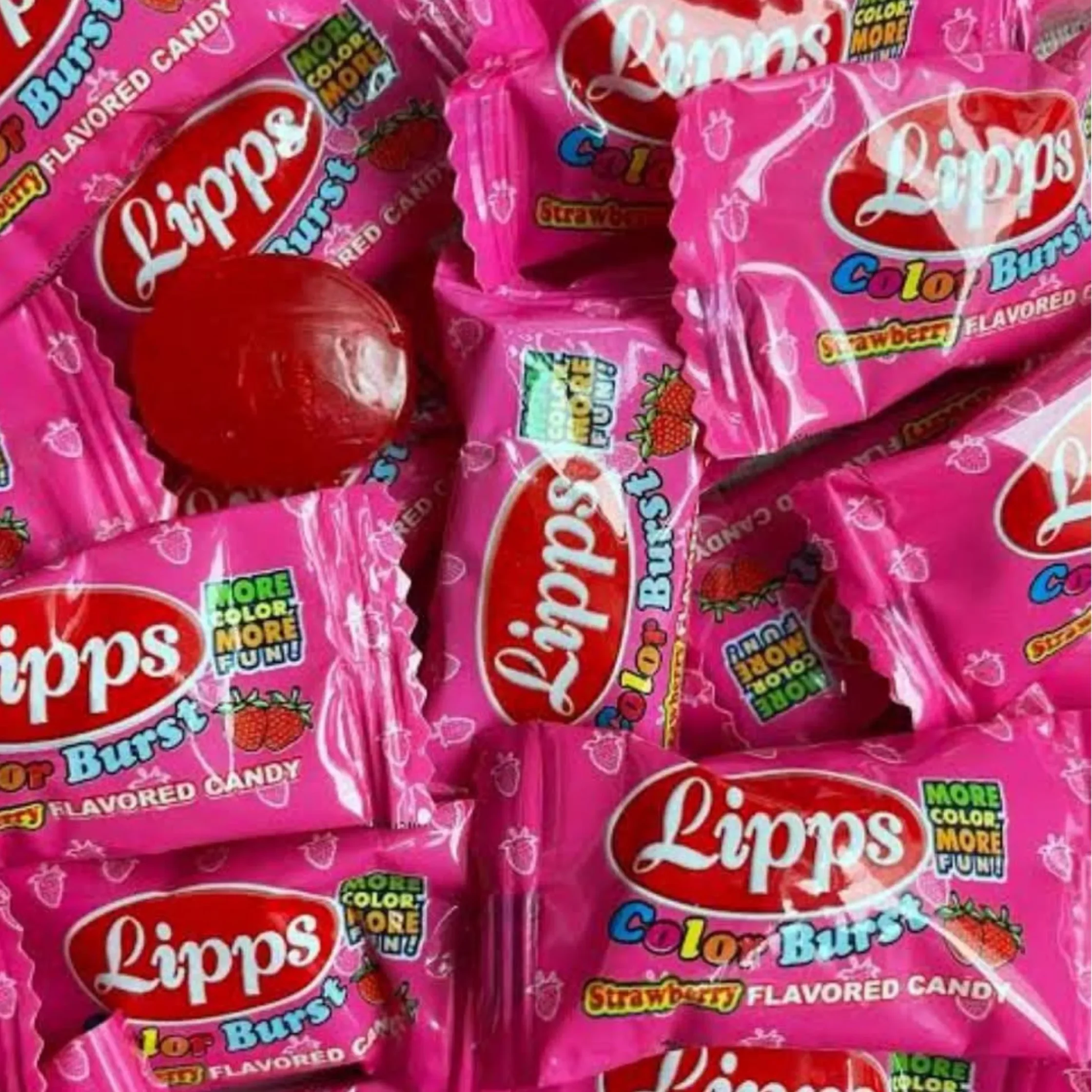
Everyone who grew up eating Lipps remembers the first time they realized how intensely the candy stained their lips. [PHOTO COURTESY OF Barato Blog Official Facebook]

15. Yakee

For lovers of all things sour, there’s Yakee—the “super asim” gum balls with a colorful coating that doesn’t hold back on the sourness. The outer surface is so sour that it might just trigger a scrunched face, but this exterior and sweet gum interior somehow balance each other out as you continue to chew through.
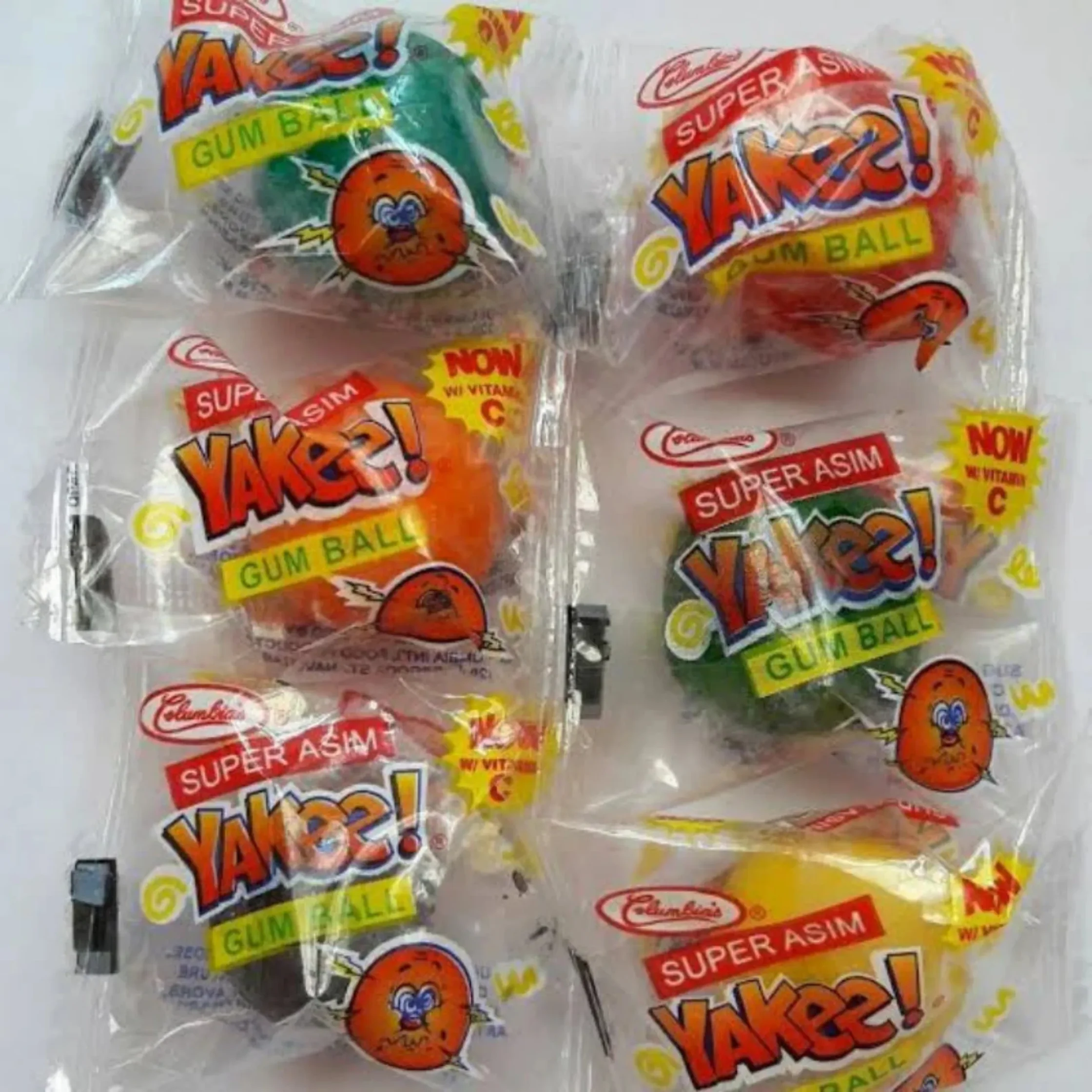
Either you loved Yakee or you’ve been dared far too many times to eat it. [PHOTO COURTESY OF Benable Official Website]

16. Pintoora

Yakee’s sibling sweet is Pintoora, which is also a gum ball that’s similar in size and form. Pintoora, however, swaps the sour coating for one that’s heavily tinted with food coloring—so much so that as you chew, the ink transfers to the tongue and tints it a vivid color.
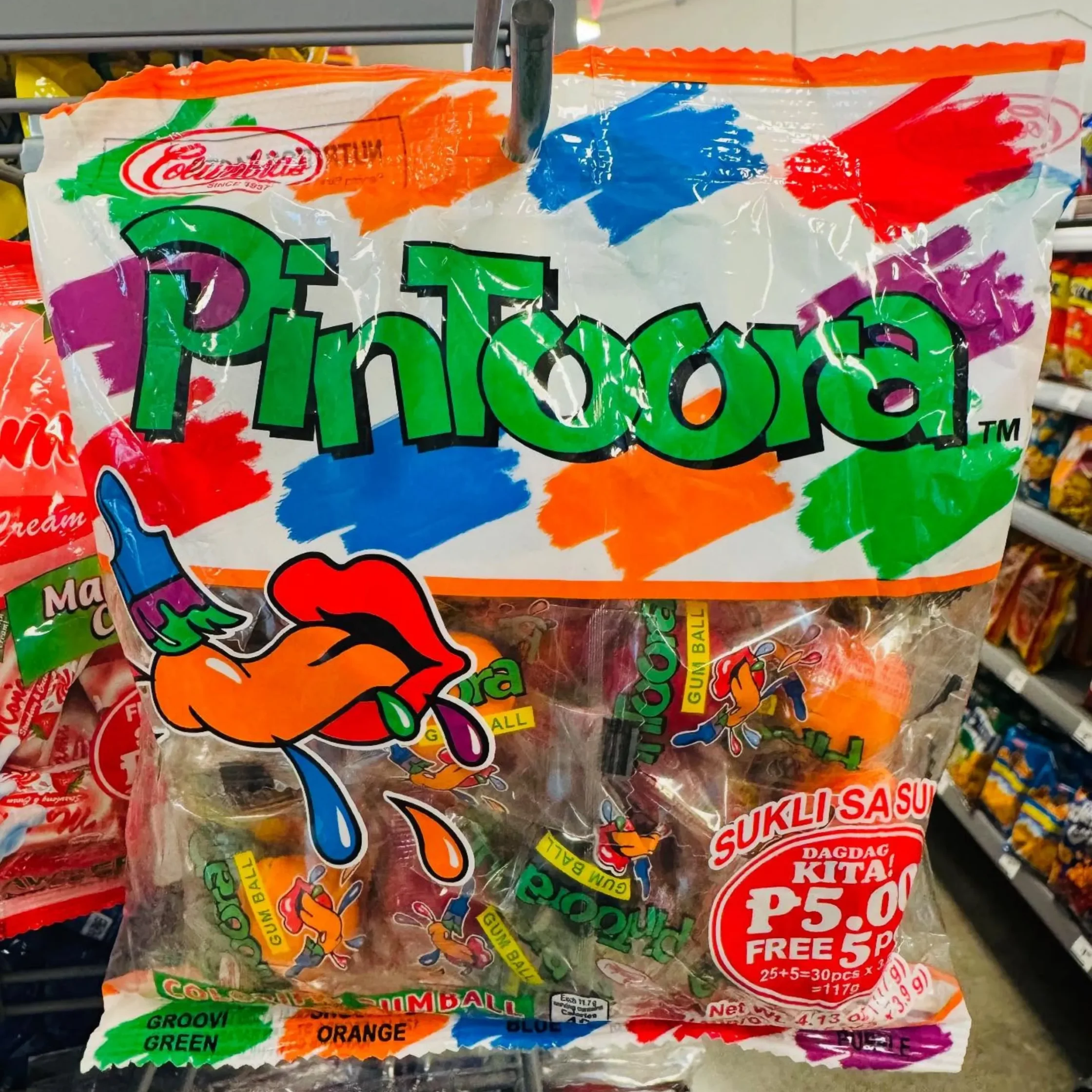

The fun of eating Pintoora was always turning your tongue bright blue or pink while trying to guess the sweet fruit flavor. [PHOTO COURTESY OF Little Manila Market Official Instagram]
author avatar
Patricia Baes
Trish thinks too much about everything—truth, existence, and what to have for dinner. Her early love of experimenting in the kitchen, coupled with a desire to better her relationship with food, led her down the rabbit hole of food media and writing. After graduating with a Psychology degree from UP Diliman, she sharpened her writing skills (and expanded her appetite) at a couple of food websites, where she covered cooking, restaurants, food history, and culture, and ate her way through Manila’s pulsating dining scene as staff writer and eventually as the publication’s food editor. Food, for Trish, is as much a source of pleasure and fuel as it is an outlet for creativity; a medium through which stories can be passed on; and a way to connect with others. And putting her musings into words lets her narrow the gap between her food geekery and background in the social sciences.

Frequently Asked Questions

Some old-school candies a majority of Filipinos ate when they were younger were Lipps, Peter’s Butter Balls, Mik-Mik, Haw-Haw, and Potchi. A lot of Filipinoes also grew up eating Haw Flakes and White Rabbit.

author avatar
Patricia Baes
Trish thinks too much about everything—truth, existence, and what to have for dinner. Her early love of experimenting in the kitchen, coupled with a desire to better her relationship with food, led her down the rabbit hole of food media and writing. After graduating with a Psychology degree from UP Diliman, she sharpened her writing skills (and expanded her appetite) at a couple of food websites, where she covered cooking, restaurants, food history, and culture, and ate her way through Manila’s pulsating dining scene as staff writer and eventually as the publication’s food editor. Food, for Trish, is as much a source of pleasure and fuel as it is an outlet for creativity; a medium through which stories can be passed on; and a way to connect with others. And putting her musings into words lets her narrow the gap between her food geekery and background in the social sciences.

Some nostalgic candies that had chocolate in them were Flat Tops, Curly Tops, Dyanmite, and Kendi Mint. There’s also Choc Nut and Hany, which were iconic chocolate-peanut candies.

author avatar
Patricia Baes
Trish thinks too much about everything—truth, existence, and what to have for dinner. Her early love of experimenting in the kitchen, coupled with a desire to better her relationship with food, led her down the rabbit hole of food media and writing. After graduating with a Psychology degree from UP Diliman, she sharpened her writing skills (and expanded her appetite) at a couple of food websites, where she covered cooking, restaurants, food history, and culture, and ate her way through Manila’s pulsating dining scene as staff writer and eventually as the publication’s food editor. Food, for Trish, is as much a source of pleasure and fuel as it is an outlet for creativity; a medium through which stories can be passed on; and a way to connect with others. And putting her musings into words lets her narrow the gap between her food geekery and background in the social sciences.

Yes! A lot of Filipinos who liked sour candy most likely grew up eaating Yakee! and Pintoora.

author avatar
Patricia Baes
Trish thinks too much about everything—truth, existence, and what to have for dinner. Her early love of experimenting in the kitchen, coupled with a desire to better her relationship with food, led her down the rabbit hole of food media and writing. After graduating with a Psychology degree from UP Diliman, she sharpened her writing skills (and expanded her appetite) at a couple of food websites, where she covered cooking, restaurants, food history, and culture, and ate her way through Manila’s pulsating dining scene as staff writer and eventually as the publication’s food editor. Food, for Trish, is as much a source of pleasure and fuel as it is an outlet for creativity; a medium through which stories can be passed on; and a way to connect with others. And putting her musings into words lets her narrow the gap between her food geekery and background in the social sciences.
patricia baes delish contributing writer

Patricia Baes

Author

Trish thinks too much about everything—truth, existence, and what to have for dinner. Her early love of experimenting in the kitchen, coupled with a desire to better her relationship with food, led her down the rabbit hole of food media and writing. After graduating with a Psychology degree from UP Diliman, she sharpened her writing skills (and expanded her appetite) at a couple of food websites, where she covered cooking, restaurants, food history, and culture, and ate her way through Manila’s pulsating dining scene as staff writer and eventually as the publication’s food editor. Food, for Trish, is as much a source of pleasure and fuel as it is an outlet for creativity; a medium through which stories can be passed on; and a way to connect with others. And putting her musings into words lets her narrow the gap between her food geekery and background in the social sciences.

0 0 votes
Total of Ratings
guest
Rating
Ratings for Article
0 Comments
Oldest
Newest Most Voted

To provide a customized ad experience, we need to know if you are of legal age in your region.

By making a selection, you agree to our Terms & Conditions.