

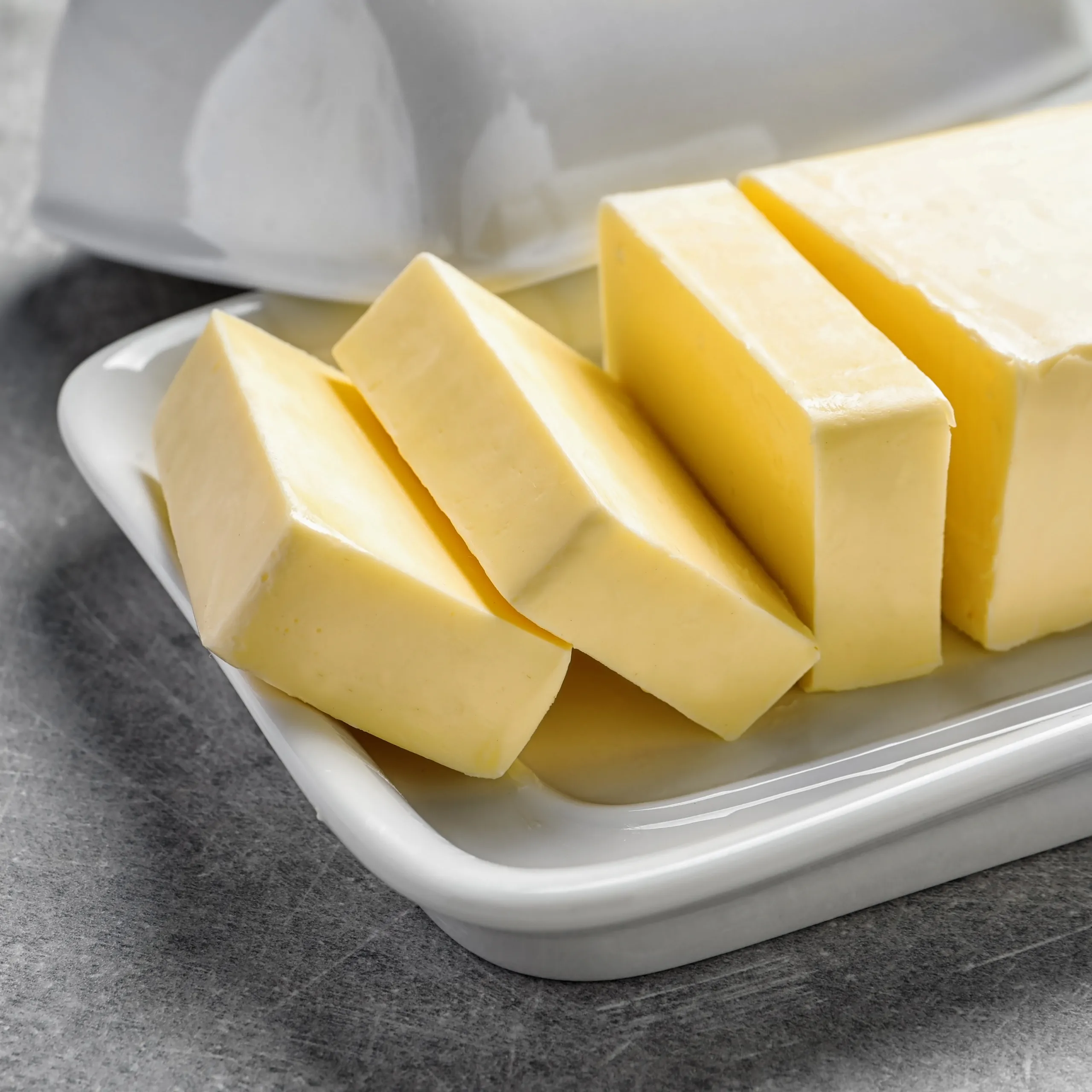
When butter and margarine are placed next to one another inside the refrigerator, it’s easy to confuse them for each other.
They can certainly look identical a lot of the time. They are also interchangeable for the most part, depending on what a recipe needs it for, of course. But make no mistake. While these similarities are not groundless, there is more going on beneath the creamy surface.
Each one has their own unique properties that dictate when they can be used and when they shouldn’t. Their respective pros and cons regarding how each of them tastes and what they do for your health can influence which one you end up reaching for. So learning how they are different and when to use what is vital information for any kitchen.
1. Butter Is Dairy-Based. Margarine Is Oil-Based.
Butter is made from churning a cream. It is most commonly made using cow’s milk, but it can also be made from the milk of goats, sheep, and buffaloes. Aside from the type of animal products they are made with, there are also other variations of butter including salted and unsalted butter, cultured butter, compound butter, ghee, and clarified butter.
Margarine, on the other hand, is made of a blend of oils, ranging from vegetable oils, animal fats, or a combination of the two. Emulsifiers, preservatives and occasional added coloring can also be found in the mix. While most margarines are incidentally vegan, some aren’t due to them containing ingredients derived from animals like whey or lactose. The reason they look very similar is because most margarine products are manufactured to have similar appearance, texture, and functionality as butter. The ones that don’t have a pale or whiter color than a yellow one.
2. They both have distinct nutritional makeups.
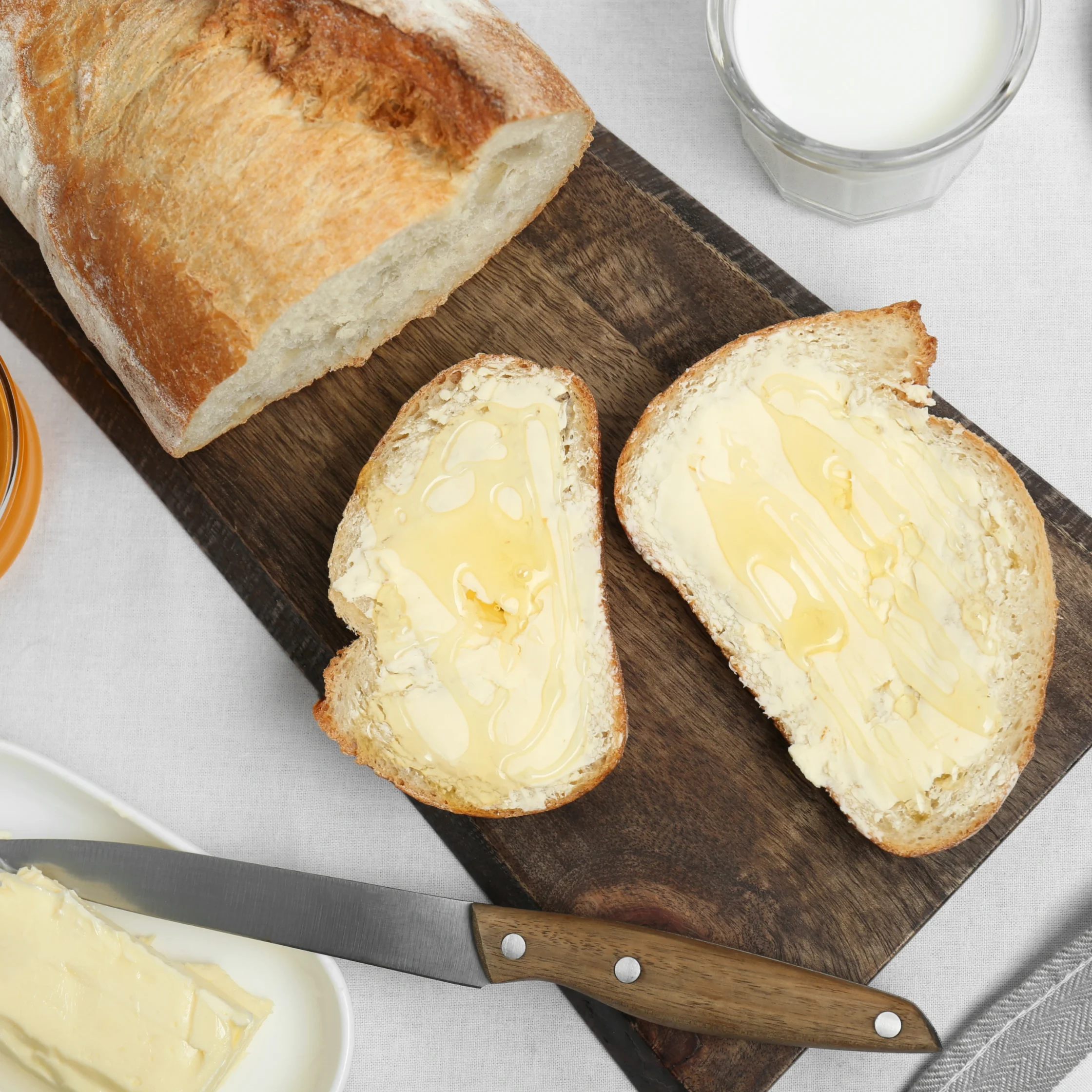
Another thing that distinguishes butter from margarine is their nutritional facts. Butter is essentially made up of milk fat, water, and milk solids, containing high levels of cholesterol and saturated fats. Because of this, butter has a naturally rich flavor and is often used in baking.
Margarine, on the other hand, is typically made from vegetable oils and water, with its fat and moisture content varying depending on the formulation. While margarine generally contains less cholesterol and saturated fat than butter, it tends to contain higher levels of unsaturated fats. Some varieties may also contain trans fats, depending on how they are made. Its taste is milder, artificially fatty, and dependent on how much it was salted.
3. Each has their own health benefits and detriments.
Since their nutritional profiles is different, their respective health advantages and disadvantages should also differ. Because butter is famously known for “clogging your arteries,” margarine is often hailed for being significantly better for your heart health. It’s free of any dietary cholesterol and bad saturated fats. But not all margarines are the same.
Every margarine product has a different ratio of oils, therefore the overall health benefits differ depending on which oils and how much each there are. Some may actually be worse for you than butter, so a good rule of thumb would be to read the label and look for the one with lower saturated fat content.
There are also existing health benefits from eating certain types of butter that are worth looking into. Compared to butter made from cows that were only fed grains, grass-fed butter contains more vitamins, minerals, antioxidants, and healthy fats.

They can be interchangeable, but they do not replace one another.
Generally speaking, both butter and margarine can be used as a condiment or spread, as a possible ingredient in baking, in making sauces, in pan frying, and in sautéing proteins and produce. Whether you choose one over the other ultimately depends on your taste preferences, dietary needs, and how you intend to use it. While they can sometimes be substituted for one another, differences in flavor, fat content, and moisture mean they won’t always produce the same results.
Margarine was created to be a substitute for butter, but there is a distinction between margarine that is specifically made to replace the use of butter and margarine that isn’t. If you’re substituting margarine for butter in baking, stick margarine is generally a better choice than the softer varieties sold in tubs, which tend to contain more water and can affect the texture and structure of baked goods.
Theoretically, it is possible to make compound butter using margarine. But if you’re looking for that creaminess and firmness, it’s best to just stick with using softened butter.
When Is It Best To Use Butter?
Butter brings flavors and textures that are absolutely crucial when baking pastries, cookies, and even cakes. The water content in the butter creates steam while baking, which is crucial for puffing up layers of croissants and pie crusts. Even the milk solids when baked creates a deep nutty flavor that using margarine may have a hard time replicating.
Butter is usually best in making many sauces and emulsions as it creates a thickened and glossy finish. Watch out as butter burns quickly. When cooking with higher heat, it’s best to switch to clarified butter known as ghee or any cooking oil with a higher smoking point.
Butter is best kept refrigerated for storage, but the cold temperature causes it to solidify and makes it difficult to spread straight from the fridge. If you plan to use it as a spread, allow it to soften at room temperature before serving.
When Is It Best To Use Margarine?
If you want to stick to a dairy-free or vegan diet, margarine is a good substitute when cooking or sautéing anything savory. Just make sure you read the label that you are using the ones that do not contain any animal products. It’s also okay to use standard baking margarine when making cookies or cakes since they do not ruin the final product, just be aware of some subtle flavor differences.
But when it comes to pastries, margarine contains too much water and not enough fat to act as a substitute for butter. Trying to make any shortbread, butter cookies, or buttercream frosting using margarine may lead to different flavor, texture, and handling properties as, unlike butter, margarine lacks the strong dairy flavor of butter.

Understanding the differences between butter and margarine can come in handy for anyone in charge of cooking, baking, or buying the groceries for their household. Maybe you prefer the taste of one spread on your toast in the morning or feel less guilty about cooking your food with the other.
Regardless of your reason, it’s best to be aware of when and why to use both so that you can make more informed decisions about how you want to cook and what you put in your body.

Frequently Asked Questions
Butter is a natural dairy product made from churning cow’s milk or any cream.
Margarine is an artificially-made fat composed of a blend of vegetables oils, animal fats, or a combination of the two. It was originally made to be a substitute for butter.
Butter is an animal fat while margarine is made up of a blend of vegetable oils. Margarine tastes milder and often greasy while butter has a very strong dairy flavor.
In terms of heart health, margarine is healthier than butter. Butter has very high levels of cholesterol. But not all margarines are the same. Try to look for margarine with lower levels of saturated fat.
Generally, butter is better for baking. Its water content is useful when baking laminated pastries. It also contains milk solids, which when heated create a rich nutty flavor.