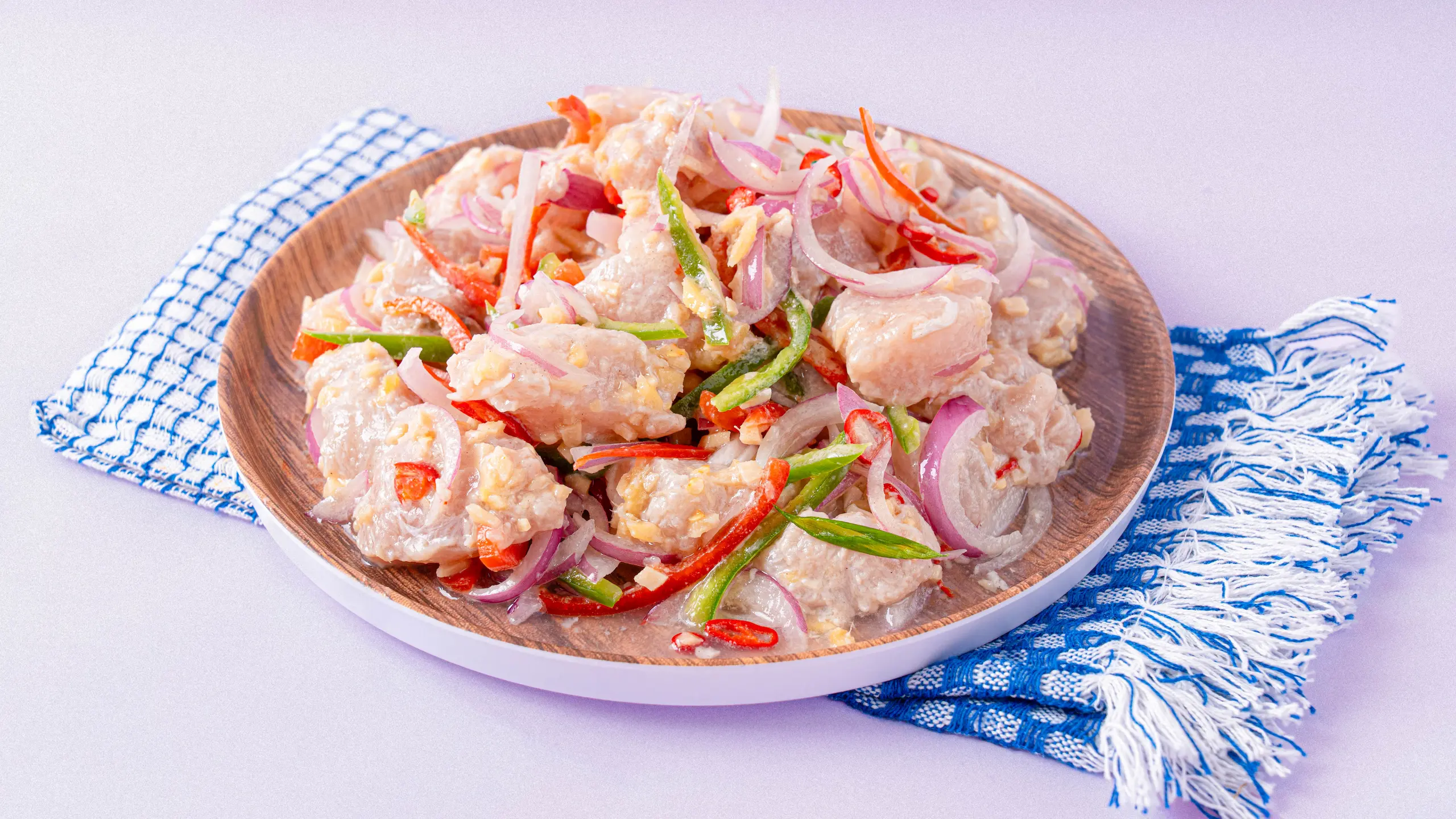


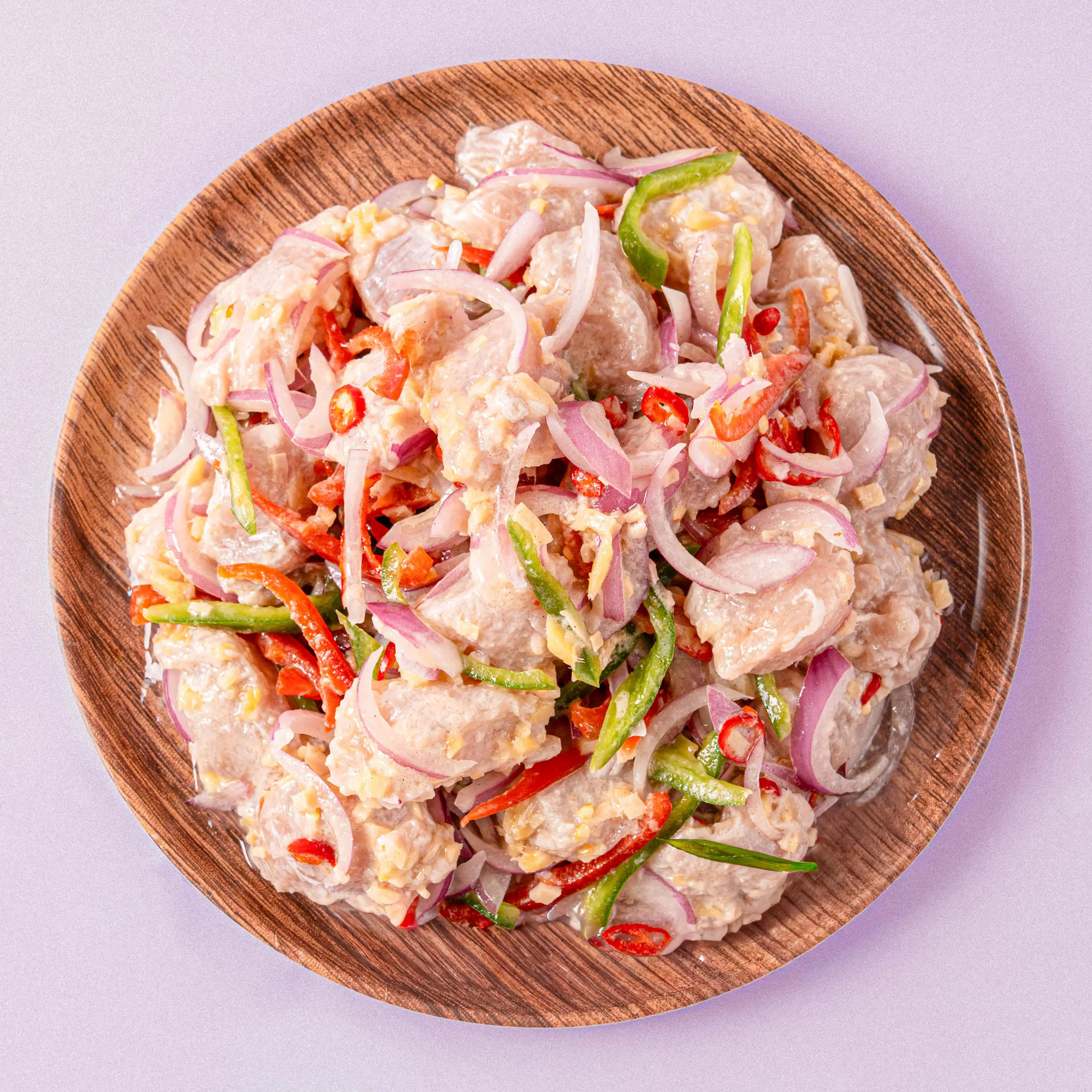
There is something wonderfully refreshing about Kilawing Tanigue. Unlike many Filipino dishes that spend a long time simmering over the stove, this one is all about freshness. You have firm pieces of tanigue, sharp vinegar, bright calamansi, crunchy onions and bell peppers, fragrant ginger, and just enough chili to give everything a pleasant kick.
It is the kind of dish that feels especially good on a warm day. The vinegar and calamansi give it a lively, clean flavor, while the fish provides a mild richness that keeps it satisfying. Put it on the table beside steamed rice and a few other Filipino dishes, and it becomes the refreshing contrast that keeps the whole meal from feeling too heavy.
Kilawin is also a dish that rewards patience. The preparation itself is simple, but the fish needs enough time to interact with the acidic marinade. And because the main ingredient is fish, freshness and safe handling are especially important.
This version uses Spanish mackerel (tanigue), red onion, ginger, chilies, bell peppers, vinegar, and calamansi juice. It is bright, tangy, mildly spicy, and full of the fresh flavors that make Filipino kilawin so enjoyable.
What Is Kilawing Tanigue?
Kilawing Tanigue, also called Kinilaw na Tanigue, is a Filipino preparation of fresh fish cured in an acidic mixture, usually involving vinegar and citrus such as calamansi.
The word kilawin or kinilaw is connected to the Filipino concept of preparing food through the action of acid rather than traditional heat cooking.
The fish isn’t actually cooked by heat. Instead, the acidity changes the proteins in the fish, causing the flesh to become firmer and more opaque.
That makes kinilaw somewhat similar in appearance to dishes such as ceviche, but Filipino kinilaw has its own history, ingredients, and flavor traditions.
Depending on the region and family, kinilaw can include different types of fish and different combinations of vinegar, calamansi, ginger, onion, chili, cucumber, coconut milk, or other ingredients.
The version you’re making keeps things relatively simple, allowing the tanigue, vinegar, calamansi, ginger, and onion to remain the main flavors.
A Little History of Kilawin
Kinilaw is considered one of the longstanding food traditions of the Philippines and is particularly associated with coastal communities where fresh fish and seafood are readily available.
Long before modern refrigeration became common, Filipino communities developed many ways of preparing and preserving seafood. Acidic ingredients such as vinegar played an important role in food preparation, and the abundance of coconut vinegar, sugarcane vinegar, and other local vinegars made acidic seafood preparations practical and flavorful.
Kinilaw also reflects the Philippines’ relationship with the sea. For many coastal communities, freshly caught fish could be transformed into a meal with little more than vinegar, salt, aromatics, and local produce.
The technique predates many modern culinary comparisons. While kinilaw is often compared with Latin American ceviche, the two traditions developed in different cultural contexts. Filipino kinilaw has its own indigenous culinary history and a wide range of regional preparations.
The dish has also evolved over time. Modern versions often incorporate calamansi, chili peppers, onions, ginger, and other ingredients that have become familiar parts of Filipino cooking.
So while the recipe may look simple, kinilaw represents a much older Filipino way of appreciating fresh seafood through acid, aromatics, and careful preparation.
Important Food-Safety Note
Because this dish uses raw fish, food safety is extremely important.
Choose fish from a reputable source that is specifically suitable for raw consumption and has been properly refrigerated or handled for that purpose. Acidic ingredients such as vinegar and calamansi do not reliably eliminate all parasites or harmful bacteria.
For home preparation, follow local food-safety guidance regarding appropriate freezing of fish intended to be eaten raw, and keep the fish properly chilled throughout preparation.
If you are pregnant, immunocompromised, elderly, or preparing food for someone in a higher-risk group, raw or undercooked fish may not be appropriate.
When in doubt, use a cooked version of the dish rather than taking chances.
How Long Should You Marinate Kinilaw?
There isn’t one universal answer because different cooks prefer different textures.
A shorter acid exposure leaves the fish more delicate and fresh-tasting.
A longer exposure produces fish that is firmer and more opaque.
However, longer marination should not be treated as a substitute for proper food safety. Vinegar and calamansi are not equivalent to cooking with heat and should not be relied upon to make unsafe fish safe.
For the best texture, many people prefer preparing kinilaw relatively close to serving time.
Recipe Tips for Better Kilawing Tanigue
Freshness comes first
Because the fish is the star, there is nowhere for poor-quality seafood to hide.
Use fish that has been properly refrigerated and handled.
It should have a clean, fresh smell rather than a strong fishy odor.
Keep everything cold
Work quickly and keep the fish refrigerated.
Chill the bowl and ingredients if practical.
Avoid leaving raw fish sitting at room temperature.
Use good vinegar
The vinegar has a major influence on the finished dish.
White vinegar works well, but you can experiment with Filipino vinegars such as:
- Coconut vinegar
- Cane vinegar
- Sugarcane vinegar
Each has its own character.
Don’t overpower the fish
It’s tempting to add lots of vinegar, chili, and onion.
But a good kinilaw should still taste like fresh fish.
The supporting ingredients should enhance the tanigue rather than completely bury it.
Cut the fish evenly
Uniform pieces allow the acid to affect the fish more consistently.
Don’t overmix
Tanigue can break apart if handled too aggressively.
Fold the ingredients together gently.
Should You Wash the Fish with Vinegar?
Some Filipino preparations use vinegar in ways that involve briefly washing or rinsing the fish before the final seasoning.
There are also variations where the first acidic liquid is discarded and a fresh batch of vinegar and calamansi is added.
These methods can affect the texture and sharpness of the finished dish.
However, vinegar washing is not a reliable food-safety step. It should not replace proper sourcing, refrigeration, and appropriate handling of fish intended to be eaten raw.
Ingredient Substitutions
Tanigue
If Spanish mackerel isn’t available, other firm fish can work, provided they are appropriately sourced and handled for raw consumption.
Possible choices include:
- Tuna
- Salmon
- Mahi-mahi
- Snapper
- Other firm white fish
The flavor and texture will change depending on the fish.
Tanigue is particularly enjoyable because it has firm flesh and a relatively rich flavor.
White Vinegar
You can substitute:
- Cane vinegar
- Coconut vinegar
- Apple cider vinegar
- Rice vinegar
Filipino cane or coconut vinegar can provide a more distinctly local character.
Rice vinegar is milder and slightly sweeter.
Calamansi
If calamansi isn’t available, use:
- Lime
- Lemon
- A mixture of lemon and lime
Calamansi has a distinctive aroma, so substitutions won’t taste exactly the same.
Red Onion
White or yellow onion can be used.
Red onion is particularly good because it provides a slightly sweet flavor and attractive color.
Red Eye Chili
You can use:
- Thai chili
- Serrano
- Jalapeño
- Finger chili
- Red pepper flakes
Adjust the quantity according to your tolerance for heat.
Olive Oil
Olive oil can be omitted.
You can also use a neutral oil if you prefer.
A small amount is enough because kinilaw isn’t meant to be an oily dish.
Understanding the Main Ingredients
Tanigue
Tanigue, or Spanish mackerel, is a popular fish in Filipino cooking.
It has firm flesh and a rich but clean seafood flavor, making it particularly suitable for preparations where the fish itself remains the focus.
Because it is a marine fish, it can also be enjoyed grilled, fried, stewed, or used in other Filipino seafood preparations.
Vinegar
Vinegar provides the strong acidity that defines kinilaw.
It brightens the fish and creates the characteristic tangy flavor.
Filipino cuisine has a remarkable variety of vinegars, including coconut and cane vinegar, and each can give kinilaw a slightly different personality.
Calamansi
Calamansi adds another layer of acidity but also contributes a distinctly fragrant citrus flavor.
The combination of vinegar and calamansi is what gives this version a particularly bright taste.
Ginger
Ginger adds warmth and freshness.
It also pairs naturally with seafood.
Its sharp aroma helps balance the richness of the tanigue.
Onion
Red onion adds crunch, sweetness, and a little sharpness.
As it sits in the acidic marinade, it softens slightly while retaining some texture.
Chili
Chili provides heat and adds another layer of flavor.
It also gives the dish a lively contrast against the cool, acidic fish.
Bell Peppers
Red and green bell peppers aren’t essential to every traditional kinilaw preparation, but they add color, sweetness, crunch, and freshness.
They make the dish particularly attractive when served at the table.
Is Kilawing Tanigue Healthy?
Kinilaw can be a nutrient-dense dish because fish is naturally rich in protein and several important nutrients.
Tanigue provides high-quality protein, and fish can provide nutrients such as selenium, vitamin B12, and niacin.
Depending on the species and portion, fish may also provide omega-3 fatty acids.
The vegetables add fiber and vitamins, while calamansi contributes vitamin C.
The dish itself is relatively light because it doesn’t require much added fat.
However, the biggest concern isn’t usually the nutritional composition—it is food safety.
Raw fish can carry parasites or harmful microorganisms, so proper sourcing, refrigeration, and preparation are essential.
Health Benefits of the Ingredients
Tanigue
Fish provides high-quality protein and nutrients including vitamin B12 and selenium.
Some fish also provide beneficial omega-3 fatty acids.
Calamansi
Calamansi contributes vitamin C and other plant compounds.
Ginger
Ginger contains naturally occurring compounds such as gingerols and contributes a strong aromatic flavor.
Onion
Onions provide fiber and plant compounds such as flavonoids.
Bell Peppers
Bell peppers provide vitamin C, carotenoids, and other antioxidants.
Chili Peppers
Chilies provide vitamin C and contain capsaicin, the compound responsible for their heat.
Vinegar
Vinegar contributes acidity and flavor without adding significant calories.
Is Kinilaw the Same as Ceviche?
They are similar in the sense that both use acidic ingredients to change the texture of raw seafood.
But kinilaw and ceviche are not the same dish.
Kinilaw has its own Filipino history and culinary traditions.
Filipino preparations commonly emphasize vinegar, calamansi, ginger, onions, and chili, while ceviche traditions vary across Latin America and often place greater emphasis on citrus.
It’s better to appreciate them as related examples of different food cultures using acidity to transform fresh seafood.
Different Ways to Make Kinilaw
Kinilaw varies considerably from one place to another.
Coconut Milk Kinilaw
Some Filipino versions incorporate coconut milk or coconut cream.
The creamy coconut balances the acidity and creates a much richer dish.
Spicy Kinilaw
Use more red chilies or hotter varieties.
Cucumber Kinilaw
Add thinly sliced cucumber for extra crunch and freshness.
Coconut Kinilaw
Fresh grated coconut can add a subtle sweetness and tropical character.
Tuna Kinilaw
Firm tuna can be used in place of tanigue, creating a slightly different texture and flavor.
What to Serve with Kilawing Tanigue
Kinilaw is delicious with steamed rice, particularly if the rice is hot and freshly cooked.
It also works beautifully as an appetizer or pulutan-style dish.
You can serve it alongside:
- Grilled fish
- Grilled pork
- Fried seafood
- Crispy tofu
- Ensaladang talong
- Fresh cucumber salad
- Atchara
Because kinilaw is bright and acidic, it can provide a refreshing contrast to rich grilled or fried foods.
Common Mistakes to Avoid
Using questionable fish: This is the most important mistake to avoid.
Leaving the fish at room temperature: Keep raw fish properly chilled.
Assuming vinegar makes raw fish automatically safe: Acid changes texture but does not reliably eliminate all foodborne hazards.
Using too much vinegar: Excess acidity can overpower the fish.
Using too much calamansi: It can make the dish sharply sour rather than pleasantly bright.
Overmixing: The fish can break apart.
Preparing it too far ahead: The texture can become overly firm and the vegetables can lose their freshness.
A Simple Way to Understand the Flavor
Kilawing Tanigue is all about contrast.
Tanigue gives the dish richness and substance.
Vinegar provides sharp acidity.
Calamansi gives bright citrus flavor.
Ginger adds warmth.
Onion provides sweetness and crunch.
Chili gives heat.
Bell peppers add freshness and color.
A good version should taste fresh, tangy, savory, slightly spicy, and clean.
It shouldn’t taste like vinegar with a little fish added.
Final Words
Kilawing Tanigue is one of those dishes that shows how beautifully Filipino cuisine can work with fresh ingredients.
There is no need for a complicated cooking process. The beauty comes from the quality of the fish and the balance between acidity, aromatics, heat, and freshness.
The firm tanigue provides the foundation. Vinegar gives the dish its characteristic tang, while calamansi adds a bright Filipino citrus note. Ginger and onion bring fragrance and texture, the chilies provide warmth, and the bell peppers add a gentle sweetness and colorful crunch.
It is also a dish that feels connected to the Philippines’ coastal food culture. Fresh seafood doesn’t need to be buried beneath heavy sauces or elaborate preparation. Sometimes, a few carefully chosen ingredients are enough.
At the same time, kinilaw deserves respect when it comes to food safety. Freshness, proper handling, refrigeration, and sourcing fish appropriate for raw consumption are much more important than simply leaving the fish in vinegar for a longer period.
When prepared safely, Kilawing Tanigue makes a wonderful addition to a Filipino meal. Serve it chilled with steamed rice, grilled seafood, or other hearty dishes, and let its bright acidity provide a refreshing contrast.
It is simple, vibrant, distinctly Filipino, and a beautiful reminder that sometimes the best way to appreciate good fish is to keep the preparation uncomplicated.