

In the Philippines, we won’t call you “sensitive” or “easily offended.” There’s another term for someone who is easily sensitive—“balat sibuyas.”
The science behind this idiom is that onion skin is delicate, easy to peel. One wrong move and you’re bound to make the person cry. But in the case of our bulb vegetable, expect the tears to come from the offender once you bruise its flesh. Just think of it as self-defense, though. Once a sharp object slits through the allium, its enzyme releases a gas called syn–propanethial-s-oxide. And when our eyes get a whiff of it, they go through a mild sulfuric reaction that finally triggers our tear ducts.
Now here comes the long-standing inquiry: is it actually possible to cut them without crying? The cold, hard truth is this: onions will always make us tear up. But there are also methods to hack our way to doing all that cutting for our soups, stews, viands, and condiments with less water streaming down our eyes.
Use a Sharp Knife to Stop Onion Gas Release
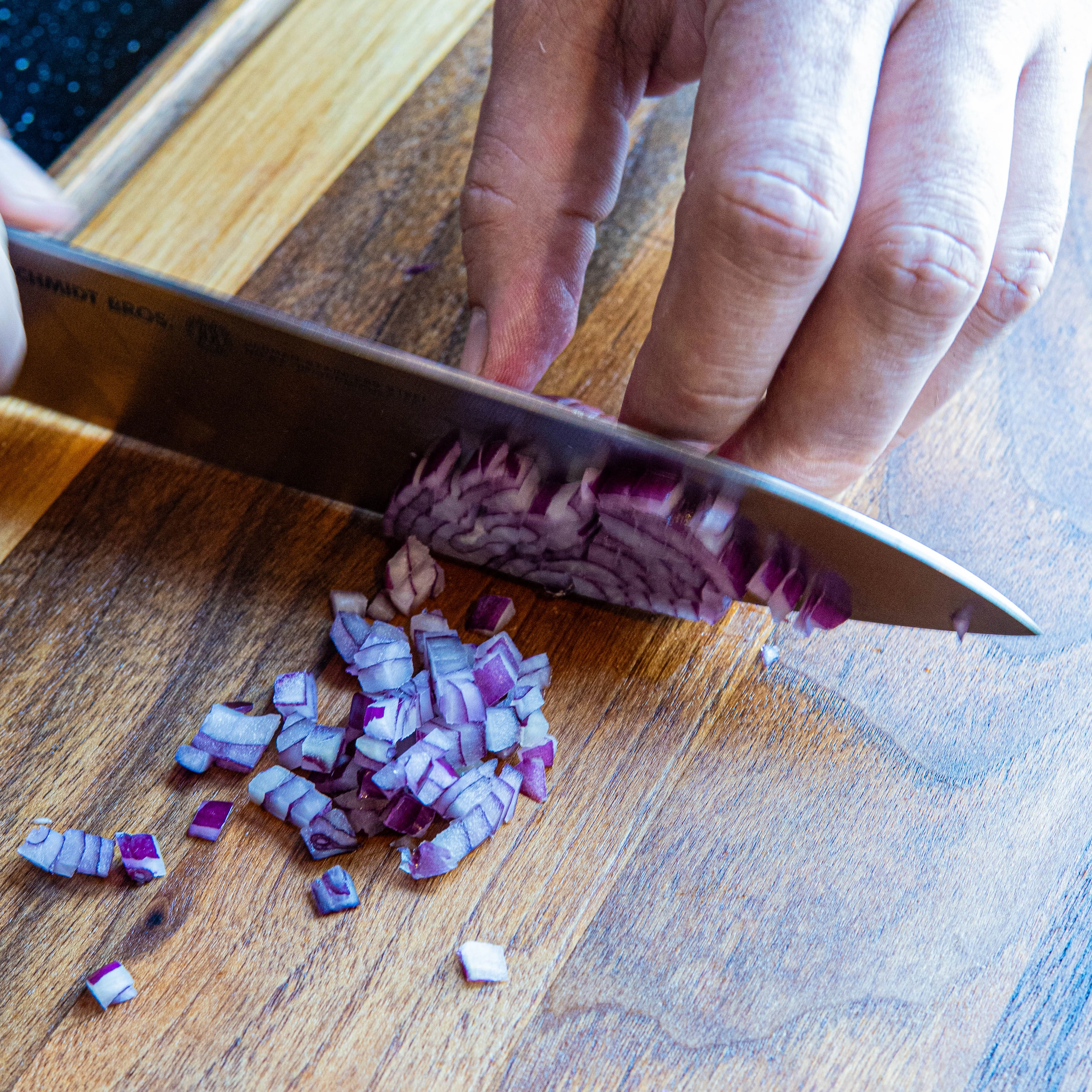
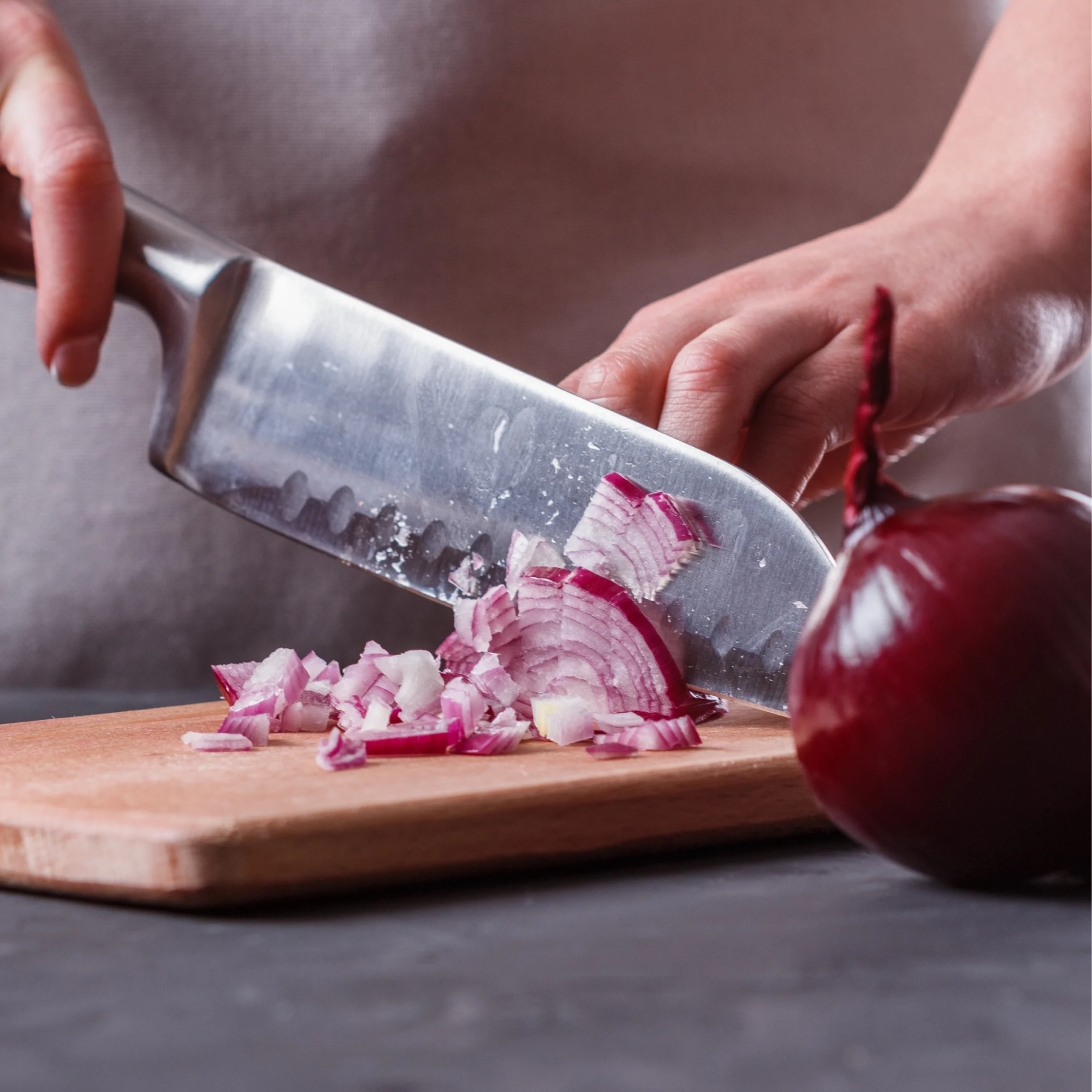
You may have gone through wearing protective gear like goggles to wear, or even placing a wet tissue paper beside your chopping board while you prepare your onions for the next step. Maybe you’ve even tried biting your spoon. However, the key to tear-less onion cutting really rests on this—making sure that your knife is sharp enough.
A razor-sharp tool is actually both helpful to you and your bulb. When you’re easily able to slice, dice, or chop your onions, you’re causing less damage to its flesh. This also avoids the onion’s juices to leak and seep to your hands, the knife, chopping board, and even in the air. The longer it lingers, it will only irritate our eyes and noses even more. Yes, this is backed by Science. Besides, the faster you get this step ticked off of your kitchen prep, the less time you have to deal with this tearful action, right?
Why Chilling Onions Prevents Crying During Prep
Speed and efficiency can definitely do wonders for your onions, especially when you’re using a razor-sharp knife. But if you have a few minutes to spare during your kitchen prep hours, why not try popping an unpeeled bulb inside the freezer for 10 to 15 minutes? A 2022 study proves that in lower temperatures, an intact onion produces less sulfur. Delish has also peeled back the layers by testing the most commonly known hacks to save your tears while cutting onions, and this method has bested the rest by far.
Letting your onion chill is beneficial in two ways. First, considering the science of it all, it slows down the production of syn-propanethial-s-oxide a.k.a. its gassy defense that makes you cry. Second, giving it time to chill also improves the firmness of the bulb, making it easier for us to transform it to our liking.
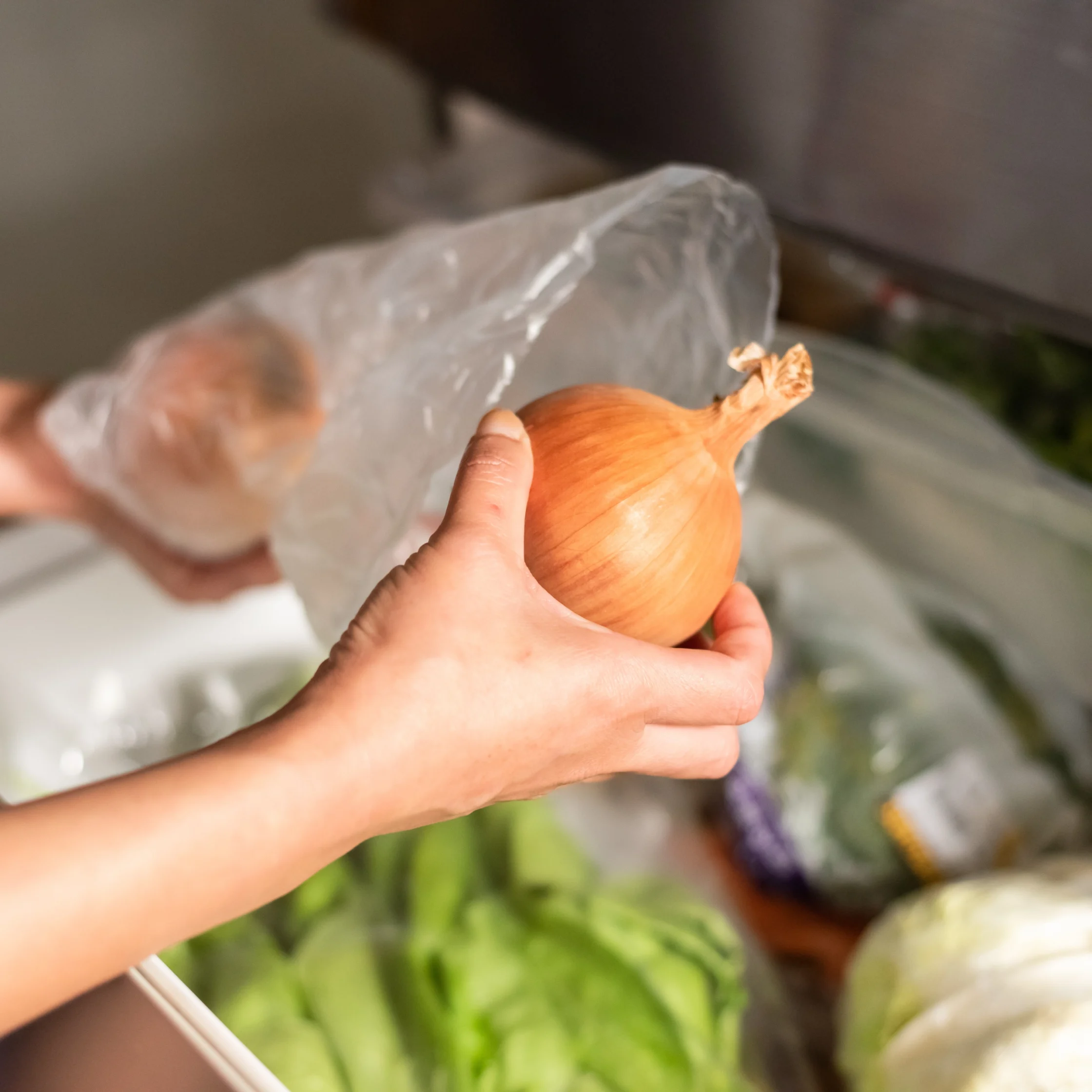
There are also alternatives to freezing your onion. Soaking or washing your peeled bulb is an option that may work for you especially if you’re after a milder taste to your dish. You can also refrigerate your unpeeled onions to tame its tearing effect, but keep in mind to use an airtight container to foolproof your fridge.
Top Onion Cuts and Techniques for Tear-Free Cooking
Cutting an onion with less tears is truly a combo of technique, type of cut, and temperature.
And if you’re one to store your alliums just in the pantry, it’s recommended that you turn your bulbs into rings and square shapes right away as working with them quickly produces less sulfur. That circles back to our first tip of having a reliable knife in the subject of onion cutting.
Our universal need for this allium does speak for how varied our ways can be when it comes to cutting and storing them. But it’s not that surprising that we don’t have it exactly pinned down just yet. After all, isn’t it in the nature of an onion to keep us peeled to their wonder one layer at a time?

Frequently Asked Questions
When an onion is cut, its cells break open and release enzymes that create a gas called syn-propanethial-s-oxide. When this gas reaches your eyes, it causes irritation and triggers tears.
Not completely. Onions naturally release tear-inducing compounds when cut, but certain techniques can greatly reduce the irritation.
Using a very sharp knife is one of the most effective methods because it slices cleanly through the onion and causes less cell damage.
Yes. Placing an unpeeled onion in the freezer for 10 to 15 minutes can help reduce the sulfur compounds released when cutting.
Yes. Washing or soaking peeled onions may help reduce irritation and can also mellow their flavor.