


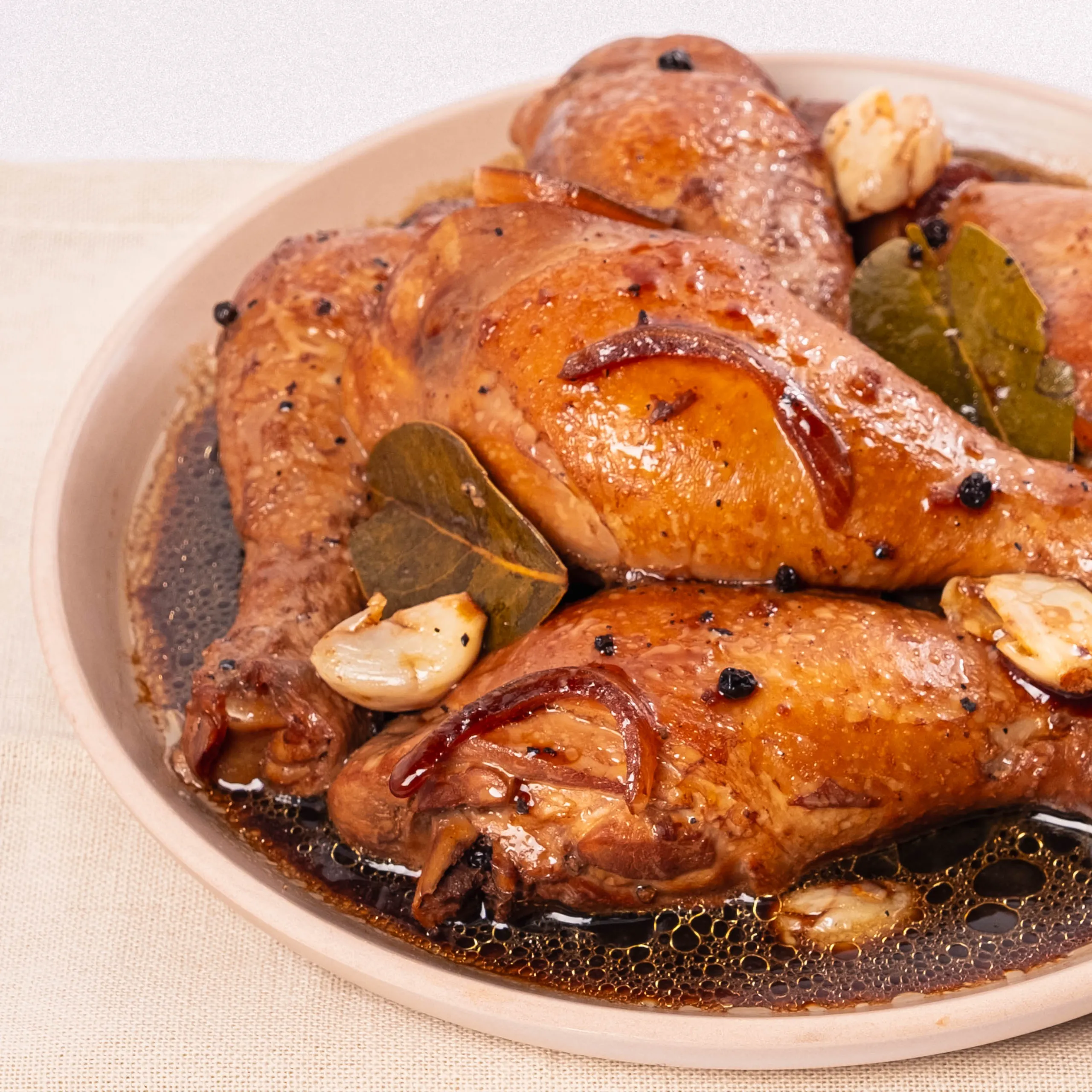
Considered a favorite comfort food by many Pinoys, Chicken Adobo is known for its savory, tangy, and slightly sweet sauce. Its aroma transports any Filipino back home—to their dining table, surrounded by loved ones.
Chicken adobo is made by simmering pieces of chicken in soy sauce, vinegar, garlic, peppercorns, and bay leaves until tender and deeply flavorful. The soy sauce and vinegar mixture reduces into a rich, savory sauce that pairs perfectly with steamed rice.
Using ingredients found in Filipino pantries, chicken adobo is a simple and budget-friendly dish that gets even better the next day as its flavors continue to develop.
A Little History of Adobo
Adobo is one of the most recognizable dishes in Filipino cuisine, but its history is more interesting than simply being a “Spanish dish.” The Spanish colonizers encountered Filipino cooking methods that involved cooking meat with vinegar and other acidic or salty ingredients. They used the Spanish word adobo, which generally referred to a method of marinating or seasoning food.
The Filipino version developed independently according to local ingredients and cooking traditions. Vinegar was particularly useful in the Philippines because its acidity helped preserve food in a tropical climate. Soy sauce became especially common later, adding the dark color and savory depth that many people now associate with adobo.
Over generations, countless regional and family versions emerged. Some are darker and saltier, some are heavy on vinegar, others are slightly sweet, and some contain coconut milk, chili, or other local ingredients. There isn’t really one single “correct” adobo—the beauty of the dish is how each Filipino family can have its own version.
Recipe Tips
- Don’t stir the vinegar immediately after adding it. This traditional technique helps prevent a harsh acidic taste.
- For deeper flavor, marinate the chicken in soy sauce and garlic for 30 minutes before cooking.
- Brown the chicken first to add extra richness to the sauce. Taking the time to sear the chicken pieces before simmering them creates an added layer of flavor.
- If you prefer a thicker sauce, simmer the adobo uncovered for a longer period. It tastes even better the next day because the flavors continue to develop overnight.
Substitutions
- You may use different chicken cuts for adobo. Chicken thighs, wings, or a whole cut-up chicken work well in place of drumsticks. You can also add chicken liver and chicken heart, if desired. Add them later in the cooking process, as chicken liver can break apart and chicken hearts can become tough when overcooked.
- For the soy sauce, you can also use low-sodium variety if you prefer a less salty dish.
- Cane vinegar is traditionally used in adobo, but white vinegar or apple cider vinegar also work well.
- While some cooks skip the brown sugar, its addition helps balance the dish’s flavors. You may also substitute it with honey or coconut sugar.
- Not a fan of onions in your adobo? Shallots can be used instead for a slightly sweeter flavor.
What To Serve This With
Chicken adobo is best served with steamed white rice, garlic fried rice, pickled papaya (atchara), stir-fried vegetables, fried eggplant, salted egg and tomato, or a simple cucumber and tomato salad.
Ready to try a different adobo recipe? Check out our Chicken Adobo with Kapeng Barako for a twist on this all-time favorite Pinoy classic!
What Makes Adobo Special?
The magic of adobo comes from the balance between saltiness, acidity, richness, and aroma.
Soy sauce provides deep umami and saltiness. Vinegar cuts through that richness with its acidity. Garlic and peppercorns provide warmth and fragrance, while bay leaves contribute a subtle herbal note. Brown sugar rounds everything out without necessarily making the dish taste sweet.
The cooking process matters just as much as the ingredients. As the liquid simmers and reduces, the flavors become concentrated and cling to the chicken. The result is a sauce that can taste surprisingly complex despite being made from everyday pantry ingredients.
Adobo also demonstrates something wonderful about Filipino cooking: preservation and practicality can become deliciousness. Ingredients that were useful for keeping food longer—particularly vinegar and salt—became part of a dish that is now deeply embedded in Filipino food culture.
Is Chicken Adobo Healthy?
Chicken adobo can be a good source of protein, particularly when made with chicken. Garlic and onions also contribute small amounts of vitamins, minerals, and beneficial plant compounds. If you serve it with vegetables and a moderate portion of rice, it can easily fit into a balanced meal.
The main thing to watch is sodium, since soy sauce is naturally high in salt. Chicken skin also adds additional fat and calories.
For a lighter version, you can use skinless chicken, reduce the amount of soy sauce, choose a lower-sodium variety, and increase the amount of garlic, onion, and other vegetables. You can also skim excess fat from the sauce after cooking.
That said, there’s no need to make every batch of adobo “diet food.” Enjoying a traditional version occasionally as part of a balanced diet is perfectly reasonable.
A Few Ways to Enjoy Adobo
The most traditional and satisfying pairing is simple: hot adobo over steamed white rice. The rice absorbs the salty, tangy sauce beautifully.
For leftovers, you can shred the chicken and use it in sandwiches, rice bowls, fried rice, or even wraps. Some people deliberately cook a large batch because adobo is one of those dishes that can become even more enjoyable after a night in the refrigerator.
You can also serve it alongside simple vegetables such as steamed kangkong, pechay, sautéed green beans, or a fresh tomato and onion salad. Their freshness provides a nice contrast to the rich sauce.
Final Thoughts
Chicken adobo is proof that a great dish doesn’t need dozens of ingredients or complicated techniques. A few simple staples—chicken, vinegar, soy sauce, garlic, peppercorns, and bay leaves—can create something deeply flavorful and comforting.
What makes adobo particularly special is that it belongs to everyone. One family may prefer it salty and dark, another may make it sweeter, while another might add coconut milk or chili. Those differences aren’t flaws; they’re part of what makes Filipino food so personal.
So don’t be afraid to adjust the balance to suit your taste. Let the vinegar mellow, allow the chicken to become tender, reduce the sauce until it’s glossy and flavorful, and serve it with plenty of rice. When that first spoonful of sauce soaks into the rice, you’ll understand why chicken adobo has remained such a beloved Filipino favorite.