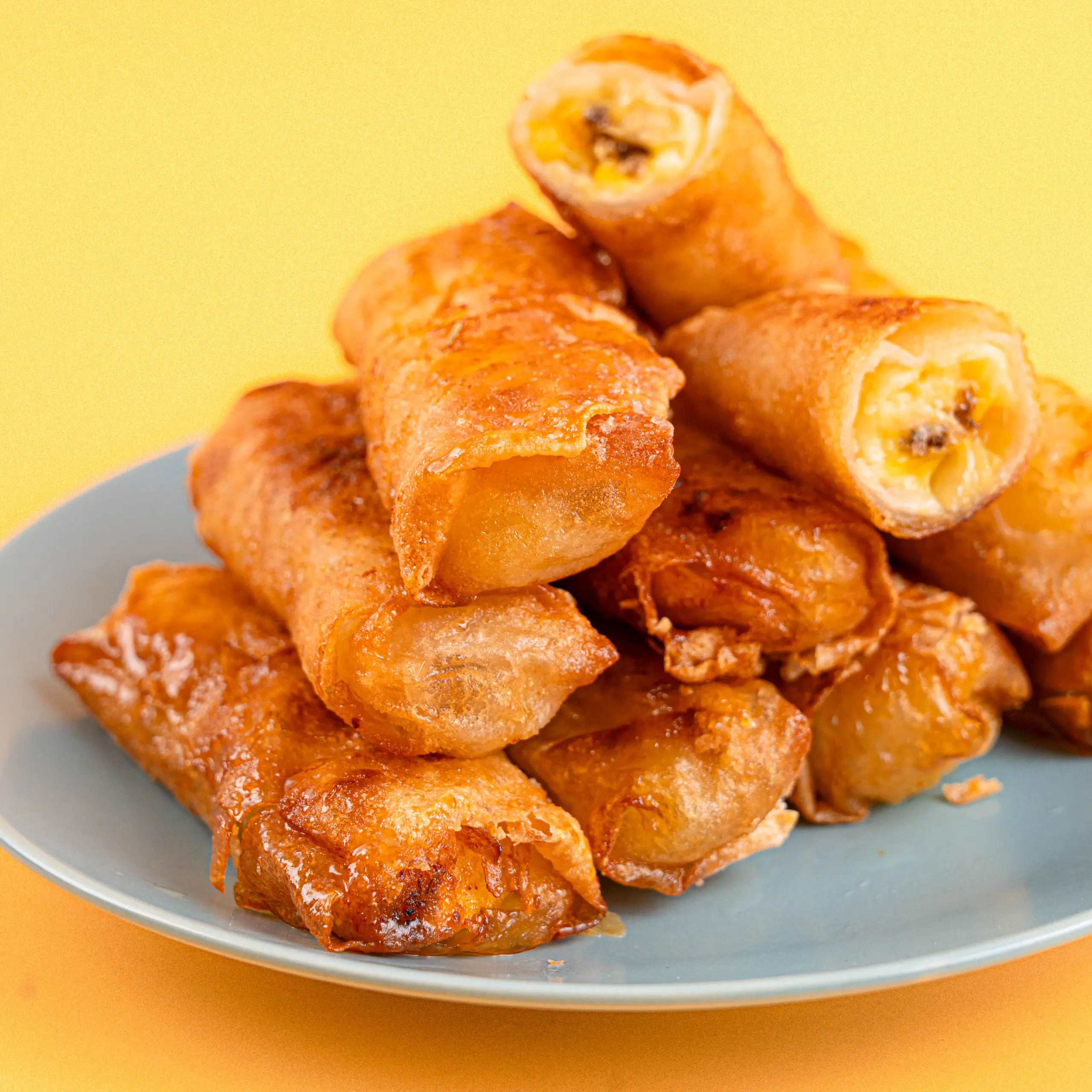


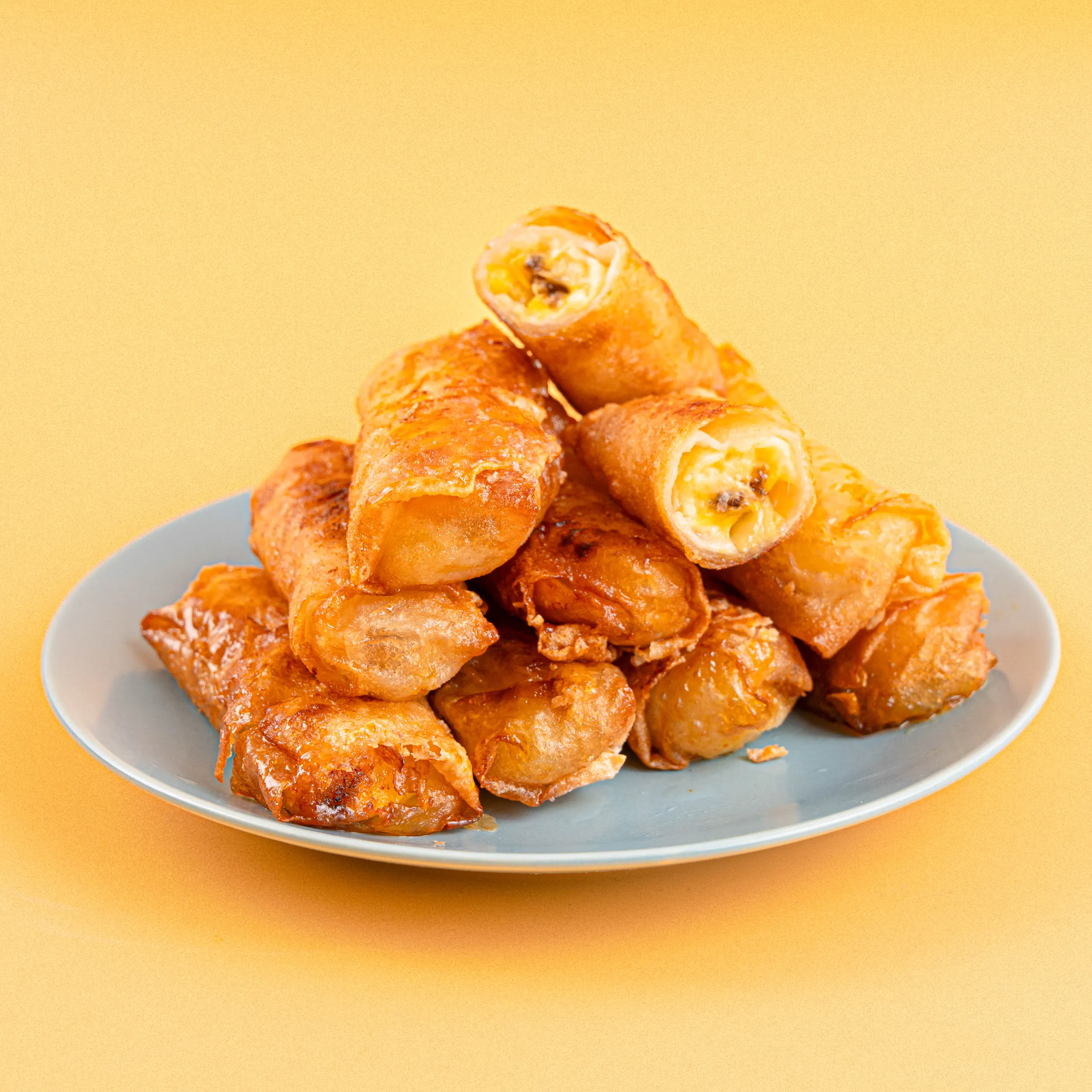
Turon is one of those Filipino snacks that can instantly bring back memories of afternoons at home, school canteens, neighborhood stores, and roadside food stalls. The familiar combination of sweet saba banana, fragrant jack fruit, crisp golden wrapper, and caramelized sugar creates a snack that is simple enough for everyday cooking but satisfying enough to feel like a special treat.
What makes turon so appealing is the contrast between its textures. The outside becomes thin, crisp, and beautifully golden as it fries, while the banana inside becomes soft and sweet. Strips of jack fruit add a distinctly tropical aroma and another layer of sweetness. The caramelized sugar coating then ties everything together, giving the finished turon its characteristic glossy, crunchy exterior.
Turon is also a wonderful example of Filipino creativity in the kitchen. It takes ingredients that are relatively inexpensive and easy to find and turns them into something that feels indulgent. A saba banana on its own is already nutritious and filling, but wrapping it with jack fruit and frying it until golden transforms it into one of the Philippines’ most recognizable merienda foods.
Although turon is commonly associated with street food and everyday snacks, it is also a dish that many families prepare at home. The recipe is flexible enough to accommodate different fillings and levels of sweetness, which means every household can develop its own preferred version.
History and Cultural Background
Turon’s history is closely connected to the Filipino tradition of merienda, or the small meals and snacks enjoyed between the main meals of the day. In the Philippines, merienda is much more than simply eating because one is hungry. It is a social habit and an important part of everyday life, giving families, friends, students, and workers an opportunity to pause and enjoy something together.
Turon developed as a practical and creative way of preparing saba bananas. Saba is particularly well suited to cooking because it remains relatively firm compared with ordinary dessert bananas. It can be boiled, steamed, grilled, fried, or incorporated into both sweet and savory dishes.
The addition of jack fruit makes the snack even more distinctly Filipino. Ripe jack fruit has an intense tropical fragrance and naturally sweet flavor that pairs exceptionally well with cooked banana.
The spring roll wrapper reflects the broader influence of Southeast and East Asian food traditions on Filipino cuisine. Filipino cooks have incorporated wrappers into many preparations and adapted them to local ingredients and tastes. In turon, the wrapper becomes thin and crisp when fried, creating a contrast with the soft fruit inside.
The caramelized sugar coating is another important part of the dish. Rather than simply sprinkling sugar over the finished banana roll, the sugar is cooked in the frying process until it melts and clings to the wrapper. This creates the characteristic sweet, brittle coating that makes a freshly prepared turon so enjoyable.
Like many beloved Filipino foods, turon does not have one universally fixed recipe. Some cooks use only banana, while others add jack fruit. Some make it lightly sweet, while others prefer a heavily caramelized coating. Modern versions may include cheese, coconut, chocolate, sesame seeds, or other fillings.
The recipe presented here keeps the classic banana-and-jack fruit combination while using a small amount of cornstarch and water to create an optional caramel sauce that can be used to finish the turon.
Understanding the Ingredients
Saba banana
Saba is the ideal banana for turon because it is firmer and starchier than many ordinary dessert bananas. It holds its shape well during frying while becoming soft and naturally sweet inside.
The bananas should be ripe enough to have developed sweetness and flavor but still firm enough to handle without falling apart. Extremely soft bananas can be difficult to wrap and may release too much moisture during frying.
Saba is also particularly important to Filipino cuisine because it can be used in many different ways. It appears in desserts, snacks, stews, boiled preparations, and sweetened dishes.
Jackfruit
Jackfruit, or langka, contributes a strong tropical aroma and a sweet, slightly chewy texture.
Only a relatively small amount is needed because its flavor is concentrated. The jack fruit should be cut into thin strips so that it can be distributed evenly inside each turon.
Fresh ripe jack fruit is wonderful when available, but canned jack fruit in syrup can also be used after being drained thoroughly.
Spring roll wrappers
The wrapper provides the crispy shell that makes turon so distinctive.
Keep the wrappers covered with a clean, slightly damp kitchen towel while assembling the rolls so they do not dry out. Dried wrappers become brittle and can crack when folded.
Sugar
Sugar serves two purposes: it sweetens the fruit and creates the caramelized exterior.
White granulated sugar is convenient because it melts predictably and produces a clean caramel flavor.
Cornstarch
Cornstarch is used to thicken the optional sugar mixture. It helps create a syrupy coating that can cling to the finished turon.
Water
A small amount of water helps dissolve the cornstarch and sugar mixture before it is cooked. Because only a little water is needed, the final sauce can thicken relatively quickly.
Oil
A neutral cooking oil is best because it allows the banana and jack fruit flavors to remain the focus. Vegetable, canola, sunflower, or another neutral frying oil can work well.
Recipe Tips
- Choose firm, ripe saba. Very soft bananas can break apart during wrapping and frying.
- Do not overfill the wrappers. A modest amount of fruit produces a cleaner, crispier roll.
- Keep wrappers covered. Dried wrappers crack easily and are difficult to seal.
- Drain canned jack fruit well. Excess syrup can make the wrappers wet and difficult to fry properly.
- Seal every roll carefully. A loose seam can open in the hot oil.
- Maintain moderate oil temperature. Extremely hot oil can burn the wrapper before the fruit has warmed through.
- Do not overcrowd the pan. Frying too many pieces at once lowers the oil temperature and can make turon greasy.
- Use a neutral oil. Strongly flavored oils can interfere with the taste of the banana and jack fruit.
- Watch the sugar carefully. Caramel can burn quickly once it reaches a high temperature.
- Use a wire rack when possible. It keeps the fried wrappers crisp by allowing excess oil to drain.
- Serve soon after frying. Turon gradually loses its crispness as it sits.
- Be careful with hot caramel. Melted sugar is much hotter than boiling water and can cause serious burns.
Ingredient Substitutions
Saba banana
If saba is unavailable, plantain is the closest practical substitute. It has a similar firm texture and can withstand frying.
Ordinary dessert bananas can technically be used, but they are softer and more likely to become mushy. They also contain more moisture, so the result will not have exactly the same texture.
Jackfruit
Jackfruit can be omitted entirely if you prefer banana-only turon.
Other possible fillings include thin strips of mango, sweetened coconut, or even a small amount of cheese, although these create variations rather than the classic banana-and-jack fruit combination.
Spring roll wrappers
If Filipino-style spring roll wrappers are unavailable, other thin wrappers suitable for frying may work. However, avoid thick wrappers because they can become heavy and chewy rather than light and crisp.
White sugar
Brown sugar can be used for a deeper caramel flavor. It may produce a darker coating and a slightly molasses-like taste.
Coconut sugar is another option, although it will produce a more distinctive flavor and darker color.
Cornstarch
If you do not have cornstarch, you can make the caramel without it by melting sugar carefully with a small amount of water. The texture will be different, but the turon will still be delicious.
Cooking oil
Use a neutral oil with a suitable frying temperature, such as canola, vegetable, sunflower, or peanut oil if there are no allergy concerns.
Knowledge About Turon and Filipino Food Culture
Turon is much more than a fried banana. It represents an important part of Filipino everyday food culture: merienda.
Merienda is the tradition of having a small meal or snack between the major meals of the day. Filipino merienda can include almost anything from bread and noodles to rice cakes, fried snacks, fruit, or sweet drinks.
Turon became especially popular because it is inexpensive to prepare, easy to carry, and satisfying. It can be sold individually at street stalls, school canteens, markets, neighborhood stores, and food stands.
The use of saba is another important cultural element. Saba is one of the Philippines’ most versatile bananas and is particularly well suited to cooking. Its firm flesh allows it to withstand heat without completely falling apart.
Jackfruit adds another unmistakably tropical element. The fruit is naturally fragrant and sweet, so even a small amount can make the filling much more aromatic.
The wrapper is equally important. Before frying, it is delicate and flexible; after frying, it becomes crisp and brittle. That transformation is what gives turon its satisfying texture.
Perhaps the most interesting part of turon is the caramel. Sugar placed in or around the frying process melts and adheres to the wrapper, creating a thin, shiny, crunchy coating. When done correctly, it provides a pleasant crackle when you bite into the snack.
Modern Filipino cooks have also become creative with turon. You may encounter versions containing cheese, chocolate, sesame seeds, coconut, mango, or other fillings. These variations show how traditional foods continue to evolve while retaining their recognizable foundation.
Health Benefits and Nutritional Information
Turon is best thought of as an occasional sweet snack rather than a health food because it is deep-fried and contains added sugar. However, its main fruit ingredients do provide valuable nutrients.
Saba banana
Saba provides carbohydrates, which are an important source of energy. It also contains potassium, vitamin B6, fiber, and other nutrients.
Because saba is naturally starchy and filling, it provides more substance than many very soft dessert bananas.
Jackfruit
Jackfruit contributes vitamin C, fiber, and various plant compounds. It also provides natural carbohydrates and sweetness.
The amount used in turon is relatively small, so its nutritional contribution should be viewed as complementary rather than the primary reason to eat the snack.
Sugar
Sugar provides energy but little nutritional value beyond calories. The caramel coating is responsible for much of turon’s characteristic sweetness, so portion size is worth considering.
Cooking oil
Oil is necessary for achieving the crisp texture associated with turon, but deep frying increases the calorie and fat content of the snack.
Using properly heated oil and draining the finished turon well can help reduce excessive oil absorption.
Cornstarch
Cornstarch is used in a small amount and primarily serves a textural purpose by helping thicken the caramel mixture.
Making turon a more balanced treat
Turon can be enjoyed as part of a balanced diet when eaten in moderation. Because it contains fruit, it offers some nutrients that a purely sugar-based dessert would not provide.
If you are preparing it at home, you can control the amount of sugar and filling, and you can avoid excessively large portions.
For a lighter variation, you can experiment with baking or air-frying the wrapped banana, although the texture will differ from traditional deep-fried turon.
Final Words
Turon is a beautiful example of Filipino cooking at its most approachable. It takes a few familiar ingredients—saba banana, jack fruit, sugar, and a spring roll wrapper—and transforms them into a snack with layers of flavor and texture. The crisp wrapper, soft banana, fragrant jack fruit, and caramelized sugar work together in a way that makes the finished snack far more memorable than its simple ingredient list suggests.
There is also something wonderfully nostalgic about turon. It is the sort of food that can be eaten while walking through a market, bought from a neighborhood vendor after school, served during an afternoon gathering, or prepared in a family kitchen when everyone wants something sweet. Its connection to merienda makes it part of the everyday rhythm of Filipino life.
At the same time, turon demonstrates the creativity of Filipino cooks. There is no need to stop with the classic recipe. The same basic technique can accommodate different fillings, sweetness levels, and cooking methods. Yet even with all the modern variations, the traditional combination of saba and jack fruit remains difficult to beat.
The secret to excellent turon is not complicated: choose firm ripe saba, keep the wrappers fresh, avoid overfilling, seal the rolls properly, maintain the right frying temperature, and treat the caramel with care. Most importantly, enjoy it while it is still warm and crisp.
In the end, turon is more than a fried banana snack. It is a small representation of Filipino food culture—resourceful, generous, adaptable, and deeply connected to the simple pleasure of sharing food. A freshly fried piece of turon, with its golden wrapper and sweet tropical filling, is a reminder that some of the most beloved dishes do not need to be complicated to become part of a country’s culinary identity.