Advertisement

The 7 Essential Kitchen Knives Every Home Cook Needs

Meet the essential knives every home cook should know—plus a few simple tools to keep them sharp and ready for action.

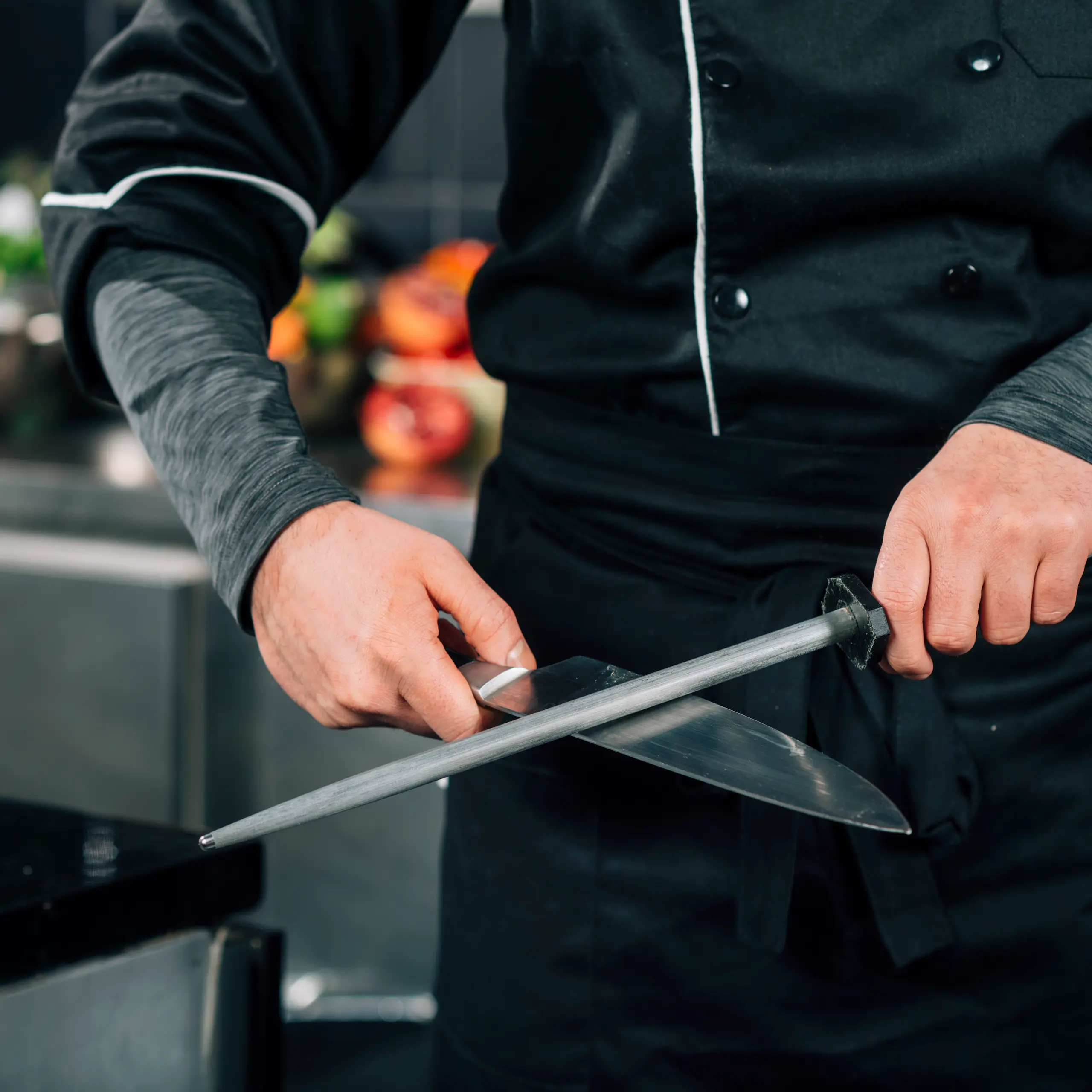
Chef sharpening a kitchen knife using a honing steel in a professional kitchen.
A dull knife can lead to accidents.

A good knife can completely change how cooking feels.

Tasks that once seemed slow or frustrating like dicing vegetables or slicing bread suddenly become smooth, efficient, and dare I say, fun. While there are dozens of specialty knives out there, most home cooks only need a handful of reliable blades to handle nearly everything in the kitchen.

The Cook’s Knife: Your All-Purpose Workhorse

The cook’s knife is a versatile, all-purpose kitchen knife with a wide blade and a slight curve that helps it to smoothly rock on the cutting board, making it ideal for lots of different tasks like chopping vegetables, slicing fruit, cutting meat, and mincing herbs.
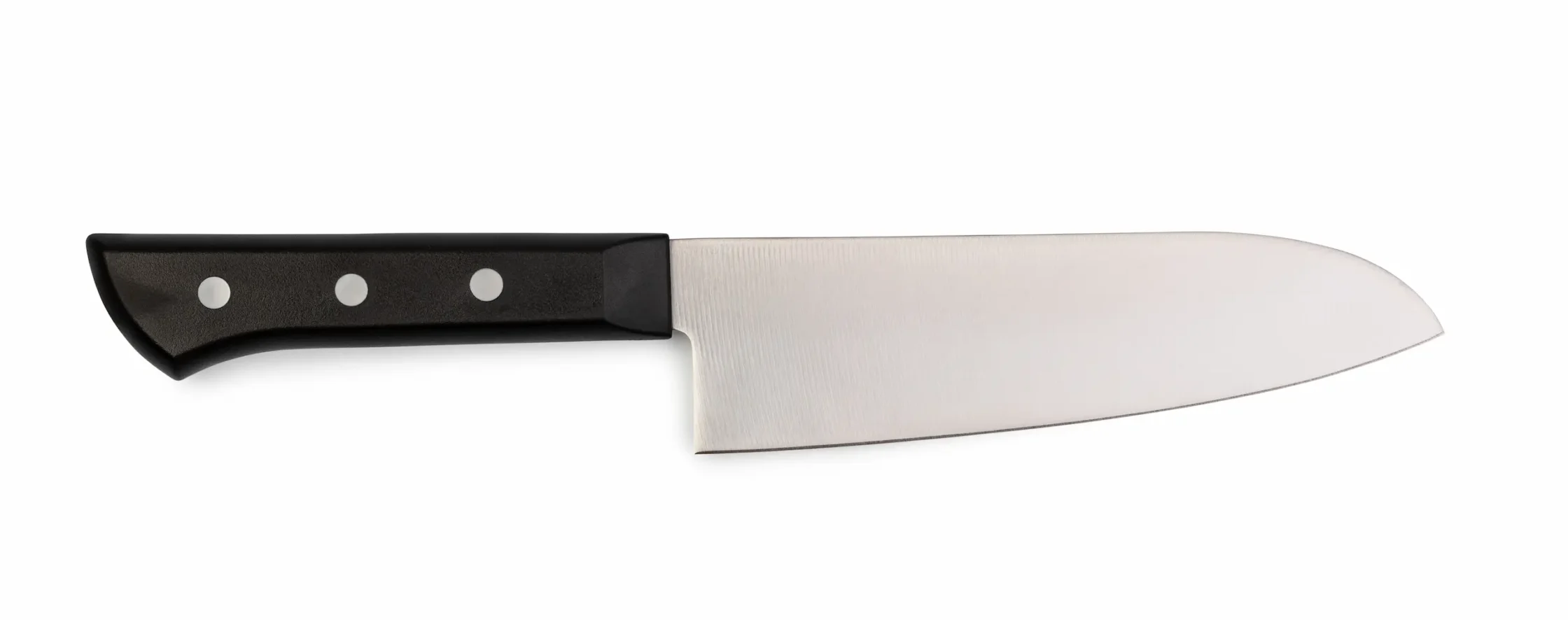
Cook's Knife with a wide blade and a slight curve
Cook’s Knife

If you want a single knife that can do a little bit of everything, this is a good one to have.

What is a Chef’s Knife Best Used For?

A chef’s knife is a larger, professional-style knife with a long, curved blade, and sharp pointed tip, designed for both power and precision.
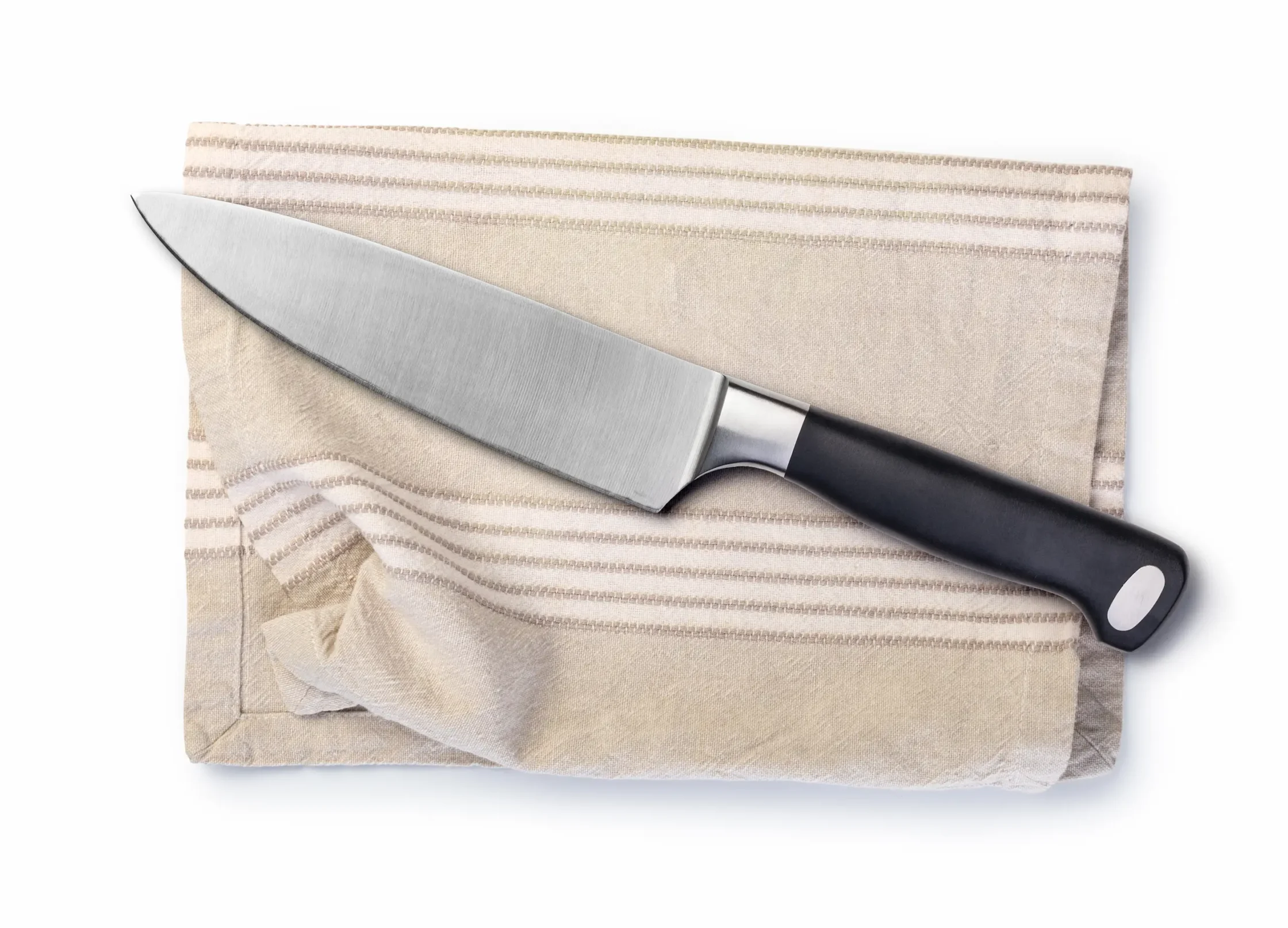
Chef's Knife with a long, curved blade, and sharp pointed tip
Chef’s Knife

This shape allows the user to make precise cuts with fast chopping motions, making it perfect for slicing, dicing, chopping, and even mincing.

Serrated Bread Knives for Clean Slicing

The bread knife features a long blade with a serrated edge, which helps grip and cut through tough surfaces without crushing whatever you’re slicing.
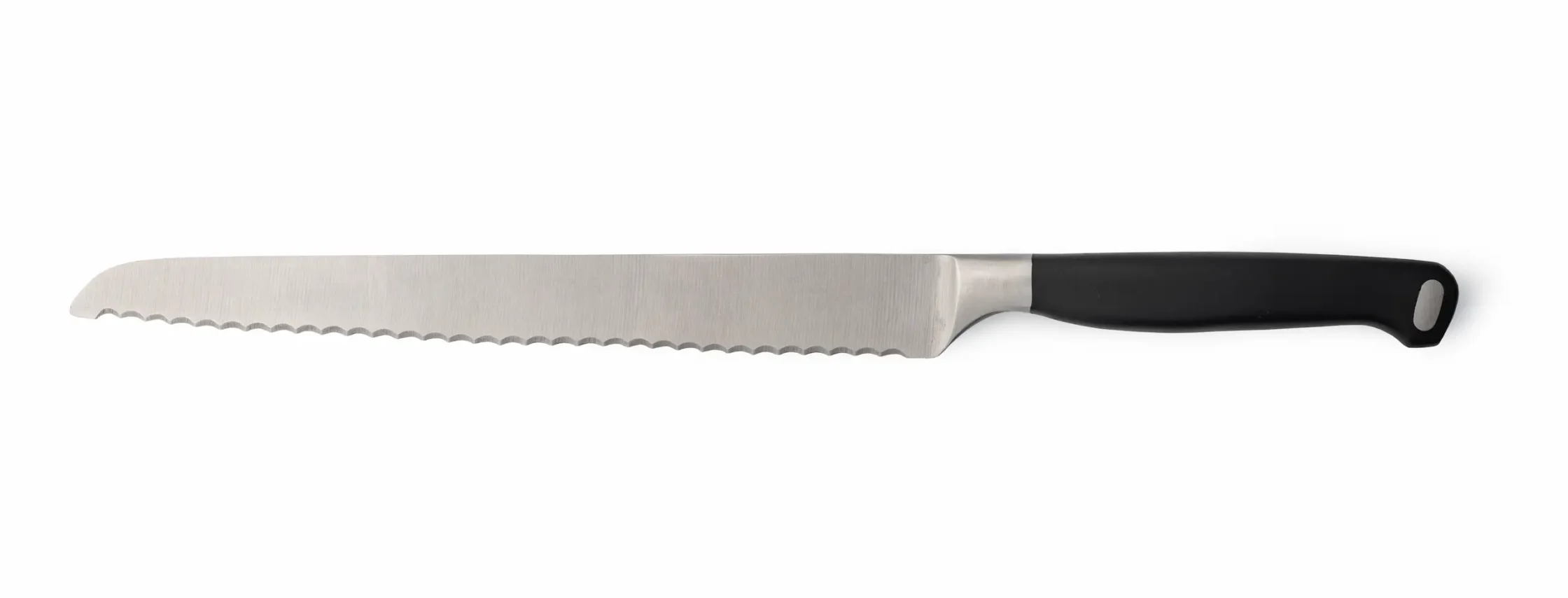
Bread Knife with a serrated edge
Bread Knife

It’s best for slicing bread, cakes, pastries, and even soft foods like tomatoes.

Prep Knives: The Bridge Between Size and Control

A prep knife is a medium-sized knife that sits between a chef’s knife and a paring knife, making it easy to handle and control.
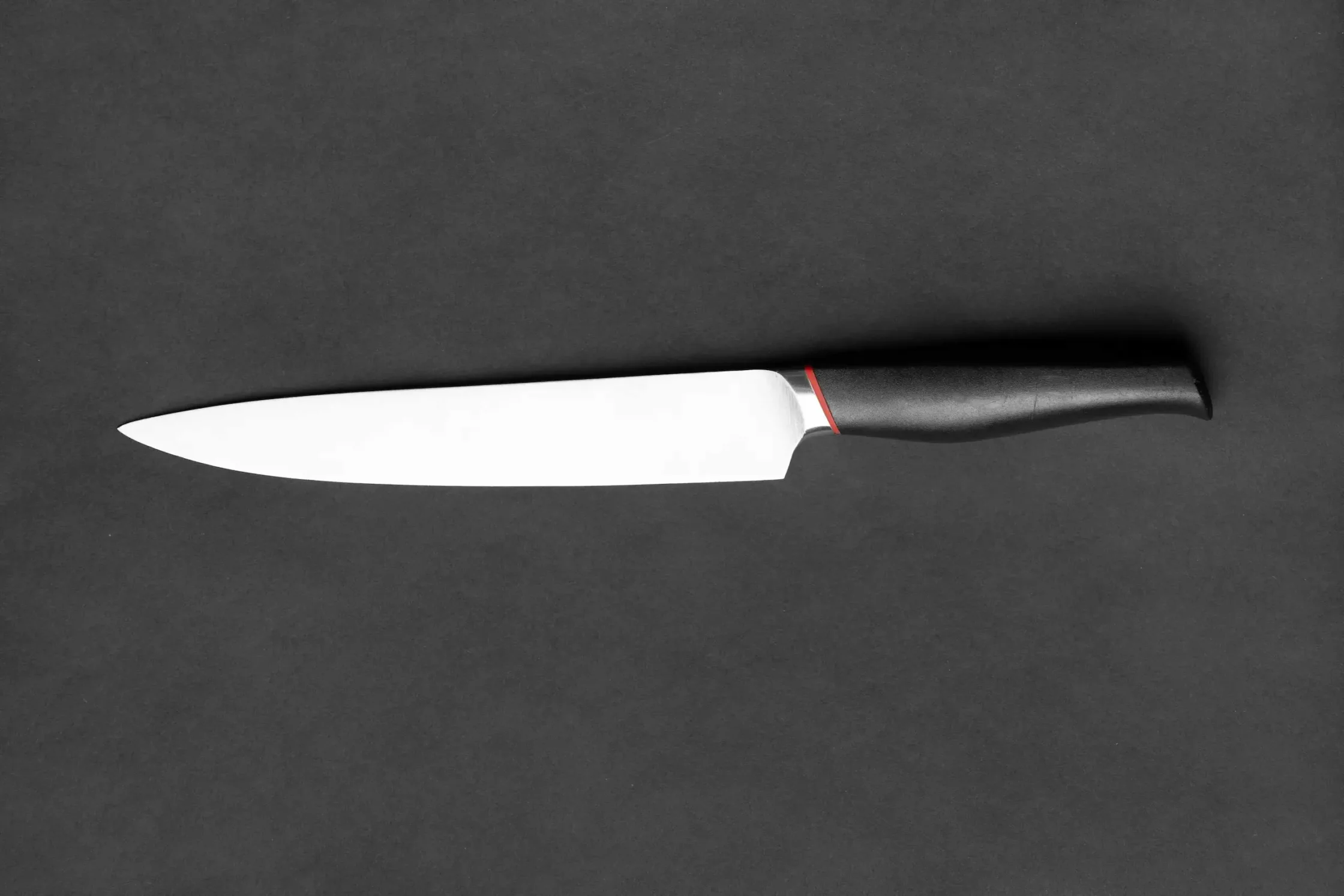
Prep Knife for cutting small vegetables, slicing fish, and preparing ingredients
Prep Knife

For many home cooks, this balanced and manageable knife is a favorite for cutting small vegetables, slicing fish, and preparing ingredients. 

Paring Knives for Delicate, Off-Board Tasks

The paring knife is the smallest and one of the most precise knives in the kitchen. Its short blade allows for detailed work where accuracy matters.
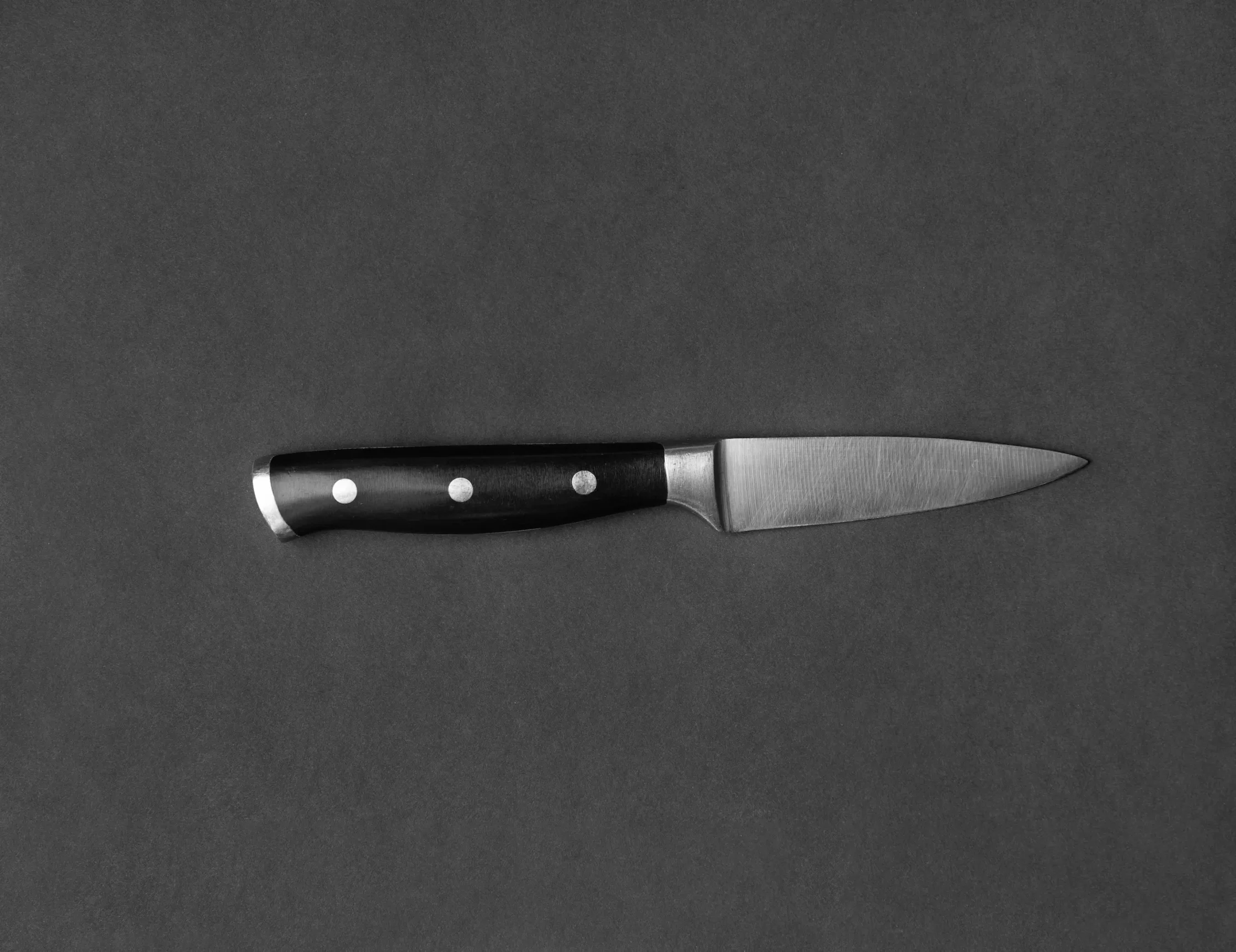
Paring Knife for tasks that require you to hold the food in your hand instead of cutting on a board, like peeling, trimming, or scoring
Paring Knife

Because of its size, it is often used for tasks that require you to hold the food in your hand instead of cutting on a board, like peeling, trimming, or scoring.

Steak Knives: Essential Tools for the Table

Unlike most kitchen knives, steak knives are the only ones designed for use at the dining table than in the kitchen.
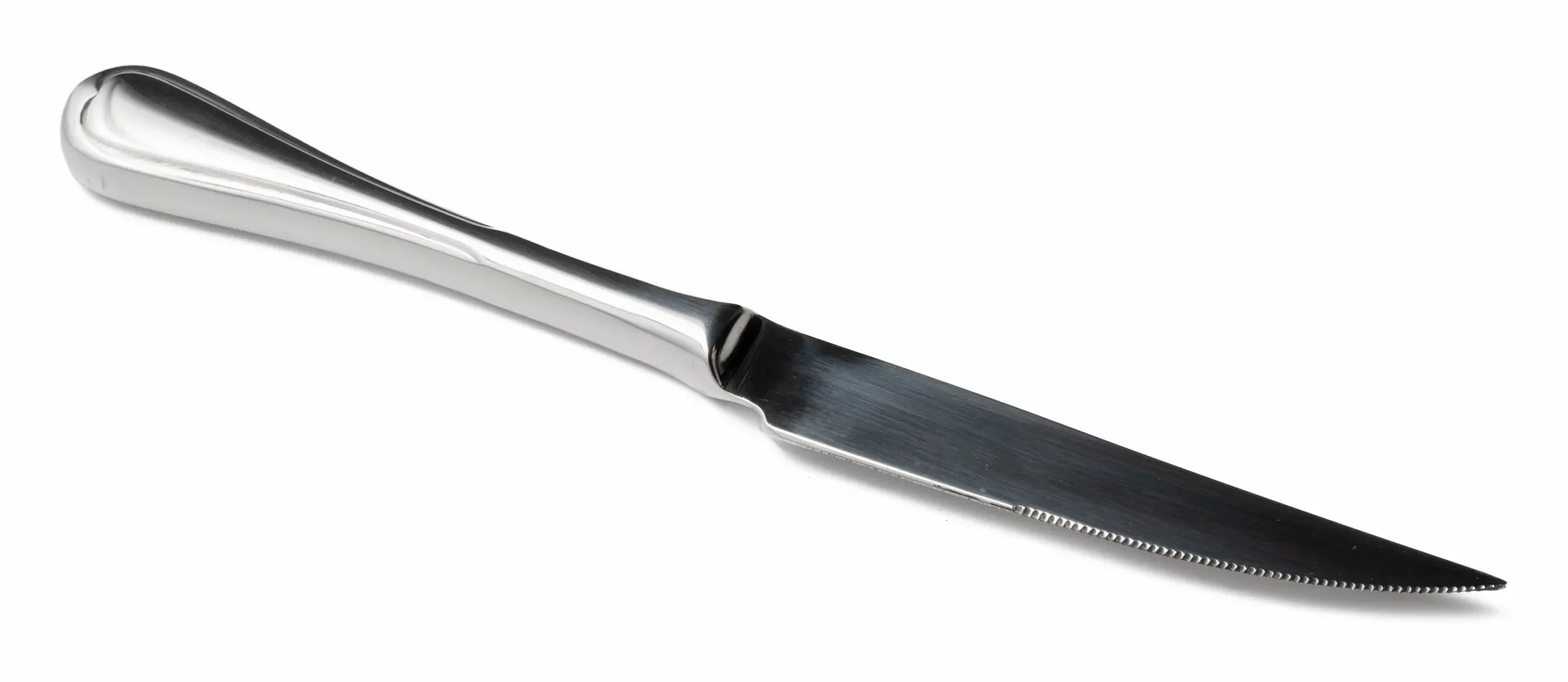
Steak Knife designed for use at the dining table than in the kitchen
Steak Knife

They’re designed to slice cleanly through cooked meats without tearing them apart, creating bite-sized pieces while keeping food neat on the plate.

Why the Utility Knife is an Everyday Essential

The utility knife is a slim, medium-sized knife that fills the gap between larger kitchen knives and small detail knives.
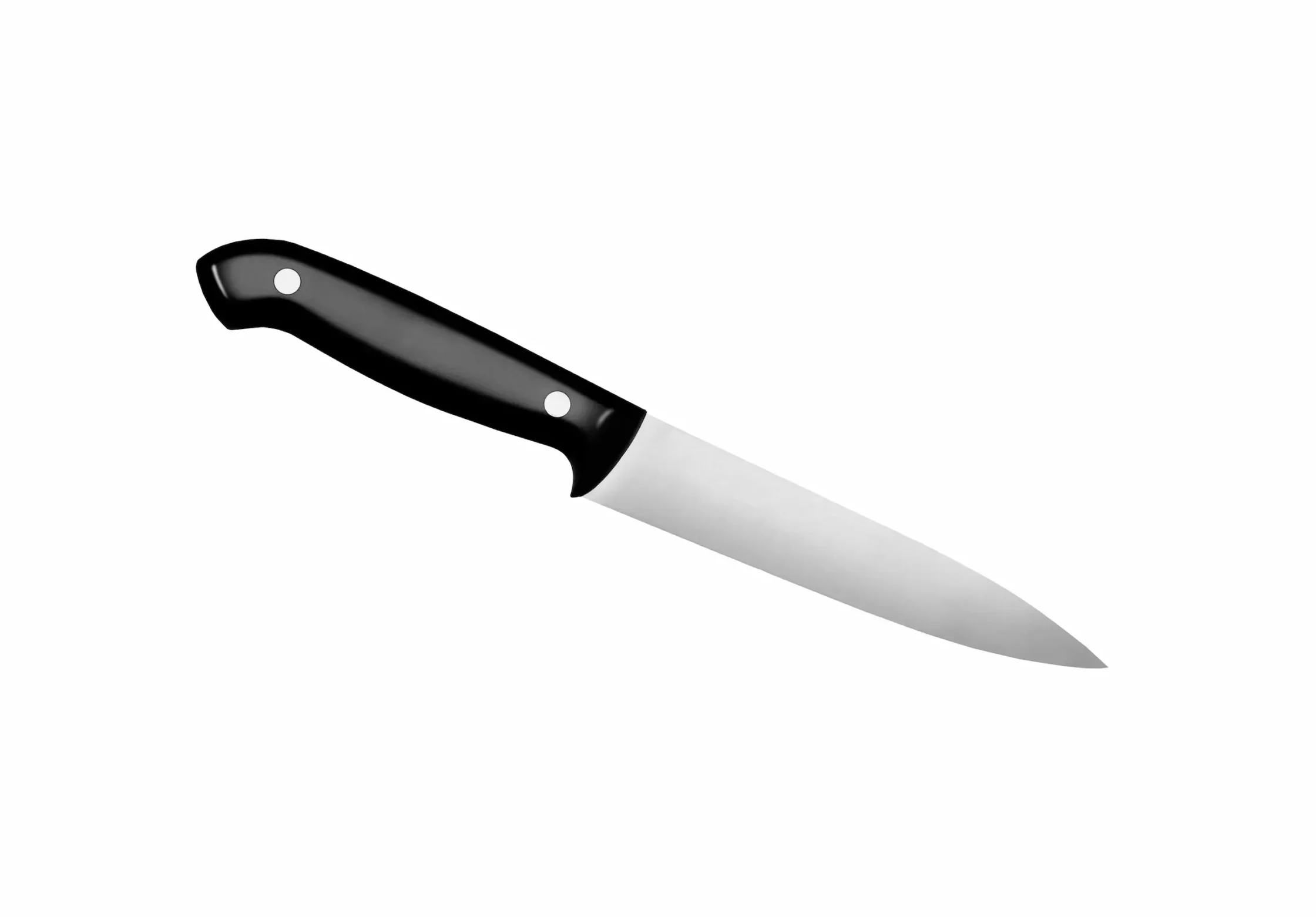
Utility Knife for everyday tasks like slicing sandwiches, cutting fruit, or trimming small cuts of meat
Utility Knife

Because it’s slim, lightweight, and easy to control, people often think of it as the go-to for everyday tasks like slicing sandwiches, cutting fruit, or trimming small cuts of meat.

How to Maintain and Sharpen Your Kitchen Blades

Now, even the best knife becomes dull over time. Keeping knives sharp not only makes cooking easier, but it also makes cutting safer.
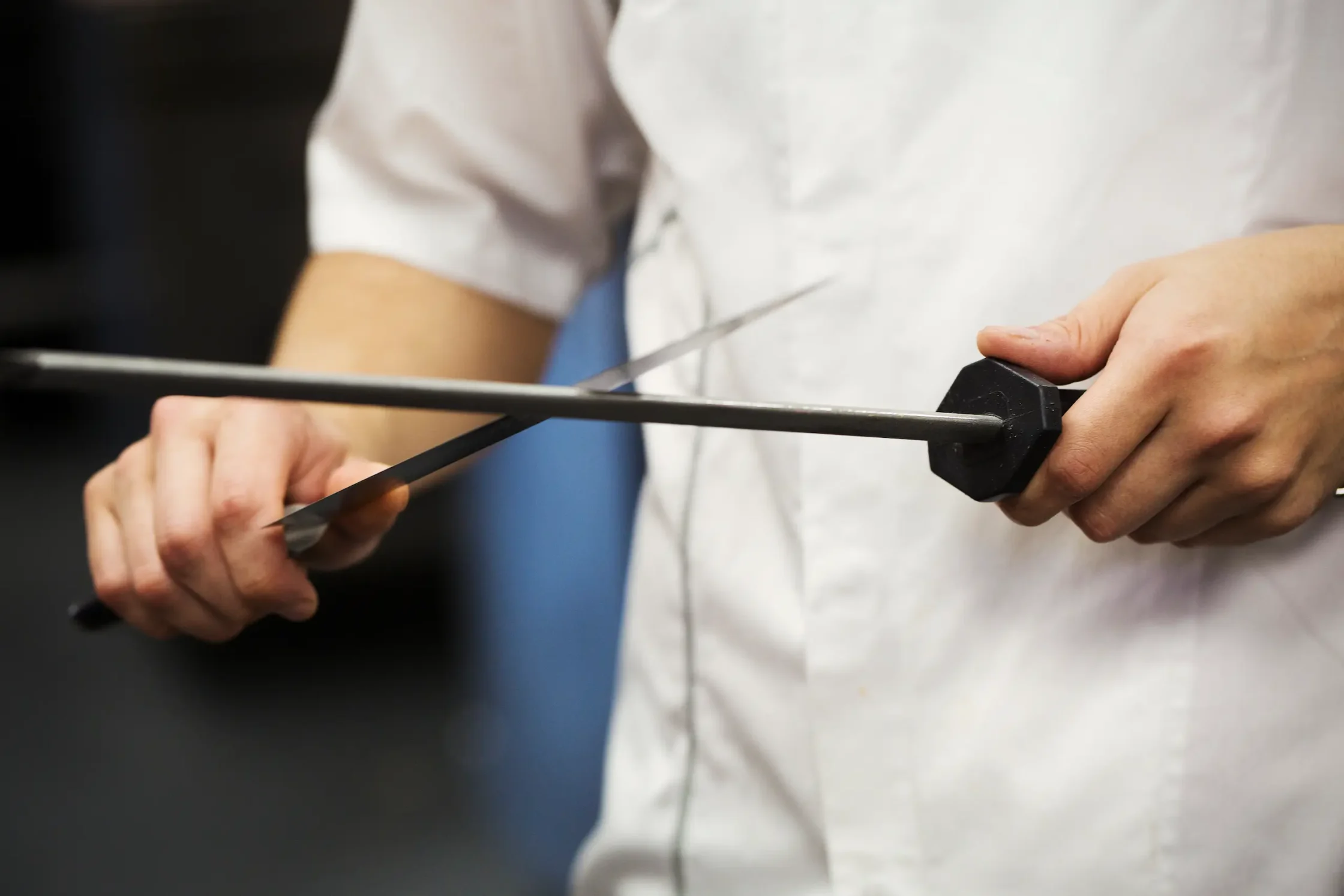
Honing Steel realigns the blade’s edge during regular use
Honing Steel

Two tools are essential for keeping knives performing their sharpest. A honing steel realigns the blade’s edge during regular use, while sharpening stones (or whetstones) restore a dull knife by creating a fresh, sharp edge.
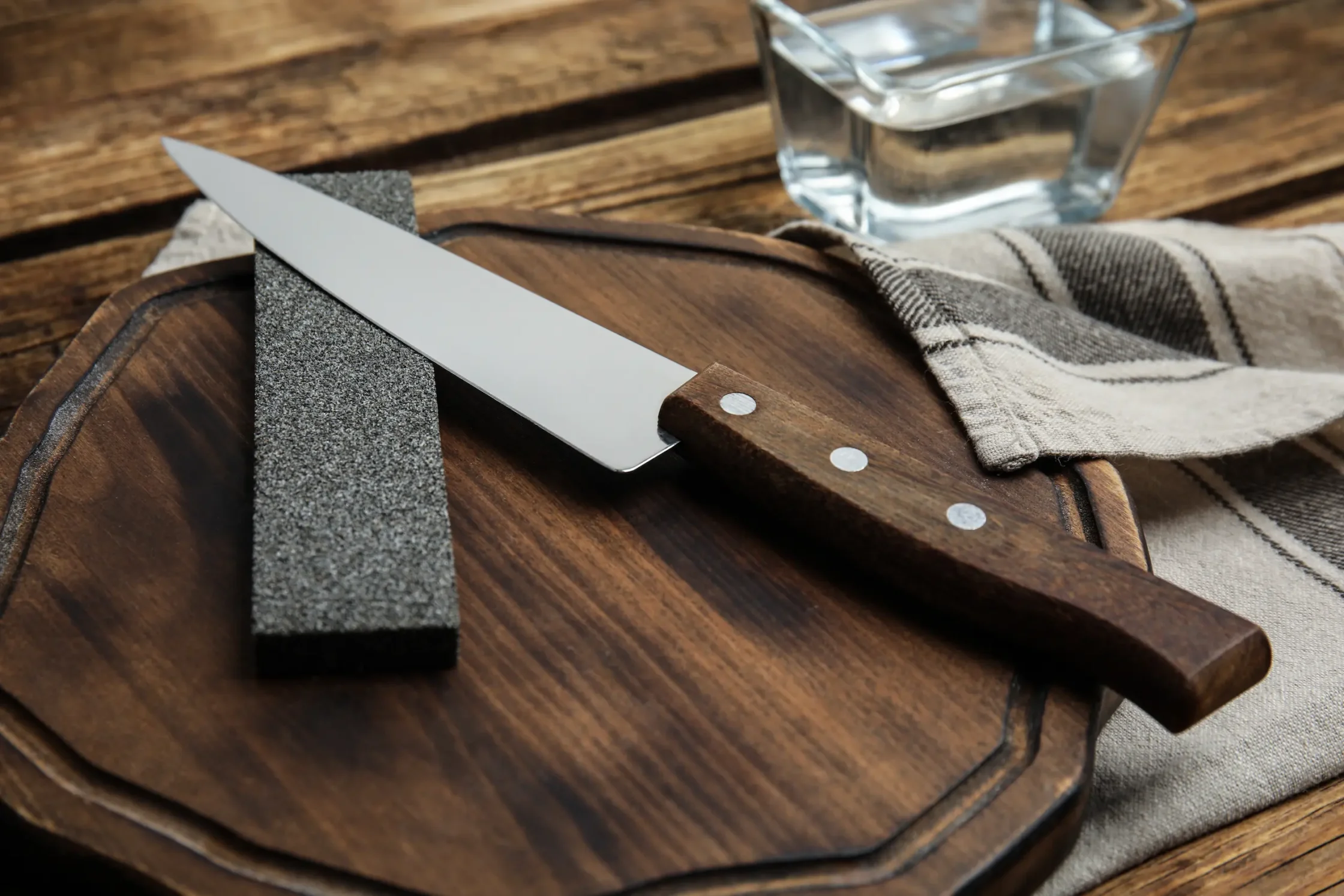
Sharpening Stone restores a dull knife by creating a fresh, sharp edge.
Sharpening Stone

With just a few well-chosen knives and proper maintenance, you can handle almost any task in the kitchen with ease. 

So next time you’re chopping veggies or slicing into a fresh loaf of bread, try reaching for the right knife, and see the difference for yourself. You might be surprised how much more fun cooking becomes when your tools are working with you, and not against you. 

author avatar
Paolo Elwick
Paolo is a food writer and storyteller exploring the intersections of food, culture, and identity through thoughtful, people-centered storytelling. He believes that, second only to language, food is one of humanity's most powerful expressions of culture—a medium for preserving history, expressing identity, and coming to understand ourselves and connect with others. Drawn to the histories, traditions, and personal experiences behind every dish, his writing combines curiosity with emotional honesty, highlighting diverse voices and celebrating the communities that shape our food landscape. Influenced by writers and artists who embrace vulnerability and introspection, Paolo uses a reflective, metaphor-rich approach to uncover the deeper meanings found in everyday meals and shared tables. He is passionate about creating stories that foster empathy, preserve cultural narratives, and invite readers to see food as more than sustenance—as memory, identity, and belonging. Through his work, Paolo hopes to amplify underrepresented perspectives and spark meaningful conversations that extend far beyond the plate.

Frequently Asked Questions

While both are versatile, a Cook’s Knife has a wide blade and a slight curve specifically for a smooth rocking motion on the board. A Chef’s Knife is typically larger and features a long, curved blade with a sharp pointed tip, designed for both power and professional precision during fast chopping and dicing.

author avatar
Paolo Elwick
Paolo is a food writer and storyteller exploring the intersections of food, culture, and identity through thoughtful, people-centered storytelling. He believes that, second only to language, food is one of humanity's most powerful expressions of culture—a medium for preserving history, expressing identity, and coming to understand ourselves and connect with others. Drawn to the histories, traditions, and personal experiences behind every dish, his writing combines curiosity with emotional honesty, highlighting diverse voices and celebrating the communities that shape our food landscape. Influenced by writers and artists who embrace vulnerability and introspection, Paolo uses a reflective, metaphor-rich approach to uncover the deeper meanings found in everyday meals and shared tables. He is passionate about creating stories that foster empathy, preserve cultural narratives, and invite readers to see food as more than sustenance—as memory, identity, and belonging. Through his work, Paolo hopes to amplify underrepresented perspectives and spark meaningful conversations that extend far beyond the plate.

A Bread Knife has a serrated edge that grips tough surfaces (like crusts or tomato skin) and cuts through them without applying downward pressure. This prevents the knife from crushing the soft interior of the bread, cake, or vegetable.

author avatar
Paolo Elwick
Paolo is a food writer and storyteller exploring the intersections of food, culture, and identity through thoughtful, people-centered storytelling. He believes that, second only to language, food is one of humanity's most powerful expressions of culture—a medium for preserving history, expressing identity, and coming to understand ourselves and connect with others. Drawn to the histories, traditions, and personal experiences behind every dish, his writing combines curiosity with emotional honesty, highlighting diverse voices and celebrating the communities that shape our food landscape. Influenced by writers and artists who embrace vulnerability and introspection, Paolo uses a reflective, metaphor-rich approach to uncover the deeper meanings found in everyday meals and shared tables. He is passionate about creating stories that foster empathy, preserve cultural narratives, and invite readers to see food as more than sustenance—as memory, identity, and belonging. Through his work, Paolo hopes to amplify underrepresented perspectives and spark meaningful conversations that extend far beyond the plate.

You should use a Paring Knife for small, detailed tasks that require accuracy, such as peeling, trimming, or scoring. Because it is small and precise, it is the best tool for tasks where you are holding the food in your hand rather than cutting on a board.

author avatar
Paolo Elwick
Paolo is a food writer and storyteller exploring the intersections of food, culture, and identity through thoughtful, people-centered storytelling. He believes that, second only to language, food is one of humanity's most powerful expressions of culture—a medium for preserving history, expressing identity, and coming to understand ourselves and connect with others. Drawn to the histories, traditions, and personal experiences behind every dish, his writing combines curiosity with emotional honesty, highlighting diverse voices and celebrating the communities that shape our food landscape. Influenced by writers and artists who embrace vulnerability and introspection, Paolo uses a reflective, metaphor-rich approach to uncover the deeper meanings found in everyday meals and shared tables. He is passionate about creating stories that foster empathy, preserve cultural narratives, and invite readers to see food as more than sustenance—as memory, identity, and belonging. Through his work, Paolo hopes to amplify underrepresented perspectives and spark meaningful conversations that extend far beyond the plate.

A Prep Knife is a medium-sized hybrid that sits between a chef’s knife and a paring knife. It is a favorite because it offers more control than a large blade but more power than a small one, making it ideal for slicing fish and preparing small vegetables.

author avatar
Paolo Elwick
Paolo is a food writer and storyteller exploring the intersections of food, culture, and identity through thoughtful, people-centered storytelling. He believes that, second only to language, food is one of humanity's most powerful expressions of culture—a medium for preserving history, expressing identity, and coming to understand ourselves and connect with others. Drawn to the histories, traditions, and personal experiences behind every dish, his writing combines curiosity with emotional honesty, highlighting diverse voices and celebrating the communities that shape our food landscape. Influenced by writers and artists who embrace vulnerability and introspection, Paolo uses a reflective, metaphor-rich approach to uncover the deeper meanings found in everyday meals and shared tables. He is passionate about creating stories that foster empathy, preserve cultural narratives, and invite readers to see food as more than sustenance—as memory, identity, and belonging. Through his work, Paolo hopes to amplify underrepresented perspectives and spark meaningful conversations that extend far beyond the plate.

No. Steak Knives are the only knives in the checklist designed for use at the dining table. They are specifically crafted to slice through cooked meats cleanly without tearing them, keeping the food neat on the plate during a meal.

author avatar
Paolo Elwick
Paolo is a food writer and storyteller exploring the intersections of food, culture, and identity through thoughtful, people-centered storytelling. He believes that, second only to language, food is one of humanity's most powerful expressions of culture—a medium for preserving history, expressing identity, and coming to understand ourselves and connect with others. Drawn to the histories, traditions, and personal experiences behind every dish, his writing combines curiosity with emotional honesty, highlighting diverse voices and celebrating the communities that shape our food landscape. Influenced by writers and artists who embrace vulnerability and introspection, Paolo uses a reflective, metaphor-rich approach to uncover the deeper meanings found in everyday meals and shared tables. He is passionate about creating stories that foster empathy, preserve cultural narratives, and invite readers to see food as more than sustenance—as memory, identity, and belonging. Through his work, Paolo hopes to amplify underrepresented perspectives and spark meaningful conversations that extend far beyond the plate.
paolo elwick delish ph food writer

Paolo Elwick

Writer

Paolo is a food writer and storyteller exploring the intersections of food, culture, and identity through thoughtful, people-centered storytelling. He believes that, second only to language, food is one of humanity's most powerful expressions of culture—a medium for preserving history, expressing identity, and coming to understand ourselves and connect with others. Drawn to the histories, traditions, and personal experiences behind every dish, his writing combines curiosity with emotional honesty, highlighting diverse voices and celebrating the communities that shape our food landscape. Influenced by writers and artists who embrace vulnerability and introspection, Paolo uses a reflective, metaphor-rich approach to uncover the deeper meanings found in everyday meals and shared tables. He is passionate about creating stories that foster empathy, preserve cultural narratives, and invite readers to see food as more than sustenance—as memory, identity, and belonging. Through his work, Paolo hopes to amplify underrepresented perspectives and spark meaningful conversations that extend far beyond the plate.

0 0 votes
Total of Ratings
guest
Rating
Ratings for Article
0 Comments
Oldest
Newest Most Voted

To provide a customized ad experience, we need to know if you are of legal age in your region.

By making a selection, you agree to our Terms & Conditions.