

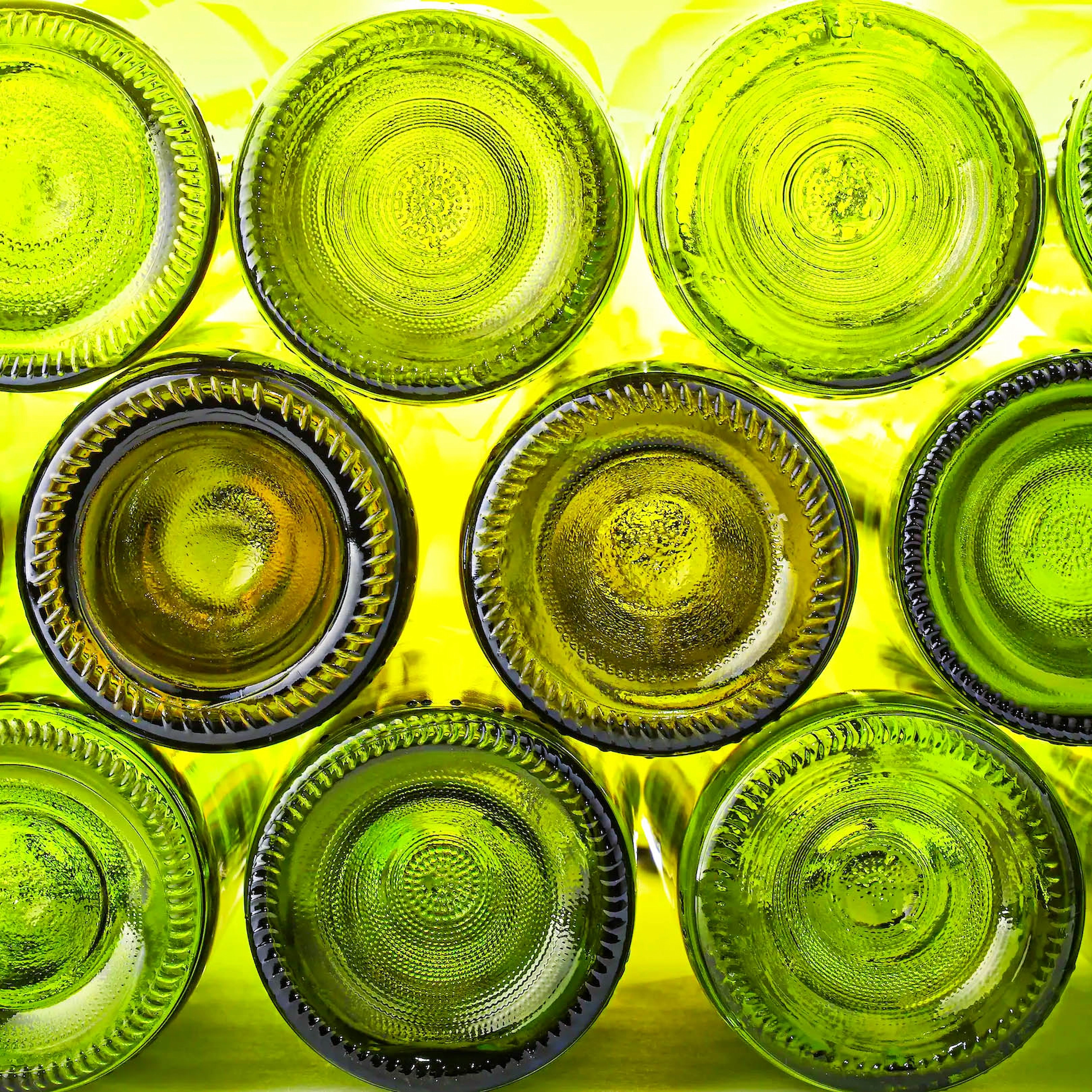
There’s a reason behind the indent—it’s not just for structure or the look of luxury. It helps keep the glass strong and the wine clean.
It has a proper name. The dent at the bottom of a wine bottle is called a punt. And it was created not just for form—it actually has a function.
Historically, the “glass dimple” was born out of necessity. Because of the way it was produced (hand-blown), glassmakers end up having a pointed bottom, which makes it unstable. Having a perfectly flat bottom is impossible and so to address this concern, they are forced to push the base inward, thus having a concave base.
What is a Wine Bottle Punt? History and Structural Purpose
Therein lies the second reason—so that the bottles stand flat and firm on a surface, and distribute the pressure, stopping it from exploding. Consequently, the shape also makes them a lot easier to stack in cellars and save much needed space too. In addition, it makes for the most convenient grip when pouring as the sommelier gets to insert their thumb into the indent, allowing for a secure one-hand pour without disturbing the temperature.
Architecturally, the punt functions as a catch basin for the sediments, especially for aged reds and natural wines. Because of the shape, the particles settle around the bump and away from the center, preventing them from getting poured into the glass.
The next time you see a wine bottle, you’ll realize that there’s actually a lot of thought put into its sexy bottom.


Frequently Asked Questions
The concave indentation is technically called a punt.
Historically, wine bottles were hand-blown. This process often left a sharp, pointed glass “scar” at the base. To ensure the bottle could stand upright and stable, glassmakers pushed this point inward, creating a flat resting surface.
Yes. The curved shape helps distribute internal pressure more evenly. This structural reinforcement makes the bottle stronger and significantly reduces the risk of it exploding under the high pressure of carbonation.
The punt serves as a convenient grip. A sommelier can place their thumb in the indent while splaying their fingers across the base, allowing for a steady, one-handed pour. This also minimizes hand-to-bottle contact, helping keep the wine at the proper temperature.
The punt acts as a catch basin for sediment. In aged reds or unfiltered natural wines, solid particles settle into the ring around the base of the punt rather than at the center, which helps prevent them from being stirred up and poured into your glass.