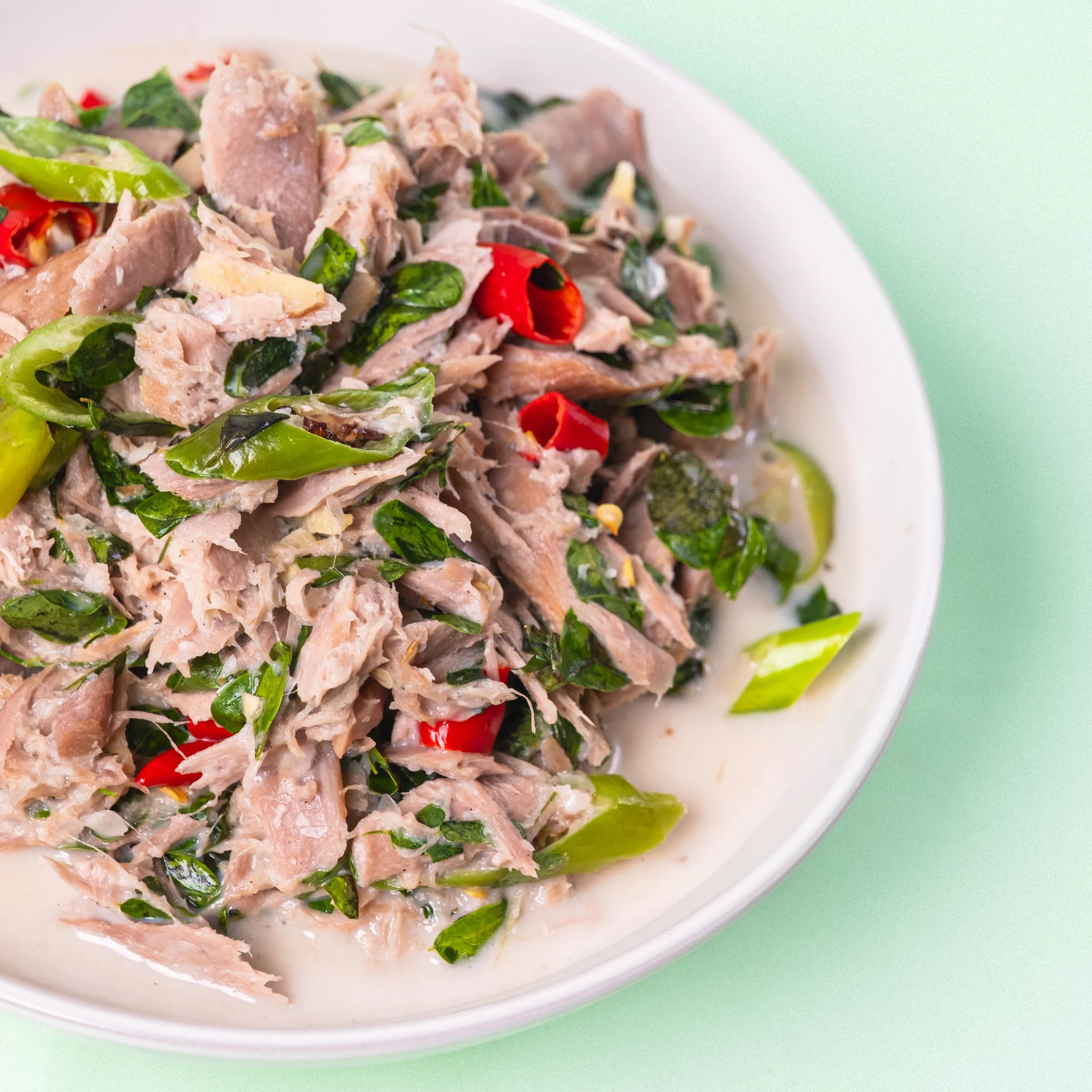


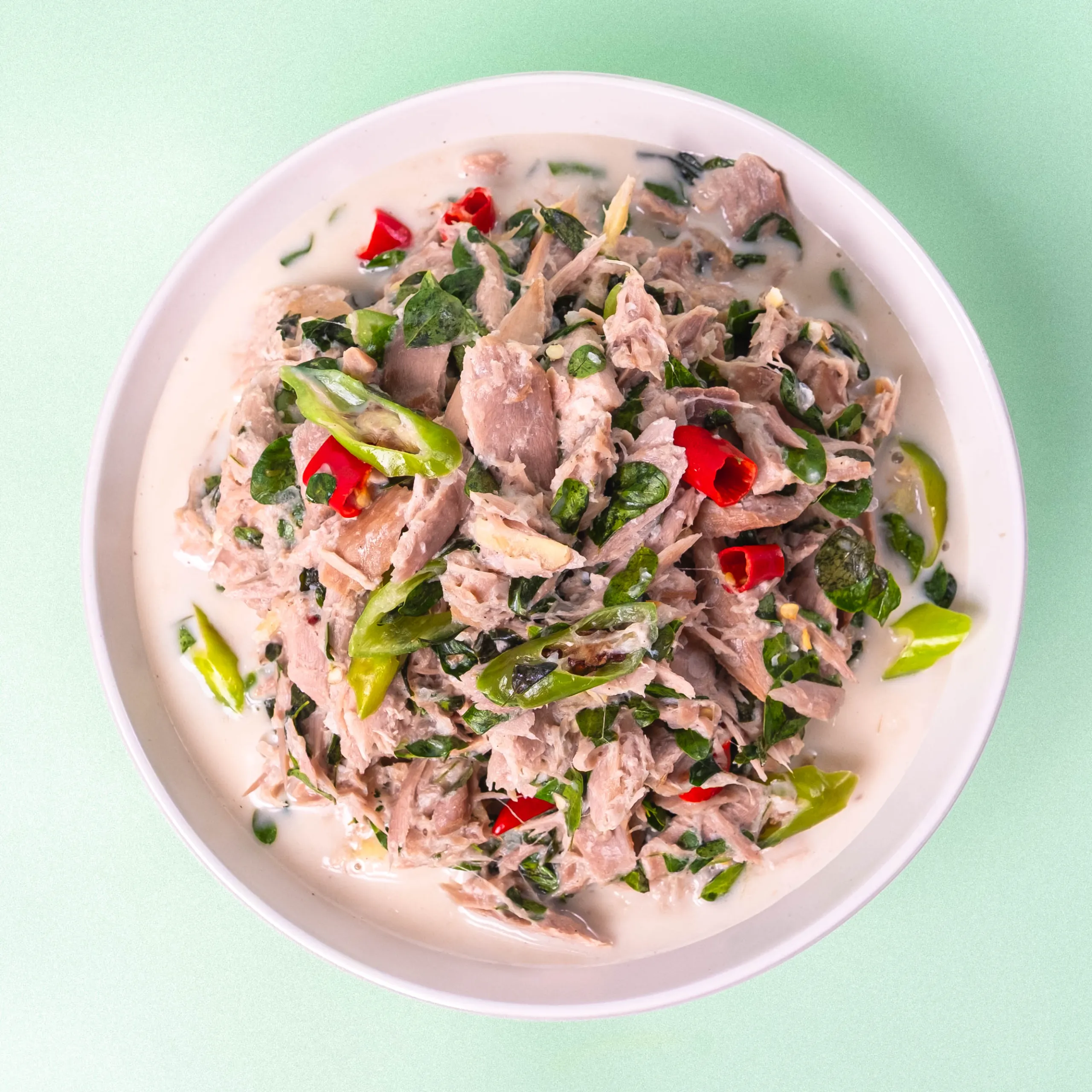
If there is one thing Bicolano cooking is known for, it is the fearless combination of coconut milk and chili. Kinunot is a beautiful example of that tradition. It is creamy, savory, aromatic, and pleasantly spicy, with tender flakes of fish tucked into a rich coconut sauce.
The name kinunot comes from the Filipino word kunot, meaning to pull apart or shred by hand. That makes perfect sense when you look at the dish itself: the cooked fish is broken into smaller pieces and gently simmered with coconut milk, ginger, chilies, and malunggay.
This particular version uses tuna belly, which is especially flavorful because of its natural fat. The richness of the fish works wonderfully with gata, while calamansi and vinegar add acidity that keeps the dish from becoming too heavy. The long green chilies provide warmth, while the red chilies bring a more pronounced kick.
It is the kind of food that tastes right at home on a Filipino dining table—especially with a large pot of steaming rice nearby. And if you love Bicolano dishes, Kinunot is a wonderful way to experience the region’s love for bold, creamy, spicy flavors in one comforting dish.
A Little History of Kinunot
Kinunot is a traditional dish associated with Bicol, a region in southeastern Luzon that is particularly famous for its use of coconut milk and chili peppers.
Bicol’s landscape and agricultural traditions have had a major influence on its cuisine. Coconut trees are abundant throughout the region, making coconut milk an important ingredient in many local dishes. Chilies are equally important, and Bicolano cooks are well known for incorporating them into savory dishes.
Kinunot developed within this culinary tradition of making the most of locally available seafood, coconut, aromatics, and leafy greens.
Different versions of the dish exist. Some preparations use stingray, while others use shark or various types of fish. The fish is cooked, shredded or flaked, and then simmered in coconut milk with aromatics and chili.
The use of stingray in traditional versions is particularly interesting because the meat has a firm texture that holds together well after cooking and shredding. Modern home cooks often use fish that is easier to find, such as tuna.
Like many Filipino regional recipes, there isn’t necessarily one universally fixed formula. Families adjust the amount of chili, vinegar, coconut milk, and fish according to their preferences and what is available.
That is part of the charm of kinunot. The dish has a recognizable identity, but there is room for a cook to make it their own.
What Does “Kinunot” Mean?
The word kinunot is related to the act of pulling or shredding the cooked fish into pieces.
Rather than serving the fish as a whole fillet or steak, the cooked meat is separated into flakes or strands before being combined with the sauce.
This gives kinunot its characteristic appearance and also allows the coconut sauce to coat every piece of fish.
The result is almost like a rich fish stew, but with a texture that makes every bite flavorful. Instead of having a large piece of fish surrounded by sauce, you get fish, coconut, chili, and aromatics together in nearly every spoonful.
Recipe Tips for Delicious Kinunot
Choose fresh tuna
Fresh tuna belly should have a clean, mild smell and firm flesh. Avoid fish that smells strongly sour or unpleasant.
Because the recipe is relatively simple, the quality of the fish makes a noticeable difference.
Don’t overboil the fish
Tuna belly is naturally flavorful, but excessive boiling can make it dry.
Cook it only until done, then remove it from the water and let it cool before flaking.
Keep the fish in generous flakes
Very finely shredded fish can disappear into the sauce. Larger flakes create a better contrast between the creamy gata and the tender fish.
Don’t rush the aromatics
Ginger, garlic, and onion provide much of the foundation of the dish. Let them become fragrant before adding the coconut milk.
Simmer the gata gently
Coconut milk is best treated gently. High heat can cause the fat and liquid to separate, particularly if it is boiled vigorously.
A gentle simmer is enough.
Add the sour ingredients carefully
Calamansi and vinegar can vary in strength. Start with the recommended amount and taste before adding more.
The finished dish should have a pleasant tang, not an aggressively sour flavor.
Add malunggay at the end
Malunggay cooks quickly. Adding it too early can result in dull, overly soft leaves.
Adjust the chili
The amount of chili in Bicolano cooking can be intimidating if you’re not accustomed to spicy food.
Don’t feel obligated to make the dish extremely hot. Reduce the red chili, remove the seeds, or use more mild green chilies if you’re cooking for children or people with lower spice tolerance.
Ingredient Substitutions
Tuna belly
Tuna belly is rich and flavorful, but you can use other firm fish.
Good alternatives include:
- Mackerel
- Milkfish
- Boneless bangus
- Salmon
- Firm white fish
Each fish will give the dish a slightly different flavor and texture.
For the closest traditional experience, however, firm fish that can be easily flaked works best.
Stingray
Traditional kinunot is often associated with stingray. If you can source properly prepared, food-safe stingray, it can be used in place of tuna.
Stingray requires careful preparation, and availability varies by location, so tuna is a convenient and accessible substitute for many home cooks.
Malunggay
If fresh malunggay isn’t available, you can use spinach, moringa leaves, or another tender leafy green.
Spinach is particularly convenient, although it has a milder flavor than malunggay.
Calamansi
Lime or lemon juice can substitute for calamansi.
Lime is generally a particularly good alternative because its bright acidity works nicely with coconut milk and fish.
White vinegar
Cane vinegar is an excellent Filipino alternative and can give the dish a slightly more regional character.
Rice vinegar can also work if you prefer a gentler acidity.
Coconut milk
Use full-fat coconut milk for the richest and creamiest result.
If you need a lighter version, you can dilute it slightly with water, although the sauce will be less rich.
Understanding the Main Ingredients
Tuna belly
Tuna belly is prized for its rich flavor and higher fat content compared with leaner portions of tuna.
That natural fat is particularly useful in kinunot because it complements the richness of coconut milk.
Because tuna belly can be rich, the ginger, chili, calamansi, and vinegar are important for keeping the dish balanced.
Coconut milk
Coconut milk is at the heart of Bicolano cuisine.
It provides fat, creaminess, subtle sweetness, and a distinct coconut aroma. In kinunot, it creates the sauce that carries the flavors of the fish and spices.
Ginger
Ginger plays a particularly useful role in fish dishes. Its warm, aromatic flavor helps complement seafood while adding freshness and complexity.
The julienned ginger also gives the dish a pleasant texture.
Chili peppers
Chili is one of the defining ingredients of many Bicolano dishes.
Long green chilies provide a relatively mild pepper flavor depending on the variety, while red chilies generally contribute more heat and color.
The combination creates both complexity and visual appeal.
Calamansi and vinegar
These ingredients provide acidity.
Acidity is especially valuable in rich dishes because it prevents the coconut milk from becoming overwhelming. It makes the sauce taste brighter and encourages you to take another bite.
Malunggay
Malunggay, also called moringa, is a leafy green commonly used in Filipino cooking.
Its slightly earthy, green flavor works well with fish and coconut milk.
It also adds a beautiful green color to the finished dish.
Health Benefits of the Ingredients
Kinunot is a flavorful, nutrient-rich meal, particularly because its main ingredient is fish and it contains leafy greens and aromatics.
Tuna provides high-quality protein and nutrients such as vitamin B12, selenium, niacin, and phosphorus. Tuna also contains omega-3 fatty acids, although the amount varies depending on the species and cut.
Malunggay is highly regarded for its nutritional content. The leaves provide vitamin A precursors, vitamin C, vitamin K, calcium, iron, and other nutrients. Because it is used as a leafy vegetable, it is an easy way to add more micronutrients to a meal.
Ginger contains naturally occurring compounds such as gingerols and has traditionally been used to support digestive comfort.
Garlic provides sulfur-containing plant compounds and small amounts of vitamin C, vitamin B6, and manganese.
Onions provide fiber and various antioxidant plant compounds.
Chili peppers contain vitamin C and carotenoids, while their heat comes primarily from capsaicin.
Coconut milk provides energy and fats, including saturated fat. It is nutritious in the sense that it supplies calories and some minerals, but it is also calorie-dense, so portion size is worth considering.
Calamansi contributes vitamin C and bright citrus flavor.
As with any rich coconut-milk dish, kinunot is best enjoyed as part of a balanced meal rather than viewed as a low-calorie food.
If you are watching your sodium intake, use salt carefully and taste before adding more.
Is Kinunot Spicy?
It certainly can be.
Bicolano cooking is famous for its love of chili, but there is no need to make your kinunot unbearably hot.
The eight long green chilies and four red chilies in this recipe produce a fairly pronounced pepper flavor. The actual heat will depend heavily on the variety of chilies used.
For a milder version:
- Reduce the number of red chilies.
- Remove the seeds and inner membranes.
- Use more long green chilies and fewer hot red chilies.
- Serve additional chili separately for people who want more heat.
For a hotter version, leave the seeds intact and add extra red chili.
How to Store Kinunot Properly
Because kinunot contains cooked fish and coconut milk, it should be handled carefully after cooking.
Transfer leftovers to a clean, airtight container and refrigerate them promptly.
Keep the refrigerator at 4°C (40°F) or below.
If you’ve made a large batch, divide it into smaller containers so it cools more quickly and is easier to reheat.
Keep fresh garnishes separate when possible.
When reheating, warm only the portion you intend to eat. Reheat gently on the stovetop or in the microwave until the food is thoroughly hot.
Avoid repeatedly reheating and cooling the entire batch.
How Long Does Kinunot Last?
Properly refrigerated cooked kinunot is best consumed within 3 to 4 days.
The coconut sauce may thicken or separate slightly after refrigeration. This is normal. Stir gently while reheating and add a small splash of water if necessary.
The fish may also become somewhat firmer after refrigeration, so gentle reheating is preferable to prolonged boiling.
If the dish has an unpleasant odor, unusual appearance, mold, or other signs of spoilage, discard it.
Don’t taste questionable leftovers simply to determine whether they are safe.
Can You Freeze Kinunot?
Kinunot can technically be frozen, but it is better enjoyed fresh or refrigerated for a few days.
Coconut milk-based sauces can change texture after freezing and thawing, sometimes becoming slightly separated or grainy. Fish can also become softer after freezing.
If you do freeze it, portion the cooled kinunot into freezer-safe containers and seal well.
For best quality, use it within approximately 1 to 2 months.
Thaw it in the refrigerator and reheat gently. Stir the sauce carefully rather than boiling it aggressively.
How to Serve Kinunot
Kinunot practically begs to be served with rice.
A plate of freshly steamed white rice is ideal because the mild rice balances the rich coconut sauce and spicy fish.
You can also serve it with:
- Garlic rice
- Brown rice
- Steamed vegetables
- Fresh tomatoes
- Cucumber salad
- Atchara
- Extra calamansi
- Fresh chili on the side
A little acidity from calamansi or pickled vegetables can be especially refreshing alongside the creamy gata.
What Makes Bicolano Coconut Dishes So Appealing?
One of the great strengths of Bicolano cooking is its ability to balance richness and heat.
Coconut milk provides richness and body, while chili adds heat and character. Ginger and garlic provide aromatic depth, while sour ingredients such as vinegar and calamansi keep the dish from becoming too heavy.
This creates a flavor progression that makes the food exciting.
You first notice the creaminess of the coconut milk, then the savory fish, followed by the warmth of ginger and chili. Finally, the acidity brightens everything and encourages you to go back for another spoonful.
That balance is one reason Bicolano food has such a distinctive identity.
A Few Ways to Make Kinunot Your Own
If you want a creamier dish, allow the coconut milk to reduce slightly before adding the fish.
For a lighter version, increase the amount of water slightly and use a little less coconut milk.
For more sourness, add additional calamansi toward the end rather than adding a large amount at the beginning.
For more heat, add extra red chili or serve fresh chilies alongside the finished dish.
For additional greens, you can add a little more malunggay or combine it with another tender leafy vegetable.
The important thing is to preserve the basic character of the dish: fish, coconut milk, aromatics, acidity, and chili.
Final Thoughts
Kinunot is a wonderful example of what makes regional Filipino food so special.
It doesn’t depend on an elaborate technique or dozens of ingredients. Instead, it takes a handful of ingredients that work beautifully together and turns them into something deeply satisfying.
The tender fish provides protein and richness, coconut milk creates a creamy foundation, ginger and garlic bring fragrance, chili gives the dish its Bicolano personality, and calamansi and vinegar provide the acidity needed to keep everything balanced. Malunggay adds color, texture, and another layer of nutrition.
What makes Kinunot even more interesting is its connection to Bicol’s food culture. The generous use of gata and chili isn’t simply a matter of making food spicy or rich—it reflects a regional culinary tradition shaped by local ingredients and generations of home cooking.
And perhaps that is the best way to enjoy it: don’t think of kinunot as something that needs to be complicated. Cook the fish gently, let the aromatics become fragrant, simmer the coconut milk patiently, adjust the sourness and heat to your liking, and finish with fresh malunggay.
Then put it on the table beside a mound of steaming rice.
For anyone discovering Bicolano cuisine for the first time, Kinunot is a dish that tells a delicious story—a story of coconut, chili, seafood, local ingredients, and the Filipino love of turning simple food into something worth gathering around the table for.