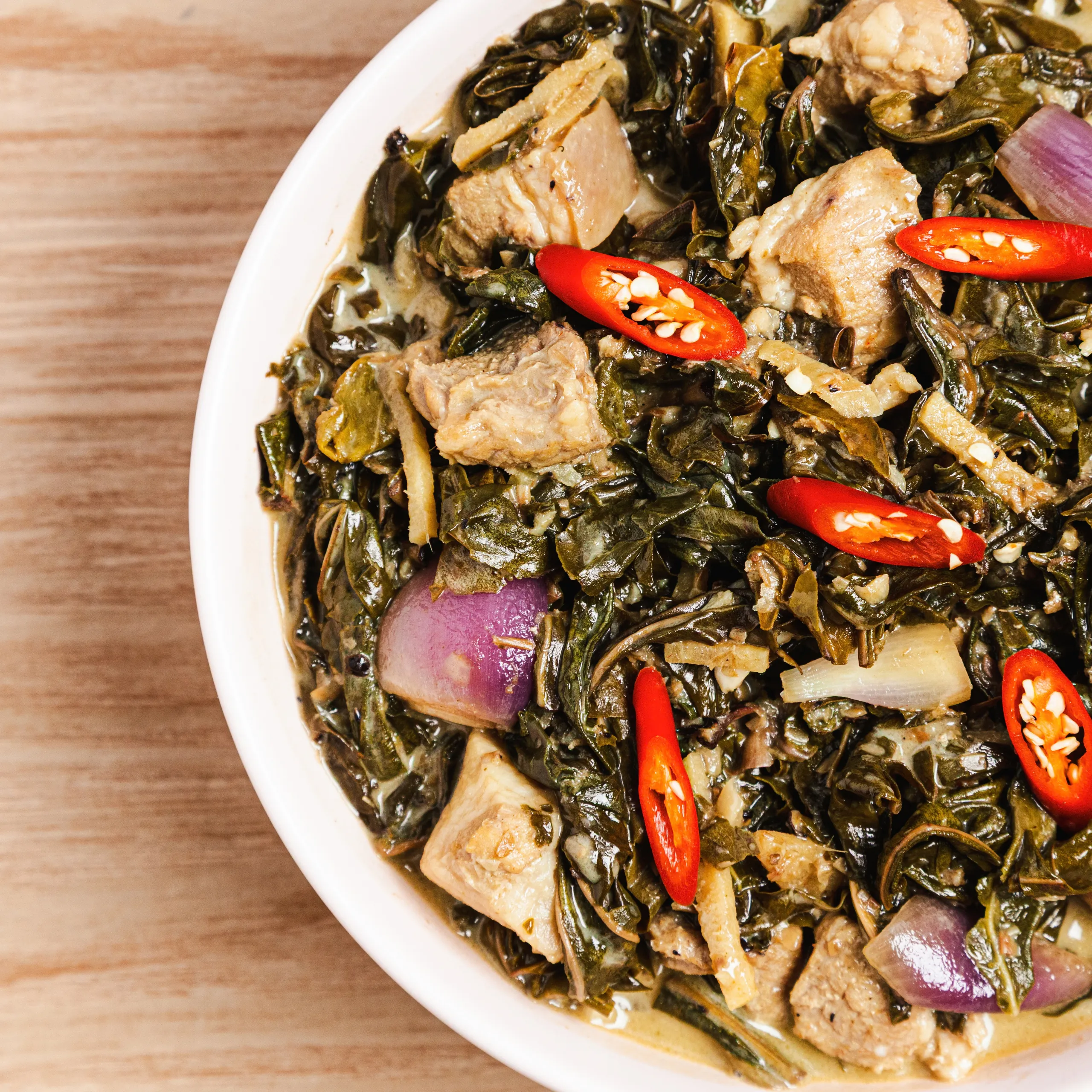


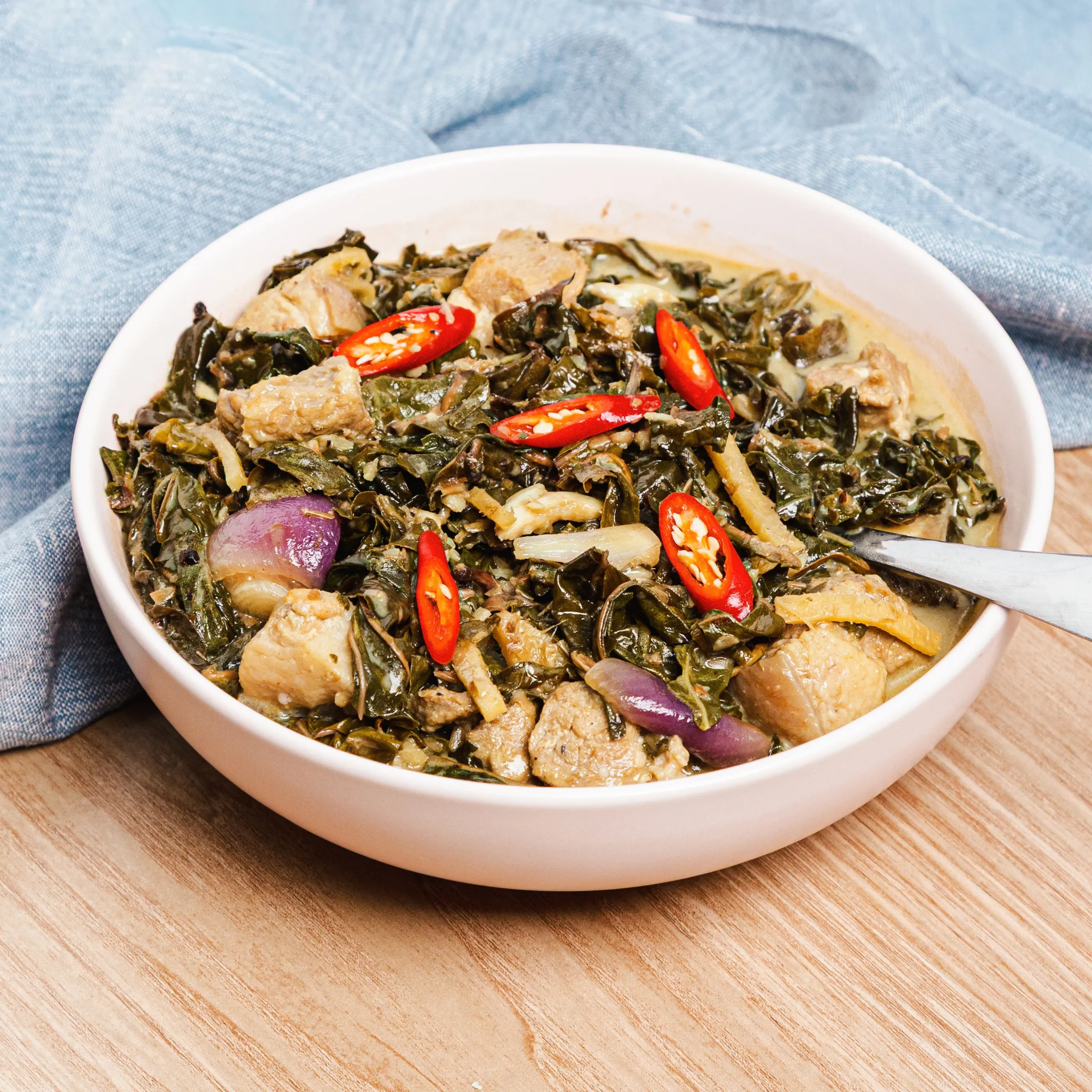
There are some Filipino dishes that immediately make a meal feel comforting and familiar, and Laing is one of them. With its creamy coconut milk, tender pork, fragrant aromatics, and gentle-to-fiery chili heat, laing is the kind of dish that tastes even better when eaten with a generous serving of steaming rice.
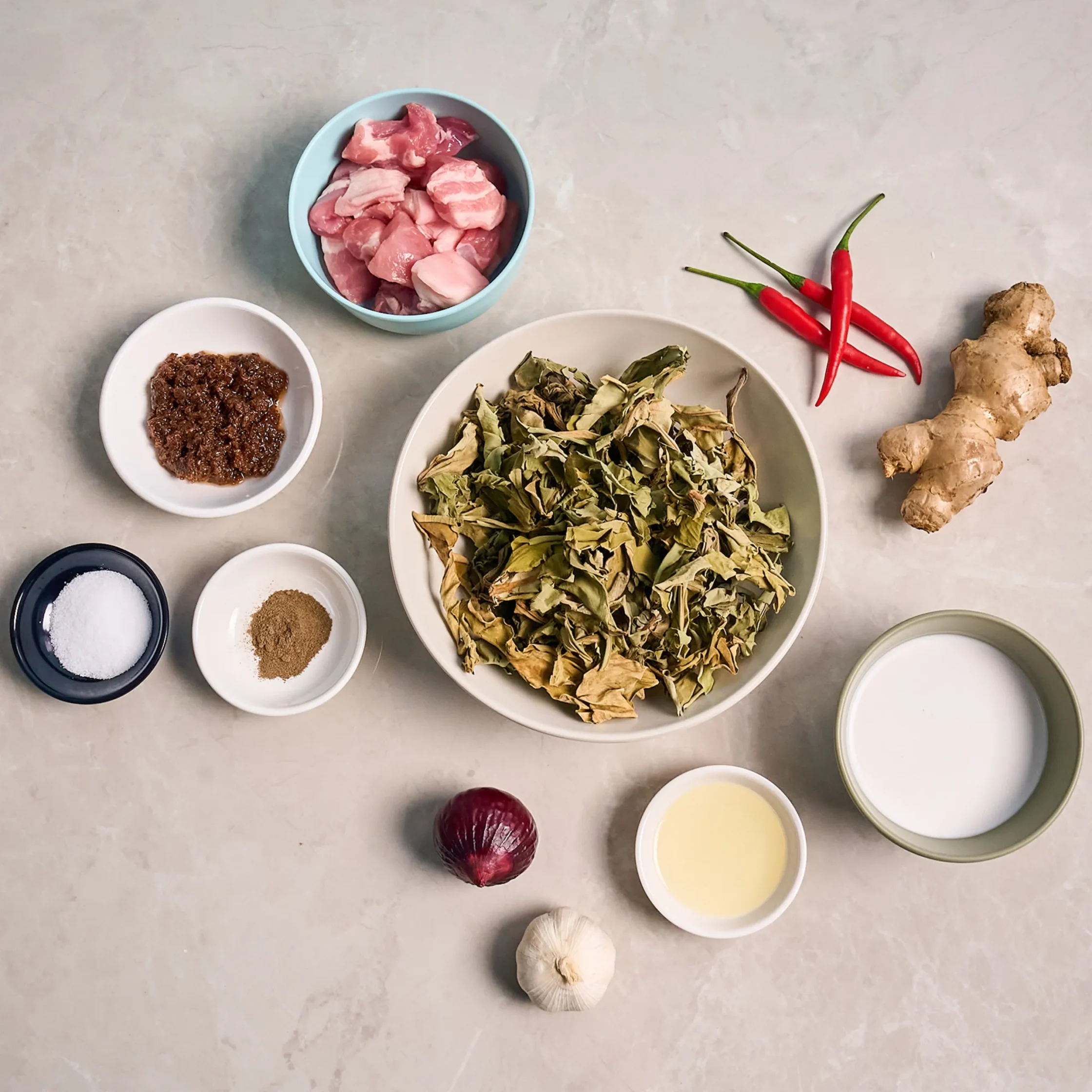
What makes laing especially interesting is that its main ingredient—dried taro leaves—may look simple and humble, yet it transforms beautifully when slowly cooked with coconut milk and seasonings. The leaves absorb the rich coconut flavor while the pork adds savory depth. Ginger, garlic, onion, and chilies bring fragrance and warmth, while bagoong gives the dish the salty, fermented character that makes it distinctly Filipino.
For many Filipinos, laing is more than simply a vegetable dish. It is connected to the food traditions of the Bicol Region, where coconut and chili are important parts of everyday cooking. The dish reflects a style of cooking that makes good use of locally available ingredients and turns them into something deeply flavorful.
Whether you’re cooking laing for your family, preparing a Filipino meal for friends, or simply trying the dish for the first time, this recipe is a wonderful introduction to the rich and comforting flavors of Filipino cuisine.
A Little History of Laing
Laing is strongly associated with the Bicol Region of the Philippines, particularly with Bicolano cuisine. Bicol cooking is well known for its generous use of coconut milk and chili peppers, two ingredients that feature prominently in laing.
The dish is traditionally made with dried taro leaves, locally known as gabi. Drying the leaves is practical in tropical communities because it helps preserve the ingredient for later use. When cooked slowly in coconut milk, the dried leaves become tender and absorb the flavors surrounding them.
There are different versions of laing depending on the household and locality. Some recipes use pork, while others use dried fish, shrimp, or no meat at all. Some cooks add more chilies for a distinctly fiery dish, while others keep the heat mild. The amount and type of bagoong can also vary.
This flexibility is part of what makes Filipino home cooking special. A dish can have a recognizable identity while still being prepared differently from one family kitchen to another.
Recipe Tips for Better Laing
- Cook the taro leaves thoroughly. Proper cooking is essential because inadequately cooked taro leaves can cause an irritating sensation in the mouth and throat.
- Use good-quality coconut milk. Since coconut milk is one of the main flavors of laing, its quality makes a noticeable difference.
- Don’t rush the simmering process. Low and slow cooking helps the leaves become tender and allows the flavors to blend.
- Be careful with bagoong. Different brands and varieties have different levels of saltiness.
- Control the chili. You don’t have to make laing extremely spicy to enjoy it. Start with less chili and add more if desired.
- Use a heavy-bottomed pot. This helps distribute heat more evenly and reduces the chance of the coconut mixture sticking or burning.
- Don’t add too much water at once. Laing should eventually have a rich, thick sauce rather than a watery consistency.
- Let it rest before serving. A few minutes can make the flavors taste more integrated.
- Taste near the end. Coconut milk can soften salty and spicy flavors, so final seasoning is best done after the dish has simmered.
Ingredient Substitutions
Pork belly
If you don’t have pork belly, you can use:
- Pork shoulder
- Pork loin
- Diced chicken
- Cooked shrimp
- Dried fish
- Smoked fish
For a vegetarian version, simply omit the pork and use a plant-based savory seasoning in place of bagoong.
Coconut milk
If regular coconut milk is unavailable, you can use canned coconut milk or another commercially prepared coconut milk product.
For a lighter version, part of the coconut milk can be replaced with water, although the resulting laing will be less creamy.
Bagoong
Bagoong is an important source of the dish’s characteristic salty, fermented flavor. Depending on what is available, you can use a suitable shrimp-based or fish-based bagoong.
For a vegetarian or vegan version, use a plant-based fermented seasoning or another savory alternative.
Keep in mind that substitutions will change the traditional flavor of the dish.
Fresh red chilies
You can substitute other fresh chilies depending on availability and desired heat.
If you don’t enjoy spicy food, you can significantly reduce the amount or leave them out. The dish will still retain its coconut and savory character.
Pork belly alternatives
For a less fatty version, leaner pork can be used. However, pork belly contributes richness and a characteristic savory flavor, so using lean meat may produce a lighter result.
What Makes Laing Special?
One of the most interesting things about laing is how it transforms a relatively humble ingredient into a rich and satisfying dish.
Dried taro leaves have a different texture and flavor experience from fresh leafy vegetables. During cooking, they absorb the coconut milk and seasonings, essentially becoming carriers for the flavors of the entire dish.
The combination of coconut milk, chili, bagoong, ginger, garlic, and pork creates several layers of flavor at once:
- Coconut milk provides richness and creaminess.
- Pork contributes savory flavor and fat.
- Bagoong provides saltiness and fermented umami.
- Ginger provides warmth and fragrance.
- Garlic contributes a deep savory aroma.
- Onion adds sweetness and complexity.
- Chili provides heat and brightness.
- Taro leaves provide the dish’s distinctive earthy character and texture.
This balance is one reason laing pairs so naturally with plain steamed rice.
Nutritional and Health Considerations
Laing contains several nutritious ingredients, but its nutritional profile depends heavily on the quantities used and the specific ingredients chosen.
Taro leaves
Taro leaves are leafy vegetables and can provide nutrients such as fiber and various vitamins and minerals. However, they must be prepared and cooked properly.
Coconut milk
Coconut milk contributes energy and fat, including saturated fat. It gives laing its characteristic creamy texture and rich flavor.
Because coconut milk can be calorie-dense, people watching their calorie or saturated-fat intake may choose to use a smaller amount or replace part of it with water.
Ginger and garlic
Garlic and ginger contribute aromatic compounds and plant compounds to the dish while adding substantial flavor without requiring large quantities.
Chilies
Chili peppers contain vitamin C and naturally occurring compounds such as capsaicin, which produces their characteristic heat.
Pork
Pork provides protein, but pork belly is also relatively high in fat. Choosing a leaner cut can reduce the fat content.
Bagoong
Bagoong provides strong savory flavor but can also contain considerable amounts of sodium. If you are limiting sodium, use less bagoong and avoid adding extra salt unless necessary.
Important: Health benefits should not be interpreted as medical treatment or as a reason to consume a particular food in unlimited amounts. Laing is best enjoyed as part of a varied, balanced diet.
How to Store Laing Properly
If you have leftovers, allow the dish to cool somewhat before storing it.
Transfer the laing into a clean, airtight food container and refrigerate it promptly. Don’t leave cooked food sitting at room temperature for an extended period.
For best quality, consume refrigerated leftovers within 3–4 days.
If you want to keep it longer, you can freeze laing in a freezer-safe airtight container. Divide it into individual portions if you expect to eat it gradually.
When reheating, heat it thoroughly until steaming hot. If the sauce has become very thick after refrigeration, add a small amount of water or coconut milk while reheating.
Repeatedly cooling and reheating the entire batch is best avoided. Instead, reheat only the portion you intend to eat.
Can You Freeze Laing?
Yes, laing can be frozen.
Allow the cooked dish to cool appropriately, place it in a freezer-safe container, and leave a little space for expansion. Label the container with the date.
When you’re ready to eat it, thaw it safely in the refrigerator and reheat it thoroughly.
The texture may change slightly after freezing and thawing, particularly because coconut-based sauces can separate. Stirring gently while reheating can help bring the sauce back together.
Final Words
Laing is a wonderful example of how Filipino cooking can turn simple ingredients into something deeply satisfying. The combination of dried taro leaves, creamy coconut milk, savory bagoong, fragrant ginger and garlic, tender pork, and chili creates a dish that is simultaneously rich, earthy, spicy, and comforting.
What makes the dish particularly special is its connection to home cooking. There is no single way every family prepares laing. One household may make it intensely spicy, another may use more coconut milk, while another may add dried fish instead of pork. These small differences are part of the personality of Filipino food.
If you’re making laing for the first time, don’t worry about getting every detail perfect. Start with a balanced amount of seasoning, cook the taro leaves thoroughly, let the coconut milk simmer gently, and taste as you go.
Then serve it with hot rice, and you’ll have a comforting Filipino meal that brings together some of the most recognizable flavors of Bicolano cuisine.