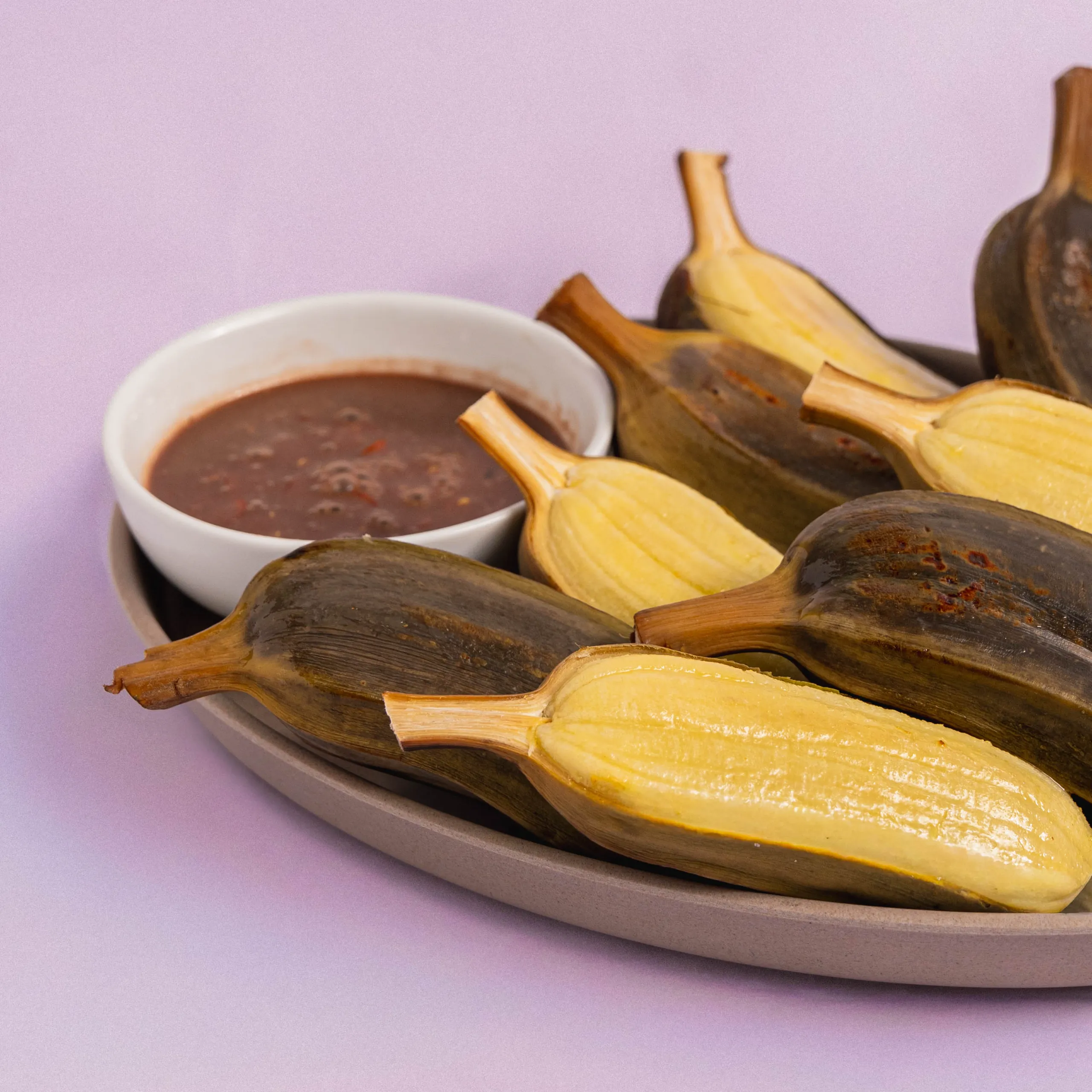


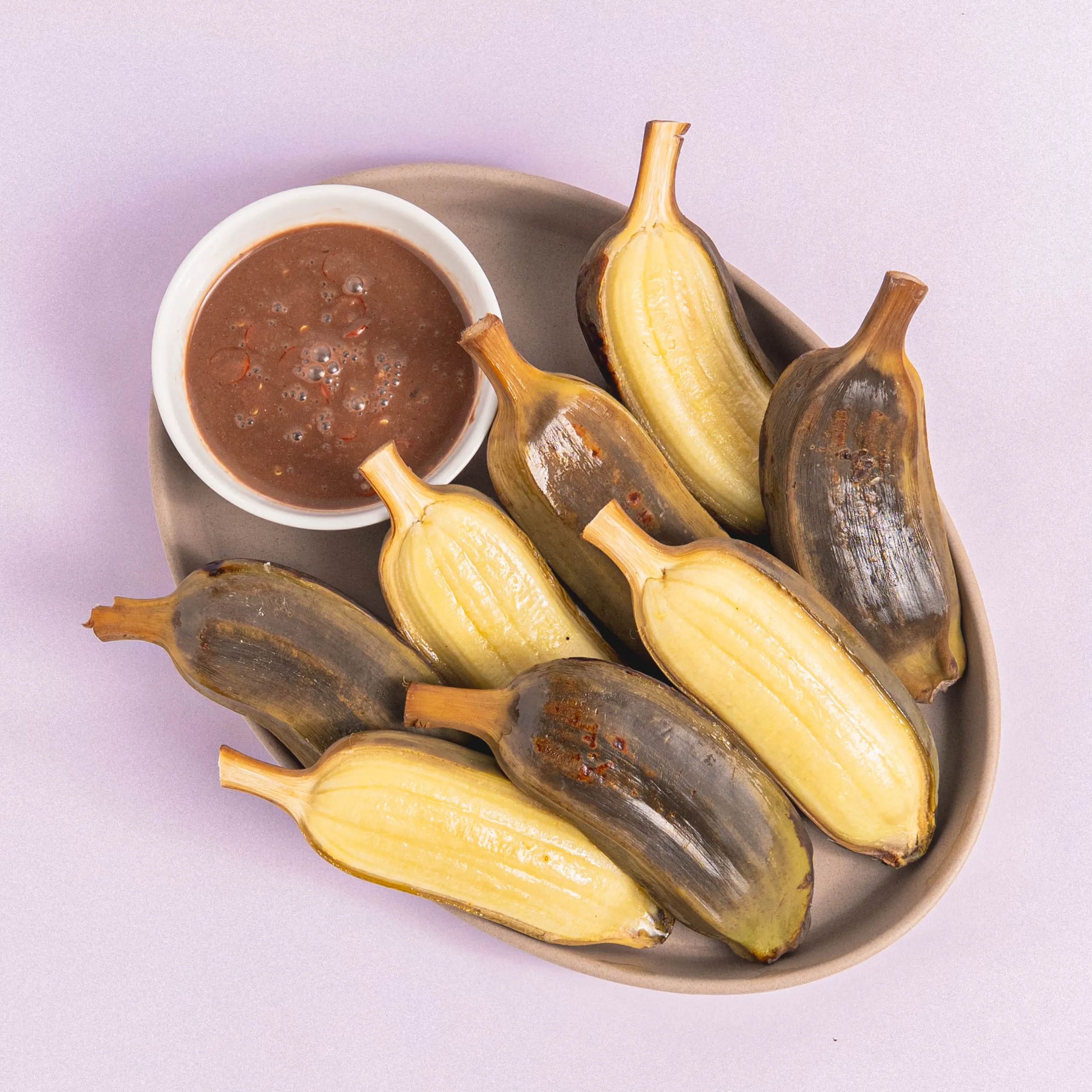
Nilagang saba with bagoong is a wonderfully simple Filipino snack that shows how much can be done with just a few humble ingredients. At first glance, it may seem like nothing more than boiled bananas served with shrimp paste, but that simplicity is exactly what makes the dish special. The soft, naturally sweet saba banana paired with salty, savory bagoong creates a contrast that is both comforting and distinctly Filipino.
This is the kind of food that feels connected to everyday life. It does not require expensive ingredients, complicated cooking techniques, or elaborate presentation. Saba bananas can be boiled until tender, peeled, and served warm with a small bowl of bagoong mixed with calamansi and chili. It is filling enough to enjoy as a snack while still being simple enough to prepare on an ordinary afternoon.
For many Filipinos, saba is familiar in both sweet and savory dishes. It can be boiled, fried, grilled, steamed, added to soups and stews, or transformed into desserts. Its firm texture allows it to withstand cooking better than many dessert bananas, while its natural sweetness becomes more noticeable as it softens.
The bagoong provides the opposite flavor profile. It is salty, savory, intensely umami-rich, and sometimes spicy. When calamansi is added, its sharp citrus flavor helps cut through the saltiness and gives the dipping sauce a fresher taste. A little red chili adds heat for those who enjoy a spicy kick.
Nilagang saba with bagoong is therefore a lesson in balance. Sweet banana meets salty shrimp paste, while sour calamansi and spicy chili brighten the combination. There is no need for a complicated sauce because the ingredients already complement one another.
History and Cultural Background
Saba banana, also known as cardaba banana, is an important cooking banana in the Philippines. Unlike many bananas that are mainly eaten raw when ripe, saba is particularly versatile because it can be cooked at different stages of ripeness.
It appears in many Filipino dishes, including banana cue, turon, maruya, pochero, nilaga, and various desserts and snacks.
The tradition of boiling saba is particularly straightforward and practical. Before modern convenience foods became common, root crops, bananas, corn, and other locally available plant foods were important parts of everyday Filipino meals and snacks.
Boiling was one of the simplest ways to prepare these ingredients. It required little equipment and allowed the natural flavor of the food to remain noticeable.
The practice of pairing mildly sweet foods with salty or savory condiments is also familiar throughout Filipino cuisine. Bagoong, in particular, has long been an important source of salty, fermented flavor.
Shrimp paste varies considerably from one region and household to another. Some versions are raw and require cooking, while others are already cooked and seasoned. Some are very salty, while others have a sweeter or more complex flavor.
Pairing boiled saba with bagoong therefore creates a simple combination of two familiar Filipino food traditions: cooked banana and fermented seafood.
The addition of calamansi and chili reflects another common Filipino preference for balancing strong flavors with acidity and heat.
Although there is no single historical origin story for this particular combination, its ingredients are deeply connected to everyday Filipino food culture. It represents the practical and creative way Filipino cooks use locally available ingredients to create snacks that are satisfying without being complicated.
Understanding the Ingredients
Saba Bananas
Saba is the heart of this dish.
It is a cooking banana with a firmer texture than the common sweet bananas typically eaten raw. When boiled, saba becomes soft and tender while maintaining enough structure to hold its shape.
Its natural sweetness depends on its stage of ripeness.
For a more savory snack, slightly underripe saba can be used. Riper saba will be sweeter and softer.
Water
Water is used to cook the bananas gently until tender.
You need enough water to keep the bananas submerged during cooking.
Bagoong
Bagoong provides the savory component of the dish.
Shrimp paste is made through fermentation and is known for its strong salty, savory, and umami-rich flavor.
Because it is naturally salty, a small amount can go a long way.
Calamansi
Calamansi gives the bagoong a bright citrus flavor.
Its acidity helps balance the saltiness and adds freshness to the dipping sauce.
Red Chili
Red chili adds heat and fragrance.
It is optional in spirit even though it is included in the ingredient list. If you prefer a milder dipping sauce, you can reduce the amount or leave it out.
Recipe Tips
• Choose firm saba if you want the banana to hold its shape.
• Use riper saba if you prefer a sweeter snack.
• Boiling with the peel can help protect the banana during cooking.
• Do not overcook the bananas. They should be tender but not mushy.
• Use enough water to keep the bananas submerged.
• Taste the bagoong before adding additional seasoning. Some varieties are extremely salty.
• Add calamansi gradually. You can always add more, but it is difficult to correct an overly sour sauce.
• Remove chili seeds for less heat.
• Keep the bagoong separate from the bananas until serving. This prevents the banana from becoming overly salty.
• Serve the saba warm. Warm banana creates a particularly pleasant contrast with the sharp, savory dipping sauce.
• Use fresh calamansi whenever possible. Bottled citrus juice can work, but fresh calamansi provides a brighter aroma.
• Adjust the bagoong to your personal taste. Fermented shrimp paste varies considerably in saltiness and sweetness from brand to brand.
• Do not discard the banana water immediately. It can be allowed to cool and discarded appropriately, but avoid using it for other foods unless it has been handled safely.
Ingredient Substitutions
Saba Banana
Saba is strongly recommended because its texture is particularly suited to boiling.
If unavailable, other cooking bananas or plantains can sometimes be used.
However, ordinary dessert bananas may become too soft when boiled.
Bagoong Alamang
If shrimp paste is unavailable, you can use another Filipino-style fermented seafood paste.
Bagoong is the most suitable choice because its flavor is particularly complementary to saba.
Calamansi
If fresh calamansi is unavailable, you can substitute lemon or lime.
The flavor will be slightly different, but the acidity will serve the same basic purpose.
Red Chili
You can use siling labuyo, long red chili, chili flakes, or another fresh chili.
For a completely mild version, simply omit it.
Bagoong Alternatives
If you do not eat shrimp or other seafood, you can experiment with a vegetarian fermented bean paste or a savory soy-based dipping sauce.
The flavor will not be traditional, but it can still provide the salty component that contrasts with the banana.
Variations
Sweet and Spicy Bagoong
Add a small amount of brown sugar to the bagoong, calamansi, and chili.
The sweetness creates a more rounded sauce and works particularly well with ripe saba.
Garlic Bagoong
Add finely minced garlic to the dipping sauce for additional aroma.
Calamansi-Chili Bagoong
Increase the calamansi and chili for a brighter and spicier dipping sauce.
This is especially good when the saba is very sweet.
Boiled Saba with Cheese
For a less traditional but interesting snack, serve warm saba with a small amount of grated cheese.
The sweet-and-salty combination is similar to other Filipino banana-and-cheese preparations.
Saba with Coconut
Serve boiled saba with freshly grated coconut for a milder and more naturally sweet variation.
Knowledge About Saba Banana
When relatively green, the fruit is firmer and more starchy. This makes it suitable for savory dishes and preparations where the banana needs to hold its shape.
Saba is one of the most useful bananas in Filipino cooking because it can be used at different stages of ripeness.
As it ripens, the starches gradually convert into sugars, making the banana sweeter and softer.
This is why the same type of banana can appear in both savory and sweet Filipino dishes.
Saba is particularly important in dishes such as:
• Turon
• Banana cue
• Maruya
• Pochero
• Nilaga
• Various Filipino desserts
• Boiled banana snacks
Its versatility is one reason it has become such a familiar ingredient in Filipino kitchens.
Why Saba and Bagoong Work Together
At first, sweet banana and salty shrimp paste may sound like an unusual combination, but the pairing makes sense from a flavor perspective.
Saba provides:
• Sweetness
• Mild starchiness
• Soft texture
Bagoong provides:
• Saltiness
• Umami
• Fermented complexity
Calamansi provides:
• Acidity
• Citrus aroma
• Freshness
Chili provides:
• Heat
• Fragrance
• Additional flavor complexity
Together, these flavors create a balance between sweet, salty, sour, spicy, and savory.
This type of contrast is common in Filipino cuisine, where strong flavors are often balanced rather than isolated.
Health Benefits and Nutritional Information
Nilagang saba with bagoong can provide several useful nutrients, particularly from the banana. However, the overall nutritional profile depends on portion size and the amount of bagoong consumed.
Saba Banana
Saba provides carbohydrates, which are an important source of energy.
It also contains potassium, vitamin B6, vitamin C, and dietary fiber, although exact amounts vary with ripeness and serving size.
Because saba is a starchy cooking banana, it can be more filling than some softer dessert bananas.
Potassium
Bananas are well known as a source of potassium.
Potassium is an important mineral involved in normal muscle function, nerve signaling, and fluid balance.
Vitamin B6
Saba contains vitamin B6, which plays a role in normal energy metabolism and nervous system function.
Fiber
Bananas provide dietary fiber, which contributes to normal digestive health and can help with feelings of fullness.
Calamansi
Calamansi contributes vitamin C and naturally occurring plant compounds.
Its main culinary benefit in this recipe is its acidity, which allows you to use a smaller amount of salty bagoong while still creating a flavorful dipping sauce.
Chili
Red chili contains vitamin C and various plant compounds.
Capsaicin, the compound responsible for chili’s heat, contributes the characteristic spicy sensation.
Bagoong
Shrimp paste contributes protein and fermented savory flavor.
However, it can also be very high in sodium.
For people who need to restrict sodium, bagoong should be consumed in moderation.
Making the Dish Healthier
You do not need to completely change the dish to make it more balanced.
A few small adjustments can help:
• Use a smaller serving of bagoong.
• Add more calamansi to create flavor without relying entirely on salt.
• Choose ripe but still firm saba for natural sweetness.
• Avoid adding extra sugar unless necessary.
• Serve the bananas as a snack rather than alongside a large amount of additional carbohydrates.
• Include fresh fruit or vegetables elsewhere in the meal.
The goal is to preserve the character of the dish while being mindful of the ingredients that are particularly high in sodium.
Serving Suggestions
Nilagang saba with bagoong is best served simply.
Place the warm boiled bananas on a plate or shallow serving dish and put the bagoong mixture in a small bowl on the side.
This allows everyone to control the amount of dipping sauce.
You can serve it as:
• An afternoon snack
• A light breakfast
• A merienda
• A simple side dish
• A pre- or post-meal snack
• Part of a traditional Filipino spread
For a more colorful presentation, arrange the bananas neatly and place the calamansi-chili bagoong in the center.
You can also serve fresh calamansi wedges on the side for people who enjoy additional acidity.
Final Words
Nilagang saba with bagoong is a wonderful reminder that Filipino food does not have to be complicated to be memorable.
With only a few ingredients, this dish creates a surprisingly complete flavor experience. The saba is soft, warm, naturally sweet, and satisfying, while the bagoong is salty, savory, and deeply umami. Calamansi brings a sharp citrus note that brightens the combination, and chili adds just enough heat to wake up the palate.
What makes the dish particularly special is its simplicity. There is no elaborate sauce to prepare, no complicated cooking technique, and no long list of ingredients. You simply cook the saba until tender, prepare the dipping sauce, and enjoy.
At the same time, the recipe reflects something important about Filipino food culture: the appreciation of contrasts. Sweet and salty flavors are often brought together in ways that might surprise someone unfamiliar with Filipino cuisine, but once you taste them together, the combination makes perfect sense.
Saba itself also deserves recognition. It is one of the Philippines’ most versatile cooking bananas, appearing in everything from savory stews to beloved street snacks and desserts. Boiling it is perhaps one of the simplest ways to appreciate its natural character.
The bagoong, meanwhile, adds a distinctly Filipino identity to the dish. Its strong fermented flavor may take some getting used to, but when paired with naturally sweet saba and bright calamansi, it becomes much more balanced and enjoyable.
Whether you grew up eating boiled saba or are discovering the combination for the first time, this dish offers something wonderfully familiar: warm food, simple ingredients, bold flavors, and the feeling that good cooking does not always require a lot of effort.
Sometimes, a few bananas, a little bagoong, a squeeze of calamansi, and a touch of chili are all you need to make a snack that feels genuinely Filipino.